bsp; Contrary to what we have been told for years, eating healthy whole grain is not the answer to whittle away our waists.  Consumption of all grain-based carbohydrates results in increased production of the fat storage hormone insulin.  Increased insulin levels create the perfect recipe for weight gain. By swapping out high carbohydrate grain foods that cause spikes in insulin with much lower carbohydrate foods, insulin release is subdued and allows the body to release fat.

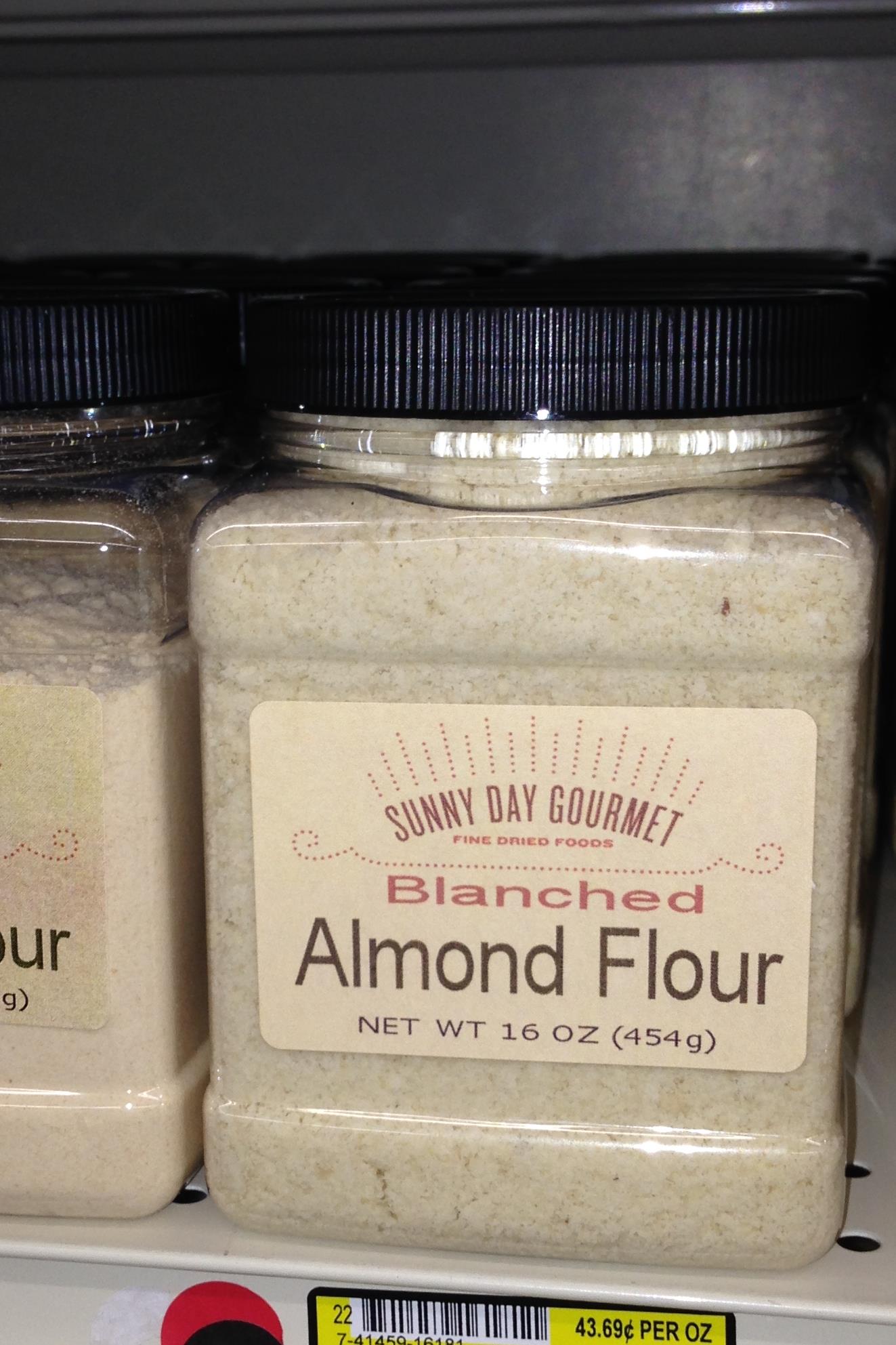
1. Swap wheat-based flour with almond flour/meal


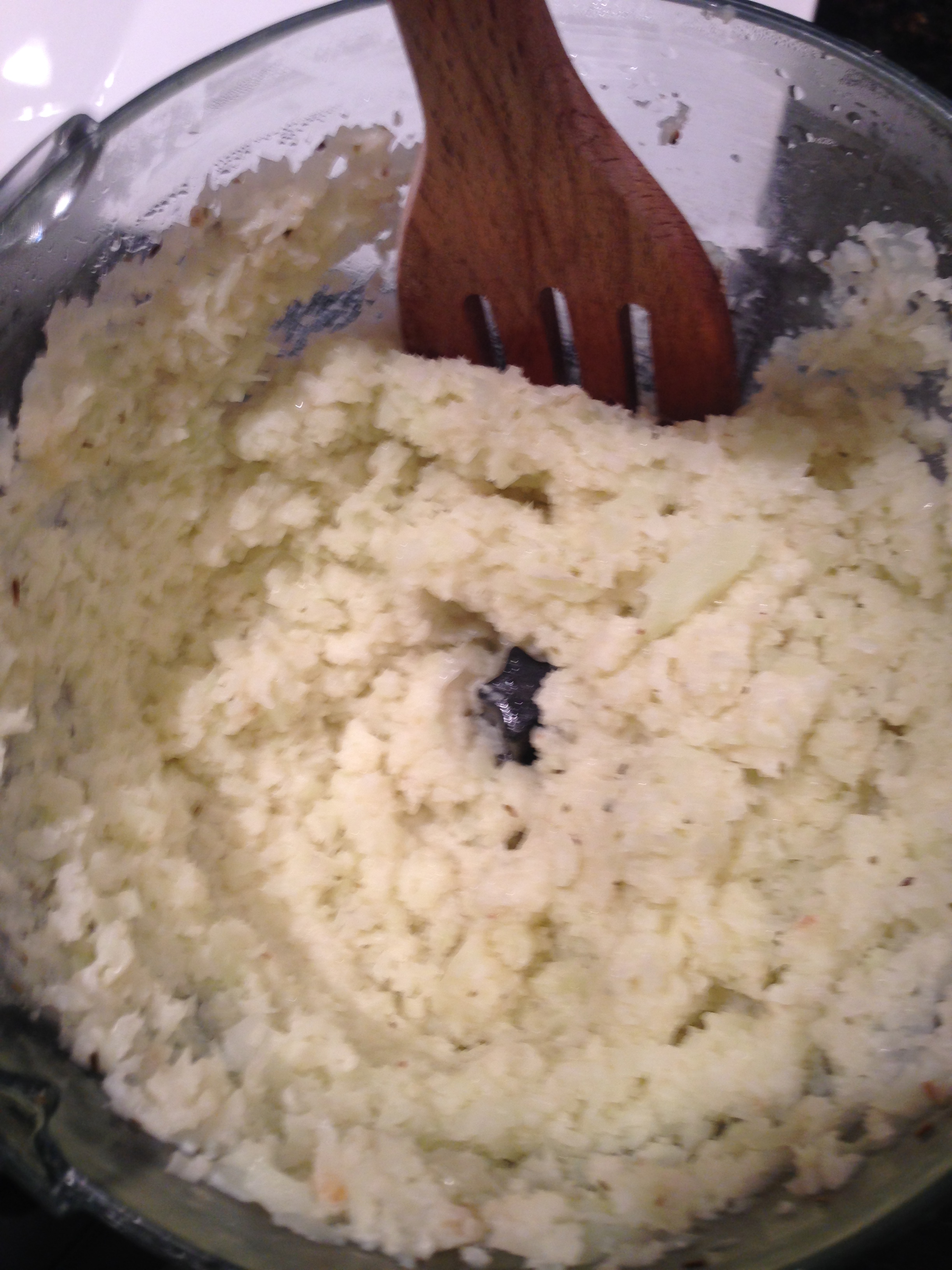
2. Swap potatoes and rice for cauliflower

3. Swap pasta for shirataki noodles and zucchini


Lisa Grudzielanek, MS,RDN,CD,CDE
Cureality Nutrition Specialist

Not so fast. Don’t make this mistake when going gluten free!

Beginning last month, the Food and Drug Administration began implementing its definition of “gluten-free” on packaged food labels.  The FDA determined that packaged food labeled gluten free (or similar claims such as "free of gluten") cannot contain more than 20 parts per million of gluten.

It has been years in the making for the FDA to define what “gluten free” means and hold food manufactures accountable, with respect to food labeling.  However, the story does not end there.

Yes, finding gluten-free food, that is now properly labeled, has become easier. So much so the market for gluten-free foods tops $6 billion last year.   However, finding truly healthy, commercially prepared, grain-free foods is still challenging.

A very common mistake made when jumping into the gluten-free lifestyle is piling everything labeled gluten-free in the shopping cart.  We don’t want to replace a problem: wheat, with another problem: gluten free products.

Typically gluten free products are made with rice flour (and brown rice flour), tapioca starch, cornstarch, and potato flour.  Of the few foods that raise blood sugar higher than wheat, these dried, powdered starches top the list.

 They provide a large surface area for digestion, thereby leading to sky-high blood sugar and all the consequences such as diabetes, hypertension, cataracts, arthritis, and heart disease. These products should be consumed very rarely consumed, if at all.  As Dr. Davis has stated, “100% gluten-free usually means 100% awful!”

There is an ugly side to the gluten-free boom taking place.  The Cureality approach to wellness recommends selecting gluten-free products wisely.  Do not making this misguided mistake and instead aim for elimination of ALL grains, as all seeds of grasses are related to wheat and therefore overlap in many effects.

Lisa Grudzielanek MS, RDN, CD, CDE
Cureality Health & Nutrition Coach

3 Foods to Add to Your Next Grocery List

Looking for some new foods to add to your diet? Look no further. Reach for these three mealtime superstars to encourage a leaner, healthier body.

Microgreens

Microgreens are simply the shoots of salad greens and herbs that are harvested just after the first leaves have developed, or in about 2 weeks.  Microgreen are not sprouts. Sprouts are germinated, in other words, sprouted seeds produced entirely in water. Microgreens are grown in soil, thereby absorbing the nutrients from the soil.

The nutritional profile of each microgreen depends greatly on the type of microgreen you are eating. Researchers found red cabbage microgreens had 40 times more vitamin E and six times more vitamin C than mature red cabbage. Cilantro microgreens had three times more beta-carotene than mature cilantro.

A few popular varieties of microgreens are arugula, kale, radish, pea, and watercress. Flavor can vary from mild to a more intense or spicy mix depending on the microgreens.  They can be added to salads, soup, omelets, stir fry and in place of lettuce.  

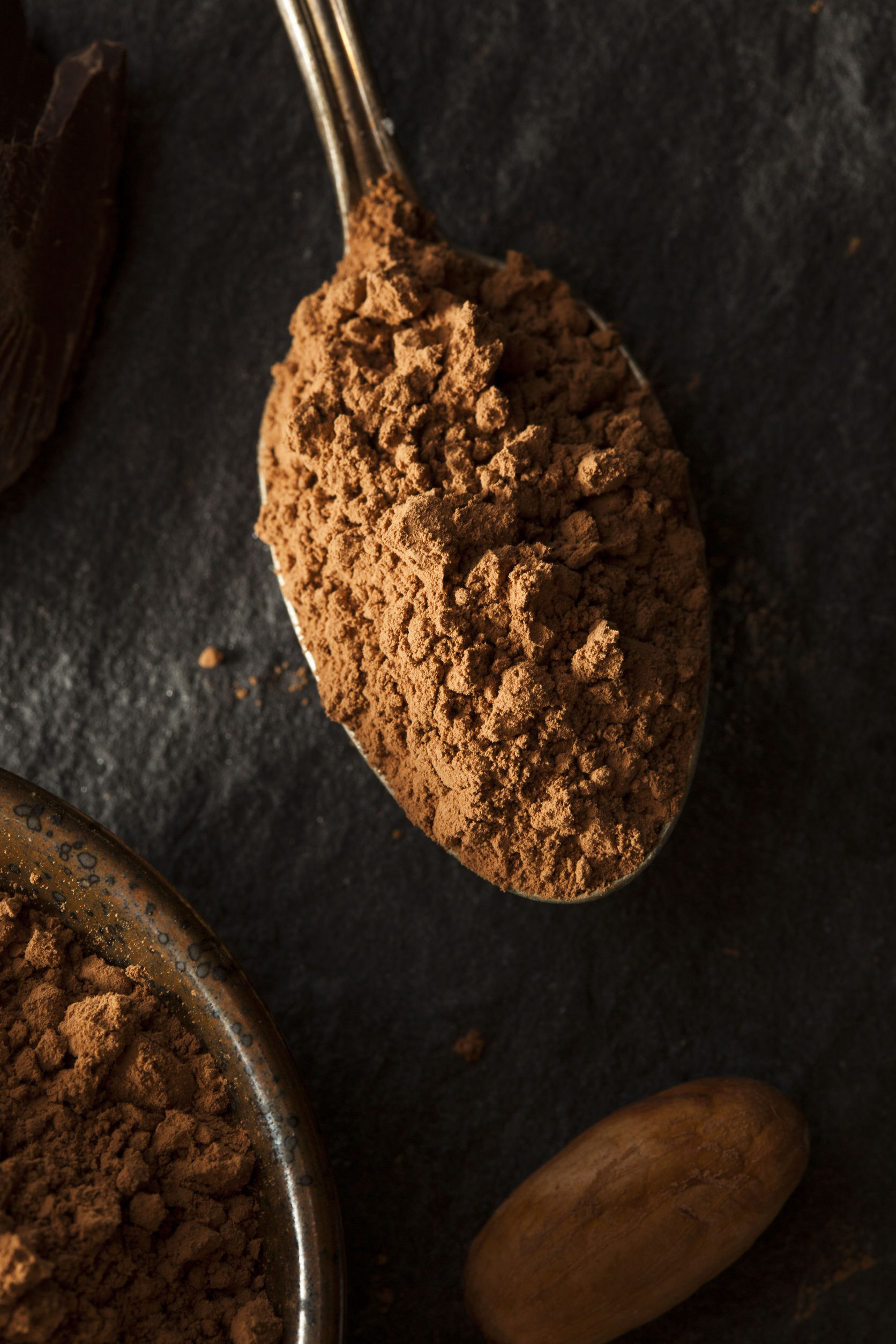
Cacao Powder

Cocoa and cacao are close enough in flavor not to make any difference. However, raw cacao powder has 3.6 times the antioxidant activity of roasted cocoa powder.  In short, raw cacao powder is definitely the healthiest, most beneficial of the powders, followed by 100% unsweetened cocoa.

Cacao has more antioxidant flavonoids than blueberries, red wine and black and green teas.  Cacao is one of the highest sources of magnesium, a great source of iron and vitamin C, as well as a good source of fiber for healthy bowel function.
Add cacao powder to milk for chocolate milk or real hot chocolate.  Consider adding to coffee for a little mocha magic or sprinkle on berries and yogurt.


Shallots


Shallots have a better nutrition profile than onions. On a weight per weight basis, they have more anti-oxidants, minerals, and vitamins than onions. Shallots have a milder, less pungent taste than onions, so people who do not care for onions may enjoy shallots.

Like onions, sulfur compounds in shallot are necessary for liver detoxification pathways.  The sulfur compound, allicin has been shown to be beneficial in reducing cholesterol.  Allicin is also noted to have anti-bacterial, anti-viral, and anti-fungal activities.

Diced then up and add to salads, on top of a bun less hamburger, soups, stews, or sauces.  Toss in an omelet or sauté to enhance a piece of chicken or steak, really the possibilities are endless.  

Lisa Grudzielanek,MS,RDN,CD,CDE
Cureality Nutrition & Health Coach

3 Band Exercises for Great Glutes

Bands and buns are a great combination.  (When I talk about glutes or a butt, I use the word buns)  When it comes to sculpting better buns, grab a band.   Bands are great for home workouts, at gym or when you travel.  Check out these 3 amazing exercises that will have your buns burning. 

Band Step Out

Grab a band and place it under the arch of each foot.  Then cross the band and rest your hands in your hip sockets.  The exercise starts with your feet hip width apart and weight in the heels.  Slightly bend the knees and step your right foot out to the side.  Step back in so that your foot is back in the starting position.  With each step, make sure your toes point straight ahead.  The tighter you pull the band, the more resistance you will have.    You will feel this exercise on the outside of your hips. 

Start with one set of 15 repetitions with each foot.  Work on increasing to 25 repetitions on each side and doing two to three sets.


Band Kick Back

This exercise is performed in the quadruped position with your knees under hips and hands under your shoulders.    Take the loop end of the band and put it around your right foot and place the two handles or ends of the band under your hands.  Without moving your body, kick your right leg straight back.  Return to the starting quadruped position.  Adjust the tension of the band to increase or decrease the difficulty of this exercise. 

Start with one set of 10 repetitions with each foot.  Work on increasing to 20 repetitions on each side and doing two to three sets. 


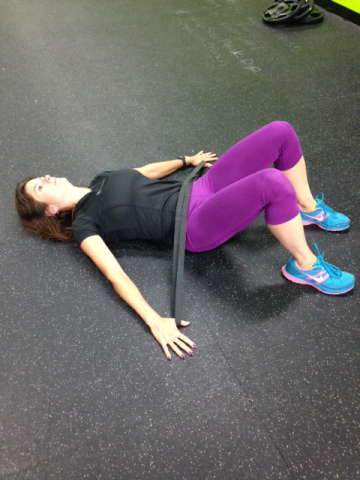
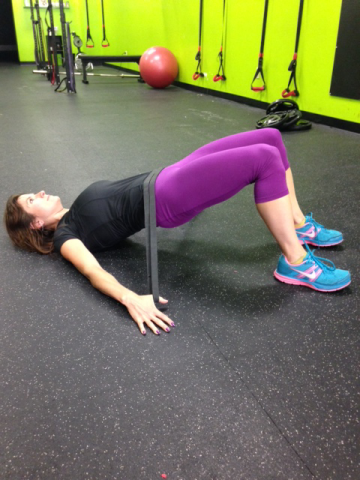
Band Resisted Hip Bridge

Start lying on your back with feet hip distance apart and knees bent at about a 45-degree angle.  Adjust your hips to a neutral position to alleviate any arching in your lower back.  Place the band across your hipbones.  Hold the band down with hands along the sides of your body.  Contract your abs and squeeze your glutes to lift your hips up off the ground.  Stop when your thighs, hips and stomach are in a straight line.  Lower you hips back down to the ground. 

Start with one set of 15 repetitions.  Work on increasing to 25 repetitions and doing two to three.  Another variation of this exercise is to hold the hip bridge position.  Start with a 30 second hold and work up to holding for 60 seconds.
Heart attack guaranteed

What if you knew for a fact that your risk for heart attack was 100% by, say, age 58? This is indeed true for many people, though at age 60, 65, 70--or 45.

In other words, unless something were done about the causes of heart disease, you would inevitably suffer a heart attack at 58.

What sort of action could you take at age 45?

Obviously, not smoking is an absolute requirement. Continue and you may as well start getting your affairs together.

How about exercising and eating a generally healthy diet? Will your risk be reduced to zero? No. It might be reduced 20-30%, depending on genetic factors.

How about a statin drug? Watch TV ads during Oprah, and you might think it's a cure. But in reality, while it is a financial bonanza for the drug manufacturers, it will reduce risk for heart attack by 30%.

(Note that risk reduction by following multiple strategies is not necessarily additive. In other words, if you have a healthy lifestyle and take a statin agent, is risk reduced 60% (30 + 30)? No, because the effects may overlap.)

So, eating healthy, exercising, and taking a statin drug might reduce risk 35-40%, maybe 50% in the best case scenario. Would you be satisfied? Most would not.

Add fish oil at a truly therapeutic dose. Risk reduction by itself: 28%.

Add niacin or other strategies for correction of your individual, specific causes of heart disease: Now we're up to 90% reduction.

Throw in a tracking process to prove whether or not atherosclerotic plaque has progressed or reversed. Now we're approaching 100% if plaque reverses. The only way I know how to track plaque is through CT heart scans. What other test is readily available to you with low radiation exposure, yet is relatively inexpensive and precise? It certainly is not stress testing, heart catheterization, CT angiograms, or other techniques. Cholesterol won't tell you. Besides CT heart scans, there's nothing else I know of.

Let's fact it: For many people, uncorrected risk for heart attack is truly 100% at some age. Take action while you can.

That, in a nutshell, is the Track Your Plaque program.

Heart scan curiosities 3


This is a sample image from the heart scan of a 54-year old, 212 lb, 5 ft 2 inch woman. The heart is the whitish-gray in the center; lungs are the dark (air-filled) areas on either side of the heart. Note the massive amount of surrounding gray tissues that encircles the heart and lungs. This is fat. At this weight, the diameter of total fat exceeds the combined diameter of the heart and lungs. If we were to show the abdomen, there would be even more fat. (The image shows the body not well centered because the technologist centers the heart, since this is, after all, a heart scan.)


This is a 55-year old, 151 lb, 5 ft 4 inch woman. Note the contrast in the quantity of fat tissue surrounding the chest, a much more normal appearance. Note that this woman is still around 25 lb over ideal weight, but not to the extreme degree of the woman above.

Another curious observation: Note the more whitish streaking in the heavier woman's lungs. Heart scans are performed while holding a deep inspiration (a deep breath inwards), mostly to eliminate lung respiratory motion during image acquisition. Nonetheless, the heavier woman's lungs are not as fully expanded as the more slender woman. In other words, the heavier woman cannot inflate her lungs as effectively as the thinner woman. Ever notice how breathless heavy people are? Some of this effect is just being out of shape. But there's also the added effect of the abdominal fat exerting upwards compression on the lung tissues, and the constrictive effect of the encircling fat mass. At the beginning of inspiration, the chest fat exerts the resistance of inertia to inspiration that is absent, or less, in a slender person. With each breath, the heavy woman must move 50 lbs or so of surrounding fat mass just to inhale.

The heavier woman is, in effect, suffocating herself in fat.

The distortions to the human body incurred by extreme weight gain are both fascinating and shocking. I hope you're breathing easily.

The shameful "standard of care"

John's initial heart scan four years ago showed a score of 329. His physician prescribed Zocor for a somewhat high LDL cholesterol.

One year later, John asked for another scan. His score: 385, a 17% increase. John exercised harder and cut his fat intake.

This past fall--3 years after his last scan--John had yet another heart scan. Score: 641, a 66% increase over the last scan, all the while on Zocor.

John sought an opinion from a reputable cardiologist. He concurred with the prescription of Zocor and advised annual stress tests. That's it.

Followers of the Track Your Plaque approach know that the expected uncorrected rate of increase in heart scan score is 30% per year. On Zocor or other cholesterol reducing statin agent, a common rate of growth is between 18-24% per year--better but not great. Plaque growth is certainly not stopped.

But that is the full extent of interest and responsibility of your cardiologist. Prescribe a statin drug, perform a stress test, and the full extent of his obligation has been fulfilled. In legal terms, your physician has met the prevailing
"standard of care". No more, no less.

In other words, the prevailing standard of care falls shamefully short of what is truly possible. For the majority of the motivated and interested, coronary plaque reversal--reduction of your heart scan score--should be the standard aimed for. It's not always achievable, but it is so vastly superior to the prescribe statin, wait for heart attack approach endorsed by most cardiologists.

Heart scan curiosities 2


This is an example of a so-called "hiatal hernia", meaning the stomach has migrated through the diaphragmatic hiatus into the chest--the stomach is literally in the chest. This example is an unusually large one. Hiatal hernias can cause chest pain, indigestion, and a variety of other gastrointestinal complaints. Heart scans are reasonably useful to screen for this disorder, though very small ones could escape detection by this method.

Sometimes, you can actually hear the gurgling of stomach contents (the common "growling" stomach) by listening to the chest. Large ones like this actually crowd your heart (the gray structure above the circled hernia), irritating it and even causing abnormal rhythm disorders. The dense dark material within the hernia represents lunch.

I would not advocate CT heart scans as a principal method to make a diagnosis, but sometimes it just pops up during a heart scan and we pass it on to the person scanned.

Vitamin D: New Miracle Drug

At the meetings of the American Society of Bone and Mineral Research, Dr. Bruce Troen of the University of Miami detailed his views on the extraordinary benefits of vitamin D replacement. He also talked about the enormous problem of unrecognized vitamin deficiency.

“There’s a huge epidemic of hypovitaminosis D, and the real key here is not just that it’ll benefit you from a bone and neuromuscular standpoint, but if you correct hypovitaminosis D and the corresponding secondary hyperparathyroidism, then you’re going to decrease prostate cancer, colon cancer—actually “up to 17 different cancers, breast cancer included.”

Unfortunately, Dr. Troen did not talk much about the heart benefits of vitamin D, likely since the data is scant, nearly non-existent. However, if the Track Your Plaque experience means anything, I predict that vitamin D replacement will become among the most powerful tools you can use to gain control over coronary plaque.

Read the text of a report from the Internal Medicine World Report to read more of Dr. Troen's comments.


http://www.imwr.com/article.php?s=IMWR/2006/11&p=40

Heart disease "reversal" by stress test


Here's an interesting example of a 71-year old man who achieved "reversal" of an abnormality by a nuclear stress test.

This man underwent bypass surgery around 10 years ago, two stents three years ago. A nuclear stress test in April, 2005 showed an area of poor blood flow in the front of the heart. On the images, normal blood flow is shown by the yellow/orange areas. poor or absent blood flow is shown by the blue/purple areas within the white outline.

Now, I can tell you that this man is no paragon of health. He's only accepted limited changes in his otherwise conventional program--in other words, someone who I'd be shocked achieved true reversal of his heart disease. (I didn't have him undergo any CT heart scans because of the difficulties in scoring someone who has undergone bypass surgery and stents, and because of limited motivation. True plaque reversal is for the motivated.)This patient did, however, accept adding fish oil and niacin to his program.

Nonetheless, stress testing can be helpful as a "safety check". Here's the follow-up stress test:
You'll notice that the blue/purple areas of poor blood flow have just about disappeared. This occurred without procedures.

Does this represent "reversal"? No, it does not. It does represent reversal of this phenomenon of poor flow. It does not represent reversal of the plaque lining the artery wall. That's because improvement of flow, as in this man, can be achieved with relatively easy efforts, e.g., improvement in diet, statin drugs, blood pressure control, etc. True reversal or reduction of coronary plaque, however, is tougher.

If blood flow is improved, who cares whether plaque shrinks? Does it still matter? It does. That's because the "event" that gets us in trouble is not progressive reduction in blood flow, but "rupture" of a plaque. A reduction in plaque--genuine reversal--is what slashes risk of plaque rupture.

Calcium reflects total plaque


People frequently ask, "Why measure coronary artery calcium? My doctor said that calcium only tells you if there's hard plaque, and that hard plaque is stable. He/she says that calcium doesn't tell you anything about soft plaque."

Is that true? Is calcium only a reflection of "hard" plaque? Is hard plaque also more stable, less prone to rupture and causes heart attack?

Actually, calcium is a means of measuring total plaque, both soft and hard. That's because calcium comprises 20% of total plaque volume. Within plaque, there may be areas that are soft (labeled "lipid pool" in the diagram). There are also areas made of calcium (shown in white arcs within the plaque). Even though this is just a graphic, it's representative of what is seen when we perform intracoronary ultrasound of a live human being's coronary artery. In other words, this cross section contains both "soft" (lipid pool) as well as "hard" (calcium) elements.

Is this artery "soft" or "hard"? It's both, of course. The artery compostion can vary millimeter by millimeter, having more soft or hard elements. The artery can also change over time in either direction. Thus, "soft" plaque may indeed be soft today, only to be "hard" in 6 months, and vice versa.

The essential point is that measuring just "soft" plaque provides limited information. What the CT heart scan does is provide a gauge of total plaque, soft and hard, and it does so easily, safely, precisely. If your score increases, the lengthwise volume of total plaque has also grown. If your score decreases, the total amount of plaque has also decreased.

Don't mistake marketing for truth

We're all so inundated with marketing messages for food. Unfortunately, many people confuse the messages delivered through marketing with the truth.

For instance:

Pork: "The other white meat." Pork is a high-saturated fat food.

"Bananas: A great source of potassium." Bananas are a high glycemic index (rapid sugar release), low fiber food.

"Pretzels: A low-fat snack." A high glycemic index food made from white wheat flour. It makes you fat and skyrockets blood sugar.

Jif peanut butter: "Choosy moms choose Jif." Do they also choose hydrogenated fats?

Hi-C: Upbeat jingles like "Who put the straw in my Hi-C fruit drink, a new cool straw that wriggles and bends? Who put the straw in my Hi-C fruit drink, with Vitamin C for me and my friends? Who was that man, I'd like to shake his hand, he made my Hi-C cooler than before!" What about the 25 grams of sugar per 4 oz serving? And the high fructose corn syrup that creates an insatiable sweet tooth, raises triglycrides 30%, and exagerates pre-diabetes?


Marketing is not reliable, unbiased information. If Ford boasts that their cars are superior to GM, do you say "Well then, I need to buy a Ford?" Of course not. Take marketing for what it is: A method of persuading people to buy. It may or may not contain the truth. It's a big part of the reason Americans are the fattest people on earth and are experiencing an explosion of chronic diseases of excess.

Tattered Red Dress

"Are you taking your health to heart? Perhaps you understand the importance of eating a diet low in cholesterol or getting 30 minutes of exercise a day. But do you know your own risk of developing cardiovascular disease?


It’s time to take your heart health personally. Heart disease is the No. 1 killer of American women — and that means it is not “someone else’s problem.” As a woman, it’s your problem.

That’s where the Go Red Heart Checkup comes in. This comprehensive evaluation of your overall heart health can help you now and in the future. By knowing your numbers and assessing your risks now, you can work with your doctor to significantly reduce your chances of getting heart disease tomorrow, next year, or 30 years from now!"


So reads some of the materials promoted by the American Heart Association Red Dress campaign to increase awareness of heart disease in women. The effort is well-intended. There is no doubt that most women are unaware of just how common coronary disease is in females.

But I've got a problem with the solutions offered. "Know your numbers"? Eat healthy, don't be overweight, be active, don't smoke. That's the gist of the program's message--nothing new. In 2006, why would some sort of screening effort for detectin of heart disease not be part of the message? Why isn't there any message about the real, truly effective means to detect hidden heart disease in women--namely, heart scanning?

Does a 58-year old woman with normal blood pressure, LDL 144, HDL 51, 20 lbs overweight have hidden heart disease? I've said it before and I'll say it again: You can't tell from the numbers. She could die of a heart attack tomorrow without warning, or maybe she'll be dancing on our graves when she's 95 and never have experienced any manifestation of heart disease. The numbers will not tell you this.

I'm glad the American Heart Association has seen fit to invest its sponsors' money in a campaign to promote prevention. I wish they hadn't fallen so far short of a truly helpful message. Perhaps the sponsors (like Pfizer, maker of Lipitor) will benefit, anyway.

Panic in the streets

Several days ago, I wrote about a local prominent judge in my neighborhood who was unexpectedly found dead in bed of a heart attack at age 49.

As expected, I've received multiple calls from patients and physicians who want heart catheterizations. For instance, an internist I know called me in a panic. He asked that I perform a heart catheterization in a patient with a heart scan score of 768. I've been seeing this patient for about a year. He's without symptoms, even with strenuous exercise; stress tests (i.e., tests of coronary bloow flow) have been normal.

I remind patients and colleagues every day, day in day out: Having a heart scan score revealing some measure of coronary plaque is not a sufficient reason by itself to proceed with procedures. Fear of suffering a fate like the unfortunate judge is also not a reason to proceed with procedures.

Increased awareness of the gravity of heart disease is a good thing. Some good can come out of a needless tragedy like this. The lesson from the judge's unfortunate experience: he needed a CT heart scan. I'm told that the judge's doctor advised him that a heart scan was a waste of time. I hope that appropriate legal action for negligence is taken by the judge's family against this physician.

Not doing a heart scan is wrong. That's the lesson to learn. The lesson is not that everybody with coronary plaque needs a procedure. Had the judge undergone a simple heart scan, intensified prevention could have been instituted and he'd still be alive with his wife and children today.

The indications for procedures are unchanged by your heart scan. If a stress test is abnormal and indicates poor flow to a part of the heart, that would be a reason. If symptoms like chest discomfort or breathlessness appear, that's an indication. If there's evidence of poor heart muscle contraction, that's a reason to proceed with a procedure. But just having coronary plaque is not a sufficient reason.