biofeedback to reduce anxiety, heart rate, and blood pressure, and achieve a sense of well-being that does not involve drugs, side-effects, or even much cost.

Biofeedback simply means that you are tracking some observable physiologic phenomenon—heart rate, skin temperature, blood pressure—and trying to consciously access control over it. One very successful method is that of bringing the beat-to-beat variation in heart rate into synchrony with the respiratory cycle. In day-to-day life, the heart beat is usually completely out of sync with respiration. Bring it into synchrony and interesting things happen: you experience a feeling of peace and calm, while many healthy phenomena develop.

A company called HeartMath has applied this principle through their personal computer-driven device that plugs into the USB port of your computer and monitors your heart rate with a device clipped on your earlobe. You then regulate breathing and follow the instructions provided and feedback is obtained on whether you are achieving synchrony, or what they call “coherence.” As the user becomes more effective in achieving coherence over time, positive physiological and emotional effects develop. HeartMath has been shown, for instance, to reduce systolic and diastolic blood pressure, morning cortisol levels (a stress hormone), and helps people deal with chronic pain. Downside of the HeartMath process: a $249 price tag for the earlobe-USB device.

But this is the age of emerging smartphone apps, including those applied to health. Smartphone apps are perfect for health monitoring. They are especially changing how we engage in biofeedback. An app called Breathe Sync is available that tracks heart rate using the camera’s flash on the phone. By tracking heart rate and providing visual instruction on breathing pattern, the program generates a Wellness Quotient, WQ, similar to HeartMath’s coherence scoring system. Difference: Breathe Sync is portable and a heck of a lot less costly. I paid $9.99, more than I’ve paid for any other mainstream smartphone application, but a bargain compared to the HeartMath device cost.

One glitch is that you need to not be running any other programs in the background, such as your GPS, else you will have pauses in the Breathe Sync program, negating the value of your WQ. Beyond this, the app functions reliably and can help you achieve the health goals of biofeedback with so much less hassle and greater effectiveness than the older methods.

If you are looking for a biofeedback system that provides advantage in gaining control over metabolic health, while also providing a wonderful method of relaxation, Breathe Sync, I believe, is the go-to app right now.

Amber’s Top 35 Health and Fitness Tips
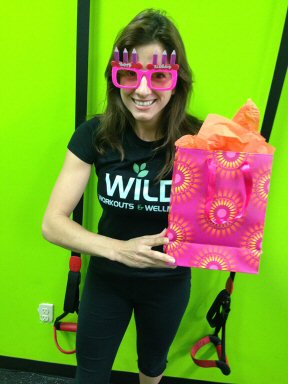
This year I joined the 35 club!  And in honor of being fabulous and 35, I want to share 35 health and fitness tips with you! 

1.  Foam rolling is for everyone and should be done daily. 
2.  Cold showers are the best way to wake up and burn more body fat. 
3.  Stop locking your knees.  This will lead to lower back pain. 
4.  Avoid eating gluten at all costs. 
5.  Breath deep so that you can feel the sides or your lower back expand. 
6.  Swing a kettlebell for a stronger and great looking backside. 
7.  Fat is where it’s at!  Enjoy butter, ghee, coconut oil, palm oil, duck fat and many other fabulous saturated fats. 
8.  Don’t let your grip strength fade with age.  Farmer carries, kettlebells and hanging from a bar will help with that. 
9.  Runners, keep your long runs slow and easy and keep your interval runs hard.  Don’t fall in the chronic cardio range. 
10.  Drink high quality spring or reverse osmosis water. 
11.  Use high quality sea salt season food and as a mineral supplement. 
12.  Work your squat so that your butt can get down to the ground.  Can you sit in this position? How long?
13.  Lift heavy weights!  We were made for manual work,.   Simulate heavy labor in the weight room. 
14.  Meditate daily.  If you don’t go within, you will go with out.  We need quiet restorative time to balance the stress in our life. 
15.  Stand up and move for 10 minutes for every hour your sit at your computer. 
16. Eat a variety of whole, real foods. 
17.  Sleep 7 to 9 hours every night. 
18.  Pull ups are my favorite exercise.  Get a home pull up bar to practice. 
19.  Get out and spend a few minutes in nature.  Appreciate the world around you while taking in fresh air and natural beauty. 
20.  We all need to pull more in our workouts.  Add more pulling movements horizontally and vertically. 
21. Surround yourself with health minded people. 
22. Keep your room dark for deep sound sleep.  A sleep mask is great for that! 
23. Use chemical free cosmetics.  Your skin is the largest organ of your body and all chemicals will absorb into your blood stream. 
24. Unilateral movements will help improve symmetrical strength. 
25. Become more playful.  We take life too seriously, becoming stress and overwhelmed.  How can you play, smile and laugh more often?
26.  Choose foods that have one ingredient.  Keep your diet simple and clean. 
27.  Keep your joints mobile as you age.  Do exercises that take joints through a full range of motion. 
28. Go to sleep no later than 10:30pm.  This allows your body and brain to repair through the night. 
29. Take care of your health and needs before others.  This allows you to be the best spouse, parent, coworker, and person on the planet. 
30.  Always start your daily with a high fat, high protein meal.  This will encourage less sugar cravings later in the day. 
31. Approach the day with positive thinking!  Stinkin’ thinkin’ only leads to more stress and frustration. 
32. You are never “too old” to do something.  Stay young at heart and keep fitness a priority as the years go by. 
33. Dream big and go for it. 
34.  Lift weights 2 to 4 times every week.  Strong is the new sexy. 
35.  Love.  Love yourself unconditionally.  Love your life and live it to the fullest.  Love others compassionately. 

Amber B.
Cureality Exercise and Fitness Coach
All posts by william-davis

Diet by LDL

Conventional notions of heart healthy diets, such as that advocated by the American Heart Association, are largely based on observations of total and LDL cholesterol.

So, cut the saturated fat in the diet, cut the overall fat content, and replace them with polyunsaturated oils like safflower, corn, and vegetable oils and increase consumption of whole grains and total and LDL cholesterol show a modest downturn. Thus, diets like the American Heart Association Total Lifestyle Change approach advocate limiting total fat to no more 25 to 35% of calories and saturated fat to no more than 7% of calories.

Orange Cream Cookies

If you loved Creamsicles as a kid, you'll love these Orange Cream Cookies. (Sorry, no photo: We ate them up before I realized we hadn't taken the photo. And, worse, we did it twice!)

Ingredients:
2 cups almond meal
2 tablespoons coconut flour
1 teaspoon baking soda
½ teaspoon sea salt
¼ cup golden raisins
½ cup chopped pecans
Sweetener equivalent to 1 cup sugar
2 tablespoons finely-grated orange rind
1 large egg
2 tablespoons coconut oil, melted
½ cup whipping cream (or coconut milk)
1 tablespoon vanilla extract

Preheat oven to 350º F.

Combine almond meal, coconut flour, baking soda, salt, raisins, pecans, sweetener and orange zest in bowl and mix.

In separate bowl, whisk egg, then add coconut oil, whipping cream, vanilla extract and mix together. Pour wet mix into dry and blend by hanin insulin with much lower carbohydrate foods, insulin release is subdued and allows the body to release fat.

1. Swap wheat-based flour with almond flour/meal

  • One of the most dubious grain offenders is modern wheat. Replace wheat flour with naturally wheat-free, lower carbohydrate almond flour.  
  • Almond flour contains a mere 12 net carbs per cup (carbohydrate minus the fiber) with 50% more filling protein than all-purpose flour.
  • Almond flour and almond meal also offer vitamin E, an important antioxidant to support immune function.

2. Swap potatoes and rice for cauliflower

  • Replace high carb potatoes and pasta with vitamin C packed cauliflower, which has an inconsequential 3 carbs per cup.  
  • Try this food swap: blend raw cauliflower in food processor to make “rice”. (A hand held grater can also be used).  Sautee the “riced” cauliflower in olive or coconut oil for 5 minutes with seasoning to taste.
  • Another food swap: enjoy mashed cauliflower in place of potatoes.  Cook cauliflower. Place in food processor with ½ a stick organic, grass-fed butter, ½ a package full-fat cream cheese and blend until smooth. Add optional minced garlic, chives or other herbs such as rosemary.
3. Swap pasta for shirataki noodles and zucchini

  • Swap out carb-rich white pasta containing 43 carbs per cup with Shirataki noodles that contain a few carbs per package. Shirataki noodles are made from konjac or yam root and are found in refrigerated section of supermarkets.
  • Another swap: zucchini contains about 4 carbs per cup. Make your own grain free, low-carb noodles from zucchini using a julienne peeler, mandolin or one of the various noodle tools on the market.  

Lisa Grudzielanek, MS,RDN,CD,CDE
Cureality Nutrition Specialist

Not so fast. Don’t make this mistake when going gluten free!

Beginning last month, the Food and Drug Administration began implementing its definition of “gluten-free” on packaged food labels.  The FDA determined that packaged food labeled gluten free (or similar claims such as "free of gluten") cannot contain more than 20 parts per million of gluten.

It has been years in the making for the FDA to define what “gluten free” means and hold food manufactures accountable, with respect to food labeling.  However, the story does not end there.

Yes, finding gluten-free food, that is now properly labeled, has become easier. So much so the market for gluten-free foods tops $6 billion last year.   However, finding truly healthy, commercially prepared, grain-free foods is still challenging.

A very common mistake made when jumping into the gluten-free lifestyle is piling everything labeled gluten-free in the shopping cart.  We don’t want to replace a problem: wheat, with another problem: gluten free products.

Typically gluten free products are made with rice flour (and brown rice flour), tapioca starch, cornstarch, and potato flour.  Of the few foods that raise blood sugar higher than wheat, these dried, powdered starches top the list.

 They provide a large surface area for digestion, thereby leading to sky-high blood sugar and all the consequences such as diabetes, hypertension, cataracts, arthritis, and heart disease. These products should be consumed very rarely consumed, if at all.  As Dr. Davis has stated, “100% gluten-free usually means 100% awful!”

There is an ugly side to the gluten-free boom taking place.  The Cureality approach to wellness recommends selecting gluten-free products wisely.  Do not making this misguided mistake and instead aim for elimination of ALL grains, as all seeds of grasses are related to wheat and therefore overlap in many effects.

Lisa Grudzielanek MS, RDN, CD, CDE
Cureality Health & Nutrition Coach

3 Foods to Add to Your Next Grocery List

Looking for some new foods to add to your diet? Look no further. Reach for these three mealtime superstars to encourage a leaner, healthier body.

Microgreens

Microgreens are simply the shoots of salad greens and herbs that are harvested just after the first leaves have developed, or in about 2 weeks.  Microgreen are not sprouts. Sprouts are germinated, in other words, sprouted seeds produced entirely in water. Microgreens are grown in soil, thereby absorbing the nutrients from the soil.

The nutritional profile of each microgreen depends greatly on the type of microgreen you are eating. Researchers found red cabbage microgreens had 40 times more vitamin E and six times more vitamin C than mature red cabbage. Cilantro microgreens had three times more beta-carotene than mature cilantro.

A few popular varieties of microgreens are arugula, kale, radish, pea, and watercress. Flavor can vary from mild to a more intense or spicy mix depending on the microgreens.  They can be added to salads, soup, omelets, stir fry and in place of lettuce.  

Cacao Powder

Cocoa and cacao are close enough in flavor not to make any difference. However, raw cacao powder has 3.6 times the antioxidant activity of roasted cocoa powder.  In short, raw cacao powder is definitely the healthiest, most beneficial of the powders, followed by 100% unsweetened cocoa.

Cacao has more antioxidant flavonoids than blueberries, red wine and black and green teas.  Cacao is one of the highest sources of magnesium, a great source of iron and vitamin C, as well as a good source of fiber for healthy bowel function.
Add cacao powder to milk for chocolate milk or real hot chocolate.  Consider adding to coffee for a little mocha magic or sprinkle on berries and yogurt.


Shallots


Shallots have a better nutrition profile than onions. On a weight per weight basis, they have more anti-oxidants, minerals, and vitamins than onions. Shallots have a milder, less pungent taste than onions, so people who do not care for onions may enjoy shallots.

Like onions, sulfur compounds in shallot are necessary for liver detoxification pathways.  The sulfur compound, allicin has been shown to be beneficial in reducing cholesterol.  Allicin is also noted to have anti-bacterial, anti-viral, and anti-fungal activities.

Diced then up and add to salads, on top of a bun less hamburger, soups, stews, or sauces.  Toss in an omelet or sauté to enhance a piece of chicken or steak, really the possibilities are endless.  

Lisa Grudzielanek,MS,RDN,CD,CDE
Cureality Nutrition & Health Coach

3 Band Exercises for Great Glutes

Bands and buns are a great combination.  (When I talk about glutes or a butt, I use the word buns)  When it comes to sculpting better buns, grab a band.   Bands are great for home workouts, at gym or when you travel.  Check out these 3 amazing exercises that will have your buns burning. 

Band Step Out

Grab a band and place it under the arch of each foot.  Then cross the band and rest your hands in your hip sockets.  The exercise starts with your feet hip width apart and weight in the heels.  Slightly bend the knees and step your right foot out to the side.  Step back in so that your foot is back in the starting position.  With each step, make sure your toes point straight ahead.  The tighter you pull the band, the more resistance you will have.    You will feel this exercise on the outside of your hips. 

Start with one set of 15 repetitions with each foot.  Work on increasing to 25 repetitions on each side and doing two to three sets.


Band Kick Back

This exercise is performed in the quadruped position with your knees under hips and hands under your shoulders.    Take the loop end of the band and put it around your right foot and place the two handles or ends of the band under your hands.  Without moving your body, kick your right leg straight back.  Return to the starting quadruped position.  Adjust the tension of the band to increase or decrease the difficulty of this exercise. 

Start with one set of 10 repetitions with each foot.  Work on increasing to 20 repetitions on each side and doing two to three sets. 


Band Resisted Hip Bridge

Start lying on your back with feet hip distance apart and knees bent at about a 45-degree angle.  Adjust your hips to a neutral position to alleviate any arching in your lower back.  Place the band across your hipbones.  Hold the band down with hands along the sides of your body.  Contract your abs and squeeze your glutes to lift your hips up off the ground.  Stop when your thighs, hips and stomach are in a straight line.  Lower you hips back down to the ground. 

Start with one set of 15 repetitions.  Work on increasing to 25 repetitions and doing two to three.  Another variation of this exercise is to hold the hip bridge position.  Start with a 30 second hold and work up to holding for 60 seconds.

Copyright © 2026 Cureality.com

I've seen a few heart attacks this past year . . . but none in the people who follow this program.

I saw a heart attack in a priest, a wonderful man who was unable to say "no" to his parishioners who insisted on bringing pies, cakes, and cookies every day.

I saw an impending heart attack in a 74-year old man, a football coach who thought the whole wheat-free, low-carb thing was some wacko trend. Four stents later, he's changed his mind.

A 69-year old woman had to be hospitalized for heart failure due to partial closure of an artery. She repeatedly told me that she simply could not follow the diet because it was "too restrictive."

There were a few others. Interestingly, all felt they were eating healthy, minimizing junk foods and avoiding fatty foods. None were wheat-free nor restricted carbohydrates.

In other words, in the people who follow the basic advice of the Track Your Plaque program to do such simple things as eliminate wheat, don't indulge in junk carbohydrates, normalize vitamin D status, supplement omega-3 fatty acids, supplement iodine and correct any thyroid dysfunction . . . well, they have no heart attacks.

Diet is superior to drugs

Might-o’chondri-AL left this wonderful record of his lipoprotein experience in the comments to the last Heart Scan Blog post. It is a great example of what is achievable with diet and a few supplements . . . without drugs.


(A) Jan. 2011 1st ever NMR lipo-protein analysis was done after 4 months of consistent home food prep of pretty low fat (only olive oil and 1 tablespoon coconut oil daily) but plenty of whole wheat and half potatoes:
* LDL # of particles (P) = 1,676 in nmol/L————being a LDL cholesterol (C) reading of 139 mg/dL
* small LDL # P = 1,021 nmol/L —————yikes! you advise smLDL be less than 117 nmol/L
* HDL # of particles = 28.8 umol/L ————–being a HDL C reading of 45 mg/dL
* Triglycerides = 90 mg/dL ————– true, I never struggled with my weight

(B) May 2011 2nd NMR after another 4 months but added in more fat (1 teaspoon highly concentrated fish oil daily, 90% chocolate, handfulls of nuts, more olive oil and kept coconut oil at 1 tablespoon daily for a controlled experiment), added 500 mg Niacin 3 times a day (in stages up to1,500 mg. total daily), 6000 IU daily vitamin D, deliberately cut out all grains except for social politeness and substituted in daily Koji fermented brown rice (rustic Amazake):
** LDL # P……………= 976 nmol/L ——————————– being LDL C of 100 mg/dL
** small LDL # P …. = 96 nmol/L ——————————– nice surprise
** HDL # P ………… = 27.3 umol/L ——————————being an increase to HDL C of 64 mg/dL
** Triglycerides …… = 42 mg/dL ——————————– despite daily carbs over 150 gr. daily

(C) Dec. 2011 3rd NMR after another 7 more months thinking Doc’s advice is worthwhile I added in yet more fat (mainly daily 2 tablespoons of coconut oil, more 90% chocolate), bumped Niacin up to 1,000 mg twice a day (2,000 mg. total daily), cut out the Amazake, kept up the vitamin D adding daily vitamin K & daily ate main mid-day meal out as lunch on spicy Thai & Chinese fish/shrimp/soup/rice meals (my next control):
*** LDL # P ………. = 764 nmol/L ————— being LDL C of 107 mg/dL ( 2x coconut’s saturated fat)
***small LDL # P… = less than 90 nmol/L ——–surprised me NMR can’t count lower
***HDL # P ……… = 41.4 umol/L ——————– being an increase to HDL C of 88 mg/dL
*** Triglycerides ….= 43 mg/dL ——————- daily carbs below ~ 120 gr. & lost too much weight

Isn't that great? Spectacular job, Might!

MIght achieved values that are superior to that achievable with, say, a high-dose statin strategy. Statins only reduce total LDL particles, reducing small LDL in a non-selective way. And, of course, this diet does not cause muscle aches, memory loss, nor liver problems.

Something to consider: As the diet has become so effective, we can reduce our reliance on niacin. In fact, the benefits of niacin diminish substantially, as small LDL is reduced, HDL increased, triglycerides decreased, and postprandial lipoproteins subdued with the diet only.

Low-carb is heart healthy

Anybody following the discussions in these pages know that: Limiting carbohydrate intake reduces risk for coronary heart disease and heart attack.

First of all, why do conventional diets advocate restricting saturated and total fat? From the standpoint of surrogate markers of cardiovascular risk, cutting saturated and total fat reduces total cholesterol; reduces calculated LDL cholesterol; and may reduce c-reactive protein modestly (an index of inflammation). It also increases blood sugar and HbA1c (reflecting the prior 60 days blood sugars), increases glycation of the proteins of the body leading to cataracts, arthritis, and hypertension.

Problem: Total cholesterol is a combination of HDL cholesterol, an estimate of VLDL cholesterol (triglycerides), and LDL cholesterol. It is a composite of both "good" things (HDL) and "bad" things (LDL and VLDL). Cutting saturated and total fat results in reduced HDL, increased VLDL/triglycerides, and a reduction in calculated LDL. Pretty weak stuff. The last item, i.e., reduction in calculated LDL, is not even a real phenomenon. In fact, the net effect in most genotypes (genetic types) may be negative: increased heart disease risk.

In contrast, what is the effect of reducing carbohydrate without restricting fat? (In the approach I use, we start with elimination of the most destructive of carbohydrates, wheat, followed by reducing exposure to other carbohydrates, especially cornstarch and corn products, sugar, and oats.) If, say, we cut carbohydrate intake into the range of a truly low-carbohydrate diet of 10-15 grams per meal ("net" carbs, or total carbohydrates minus fiber), then we witness a number of metabolic transformations:

Reduced fasting triglycerides and VLDL
Reduced postprandial (after-eating) triglycerides, chylomicrons, and chylomicron remnants
Increased HDL and shift towards large HDL particles (presumably more protective)
Reduced small LDL particles
Reduced glycation and oxidation of small LDL particles
Reduced hemoglobin A1c
Reduced c-reactive protein and other inflammatory markers
Reduced blood pressure

By slashing carbohydrates, we also witness weight loss from visceral fat, reversal of pre-diabetes and diabetes, and reduced phenomena of glycation. And, if the wheat-free part of low-carb is maintained, you can also see marked improvement in gastrointestinal health, relief from joint pains, relief from leg edema, relief from migraine headaches, improved behavior and ability to concentrate in children with impaired learning, ADHD, and autism, better mood, deeper sleep. You will see multiple inflammatory and autoimmune diseases improve or completely relieved, such as rheumatoid arthritis and ulcerative colitis.

Having personally gone down the diabetic path and back by cutting the fat in my diet, now maintaining a HbA1c of 4.8% with fasting glucose 84 mg/d; (without medications), there should be no remaining doubt: Low-carb diets, especially if wheat-free, dramatically reduce the factors leading to heart disease; low-fat diets worsen the factors leading to heart disease.

Mocha Walnut Brownies

Richer than a cookie, heavier than a muffin, brownies are ordinarily an indulgence that leaves you ashamed of your lack of restraint. Have one . .  . or two or three, and you will surely pack on a pound of belly fat.

But these mocha walnut brownies, as with other recipes I provide, will not pack on the pounds. With no wheat to trigger appetite, nor any readily-digestible carbohydrate to generate blood sugar highs and lows, you can have a nice brownie or two or three and nothing bad happens: You don’t send blood sugar sky-high, don’t trigger formation of small LDL particles and triglycerides, you don’t trigger appetite, you don’t gain a pound of belly fat. You simply have your brownie(s) and enjoy them.

Serve these brownies plain or topped with cream cheese, natural peanut or almond butter, or dipped in coffee.


Ingredients:
8 ounces unsweetened baking chocolate (100% chocolate)
4 tablespoons coconut oil or butter, melted
2 large eggs, separated
½ cup coconut milk (or sour cream)
2 teaspoons vanilla extract
2 cups ground almonds
2 tablespoons coconut flour
1 cup chopped walnuts
¼ cup unsweetened cocoa powder
2 teaspoons instant espresso
Sweetener equivalent to 1 cup sugar or to taste (e.g., liquid stevia, Truvía, erythritol)


Preheat oven to 350º F.

Melt chocolate using double boiler method or in 15-second increments in microwave. Stir in melted coconut oil or butter.

In small bowl, beat egg whites until frothy. Add egg whites, egg yolks, coconut milk, and vanilla extract to chocolate mixture and mix thoroughly by hand.

In separate bowl, combine ground almonds, coconut flour, walnuts, cocoa powder, espresso, and sweetener. Mix thoroughly.

Add dry mix to chocolate mix and mix together thoroughly. If dough is too stiff, add additional coconut milk, one tablespoon at a time.

Place mixture in 9-inch baking pan and bake for 25 -30 minutes or until toothpick withdraws dry.