4 Tips to Boost Kids Veggie Intake


Vegetables are arguably the most important food group, the key to any healthy diet. They are one of the most nutrient dense food groups and serve the foundation to healthy meals and snacks. A frequent comment from people enjoying the Cureality way of eating is, “I am eating more vegetables than I ever have in my life!”

This is great because plentiful consumption is associated with decreased heart disease, reduced weight, lower blood pressure, glowing skin and decreased risk of some cancers. However, perhaps you’re reading this and feeling great that you eat your veggies but struggle to get your kids to do the same. If you are a parent, who is simply trying to provide nutritious options to your kids, give these tips a try.

1. Add cheese or butter to enhance flavor and increase the absorption of fat soluble vitamins A, D, E and K. Younger kids like to dip foods, so often pairing with a dip, such as hummus, can increase intake.

2. Try the “rule of 15” — putting a food on the table at least 15 times to see if a child will accept it. Don’t give up after a few attempts. This can indeed be frustrating, but have patience and continue to offer a small portion to expose children to veggies without forcing intake. Often parents feel like it’s their job to just make their children eat something. I suspect most children will always select apple pie over an apple. It is important to set the stage, at an early age, with what is offered. In addition, being a good food model is important. You can’t expect your child to try broccoli, if you make negative comments about its taste, texture or smell.

3. Once a food is accepted, parents should use “food bridges,” finding similarly colored or flavored foods to expand the variety of foods a child will eat. If a child likes pumpkin pie, for instance, try mashed sweet potatoes and then mashed carrots. If a child loves corn, try mixing in a few peas or carrots. Even if a child picks them out, the exposure to the new food is what counts.

4. Allow children to engage, as able. When grocery shopping or offering a snack, ask your child which option they would like to eat (e.g. ask which healthy foods they would prefer, blueberries or strawberries, cucumbers or carrots, etc.). When children are included in more food decisions it can decrease resistance. Include children in age appropriate preparation, as well, for example cutting produce, making a vegetable soup, or selecting produce at the grocery store.

Lisa Grudzielanek, MS, RDN, CD, CDE
Cureality Nutrition Coach

How Can I Lose Weight Eating Fat?


For new comers to the Cureality nutrition approach, this question may invariably pop up. For many years, fats and oils, whether classified as good or bad, were demonized because they contain 9 calories per gram. Meaning, they contain more than twice the 4 calories per gram of carbohydrate or protein.

So this familiar logic stated, if you eat less fat, which by default meant more carbohydrate, you would eat fewer calories and lose weight. This misguided logic was based on the assumption that caloric density was the primary reason people either gained or lost weight. The result - obesity rates have climbed and low-fat diet recommendations have proven unsuccessful in thwarting the battle of the bulge.

Why? There are a multitude of reasons, as discussed in the Cureality Diet Track. The following two explanations are important to to avoid needlessly suffering on a low-fat diet.

1) Appetite satiation is drive by insulin response, not calorie density.

Meals that trigger a substantial insulin response trigger increased appetite and fat storage. Carbohydrates, such as whole grain bread, whole wheat waffles, and fruit juice trigger insulin release. Continuous insulin provocation equates to one heck of a time trying to lose weight, as insulin is a fat-storage hormone. In comparison, oils and fats are the least insulin provoking with protein a close second. Consuming adequate fat intake is essential to quench appetite and avoid the insulin surges and crashes that are the result of eating plenty of “healthy whole grains”.

2) Modern wheat increases appetite thereby increasing intake.

Portion control becomes a major challenge because the gliadin protein in modern wheat stimulates appetite to the tune of 400 calories more per day, 365 days per year. That’s a recipe for weight gain, not loss.

The Cureality nutrition approach encourages the generous use of healthy fats and oils to support healthy weight loss and cardiovascular health. These topics are discussed in much more detail in the Cureality Member Forum.

Lisa Grudzielanek, MS, RDN, CD, CDE
Cureality Nutrition Coach

Condition Afflicts Millions: Do you have “YBS”?

After one of the harshest winters, spring has finally arrived.  The welcomed warmer temperatures and longer daylight hours infuse us with a sense of renewal and new beginnings.   Low and behold we begin to come out of hibernation and start the mad dash to engage in positive lifestyle changes such as eating better, exercising, proper sleep and taking appropriate nutritional supplements.  But invariably, life happens.  

Yep, just when you were about to get started, it happens.  YBS sets in.   I see this “condition” all too often with clients attempting to enter or re-enter into any number of behavior changes.  I will go so far as to say we all have been afflicted at one point or another in our lives.  I call this condition Yeah But Syndrome, or “YBS”.    It is often paralyzing and prevents those afflicted from moving into action, instead remaining in a state of inertia.  

There are many symptoms of YBS but the following are some of the most common.  

• Yeah I planned to go to the gym today BUT, the kids needed a ride to practice.  
• Yeah I really want to eat better BUT I don’t have the time.   
• Yeah I didn’t plan to eat the cake BUT my husband wanted too, so I did also.   
• Yeah I really meant to go to the grocery shopping BUT I was too tired, so I hit the drive- thru.  
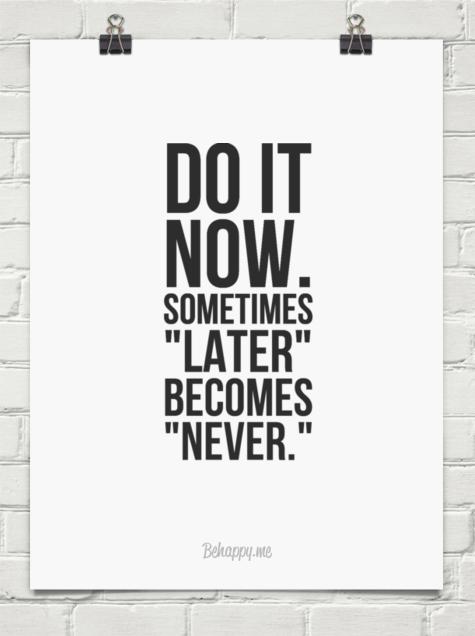
• Or this is a good one. Yeah I meant to start today BUT, I’ll start tomorrow.  

But tomorrow never comes.  You get the drift.  We can all come up with a million yeah buts, in other words, excuses.    The good news is the treatment for YBS is simple--just do it!  Take action.  The reality of today’s 24-7 planet is there will always be something.  The kids, work commitments, family obligations and various projects that need your attention will perpetually be present in some shape or form.  The difference to make the difference is to learn to dance in the rain, not wait for the rain to pass.  When will all the stars align so that your world will be “just right” to start?  If not NOW, WHEN will you begin?  

The key word here is begin.   Far too frequently, I coach clients that shoot themselves in the foot before they start.   Instead of consuming yourself with all the barriers to entry, select reasonable, low-hanging fruit that is “doable.”    The art of lifestyle change is to avoid all-or-nothing thinking and begin to appreciate what you CAN do, versus focusing energy on what you can’t do.  What is one action you can do TODAY to move toward your wellness goal(s)?  Start to focus on what you can do in the mist of your existing life demands. This mantra is a friendly reminder: BE-DO-HAVE.  Be committed.  Do what it takes.  And you will have results.  

Lastly, if you think removing cereal from your morning routine it is too difficult and you can’t do it. Guess what-- you’re likely right.   What you think is what you get!   But what if you think instead, “I can do this.  There are many truly healthy options for breakfast to replace cereal such as eggs and veggies that will help me look and feel my best.”  Then guess what--you will!  This simple change in mind-set can start a tidal wave of change and prevent you from abandoning ship when life tosses you into rough waters.  Ongoing support is hugely important to sustain lifestyle changes.  Join the conversations in the Cureality Forum to engage the support of health coaches and Cureality Members to stay on track. 

Is it mainstream or alternative?

A question I get about once a week: "Is your program a kind of alternative medicine?"

Our program for control and reversal of coronary plaque using CT heart scans applies an eclectic panel of tools to achieve its goals. We use high-tech methods like lipoprotein analysis and CT heart scans; nutritional supplements like fish oil, vitamin D, and l-arginine; diet strategies and "functional foods" (using foods as a therapeutic tool); and conventional medication.

I don't consider this approach "alternative" in the sense that it uses unmeasurable or spiritual strategies. But I don't consider it mainstream, either, since current mainstream practice of heart disease prevention is far less rigorous with far less satisfactory results.

I think I can sum up the Track Your Plaque approach by saying that we use tools that work. Our measure of success is whether or not your heart scan score is stopped or reduced--that's hard to fudge. You can call it what you will, but I call it the best program for heart disease prevention I know of, alternative or mainstream.

Want to see someone turn diabetic?

If you want to witness the transformation of someone into a pre-diabetic or diabetic, put them on a low fat diet.

Dr. Dean Ornish's program, detailed in his books, Dr. Dean Ornish's Program for Reversal of Heart Disease and Eat More, Weigh Less , are woefully outdated in 2006. Yet the low fat notion continues to show up in the consciousness of people I talk to about heart disease reversal.

"I'm already on a low fat diet. Do you think my heart scan score has reversed?"

Highly unlikely. What Dr. Ornish (as a non-cardiologist, by the way) failed to recognize is that what he did manage to reverse in a small number of people is something called "endothelial dysfunction", but he did not reverse or shrink coronary plaque.

Given the limitations of technology when the Ornish concept got its start, it appeared as if reversal was obtained. In reality, all his approach accomplished was a relaxation in tone of abnormally constricted arteries, thus giving the appearance of reversal. Increased artery tone, or endothelial dysfunction, is extremely common when atherosclerotic plaque is present.

Any cardiologist will tell you that there are many ways to reverse endothelial dysfunction: exercise, weight loss, cholesterol drugs, drugs for high blood pressure, fish oil, hormonal therapy, vitamin C, l-arginine, etc. There is nothing special about a low fat diet.

In fact, Track Your Plaque followers will recognize that a low fat diet is, in fact, potentially harmful, particularly when low HDL or small LDL is part of your pattern.

Let's bury the outdated ideas of the Ornish low fat diet once and for all. It doesn't work. All it may do is confuse you and set you back from your real coronary plaque reversal program.

Inulin: A fiber for weight loss

Here's an interesting product that seems to be gaining some popularity for weight loss: Inulin.

Not to be confused with "insulin", with which it is completely unrelated, inulin is a naturally-occurring plant fiber. It's found in broccoli, asparagus, celery, etc. Like beta-glucan from oats or pectin, inulin is a so-called soluble fiber, a fiber that assumes a gel-like consistency when exposed to water.

Inulin has the effect of increasing satiety, or the sensation of fullness. This cuts your craving for foods. I've tried it recently and I prefer it over glucomannan, another soluble fiber for satiety.

The people at Stonyfield Farms have been adding inulin to their yogurts from some time. The nutritionist at the company tells me that there's 2-3 grams of inulin per 6 ounce container of their yogurt.

You can also find inulin as a supplement that you can add to foods, available from some health food stores and online supplement companies. I came across a neat product called Fiber Choice that's now being distributed widely throughout the U.S. I tried their Weight Management version. It was a delicous strawberry taste. The label says take two chewable tablets twice a day, but I found that two tablets three times a day somewhat better. It's best taken around 30-60 minutes prior to each meal and it causes you to be fuller with less food. One caution: It'll cause loads of gas, especially in the beginning. For that reason, you might try starting with a smaller dose, or start on the weekends when you have the option of some privacy!

More info on the Fiber Choice product can be found at their website, http://www.fiberchoice.com.

Disclaimer: I have no relationship with the manufacturer of this product. I'm simply passing on some thoughts on my experience with this interesting possibility for weight loss.

Will you recognize the truth when you see it?

Do you ever wonder that, if the truth were given to you, that you'd recognize it as such? Or would you dismiss it as just another bunch of nonsense?

After all, you and I live in the Information Age. It means that we have access to mountains of information like never before in human history. But it also means that the truth is often drowned out by an avalanche of mis-truths, sales pitches and marketing, and just plain nonsense.

This struck me the other day when I was talking to a patient.

64 years old with a high heart scan score placing her at significant risk, she looked confused. I'd just described the multitude of causes of coronary plaque that we'd uncovered. The heart scan alone had been a shocker.

"I don't understand. My doctor told me that I had nothing to worry about. I've known him for years and he knows me really well. He did a stress test. That was fine. I don't get all this other stuff you're telling me--lipoprotein whatever..."

Despite my efforts to help her gain an understanding of our intensive approach, she just became increasingly more frustrated. "I just don't think I can do this."

That's the last I've heard from her. As far as I know, she's returned to the comfort of her family doctor who has reassured her over the years. And perhaps there's some good in that. But I do fear for the day when, unexpectedly, she suffers some catastrophe that we told her was coming sooner or later unless real preventive efforts were started.

You could say that she failed to recognize the truth when it was given to her-- boldly, unadorned, and with far greater scientific certainty than the casual reassurances she was accustomed to. But, unfortunately, that's all that some people want.

Don't neglect the basics in your heart disease reversal program

Carl loved new ideas and novel approaches. You could tell by the sheer number of nutritional supplements he took. His list had grown to 18 different supplements over the past two years.

Carl came to me for coronary plaque regression. Lipoprotein analysis did uncover several previously unsuspected abnormalties, most notably small LDL particles and lipoprotein(a). In addition, Carl's LDL cholesterol ranged between 111 mg-156 mg and he was clearly hypertensive, with systolic blood pressures consistently around 150-160. (Recall that people with Lp(a) are more prone to hypertension.)

Carl was more than willing to have his lipoprotein(a) reduced. We did so with niacin and testosterone and the level dropped to near zero. Likewise, we corrected his small LDL pattern with niacin, fish oil, and a reduction in processed carbohydrates.

But Carl really resisted doing much about his LDL cholesterol and high blood pressure. I got the sense that these "boring" issues simply didn't interest him. After all, LDL cholesterol and blood pressure were the stuff of TV commercials and the popular conversation propagated by drug companies.

Carl's follow-up heart scan, however, finally persuaded him: a 24% increase in one year, likely due to the neglect of the basic issues.

I liken Carl's case to being like the teenager with a new car who polishes the paint to a bright finish, puts new wheels and tires on it, spruces up the interior with various doodads--but then fails to change the oil. Sometimes it's the most basic issues that can diminish your success.

Issues like LDL cholesterol and high blood pressure aren't the most glamorous, but they do count in your coronary plaque control program.

Is your doctor a hospital employee?

There's a disturbing trend that's growing--silently but rapidly.

In Milwaukee, three hospital systems compete for the local health care dollar. To gain more control over revenues and the routing of patients, the hospitals are aggressively hiring physicians to work for them. I've witnessed many of my cardiology colleagues, primary care doctors, and a substantial number of procedural specialists enticed by the offers made by hospital employers.

This phenomenon is not unique to Milwaukee but is being used in many, perhaps most, major cities in the U.S.

This means that physicians are employees of the hospital. That way, employee-physicians are obliged to use only the hospital system that employs them. In the old days, your doctor could use any hospital he/she desired, depending on the quality, location, facilities, etc. Now, many physician-employees are given no choice but to use the hospital that pays their salary.

That by itself is not necessarily bad. But combine salary with incentives for bringing in patients for hospitalization and procedures--that the rub. In other words, physician-employees are incentivized to generate more revenue for the system, just as employees in many other industries.

If you're a salesman for an insurance company, your job is to bring in more business. If you're a worker on an auto production line, you're expected to meet certain quotas. These same principles are now being applied to many physicians.

How does this affect you? Well, if your physician--especially procedure-driven specialists like cardiologists, general surgeons, orthopedists, etc.--is a hospital employee, BEWARE! Do you really need that procedure, or is your doctor suggesting you have a procedure because it will add to his track record?

Prevention? In this model of health care, why bother? It certainly doesn't pay for a hospital to keep you well. Then why should your physician-employee?

Be careful who you're dealing with. If your physician is a hospital-employee, don't bet on getting preventive care. It's more likely you're that just a future source of revenue when it's time for your bypass operation, hip replacement, carotid endarterectomy, etc.

What more powerful argument is there for increased self-empowerment and information for health care consumers?

Take a walking vacation

If you're planning a vacation, why not consider a walking vacation?

The concept is really taking off. All you need is a pair of comfortable shoes and an interesting locale. More and more services are popping up to help you plan fun and interesting destinations and itineraries. One such catalog can be found at http://walking.about.com/od/tours/a/walkingvacation_3.htm

Lengthier walks may require some advance planning and toting some supplies. Don't forget the water!

From a health viewpoint, a walking vacation sure beats the heck out of a cruise that packs on 12 pounds of extra weight from the 24-hour a day buffet. If you're in the midst of a weight loss effort, several hours of walking through interesting locales and scenery can make it effortless.

There's loads of neat places to visit from a walker's perspective. One interesting website is www.waterfallwalks.com that lists trails that provide spectacular views of waterfalls.

Another variation on this theme is biking vacations. My wife and I are trying to set the time aside for a biking tour of wineries in the French countryside. That's our kind of multi-tasking!

"Expanded indications for implantable defibrillators"

So reads the headline on a magazine I received recently (along with thousands of my colleagues) from a major hospital system.

It goes on to say: "In January 2005, indications for implantable cardioverter-defibrillators (ICDs) were substantially broadened [emphasis ours] to include most patients with a left ventricular ejection fraction (EF) of 35% or less. This change translates into a 2- to 3-fold increase in the number of Medicare beneficiariries eligible for ICDs."

Ka-ching!!! Hear the money piling up in the bank?

The device manufacturers are constantly churning data and lobbying for reimbursement to expand the use of their devices to more and more people. Defibrillators in particularly are generally a $25,000 to $50,000 opportunity for the device manufacturer alone, not counting the costs incurred at the hospital for implantation.

Beware. As reimbursement for stents and other procedures diminishes, expect a sudden "demand" for more and more people to get implantable defibrillators. Better yet, stay away from the whole issue by preventing your heart attack.

Get a heart scan--but then don't delay taking action!

I just came from one of the local hospitals after having performed a heart catheterization on a patient I met earlier this week.

Jack had gotten a heart scan a year ago with a score of 246, placing him in the 76th percentile. The "event" rate with this percentile rank is around 3% per year--not very high but enough to pose risk over a long period.

Jack chose to ignore his score. After all, the pressures of work at the University, maintaining his home and yard, etc. consumed all his energies. He came to my office--now one year after his scan--and told me about the chest pressure he was getting. Initially, his chest pains occurred with extended walking. In the past week, however, Jack was experiencing chest pressure with just walking 30 feet.

This pattern of increasing symptoms is called "accelerated angina", meaning that Jack was rapidly heading towards a heart attack. So I advised a heart catheterization in near future.

Jack's catheterization showed extensive plaque including a 50% blockage in the mainstem artery and 90% in the artery to the front of the heart (left anterior descending artery). Jack is going to have a bypass operation tomorrow.

What if Jack hadn't ignored his heart scan from a year ago? Well, I'd be very confident in saying that he would not be undergoing bypass surgery tomorrow.

The lesson: Don't dilly-dally on taking action to keep your plaque from growing. While it's not an emergency, it can easily become one if you choose to ignore your scan.

Feel that nudge in your back?

You feel that nudge in your back? That's your local hospitals competing for your bypass surgery business.

Just this morning while watching a morning news show, I saw three advertisements for hospital bypass surgery programs. One ad featured a man in his 50s telling his story:"The cardiologist determined immediately that I needed a triple bypass operation. My family and I are very grateful to _____ hospital!"

In what other field is failure celebrated so prominently? When I see these ads, I hear "My doctors failed to provide early detection and then prevent what became a life-threatening condition, even though heart disease is a chronic process that requires decades to develop." What if our man said instead,"I had a heart scan and my score was high. So I was shown why I had so much plaque. They then showed me how to control and even reduce the amount of plaque I had. I'm living safely and symptom-free without need for surgery or procedures."

Of course, the hospital is out $60,000-100,000 for the surgery. How else could they afford ad campaigns costing several million dollars a year? See these advertisements for what they are: Marketing generated by profit-seeking businesses competing for your dollars--lots of them.