ity="67" SemiHidden="false" UnhideWhenUsed="false" Name="Medium Grid 1 Accent 2">

Sit Less and Move More.



We sit way too much. Many of us have desk jobs where we sit for 8 to 9 hours a day. After we leave the office, we sit in our car to run errands. We follow that by sitting down to eat dinner. Our day ends by sitting on the couch to unwind by watching some television.

Many of us will be sitting a good 12 to 15 hours each and every day. Unfortunately the research shows that long hours of sitting can lead to obesity, heart disease, diabetes, and even early death. Don’t be fooled that your workout is enough movement. You can still be active and sedentary.

How can you add more movement to your day? First, think about all the times you find yourself sitting during the day. Then come up with a creative way that you can get out of the seat and move your feet.

Here are a couple of examples:

Instead of driving everywhere, jump on your bike. The picture above is of the bike I use to go to work or run errands. Bike riding is great exercise, greener transportation and a great stress relief.

We spend a lot of time at work sitting in front of the computer or the phone. Prop your laptop on a bookshelf to create a standing workstation. You can also purchase a sit-stand workstation you can adjust throughout the day. Get a headset and stand during phone calls.

Walk during your lunch break. Walk to the coffee shop, the mailbox, and the dry cleaners. Get your errands done on foot or just enjoy a stroll outside.

Take a movement break every hour. Do some desk push-ups, squats or walk the stairs. Need to communicate with a coworker? Don't email, walk over and talk to them.

Human beings are meant to move, not sit in chairs all day. I want to challenge you to incorporate more movement into your day. I'd love to read your comments how you move more and sit less.


Have You Had Your Prebiotics Today?


Prebiotics and resistant starch may be the missing link to your digestive health. Indigestible fibers that allow healthy bowel flora to proliferate and thrive are often called prebiotics. They are also known as resistant starches, because they are resistant to human digestion. I recently had a client call the addition of resistance starch to her diet, “the missing link my body needed”.

A starch that resists digestion and reaches the large intestine becomes food for the healthy bacteria in the large intestine. These bacteria can break down and “feed on” the resistant starch thus providing the friendly bacteria with the fuel they need to survive.

Imbalance of the quantity and type of bacteria species present in the gut contributes to gastrointestinal illness, blood sugar imbalance, obesity, mood disorders, and immune system challenges.

Green unripe bananas and plantains are one of best sources for prebiotic fiber content with 27 to 30 grams of fiber in one medium banana. Green bananas are essentially inedible. They are most easily incorporated into diet by blending into a smoothie.

One mistake frequently made incorporating prebiotic fibers from bananas is consuming bananas that are too ripe. Once the banana ripens the resistant starch is degraded and become a digestible starch. Thus, no longer a good prebiotic fiber source. In fact, the riper the banana becomes the higher the glycemic (blood sugar) response.

It can be difficult to find bananas that are very green. I made several trips to my local grocery store to find these bowel flora champions. I find it helpful to ask the produce clerk to take a look at the shipment that just arrived, noting the day the shipment arrives, for the best chance to gobble up these green beauties.

In an effort to keep green bananas green I tried a few strategies. One that sounded promising was wrapping the end of the banana to prevent the ethylene gas, which ripens the fruit, from dissipating. You can see from the image this clearly did not work. After a mere two days the green bananas were no longer green. What I found works best is placing the green bananas in the fridge. This halts the ripening process. The skin of the banana will turn brown, which is normal, but the fruit inside is still good. I’ve kept bananas in my fridge for up to 8 days and they hold up well other than the brownish black discoloring that develops on the skin. The banana will be firm and require a knife to cut the skin off the banana.

If you’d like to learn more about prebiotics and strategies to support resolution of common gastrointestinal complaints read the recently release Cureality Guide to Healthy Bowel Flora by Dr. Davis. This guide is one of the many valuable resources available exclusively to Cureality.com members.
---Lisa Grudzielanek, MS, RDN,CD,CDE
Cureality Nutrition Specialist

Something is Better Than Nothing


This past weekend I attended a fitness conference with an amazing lineup of presenters. Even after 11 years in the fitness industry, I love attending these events. I’m a lifetime student always learning more and honing my craft.

I went to a presentation by Al Vermeil about joint mobility, not knowing anything about him. To my surprise, Al was the strength and conditioning coach for the Chicago Bulls and the San Francisco 49ers the years these teams won championships in their respective sports. That’s a pretty impressive resume.

Al was a great presenter, full of fun and practical advice. During his presentation, Al said the following statement:

“Every time you miss a workout, the next one is easier to miss.”

This statement really hit home because I’ve seen this time and time again working in the fitness industry and in my own life. One workout is missed, then an entire week of workouts are missed, then it’s been an entire month of never setting foot back into the gym.

It’s easy to get thrown off your workout routine when life gets busy and days get long. So what do you do? Do you just trash your workout plan?

The all or nothing attitude is common when it comes to making health changes. Either you’re following your plan 100% or you not. I’m here to tell you that doing something is better than nothing. Doing part of your workout or a mini workout is better than missing an entire workout.

The other day I had the choice to do something or nothing. I had a full day of work meetings, video, and family commitments. Here is what happened. I did shorter variation of my joint mobility routine. I followed that with a quick kettlebell circuit of 25 kettlebell swings, 12 kettlebell overhead presses, and 12 kettlebell goblet squats. I did three rounds of this circuit. That’s it! The following day, I got back to my regular exercise routine.

Be consistent with movement and you’ll always see improvements. That’s the magic of exercise. You'll get better if you just do it.

What’s the Problem with My “Healthy” Bowl of Oatmeal?


Food manufacturers have clever ways to market foods to us. Unfortunately, many foods that have a reputation for being healthy are no more than junk food disguised as a healthy food choice. I commonly see people under the influence of a “health halo” effect. This is due to strategic marketing efforts. People overestimate the nutritional value of a food that is labeled “good for you” or they underestimate the negative impact of a food because it contains a healthful ingredient, like flaxseed or fiber. In fact, a recent study from the University of Houston found that terms on food labels such as antioxidants, all-natural, and gluten-free often are used to give an otherwise standard food a "healthy" halo, and influence consumption from the well- intended consumer.

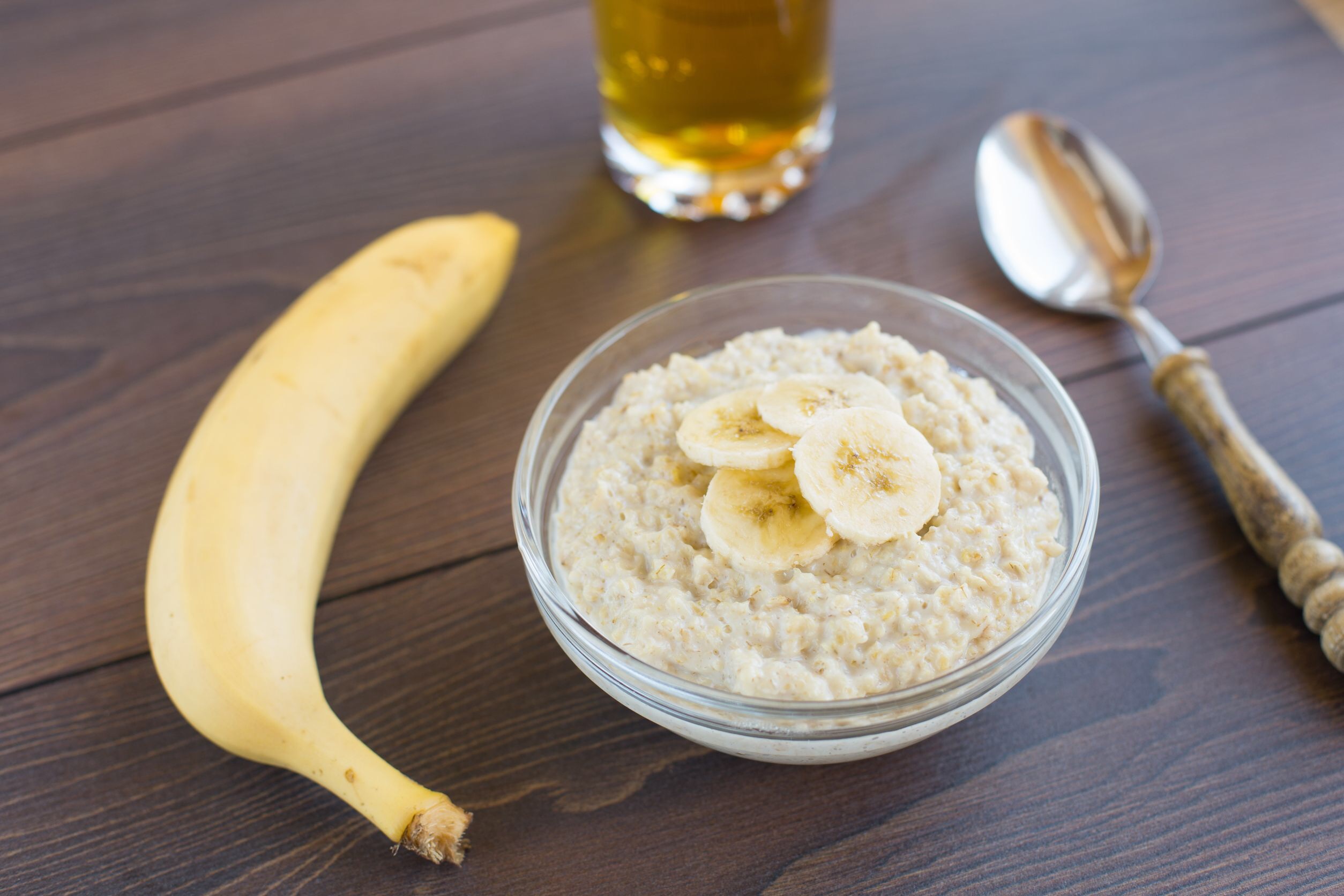
Case in point-- oatmeal. We’ve all heard about the cholesterol lower benefits from soluble fiber contained in oatmeal. It’s blasted all over packages with a paid endorsement from The American Heart Association. However, that’s not the whole story. Most people enjoy a cup of oatmeal with one to two tablespoons of added sugar and fruit such as a ripe, yellow banana. In other words, let’s enjoy a bowl of “send my blood sugar through the roof” high glycemic oatmeal. The glycemic index of oatmeal is 55, and instant oatmeal is 83. Top that with more table sugar, glycemic index 58-65 and better yet top that with a high glycemic, ripe banana with a GI of 62.

Preparing one packet of regular instant oatmeal with one tablespoon of sugar and a medium ripe banana five days per week would result in the sugar equivalent of more than 5 1/2 cups of sugar per month!

Furthermore, the story many Americans are missing is all of that sugar intake, from their so-called “healthy” bowl of oatmeal, actually raises small-dense LDL cholesterol particles, increases blood sugar and contributes to insulin resistance, faulty gut flora, and belly fat.

How do we improve upon our bowl of oatmeal? Enjoy a bowl of hot coconut flaxseed cereal, eggs any variety of ways, or last night’s leftover salmon and vegetables.

The Cureality program provides tools, guidance, and support that does not follow the party line but rather offers nutrition solutions that address the underlying causes for proliferation of many chronic diseases.

Power in Numbers


In his book, The Wisdom of Crowds, author James Surowiecki begins with the story of an ox judging competition in which 800 people—not ox experts nor breeders, just ordinary people attending a county fair—were asked to guess the weight of the ox. The competition was conducted by a scientist, Francis Galton, who held a low opinion of the intelligence of the average person, remarking that “the stupidity and wrong-headedness of many men and women being so great as to be scarcely credible.” He hoped to prove, by examining the various guesses, that the average person had no idea of how to judge the real answer. After all participants casted their written votes, Galton tallied up the total and averaged the result: 1,197 pounds—just one pound off from the real weight of 1,198 pounds. Few individuals actually guessed the correct weight themselves but, when the opinions of many were combined, the result was near-perfect.

Crowds can also be a source of irrational behavior, panic, and stampede. Witness any modern football or soccer game, for instance, in which fights break out over an issue as minor as a disputed call or a heckle. Or go back through history to the countless events when mass hysteria ruled, such as the Salem Witch Trials or Orson Welles’ War of the Worlds radio broadcast.

Let’s put aside examples of mass emotional chaos of the sort that causes crowds to stampede store doors on Black Friday. Let’s focus instead on conscious, considered, thoughtful opinions. We all accept that there are as many opinions on issues as there are people, not uncommonly with widely divergent views. But can we, as Galton’s famous experiment did, combine the opinions of many and come away with some fruitful insight—the correct answer? Just as the people participating in Galton’s experiment were not experts, so Cureality participants—a crowd-sourced collection of opinions—are not experts. If we were to poll everyone to identify their area of expertise or experience, it would likely include finance, the retail industry, raising children, or teaching—but not health. Yes, we have experts curating the direction of content, but we also crowd-source collective opinion.

Right now, Cureality is based on existing science, the philosophy of self-directed health, combined with guidance and community to help the participant along in the sometimes complex world of health questions. But as our processes and procedures improve, can we—like Galton’s ox weight guessers—come away with coalescent wisdom, answers to our health questions, near-perfect solutions to health conditions that have eluded the “experts” for centuries?

I think that we can. No, I know that we can. We enter a new age in information and harness the power of the crowd-sourcing of solutions, even when no single individual has the complete answer herself.

Use This Trick to Boost Exercise Motivation


Are you been struggling to get your workouts in? 

Do you belong to a gym and find that you're not going?

Do you have exercise equipment sitting in your basement collecting dust because you find that you just can’t get yourself down there?

If you answered, “yes” to any of these questions you are not alone. Many people struggle with finding the motivation to exercise.

The problem here is that you have head trash going on. Head trash is that voice inside your head coming up with a million excuses that inhibit you from carving out a bit of time to take care of yourself.

Head trash will tell you that you’re too tired, even though a workout would give you a boost of energy.

Head trash will tell you that you’re too busy, even though you just spent a half hour on Facebook.

Head trash is barking at you to take care of others, even thought you know your health is important for you well being.

Head trash is a real conflict that can get in the way of our health and fitness goals. We start an exercise program with the intentions of a long-term commitment. But after the initial excitement wears off, we find our workouts occurring less frequently. Head trash begins to take over and soon we find ourselves not exercising at all.

Here is my secret for winning the battle over the head trash that keeps getting in way of your workouts. Tell yourself that you are only going to exercise for 10 minutes and evaluate if you want to continue. If you're truly too tired you can stop after 10 minutes. If you're truly too busy you can stop and move onto a task that needs your attention.

Making this deal with your mind that you are only going to exercise for 10 minutes seems reasonable. The head trash will become quite because your mind is convinced it has an out within 10 minutes.

I've used this 10-minute trick myself. I grind through the first few minutes, but then the magic happens. Once you hit the 10-minute mark your body takes over. Exercise feels amazing and your body is energized and enjoying the movement. You have tricked your mind to get over the hurdle of starting and now you’re in the exercise groove.

Try the 10-minute trick next time your head trash is getting in the way of your workout. You'll be amazed how your workout consistency improves.

The Track Your Plaque guide to getting grotesquely overweight

If you'd like to gain huge quantities of weight, here's a number of helpful tips:

1) Follow the advice of food manufacturers and eat the products they label "healthy", or "heart healthy", or "part of a nutritious breakfast" etc., like Shredded Wheat cereal, pretzels ("a low-fat snack"!), low- or non-fat salad dressings.

2) Cut your morning calorie intake by skipping breakfast.

3) Hang around with other heavy people. They will confirm that it's okay to be overweight.

4) Call walking your dog "exercise".

5) Get a sedentary desk job. Use your swivel desk chair to scoot about whenever possible, rather than getting up to do things.

6) Say "I've worked hard all week long. Weekends are for relaxing, not for physical activities. I deserve a rest."

7) Eat foods without thinking about it: Eat chips while watching football, eat while on the phone, daydream over the sink.

8) Eat to provide comfort when stressed.

9) Eat foods that have sentimental value, whether or not they're good for you: Freshly-baked cakes that remind you of Mom, Pop Tarts that you used to carry in your lunchbox when you were a kid, hot dogs just like Dad would buy at the baseball stadium.

10) Cut back on sleep and generate insatiable starch cravings.

11) Stack your shelves at home with great variety. That way, you'll always have something to suit your mood.

12) Say to your spouse: "It's none of your damn business what I eat! I'm a grown man/woman!" Prove it by over-indulging in obviously unhealthy foods.

13) Tell yourself that you're just too busy to pay attention to food choices. Just grab whatever you can out of a convenience store or vending machine.

See, it's easy! And that just a start.

Of course, I don't really want you to do any of these things. But if you see yourself in any of the above, and you're struggling with weight, you should seriously rethink your approach.

Your heart scan is just a "false positive"

I've seen this happen many times. Despite the great media exposure and the growing acceptance of my colleagues, heart scans still trigger wrong advice. I had another example in the office today.

Henry got a CT heart scan in 2004. His score: 574. In his mid-50s, this placed him in the 90th percentile, with a heart attack risk of 4% per year. Henry was advised to see a cardiologist.

The cardiologist advised Henry, "Oh, that's just a 'false positive'. It's not true. You don't have any heart disease. Sometimes calcium just accumulates on the outside of the arteries and gives you these misleading tests. I wish they'd stop doing them." He then proceeded to advise Henry that he needed a nuclear stress test every two years ($4000 each time, by the way). No attempt was made to question why his heart scan score was high, since the entire process was outright dismissed as nonsense.

I'm still shocked when I hear this, despite having heard these inane responses for the past decade. Of course, Henry's heart scan was not a false positive, it was a completely true positive. I'm grateful that nothing bad happened to Henry through two years of negligence, though his heart scan score is likely around 970, given the expected, untreated rate of increase of 30%.

The cardiologist did a grave disservice to Henry: He misled him due to his ignorance and lack of understanding. I wish Henry had asked the cardiologist whether he had read any of the thousands of studies now available validating CT heart scans. I doubt he's bothered to read more than the title. The cardiologist is lucky (as is Henry) that nothing bad happened in those two years.

Do false positives occur as the cardiologist suggested? They do, but they're very rare. There's a rare phenomenon of "medial calcification" that occurs in smokers and others, but it is quite unusual. >99% of the time, coronary calcium means you have coronary plaque--even if the doctor is too poorly informed to recognize it.

What's better than a heart scan?


Do you know what's better than a heart scan?

Two heart scans. No other method can provide better feedback on the results of your program.

Say you've made efforts to correct high LDL; lost weight to raise HDL and reduce small LDL; added soluble fibers, nuts, and dramatically reduced wheat products; take fish oil, vitamin D, and follow a flavonoid-rich diet. Has it worked?

After a year or so of your program, that's when another heart scan can give you invaluable feedback on whether it's been successful. I tell my patients that it's relatively easy to correct lipid and lipoprotein abnormalities. The difficult part is to know when it's good enough. Is your LDL of 67 mg/dl and HDL of 50 mg/dl good enough? Another heart scan score is the best way I know of to find out.

Variation in plaque growth differs hugely from one person to another, even at equivalent lipoprotein values. Why? Lots of reasons. Humans are inconsistent day to day. Lipoproteins, being a snapshot in time and not a cumulative value, change somewhat from day to day. There's also the possibility of unmeasured, unrecognized factors that influence coronary plaque growth. We may not be smart enough to identify these hidden factors yet. But your heart scan score will incorporate the effects of these hidden factors.

Ideally, we aim for zero growth in plaque (no change in score) or a reduction. But, particularly in the first year, 10% or less plaque growth is still a good result that predicts much reduced risk of heart attack. More than 20% per year and your program needs more work--or else you know what's ahead.

Lipids are snapshots in time; heart scans are cumulative

Let me paint a picture. It's fictional, though a very real portrait of how things truly happen in life.

Michael is an unsuspecting 40-year old man. He hasn't undergone any testing: no heart scan, no lipids or lipoproteins. But we have x-ray vision, and we can see what's going on inside of him. (We can't, of course, but we're just pretending.) Average build, average lifestyle habits, nothing extraordinary about him. His lipids/lipoproteins at age 40:

--LDL cholesterol 150 mg/dl
--HDL cholesterol 38 mg/dl
--Triglycerides 160 mg/dl
--Small LDL 70% of all LDL

At age 40, with this panel, his heart scan score is 100. That's high for a 40-year old male.

Fast forward 10 years. Michael is now 50 years old. Michael prides himself on the fact that, over the past 10 years, he's felt fine, hasn't gained a single pound, and remains as active at 50 as he did in 40. In other words, nothing has changed except that he's 10 years older. His lipids and lipoproteins:

--LDL cholesterol 150 mg/dl
--HDL cholesterol 38 mg/dl
--Triglycerides 160 mg/dl
--Small LDL 70% of all LDL

Some of you might correctly point out that just simple aging can cause some deterioration in lipids and lipoproteins, but we're going to ignore these relatively modest issues for now.)

Lipids and lipoproteins are, therefore, unchanged. Michael's heart scan score: 1380, or an approximate 30% annual increase in score. (Since Michael didn't know about his score, he took no corrective/preventive action.)

My point: If we were to make our judgment about Michael's heart disease risk by looking at lipids or lipoproteins, they would'nt tell us where he stood with regards to heart disease risk. His lipids and lipoproteins were, in fact, the same at age 50 as they were at age 40. That's because measures of risk like this are snapshots in time.

In contrast, the heart scan score reflects the cumulative effects of life and lipids/lipoproteins up until the day you got your scan.

Which measure do you think is a better gauge of heart attack risk? I think the answer's obvious.

The recognition of the metabolic syndrome as a distinct collection of factors that raise heart disease risk has been a great step forward in helping us understand many of the causes behind heart disease.

Curiously, there's not complete agreement on precisely how to define metabolic syndrome. The American Heart Association and the National Heart, Lung, and Blood Institute issued a concensus statement in 2005 that "defined" metabolic syndrome as anyone having any 3 of the 5 following signs:


Waist size 40 inches or greater in men; 35 inches or greater in women

Triglycerides 150 mg/dL or greater (or treatment for high triglycerides)

HDL-C <40 mg/dL in men; <50 mg/dL in women (or treatment for reduced HDL-C)

Blood Pressure >130 mmHg systolic; or >85 mmHg diastolic (or drug treatment for hypertension)

Glucose (fasting) >100 mg/dL (or drug treatment for elevated glucose)


Using this definition, it has become clear that meeting these criteria triple your risk of heart attack.

But can you have the risk of metabolic syndrome even without meeting the criteria? What if your waste size (male) is, 36 inches, not the 40 inches required to meet that criterion; and your triglycerides are 160, but you meet none of the other requirements?

In our experience, you certainly can carry the same risk. Why? The crude criteria developed for the primary practitioner tries to employ pedestrian, everyday measures.

We see people every day who do not meet the criteria of the metabolic syndrome yet have hidden factors that still confer the same risk. This includes small LDL; a lack of healthy large HDL despite a normal total HDL; postprandial IDL; exercise-induced high blood pressure; and inflammation. These are all associated with the metabolic syndrome, too, but they are not part of the standard definition.

I take issue in particular with the waist requirement. This one measure has, in fact, gotten lots of press lately. Some people have even claimed that waist size is the only requirement necessary to diagnose metabolic syndrome.

Our experience is that features of the metabolic syndrome can occur at any waist size, though it increases in likelihood and severity the larger the waist size. I have seen hundreds of instances in which waist size was 32-38 inches in a male, far less than 35 inches in a female, yet small LDL is wildly out of control, IDL is sky high, and C-reactive protein is markedly increased. These people obtain substantial risk from these patterns, though they don't meet the standard definition.

To me, having to meet the waist requirement for recogition of metabolic syndrome is like finally accepting that you have breast cancer when you feel the two-inch mass in your breast--it's too late.

Recognize that the standard definition when you seen it is a crude tool meant for broad consumption. You and I can do far better.

What role DHEA?


DHEA, the adrenal gland hormone, has suffered its share of ups and downs over the years.

Initially, DHEA was held up as the fountain of youth with hopes of turning back the clock 20 years. Such extravagant dreams have not held up. But DHEA can still be helpful for your program.

All of us had oodles of DHEA in our bodies when we were in our 20s and 30s. Gradually diminishing levels usually reach nearly blood levels of around zero by age 70.


In our heart disease prevention program, of course, we aim to stop or reduce your CT heart scan score. Does DHEA reduce your score? No, it most certainly does not. But it can be helpful for gaining control over some of the causes behind coronary plaque.

For instance, DHEA can:

--Help reduce abdominal fat and increase muscle mass (slightly)
--Provide more physical stamina.
--Boost mood.
--It may modestly reduce some of the phenomena associated with the metabolic syndrome (high blood pressure, high blood sugar, high insulin, low HDL, small LDL, etc.)

In my experience, people who feel better do better on their overall program. If you're always tired and run down and run out of steam by 3 pm, I won't see you riding your bicycle outdoors or at the aerobics class. But if you're bursting with energy until you put your head on the pillow, you're more inclined to walk, bike, dance, play with the kids, dance, take Tai Chi, etc.

Some downsides to DHEA: Some people experience aggression. Backing off on the dose usually relieves it. Also, sleeplessness. Taking your DHEA in the morning usually fixes it.


The dose is best tailored to your age and blood levels. People less than 40 years old should not take DHEA. The older you are, the higher the dose, though we rarely ever have to exceed 50 mg per day. If you've never had a blood level and your doctor refuses to obtain one, 25 mg per day is a reasonable dose (10-15 mg in women 40-50 years old). It's always best to discuss your supplement use, particularly agents like DHEA, with your doctor.

Track Your Plaque Members: Stay tuned to the www.cureality.com website for a Special Report more completely detailing the hows and whys behind DHEA.

Brainwashed!

At a social gathering this weekend, as we humans like to do, someone asked me what I did for a living. I told him I was a cardiologist.

"What hospital do you work at?" he asked.

This is invariably the response I get whenever I tell people what I do. I wouldn't make much of it except that it happens just about every time.

This indicates to me just how successful hospitals, my colleagues, cardiac device manufacturers, and others supporting the status quo in heart care, have been in persuading us that the place for heart disease is the hospital--period.

Tense families, drama, high-tech...It all takes place in the hospital.

Yet the people destined to be the fodder for hospital heart care are presently well, mostly unaware of what the future holds. Also unaware that heart disease is readily, easily, inexpensively, and accurately identifiable. Ask anyone in the Track Your Plaque program who's had a CT heart scan.

We all need to rid ourselves of the idea that the hospital is the place for heart disease. If the coronary plaque behind heart attack is easy to detect and controllable, there's little or no need for the hospital for the vast majority of us.

In the majority of instances of coronary disease, the hospital should be the place for the non-compliant and the ill-informed, and not for those of us sufficiently motivated to know and do better. The formula is simple: 1) Quantify plaque with a CT heart scan, 2) Identify the causes, then 3) Correct the causes.

The Fanatic Cook: A fabulous Blog about food and nutrition

I came across this Blog authored by a nutritionist when it was highlighted on Blogger as an interesting site:

The Fanatic Cook at http://fanaticcook.blogspot.com/

I was thoroughly impressed with the insightful and entertaining commentary. I'd highly recommend this site to you for reading on nutrition. In particular, her coenzyme Q10 column was exceptionally well written and clear.(http://fanaticcook.blogspot.com/2005/02/statins-and-not-well-publicized-side.html)

Also read her column, Super NonFoods at http://fanaticcook.blogspot.com/2005/07/super-nonfoods.html.

There's also oodles of recipes, all for the taking.

Eggs: Good, bad, or indifferent?

Eggs have been in the center of the cholesterol controversy almost from the very start.

The traditional argument against eggs went that eggs, high in cholesterol (210-275 mg per egg)and with some saturated fat (1.5-2.5 grams per egg), raised blood cholesterol (and LDL). Out went the daily fried, scrambled, poached eggs that many Americans indulged in most mornings. (We replaced it with more breakfast cereals and other carbohydrate conveniences, then got enormously overweight.)


A large Harvard epidemiologic study in 1999 called this observation into question. They tracked the fate of 117,000 thousand people and then compared the rate of heart attack, death, and other cardiovascular events among various people correlated to the "dose" of eggs they ate. Egg intake varied from none to 7 or more per week. Lo and behold, people who ate more eggs appeared to not suffer more events.

This study, large and well-conducted by an internationally respected group of investigators, seem to reopen the gates for more egg consumption, though most Americans still consume eggs cautiously.

Deeper down in this study, however, was another observation: People with diabetes who ate 1 egg per day had double the risk of heart attack. Because this study was observational, no specific conclusion as to why could be drawn.

A new study conducted by a Brazilian group may shed some light. Healthy (non-diabetic) men were fed an emulsion of several eggs. Inclusion of plentiful yolks caused a dramatic slowing of fat clearance from the blood. Specifically, "chylomicron remnants" were abnormally persistent in the blood. Chylomicron remnants are potent causes of coronary plaque. (Chylomicron remnants can be measured fairly well by intermediate-density lipoprotein and VLDL by NMR, or IDL by VAP.)

Diabetics are know to have substantial disorders of after-meal fat clearance, including an excess of chylomicron remnants. Could the Brazilian observation be the explanation for the increased event rate in diabetics in the Harvard study? Interesting to speculate.

We continue to tell our patients that eating eggs in moderation is probably safe. After all, there are good things in eggs: the high protein in the egg white, lecithin in the yolk. It is the yolk's contents that are in question, not the white. Thus, you and I can eat all the egg whites (e.g., Egg Beaters) we want. It's the safety of yolks that are uncertain.

The abnormal after-eating effect suggested by the Brazilians opens up some very interesting questions and confirms that we should still be cautious in our intake of egg yolks. One yolk per day is clearly too much. What is safe? The exisitng information would suggest that, if you have diabetes, pre-diabetes, or a postprandial disorder (IDL, VLDL), you should minimize your egg yolk use, perhaps no more than 3 or so per week, preferably not all at one but spaced out to avoid the after-eating effect.

Others without postprandial disorders may safely eat more, perhaps 5 per week, but also not all at one but spaced out.

Track Your Plaque Members: Be sure to read our upcoming Special Report on Postprandial Disorders. It contains lots of info on what this important pattern is all about. Postprandial disorders are largely unexplored territory that hold great promise for tools to inhibit coronary plaque growth and drop your heart scan score. The Brazilian study is just one of many future studies that are likely to be released in future about this very fascinating area.


Hu FB, Stampfer MJ, Rimm EB, Manson JE, Ascherio A, Colditz GA, Rosner BA, Spiegelman D, Speizer FE, Sacks FM, Hennekens CH, Willett WC.A prospective study of egg consumption and risk of cardiovascular disease in men and women. JAMA 1999 Apr 21;281(15):1387-94.

Cesar TB, Oliveira MR, Mesquita CH, Maranhao RC. High cholesterol intake modifies chylomicron metabolism in normolipidemic young men. J Nutr. 2006 Apr;136(4):971-6.

Diabetes is Track Your Plaque's Kryptonite!


If there's one thing I truly fear from a heart scan score reduction/coronary plaque regression standpoint, it's diabetes.

I saw a graphic illustration of this today. Roy came into the office after his 2nd heart scan. His first scan 14 months ago showed a score of 162. Roy started out weighing well over 300 lbs and with newly-diagnosed adult diabetes.

Roy put extraordinary effort into his program. He lost nearly 70 lbs by walking; cutting processed carbohydrates, greasy foods, and slashing overall calories. His lipoproteins, disastrous in the beginning, were falling into line, though HDL was still lagging in the low 40s, as Roy remains around 60 lbs overweight, even after the initial 70 lb loss.

Unfortunately, despite the huge loss in weight, Roy remains diabetic. On a drug called Actos, which enhances sensitivity to insulin, along with vitamin D to also enhance insulin response, his blood sugars remained in the overtly diabetic range.

Roy's repeat heart scan showed a score of 482--a tripling of his original score.

Obviously, major changes in Roy's program are going to be required to keep this rate of growth from continuing. But I tell Roy's story to illustrate the frightening power of diabetes to trigger coronary plaque growth.

Like Kryptonite to Superman (remember George Reeves crumbling and falling to his knees when the bad guys got a hold of some?), diabetes is the one thing I fear greatly when it comes to reducing your heart scan score. As you see with Roy's case, diabetes can be responsible for explosive plaque growth, more than anything else I know.

The best protection from diabetes is to never get it in the first place. (See my earlier Blog, "Diabetes is a choice you make".)