I've gotten a number of requests for solutions on how to solve the low thyroid issue if either 1) your doctor refuses to discuss the issue or denies it is present, or 2) there are government mandates against thyroid correction unless certain (outdated) targets are met.
Oh, boy.
While I'm not encouraging anyone to break the laws or regulations of their country (and it's impossible to generalize, with readers of this blog originating from over 30 countries), here are some simple steps to consider that might help you in your quest to correct hypothyroidism:
--Measure your body temperature--First thing in the morning either while lying in bed or go to the bathroom and measure your oral temp. Record it and, if it is consistently lower than 97.0 degrees (Fahrenheit), show it to your doctor. This may help persuade him/her.(You can still be hypothyroid with higher temperatures, but if low temperatures are present, it is simply more persuasive evidence in favor of treatment).
--Supplement with iodine 150 mcg per day to be sure you are not iodine deficient. This is becoming more common in the U.S. as people avoid iodized salt. It is quite common outside the U.S. An easy, inexpensive preparation is kelp tablets.
--Show your doctor a recent crucial study: The HUNT Study that suggests that cardiovascular mortality begins to increase at a TSH of only 1.5 or greater, not the 5.5 mIU usually used by laboratories and doctors.
--Ask people around you whether they are aware of a health practitioner who might be willing to work with you, or at least have an open mind (sadly, an uncommon commodity).
Also, see thyroid advocate and prolific author, Mary Shomon's advice on how to find a doctor willing to work with you. Yes, they are out there, but you may have to ask a lot of friends and acquaintances, or meet and fire a lot of docs. It shouldn't be this way, but it is. It will change through public pressure and education, but not by next week.
Another helpful discussion from Mary Shomon: The TSH Normal Range: Why is there still controversy? You will read that even the endocrinologists (a peculiarly contentious group) seethingly debate what constitutes normal vs. low thyroid function.
Also, you might remind a resistant health practitioner that guidelines are guidelines--they are not laws that restrain anyone. They are simply meant to represent broad population guidelines that do not take your personal health situation into consideration.
I re-post a Heart Scan Blog post from one year ago, answering the question: Which statin drug is best?
I still get this question from patients in the office and online, nearly always prompted by a TV commercial. So let me re-express my thoughts from a year ago, which have not changed on this issue.
The statin drugs can indeed play a role in a program of coronary plaque control and regression.
However, thanks to the overwhelming marketing (and lobbying and legislative) clout of the drug manufacturing industry, they play an undeserved, oversized role. I get reminded of this whenever I'm pressed to answer the question: "Which statin drug is best?"
In trying to answer this question, we encounter several difficulties:
1) The data nearly all use statins drugs by themselves, as so-called monotherapy. Other than the standard diet--you know, the American Heart Association diet, the one that causes heart disease--it is a statin drug alone that has been studied in the dozens of major trials "validating" statin drug use. The repeated failure of statin drugs to eliminate heart disease and associated events like heart attack keeps being answered by the "lower is better" argument, i.e., if 70% of heart attacks destined to occur still take place, then reduce LDL even further. This is an absurd argument that inevitably encounters a wall of limited effects.
2) The great bulk of clinical data examining both the incidence of cardiovascular events as well as plaque progression or regression have all been sponsored by the drug's manufacturer. It has been well-documnted that, when a drug manufacturer sponsors a trial, the outcome is highly likely to be in favor of that drug. Imagine Ford sponsors a $30 million study to prove that their cars are more reliable and safer. What is the likelihood that the outcome will be in favor of the competition? Very unlikely. Such is human nature.
If we were to accept the clinical trial data at face value and ignore the above issues, then I would come to the conclusion that we should be using Crestor at a dose of 40 mg per day, since that was the regimen used in the ASTEROID Trial that achieved modest reversal of coronary atherosclerotic plaque by intravascular ultrasound.
But I do not advocate such an ASTEROID-like approach for several reasons:
1) In my experience, nobody can tolerate 40 mg of Crestor for more than few weeks, a few months at most. Show me someone who can survive and tolerate Crestor 40 mg per day and I'll show you somebody who survived a 40 foot fall off his roof--sure, it happens, but it's a fluke.
2) The notion that only one drug is necessary to regress this disease is, in my view, absurd. It ignores issues like hypertension, metabolic syndrome, inflammatory phenomena, lipoprotein(a), post-prandial (after-eating) phenomena, LDL particle size, triglycerides, etc. You mean that Crestor 40 mg per day, or other high-intensity statin monotherapy should be enough to overcome all of these patterns and provide maximal potential for coronary plaque reversal? No way.
3) Plaque reversal can occur without a statin agent. While statin drugs may provide some advantage in the reduction of LDL, much of the benefit ends there. All of the other dozens of causes of coronary atherosclerotic plaque need to be addressed.
So which statin is best? This question is evidence of the brainwashing that has seized the public and my colleagues. The question is not which statin is best. The question should be: What steps do I take to maximize my chances of reversing coronary atherosclerotic plaque?
The answer may or may not involve a statin drug, regardless of the subtle differences among them.
While shaving this morning, I caught the report by NBC medical expert, Dr. Nancy Sniderman, about her coronary plaque and CT coronary angiogram.
Those of you in the Track Your Plaque program or who follow The Heart Scan Blog know that we should tell Dr. Sniderman and her doctor that:
She has done virtually nothing that will stop an increasing heart scan score! In fact, Dr. Sniderman is now following the "prevention program" that is eerily reminiscent of Tim Russert's program! We all know how that turned out.
It is pure folly to believe that a combination of Lipitor, exercise, and a "healthy diet" (usually meaning a low-fat diet--yes, the diet that promotes heart disease) will stop the otherwise relentless increase in heart scan score.
Dr. Sniderman, please consider:
1) Having the real causes of your coronary plaque identified. (It is highly unlikely to be just LDL cholesterol, though the drug industry is thrilled that you believe this.)
2) Ask yourself (or, if your doctor knew what she was doing, ask her): Why do I have heart disease? LDL cholesterol is insufficient reason--virtually nobody I know has high LDL cholesterol as the sole cause. LDL cholesterol is, at most, one reason among many others, but is insufficient as a sole cause.
3) What is your vitamin D status? Crucial!
4) What is your thyroid status?
5) Fish oil--a must!
6) Do you have lipoprotein(a)? Small LDL?
Just addressing the items on the above checklist would put you on a far more confident path to stop your heart scan score from increasing.
If you were to repeat your heart scan score, my prediction: Your score will be higher by 18-24% per year.
Something happened to me around October-November of last year.
I usually feel great. Ordinarily, my struggles are sleeping and relaxing. As with most people, I have too many projects on my schedule, though I find my activities stimulating and fascinating.
I blasted through a very demanding November, trying to meet the needs of a book publisher. This involved sleeping only a few hours a night for several days on end, all after a full day of office practice and hospital duties.
But it was getting tougher. My concentration was becoming more fragmented. Getting things done was proving an elusive goal. Exercise became a real chore.
Although I usually force myself to go to sleep, I was starting to fall asleep before my usual bedtime, and I was sleeping longer than usual.
It's been a tough winter in Wisconsin. Let's face it: It's Wisconsin. But it's been tough even for this region, with weeks of temperatures consistently below 10 degrees. Even so, I was having a heck of a time keeping warm. Extra shirts, socks, soaking my hands in hot water--none of it worked and I was freezing.
So I had my thyroid values checked:
Free T3: 2.6 pg/ml (Ref 2.3-4.2)
Free T4: 1.20 ng/dl (Ref 0.89-1.76)
TSH: 1.528 uUI/ml (Ref 0.350-5.500)
Normal by virtually all standards. I measured my first morning oral temperature: 96.1, 96.3, 95.9. Hmmmm.
My experience coincided with the Track Your Plaque and Heart Scan Blog conversations about low thyroid being enormously underappreciated, with the newest data on thyroid disease suggesting that a TSH for ideal health is probably 1.5 mIU or less. (More about that: Is normal TSH too high? and Thyroid perspective update .
Could this simply be a case of medical student-oma in which every beginning medical student believes he has every disease he learns about?
Despite the apparently "normal" thyroid blood tests, I took the leap and started taking Armour thyroid, beginning at 1/2 grain (30 mg), increasing to 1 grain (60 mg) after the first week.
Within 10 days, I experienced:
--Dramatic restoration of the ability to concentrate
--A boost in mood. (In fact, the last few blog posts before I replaced thyroid reflect my deepening crabbiness.)
--Large increase in energy, now restored to old levels
--Need for less sleep
--I'm warm again! (It's still <20 degrees, but I get easily stay warm while indoors.)
I am absolutely, positively convinced of the power of thyroid. I am further convinced from the clinical data, patient experiences, and now my own personal experience, that low levels of hypothyroidism are being dramatically underappreciated and underdiagnosed.
I shudder to think of what my life would have been like 6 months or a year from now without correction of thyroid hormone.
Now, the tough question: Why the heck is this happening to so many people?
Just a quick announcement:
If you would like to hear more about the concepts articulated in The Heart Scan Blog or in the Track Your Plaque program, I am available to speak to your group.
Among the possible topics:
Return to the Wild: Natural Nutritional Supplements That Supercharge Health
Why this apparent "need" for fish oil and other heart-healthy supplements? I discuss why some nutritional supplements make perfect sense when we are viewed in the context of primitive humans living modern lives, while other supplements do little.
Shrink Your Tummy . . .or, Why Your Dietitian is Fat!
Weight loss doesn't have to involve calorie counting, deprivation, or hunger pangs. But the conventional "rules" for weight loss and health have to be broken.
The Politically Incorrect Guide to Extraordinary Heart Health
Heart health is something that you can seize control over, something identifiable, correctable, and . . . reversible. Much of this can be achieved with little or no medication, nor procedures. I detail all the enormously empowering lessons learned through the Track Your Plaque program.
I can also present in-depth yet entertaining discussions on the power of vitamin D, natural cholesterol control, screening for heart disease, and similar topics covered in the blog.
To learn more, just e-mail us at contact@trackyourplaque, or call my office at 414-456-1123.
The key word here is begin. Far too frequently, I coach clients that shoot themselves in the foot before they start. Instead of consuming yourself with all the barriers to entry, select reasonable, low-hanging fruit that is “doable.” The art of lifestyle change is to avoid all-or-nothing thinking and begin to appreciate what you CAN do, versus focusing energy on what you can’t do. What is one action you can do TODAY to move toward your wellness goal(s)? Start to focus on what you can do in the mist of your existing life demands. This mantra is a friendly reminder: BE-DO-HAVE. Be committed. Do what it takes. And you will have results.
Lastly, if you think removing cereal from your morning routine it is too difficult and you can’t do it. Guess what-- you’re likely right. What you think is what you get! But what if you think instead, “I can do this. There are many truly healthy options for breakfast to replace cereal such as eggs and veggies that will help me look and feel my best.” Then guess what--you will! This simple change in mind-set can start a tidal wave of change and prevent you from abandoning ship when life tosses you into rough waters. Ongoing support is hugely important to sustain lifestyle changes.
Join the conversations in the
Cureality Forum to engage the support of health coaches and Cureality Members to stay on track.
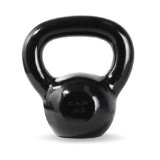 You either love them or you hate them.
When you are in love with kettlebells, like I am, you enjoy the multi-muscle group movements. Kettlebell workouts are fluid, like a dance, putting together a chain of movements that leave your heart pounding and sweat pouring. Yes, there’s some sneaky cardio component to a kettlebell workout. A great blend of aerobic and anaerobic conditioning.
If you hate kettlebells it’s because kettlebell exercises keep you honest with proper exercise execution. Form is imperative to moves like the kettlebell swing or the kettlebell snatch. Do it incorrectly and you’ll be either sore or have bruised wrists the next day. But this is no reason to shy away from the kettlebell. You have way too much to gain from this odd looking piece of exercise equipment.

You will get a mega -caloric burn. The American council on Exercise states that the average kettlebell workout burns 20 calories per minute. That’s 1200 calories in just one hour. Kettlebell workouts utilize many muscle groups to give you an efficient, total body conditioning workout.
If you’re looking for a toned back side get a kettlebell. The classic kettlebell swing works all the posterior muscles like your glutes, hamstrings, and lower back. But only if you use correct form. Otherwise you'll find yourself with nagging back pain, instead of a better butt.
Kettlebell exercises are functional movements that will allow you to play hard without getting injured. If you are an athlete, a nature enthusiast, or just want to keep up with the kids then you need to give kettlebells a try. During a workout, the exercises will target movements that will make getting up and down off the floor easier, as well as bending over to pick something up.
If you are interested in doing kettlebell workouts
start with a coach or take class. You can’t fake form with kettlebell exercises or you could end up hurt. I’m not trying to scare anyone away because good form is easy to learn. Your body will memorize the correct movement pattern and you’ll be on your way to a successful kettlebell workout.
Though I have personally dealt with both auto-immune thyroiditis (Hashomoto’s) and several gut issues (wheat sensitivity, gastritis, etc.), it was not until recently that I discovered how close the thyroid and gut work together to keep you healthy – and how problems with one can affect the other along with your overall health.
Most of us understand that the primary function of the gut, that 25 to 30 feet of “tubing” that includes everything from your stomach to your large intestines, is to process the food we eat and allow the “good stuff” (essential nutrients) to pass into our blood stream while keeping the “bad stuff” (harmful proteins) out. However, it may surprise some that the gut also holds as much as 70% of all the immune tissue in the body.
Now, imagine all the health havoc that could ensue if, suddenly, the gut stopped doing its job – particularly if it failed to stop toxic proteins from entering the blood stream and then mounted an overzealous immune response against them. Sometimes, those overzealous immune responses reach beyond their intended targets to attack otherwise healthy tissues and organs – like the thyroid gland.
Recent studies indicate that thyroid hormones play a significant role in maintaining gut integrity, preventing leaky gut that can, in some cases, lead to auto-immune attacks against the thyroid. A properly functioning gut also aids the production of thyroid hormones by converting some of the inactive “T4” thyroid hormone into the functional “T3” hormone. Failure to simultaneously maintain both a healthy gut and a healthy thyroid can create a vicious cycle leading to chronic health problems and declining vitality.
What it all means is that to enjoy optimal health, you must promote good thyroid health to promote good gut health and vice versa. Unfortunately, traditional medicine tends to focus on one issue to the exclusion of others. A typical endocrinologist may treat your under active thyroid without spending a moment to address underlying gut issues. A gastroenterologist will work alleviate a gut problem but will rarely address a potential thyroid problem.
This illustrates, once again, how our bodies work as a system and why it is necessary to bridge the “healthcare gaps” in traditional medicine by becoming personally responsible for your health. I encourage everyone to consult the Cureality Program Guide and online
Cureality Diet and
Thyroid Health Tracks to learn more about how to optimize both your gut and thyroid health on your journey to realizing complete, whole-body health.