Anonymous said:
Wheat increased hunger with even with only a small amount. Crackers in soup was enough to set it off.
Also, when I was trying to get off wheat, I noticed that 2 eggs and 2 bacon and I could go 5 hours before hunger, or 2 eggs and 2 bacon and toast was good for three hours before hunger. That was the final step to giving up wheat. Now three years and 59 Kg [130 lbs!] loss later, there is no doubt in my mind that wheat is evil, and I do not regard it as suitable for human food. I speculate that it increases ghrelin or cortisol.
Anna said:
For me, in the two years since I began eating Gluten-Free (Low Carb for 6 years), the few times I've had re-exposure to wheat, I've experienced fast onset and intense abdominal pain (known exposure during the daytime) and heartburn, indigestion, intense nausea, and disrupted sleep (exposures during evening meal not discovered until the next day).
My husband wants to think he's fine with wheat (though I know that he has at least one gene that predisposes to celiac), but IMO, he isn't. He eats no wheat at home because that's the default, and he's OK with that. But if he goes out to dinner at a restaurant that serves "good" artisan bread, he will indulge in a few bites (he does restrict his carb intake, so it's still a limited amount). More often than not, he will sleep fitfully on those nights, snore more, and wake in the night with indigestion. He wants to bury his head in the sand and will only acknowledge the discomfort being due to eating too many carbs, not the wheat itself. I notice he sleeps fine if he eats a small amount of potato or rice. Go figure.
Our 12 yo son has been eating GF for two years also. About 6 months into GF, he unknowingly ate wheat a number of times (licorice candy laces at a friend's house), which resulted in outbreaks of canker sores in his mouth each time. He also exhibits mood and behavior changes when he eats wheat, which is what prompted me to test him for gluten intolerance in the first place.
Mark said:
- One of the most dubious grain offenders is modern wheat. Replace wheat flour with naturally wheat-free, lower carbohydrate almond flour.
- Almond flour contains a mere 12 net carbs per cup (carbohydrate minus the fiber) with 50% more filling protein than all-purpose flour.
- Almond flour and almond meal also offer vitamin E, an important antioxidant to support immune function.
2. Swap potatoes and rice for cauliflower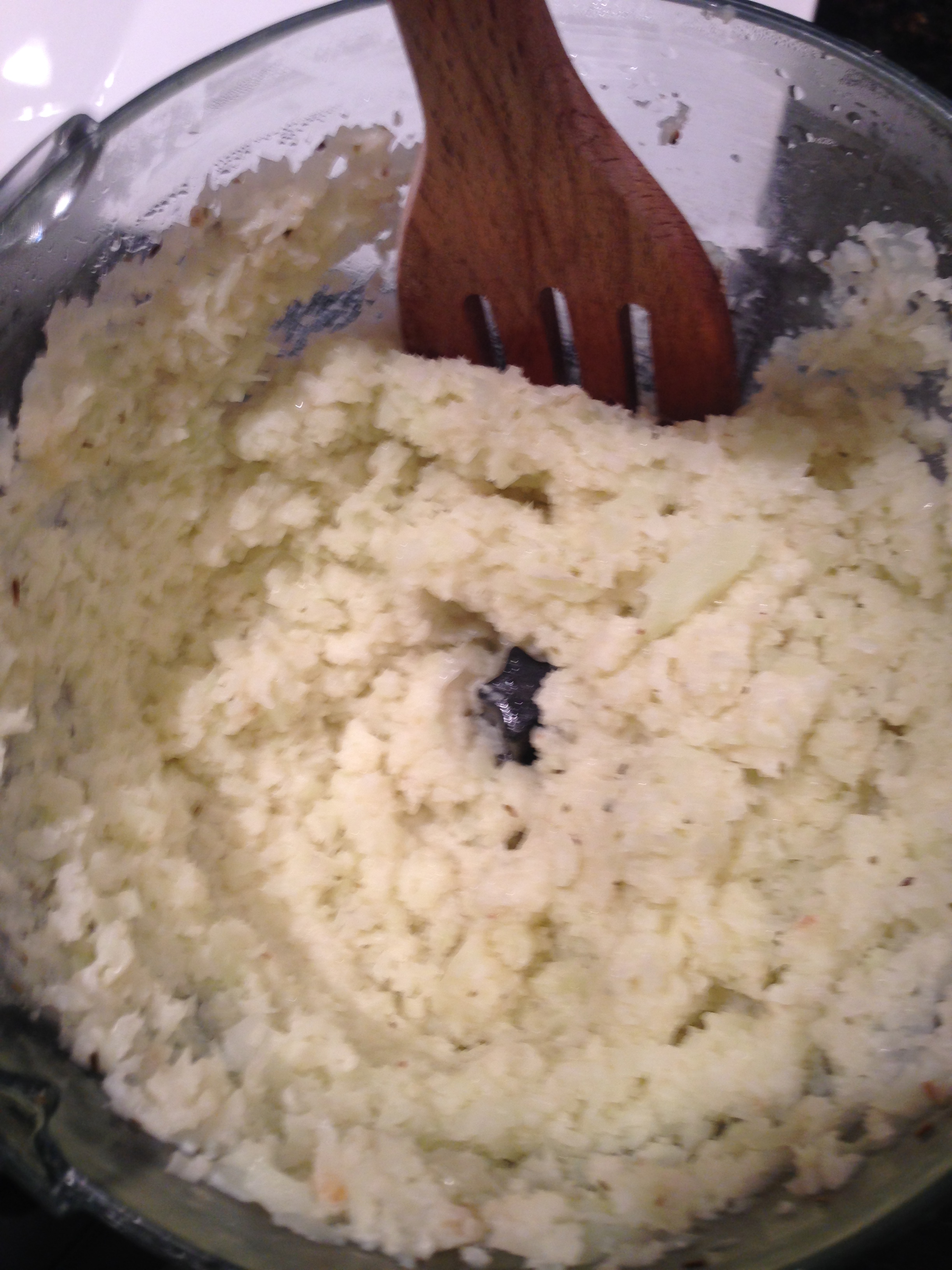
- Replace high carb potatoes and pasta with vitamin C packed cauliflower, which has an inconsequential 3 carbs per cup.
- Try this food swap: blend raw cauliflower in food processor to make “rice”. (A hand held grater can also be used). Sautee the “riced” cauliflower in olive or coconut oil for 5 minutes with seasoning to taste.
- Another food swap: enjoy mashed cauliflower in place of potatoes. Cook cauliflower. Place in food processor with ½ a stick organic, grass-fed butter, ½ a package full-fat cream cheese and blend until smooth. Add optional minced garlic, chives or other herbs such as rosemary.
3. Swap pasta for shirataki noodles and zucchini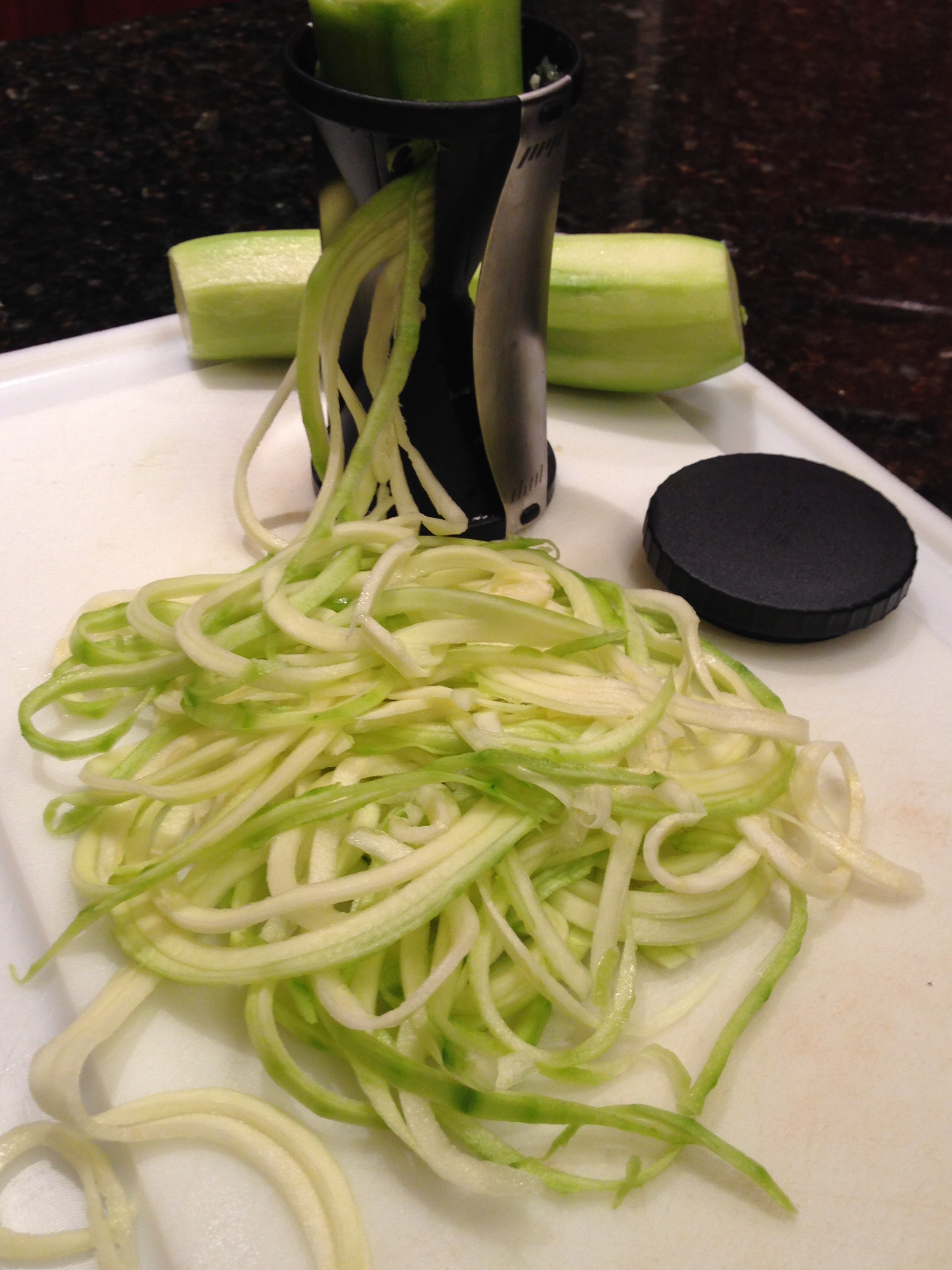
- Swap out carb-rich white pasta containing 43 carbs per cup with Shirataki noodles that contain a few carbs per package. Shirataki noodles are made from konjac or yam root and are found in refrigerated section of supermarkets.
- Another swap: zucchini contains about 4 carbs per cup. Make your own grain free, low-carb noodles from zucchini using a julienne peeler, mandolin or one of the various noodle tools on the market.
Lisa Grudzielanek, MS,RDN,CD,CDE
Cureality Nutrition Specialist
 Beginning last month, the Food and Drug Administration began implementing its definition of “gluten-free” on packaged food labels. The FDA determined that packaged food labeled gluten free (or similar claims such as "free of gluten") cannot contain more than 20 parts per million of gluten.
It has been years in the making for the FDA to define what “gluten free” means and hold food manufactures accountable, with respect to food labeling. However, the story does not end there.
Yes, finding gluten-free food, that is now properly labeled, has become easier. So much so the market for gluten-free foods tops $6 billion last year. However, finding truly healthy, commercially prepared, grain-free foods is still challenging.
A very common mistake made when jumping into the gluten-free lifestyle is piling everything labeled gluten-free in the shopping cart. We don’t want to replace a problem: wheat, with another problem: gluten free products.
Typically gluten free products are made with rice flour (and brown rice flour), tapioca starch, cornstarch, and potato flour. Of the few foods that raise blood sugar higher than wheat, these dried, powdered starches top the list.
They provide a large surface area for digestion, thereby leading to sky-high blood sugar and all the consequences such as diabetes, hypertension, cataracts, arthritis, and heart disease. These products should be consumed very rarely consumed, if at all. As Dr. Davis has stated, “100% gluten-free usually means 100% awful!”
There is an ugly side to the gluten-free boom taking place. The Cureality approach to wellness recommends selecting gluten-free products wisely. Do not making this misguided mistake and instead aim for elimination of ALL grains, as all seeds of grasses are related to wheat and therefore overlap in many effects.
Lisa Grudzielanek MS, RDN, CD, CDE
Cureality Health & Nutrition Coach
Looking for some new foods to add to your diet? Look no further. Reach for these three mealtime superstars to encourage a leaner, healthier body.
Microgreens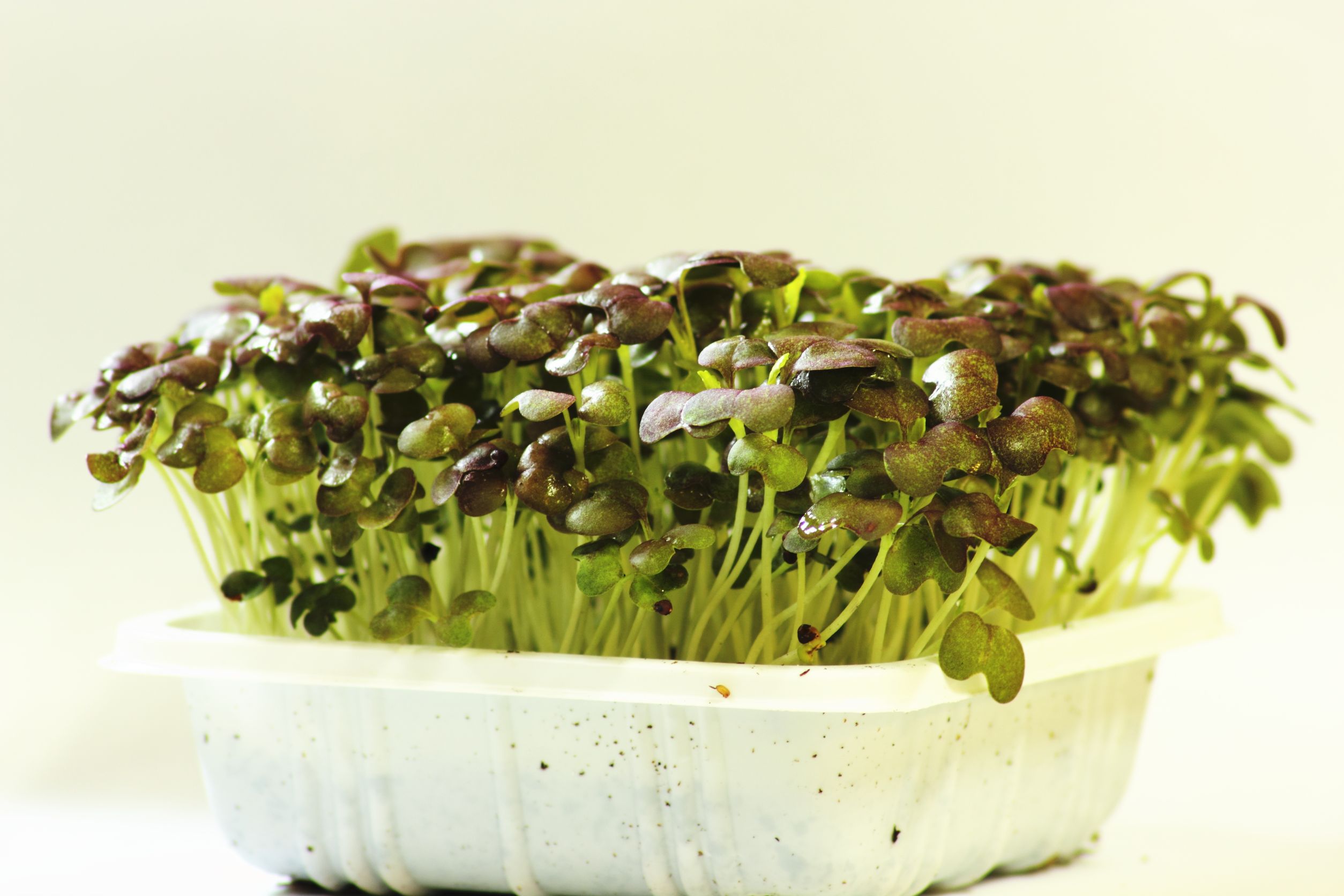
Microgreens are simply the shoots of salad greens and herbs that are harvested just after the first leaves have developed, or in about 2 weeks. Microgreen are not sprouts. Sprouts are germinated, in other words, sprouted seeds produced entirely in water. Microgreens are grown in soil, thereby absorbing the nutrients from the soil.
The nutritional profile of each microgreen depends greatly on the type of microgreen you are eating. Researchers found red cabbage microgreens had 40 times more vitamin E and six times more vitamin C than mature red cabbage. Cilantro microgreens had three times more beta-carotene than mature cilantro.
A few popular varieties of microgreens are arugula, kale, radish, pea, and watercress. Flavor can vary from mild to a more intense or spicy mix depending on the microgreens. They can be added to salads, soup, omelets, stir fry and in place of lettuce.
Cacao Powder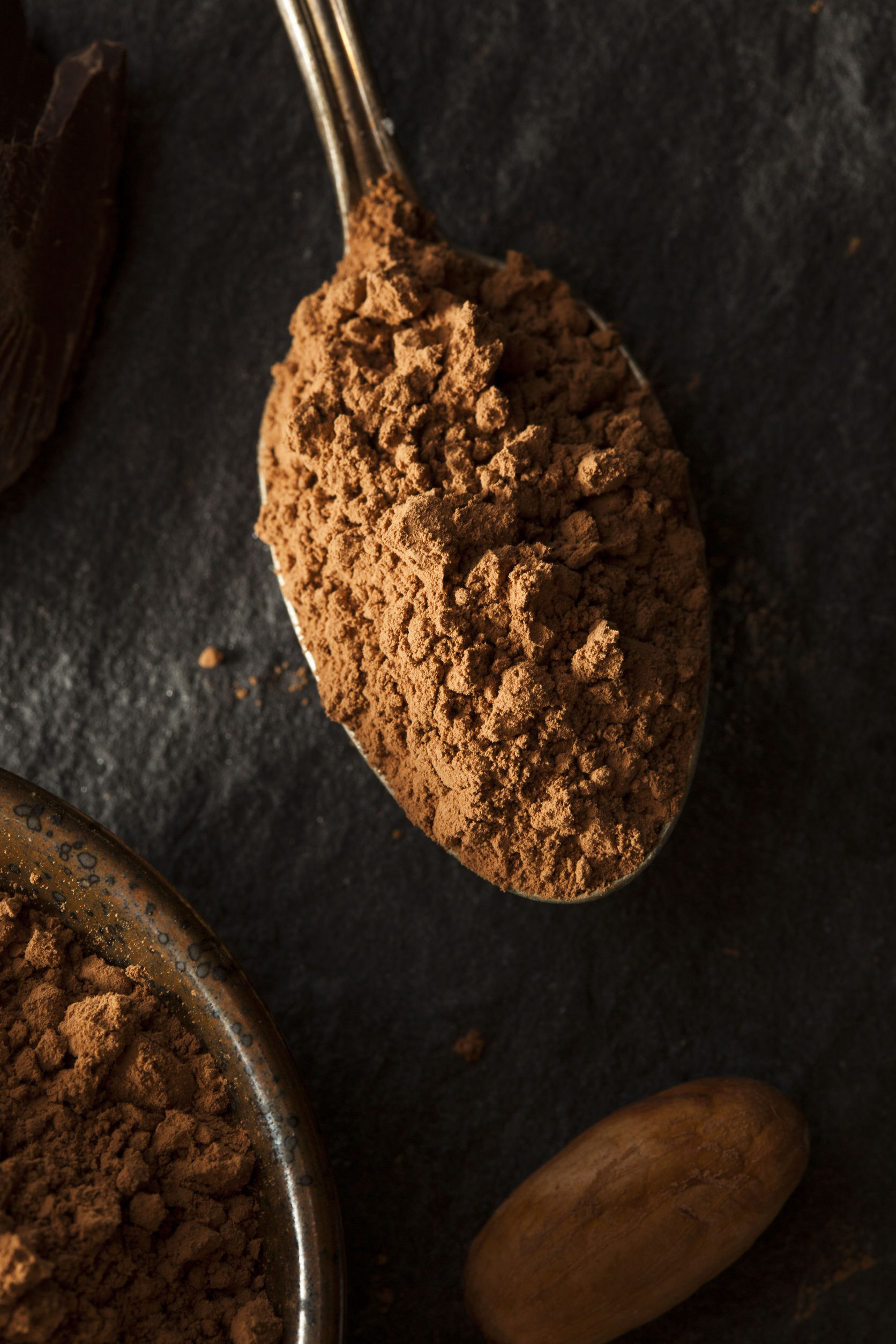
Cocoa and cacao are close enough in flavor not to make any difference. However, raw cacao powder has 3.6 times the antioxidant activity of roasted cocoa powder. In short, raw cacao powder is definitely the healthiest, most beneficial of the powders, followed by 100% unsweetened cocoa.
Cacao has more antioxidant flavonoids than blueberries, red wine and black and green teas. Cacao is one of the highest sources of magnesium, a great source of iron and vitamin C, as well as a good source of fiber for healthy bowel function.
Add cacao powder to milk for chocolate milk or real hot chocolate. Consider adding to coffee for a little mocha magic or sprinkle on berries and yogurt.
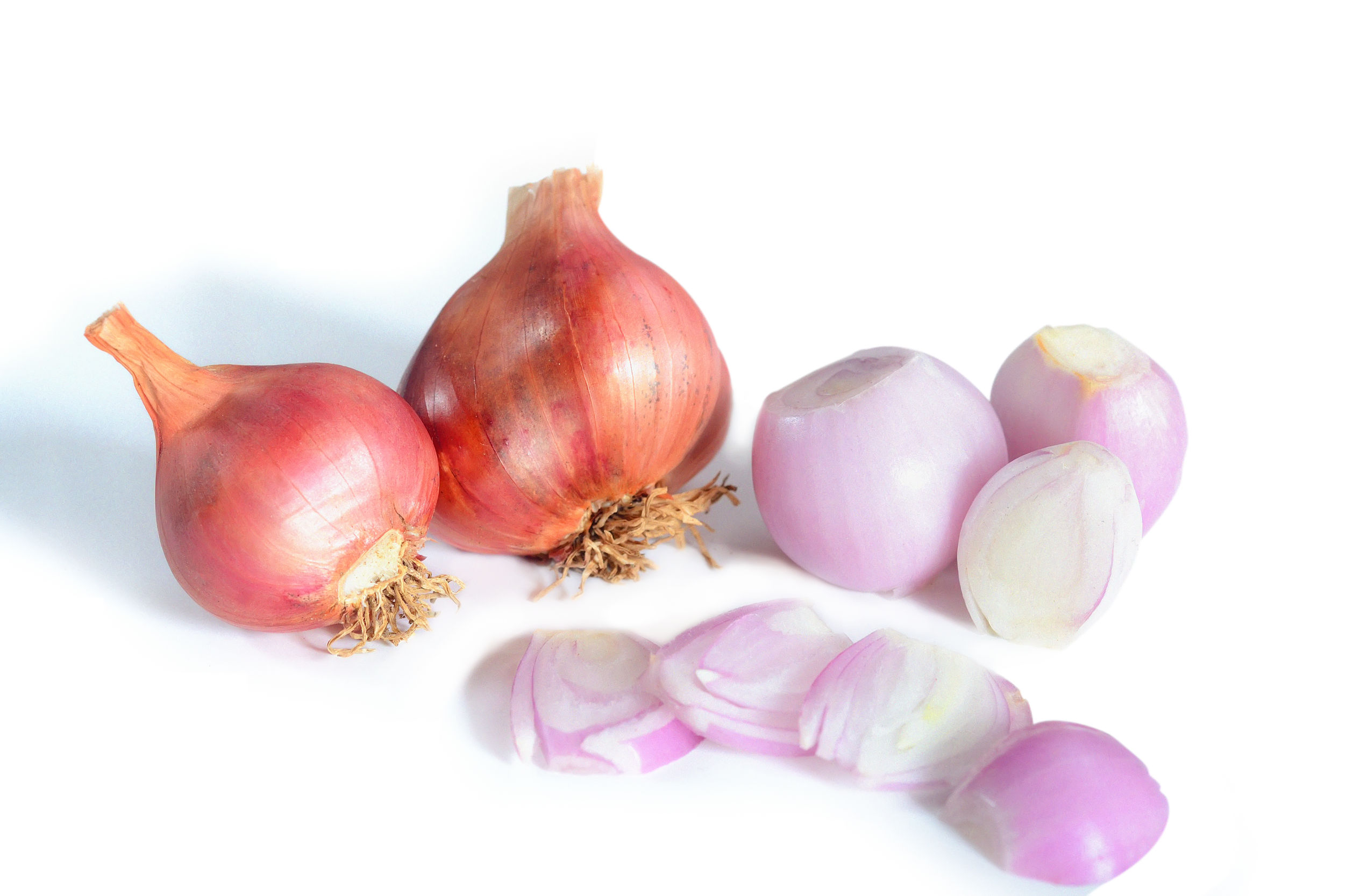
Shallots
Shallots have a better nutrition profile than onions. On a weight per weight basis, they have more anti-oxidants, minerals, and vitamins than onions. Shallots have a milder, less pungent taste than onions, so people who do not care for onions may enjoy shallots.
Like onions, sulfur compounds in shallot are necessary for liver detoxification pathways. The sulfur compound, allicin has been shown to be beneficial in reducing cholesterol. Allicin is also noted to have anti-bacterial, anti-viral, and anti-fungal activities.
Diced then up and add to salads, on top of a bun less hamburger, soups, stews, or sauces. Toss in an omelet or sauté to enhance a piece of chicken or steak, really the possibilities are endless.
Lisa Grudzielanek,MS,RDN,CD,CDE
Cureality Nutrition & Health Coach
Bands and buns are a great combination. (When I talk about glutes or a butt, I use the word buns) When it comes to sculpting better buns, grab a band. Bands are great for home workouts, at gym or when you travel. Check out these 3 amazing exercises that will have your buns burning.
Band Step Out
Grab a band and place it under the arch of each foot. Then cross the band and rest your hands in your hip sockets. The exercise starts with your feet hip width apart and weight in the heels. Slightly bend the knees and step your right foot out to the side. Step back in so that your foot is back in the starting position. With each step, make sure your toes point straight ahead. The tighter you pull the band, the more resistance you will have. You will feel this exercise on the outside of your hips.
Start with one set of 15 repetitions with each foot. Work on increasing to 25 repetitions on each side and doing two to three sets.


Band Kick Back
This exercise is performed in the quadruped position with your knees under hips and hands under your shoulders. Take the loop end of the band and put it around your right foot and place the two handles or ends of the band under your hands. Without moving your body, kick your right leg straight back. Return to the starting quadruped position. Adjust the tension of the band to increase or decrease the difficulty of this exercise.
Start with one set of 10 repetitions with each foot. Work on increasing to 20 repetitions on each side and doing two to three sets.


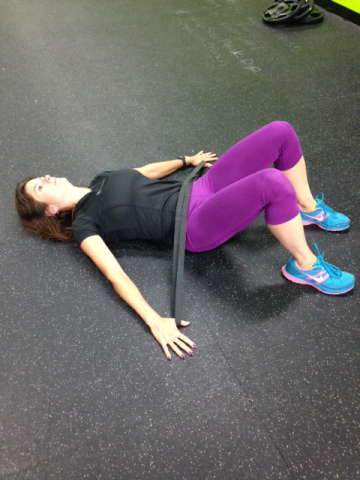
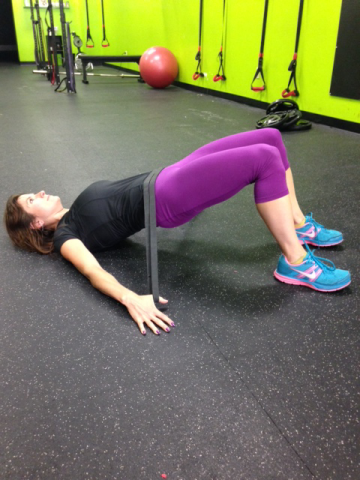
Band Resisted Hip Bridge
Start lying on your back with feet hip distance apart and knees bent at about a 45-degree angle. Adjust your hips to a neutral position to alleviate any arching in your lower back. Place the band across your hipbones. Hold the band down with hands along the sides of your body. Contract your abs and squeeze your glutes to lift your hips up off the ground. Stop when your thighs, hips and stomach are in a straight line. Lower you hips back down to the ground.
Start with one set of 15 repetitions. Work on increasing to 25 repetitions and doing two to three. Another variation of this exercise is to hold the hip bridge position. Start with a 30 second hold and work up to holding for 60 seconds.
Steve said:
Interesting that I should sit down, turn on my computer and find your poll. Having gone several weeks, maybe months, avoiding gluten, I took my daughter and her boyfriend out to eat because my wife has been working late at the office lately. Although I was thinking I would just eat my steak and chicken, I succumbed to the temptation of eating about a dozen greasy, breaded shrimp that my daughter and her boyfriend ordered. It's 1:39am and I still do not feel sleepy. My left nostril is completely blocked, my stomach feels bloated, really, really full and I've been burping. In your poll I checked sinus problems but could have chose gastrointestinal or nervous problems just as well.
A few weeks ago my daughter brought home a pizza and, once again, despite my knowing that I shouldn't, I ate a couple of pieces. I was sick for two days. The pain in what I think was my transverse colon was so bad I thought I might have to go to ther emergency room. Before I ate the pizza I had never gone grain-free that long before. I did this after reading Robb Wolf's book.
I AM CONVINCED. No more wheat for me! Please, Lord, give me strength.
LV said:
What don't I experience! I typically avoid wheat (and gluten for that matter) as I'm pretty sure it makes me sick, but when I slip (or someone else slips me some) I end up with massive amounts of joint swelling and tenderness, diarhea, cramping, gas, bloating and brain fog. I'm absolutely miserable. Just that alone is enough to keep me off gluten. I have RA, so if I have repeated exposures I'll have a flare which SUCKS!