on-folder-close"> (0)


Biofeedback is a wonderful, natural way to gain control over multiple physiological phenomena, a means of tapping into your body’s internal resources. You can, for instance, use biofeedback to reduce anxiety, heart rate, and blood pressure, and achieve a sense of well-being that does not involve drugs, side-effects, or even much cost.

Biofeedback simply means that you are tracking some observable physiologic phenomenon—heart rate, skin temperature, blood pressure—and trying to consciously access control over it. One very successful method is that of bringing the beat-to-beat variation in heart rate into synchrony with the respiratory cycle. In day-to-day life, the heart beat is usually completely out of sync with respiration. Bring it into synchrony and interesting things happen: you experience a feeling of peace and calm, while many healthy phenomena develop.

A company called HeartMath has applied this principle through their personal computer-driven device that plugs into the USB port of your computer and monitors your heart rate with a device clipped on your earlobe. You then regulate breathing and follow the instructions provided and feedback is obtained on whether you are achieving synchrony, or what they call “coherence.” As the user becomes more effective in achieving coherence over time, positive physiological and emotional effects develop. HeartMath has been shown, for instance, to reduce systolic and diastolic blood pressure, morning cortisol levels (a stress hormone), and helps people deal with chronic pain. Downside of the HeartMath process: a $249 price tag for the earlobe-USB device.

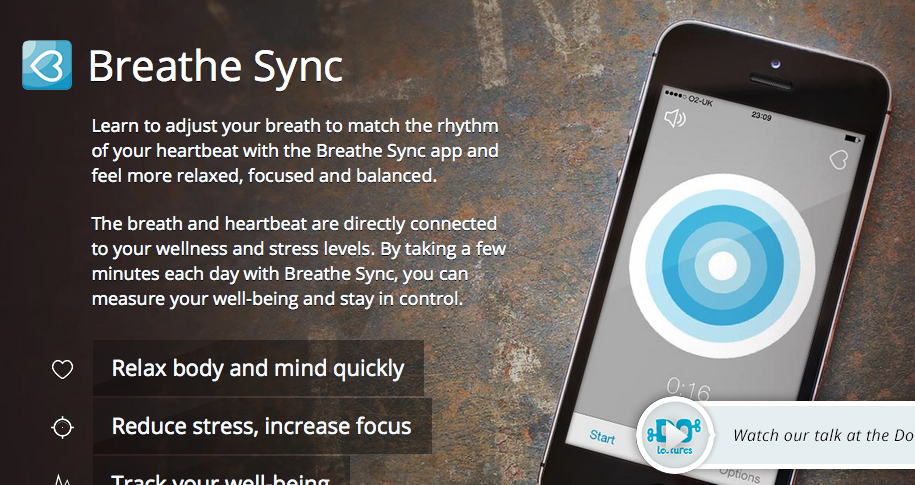
But this is the age of emerging smartphone apps, including those applied to health. Smartphone apps are perfect for health monitoring. They are especially changing how we engage in biofeedback. An app called Breathe Sync is available that tracks heart rate using the camera’s flash on the phone. By tracking heart rate and providing visual instruction on breathing pattern, the program generates a Wellness Quotient, WQ, similar to HeartMath’s coherence scoring system. Difference: Breathe Sync is portable and a heck of a lot less costly. I paid $9.99, more than I’ve paid for any other mainstream smartphone application, but a bargain compared to the HeartMath device cost.

One glitch is that you need to not be running any other programs in the background, such as your GPS, else you will have pauses in the Breathe Sync program, negating the value of your WQ. Beyond this, the app functions reliably and can help you achieve the health goals of biofeedback with so much less hassle and greater effectiveness than the older methods.

If you are looking for a biofeedback system that provides advantage in gaining control over metabolic health, while also providing a wonderful method of relaxation, Breathe Sync, I believe, is the go-to app right now.

How did Cureality get its start?


In the Cureality program, we embrace information and strategies that empower you in health without drugs, without hospitals, without procedures. We convert your doctor from director of healthcare to your assistant in health. He or she is there when you need help, but you largely direct your own health future.

How did we gain the know-how, information, tools, even chutzpah to take on such an ambitious project?


It started around 10 years ago with the awkwardly named Track Your Plaque program. In fact, some of the current followers of the Cureality program are former Track Your Plaque members, having learned of the wonderful list of strategies that can be adopted to gain better control over, even reverse, coronary atherosclerotic plaque and risk for heart attack. They also learned that something special happens when you engage with other people with similar interests, all sharing ideas, insights, and resources to get the self-directed health job done. Over time, what started out as simply a source of better information for coronary health evolved into a self-directed coronary disease management program. We never set out to create something as wildly ambitious as a do-it-yourself-at-home coronary disease risk management program, but that is how it inadvertently turned out.

How we went from Information Provider to Health Empowerment Program

So we never intended to take on something so seemingly impossible as managing coronary risk on your own. But, because we armed people with such empowering, profound insights into better ways to manage their heart disease risk beyond “don’t smoke, cut saturated fat, be active, and take a statin drug”—the typical advice offered by doctors—they returned after an interaction with their doctors disappointed: doctors often declared such strategies unnecessary, or the doctor didn’t understand them—even when there were clear-cut clinical data already available to support their use. In other words, the patients—everyday people, not experts—knew more than their doctors. 

This flip-flop in the balance of knowledge made for some very interesting stories, like “Harold” (not his real name) who, having survived a heart attack and received a stent, was told by his doctor to cut his fat intake, eat more whole grains, exercise, take aspirin and a beta blocker drug, and reduce his cholesterol values with a statin drug. Upon learning all the additional information from the Track Your Plaque program, Harold returned to his doctor and asked “I’m not so ready to just go along with this idea of ‘reducing cholesterol’ to address heart disease risk. Because my goal is to gain as much control over coronary disease as possible, maybe even reverse it, I’d like to address some additional issues that I believe may be important. I’d like to have my advanced lipoproteins drawn to measure the proportion of small LDL particles I have, whether I have lipoprotein(a), an omega-3 fatty acid index and 25-hydroxy vitamin D level, and a thyroid assessment. Oh, and I believe I should also have an assessment of my inflammation status, perhaps a c-reactive protein and phospholipase A2, and my blood sugar status measured with a fasting glucose, insulin, and hemoglobin A1c.” Harold’s doctor was dumbfounded and speechless. Rather than reveal his ignorance, his doctor advised Harold that none of that was necessary, sending him on his way and telling him that he was fine.

But this left Harold with a sour taste in his mouth, having engaged in many online discussions with people who had followed conventional advice that resulted in more heart attack, more heart procedures—the conventional answers simply did not work. He also discussed his situation with people who had successfully obtained the additional information he sought, added it to their program and enjoyed dramatically improved health, including freedom from more heart attacks, heart symptoms, and heart procedures, as well as improved overall health. So Harold found an easy way to obtain the testing on his own. Within a couple of weeks, he returned to his online community and shared all his information. Within moments, he was provided useful discussion to help him understand the values, all leading to changes in nutrition, nutritional supplement choices, how and where to get the simple tools necessary, such as iodine and vitamin D supplements. He even entered his data, choosing which values he was willing to share with others, which remained private, allowing him to compare his own follow-up values several months later. Engaged in this process, self-directed but collaborative, he witnessed marked transformations in his health. Not only did he never again—over several years—ever re-develop heart symptoms nor require any more trips back to the cath lab, he lost weight, reversed a pre-diabetic sugar profile, improved his cholesterol values without drugs, got rid of the acid reflux symptoms he endured for many years, dropped his blood pressure to normal, enjoyed better mood, energy, and sleep. Slender, healthier, all accomplished without his doctor. 

Harold returned to his doctor for a routine follow-up. Slender, energetic, without complaints, on no drugs except the aspirin for his stent, the basic laboratory assessment his doctor ordered in front of him, his doctor admitted,” Well, I don’t know how you’re doing it, but these values look like a 20-year old substituted his blood for yours. They’re unbelievable. What drugs are you taking to do this?” “No drugs,” Harold replied, “I’m following a program to reverse heart disease, but it means doing some things that are different from conventional solutions.” His doctor closed their meeting with the signature response of doctors nationwide: “Well, I don’t understand what you are doing, but just keep doing it.”

Yes, Harold knew more about how to control heart disease than his doctor, more than his cardiologist. The cardiologist knew how to insert a stent or defibrillator. But deliver information that empowered Harold in all aspects of health from head to toe, while also dramatically reducing, perhaps eliminating, his coronary disease risk? As you now know, that is not what conventional healthcare does, nor is it interested in doing so, as it would relinquish control and threaten to cut off this hugely profitable revenue stream that drives “healthcare.”

Having managed to inadvertently create a self-directed coronary risk management program with such spectacular results and in probably one of the most difficult areas of all—heart disease—it became clear that a similar approach could be even more easily applied to many other areas of health, such as weight loss, bone health, cholesterol and blood pressure issues, diabetes and pre-diabetes, hormonal health, autoimmune conditions, and others. You can do it when empowered by safe, effective information, and supported by a community of sharing and collaboration. We don’t fire our doctors; they are there when we need them when, for instance, we get injured or catch pneumonia, or as an occasional resource. But doctors should no longer be able to get away with neglect, misinformation, or blindly directing you to the next revenue-generating procedure because you are empowered by the information and support you receive in Cureality.

As we get more effective in delivering this information and new tools to you, just imagine what we can accomplish in this new age of information and self-empowerment. The future for us is bright with ambitions for better interactive tools with Cureality expert staff, better ways to crowd source health answers, provide more engaging community conversation, all while the health insights that help accomplish our self-directed health goals get better and better. Each person that joins Cureality helps make this service more effective because your wisdom, insights, and experience are added to the collective knowledge. We are more powerful together than we are as individuals.

If you are already a Cureality Member, please add your comments and questions to the growing conversation. If you are not a Member, consider joining our discussions, as each new voice gets us closer and closer to better answers to take back control over health.

Power in Numbers


In his book, The Wisdom of Crowds, author James Surowiecki begins with the story of an ox judging competition in which 800 people—not ox experts nor breeders, just ordinary people attending a county fair—were asked to guess the weight of the ox. The competition was conducted by a scientist, Francis Galton, who held a low opinion of the intelligence of the average person, remarking that “the stupidity and wrong-headedness of many men and women being so great as to be scarcely credible.” He hoped to prove, by examining the various guesses, that the average person had no idea of how to judge the real answer. After all participants casted their written votes, Galton tallied up the total and averaged the result: 1,197 pounds—just one pound off from the real weight of 1,198 pounds. Few individuals actually guessed the correct weight themselves but, when the opinions of many were combined, the result was near-perfect.

Crowds can also be a source of irrational behavior, panic, and stampede. Witness any modern football or soccer game, for instance, in which fights break out over an issue as minor as a disputed call or a heckle. Or go back through history to the countless events when mass hysteria ruled, such as the Salem Witch Trials or Orson Welles’ War of the Worlds radio broadcast.

Let’s put aside examples of mass emotional chaos of the sort that causes crowds to stampede store doors on Black Friday. Let’s focus instead on conscious, considered, thoughtful opinions. We all accept that there are as many opinions on issues as there are people, not uncommonly with widely divergent views. But can we, as Galton’s famous experiment did, combine the opinions of many and come away with some fruitful insight—the correct answer? Just as the people participating in Galton’s experiment were not experts, so Cureality participants—a crowd-sourced collection of opinions—are not experts. If we were to poll everyone to identify their area of expertise or experience, it would likely include finance, the retail industry, raising children, or teaching—but not health. Yes, we have experts curating the direction of content, but we also crowd-source collective opinion.

Right now, Cureality is based on existing science, the philosophy of self-directed health, combined with guidance and community to help the participant along in the sometimes complex world of health questions. But as our processes and procedures improve, can we—like Galton’s ox weight guessers—come away with coalescent wisdom, answers to our health questions, near-perfect solutions to health conditions that have eluded the “experts” for centuries?

I think that we can. No, I know that we can. We enter a new age in information and harness the power of the crowd-sourcing of solutions, even when no single individual has the complete answer herself.

What is Cureality all about?


“Looking over your medical record, Nancy, I’m a bit concerned about your risk for osteoporosis and hip fracture. It looks like your mom had a hip fracture at age 67. Is that right? ”

“Yes, she did,” Nancy responded. “And her life was never quite the same for the 15 years she lived after that.

“You’re 53 year old. Bone thinning develops over many years. Let’s get you scheduled for a bone scan.”

Two weeks later:

“Your z-score is 1.5, Nancy. This means you’ve got a mild form of osteoporosis called ‘osteopenia.’ Here: This is a prescription for alendronate, what used to be called Fosamax.”

“Aren’t there side-effects with that drug? A friend of mine said that her mom had a leg fracture from it.”

“Well, yes. All prescription drugs have potential side-effects. They’re rare, but they can happen and we can’t predict it. Besides leg fracture, there’s something called jaw osteonecrosis in which the jawbone dies and has to be surgically replaced. But would you rather run the risk of a hip fracture?”

“Before we jump to drugs, aren’t there natural things I could do first?”

(Big sigh.) “You can take calcium, but that only helps a bit. You’ve got to make a choice: Take the drug or risk a hip fracture.”

“I’m going to explore some natural remedies on my own first.”

Nancy’s dialogue with her doctor is fictional but based on similar encounters that occur thousands of times every day nationwide. Identify a problem, prescribe a drug. Natural remedies? “They don’t work.” “I don’t know anything about that.” “None of that is proven.” “I only practice evidence-based medicine.” You’ve probably heard a few of these explanations yourself if you ever question the wisdom of conventional medical care.

Each of Nancy’s fictitious interactions were no more 10 minutes long. If she is like most people, she will have one or two such interactions over the course of a year, unless she develops some acute illness. So she’s got something like 20-30 minutes per year to compress all of her “health” advice into the time allotted. 20-30 minutes per year to discuss bone health, nutrition, blood sugar issues, cholesterol issues, blood pressure, female issues, and all the other facets of health. Perhaps she has developed some chronic gastrointestinal complaints, too, and an odd rash on her elbows, maybe headaches a few times per week that she didn’t have before. Regardless, she’s going to have to make do with those few minutes, likely receiving one or more prescriptions or imaging procedures for each.

Such is the nature of modern healthcare: Provide the minimum interaction, address only a few, perhaps no more than one, problem, then prescribe a drug. This is, more often than not, wrong. Plain wrong. Tragically, awfully, unethically, unnecessarily wrong.

Let’s pick up again with Nancy. Upon learning of her osteopenia and long-term risk for hip fractures of the sort that changed her mom’s life and health irretrievably, Nancy started searching for solutions. Not only did she discover that, yes, there are indeed a number of safe and effective ways to deal with osteopenia. She also learned that such strategies have even been examined in clinical trials, some of the strategies pitted head-to-head with drugs and performed on a par, sometimes better, than prescription drugs. She also found that there are online communities that she could join and discuss her health situation with people all sharing the same health interests. During one such interaction at the start of her effort, when she was still a bit unsure and tentative, a woman she didn’t know but who shared a similar interest in restoring bone health, commented to Nancy, “Don’t sweat it, Nancy. I was in your shoes a little over a year ago. I followed a program for bone health: vitamin D, vitamin K2, magnesium, I made sure that I included leafy green vegetables at least once or twice per day, and I added strength training for a few minutes twice per week. I started with osteoporosis. My most recent bone density test showed that I reversed it completely—it’s entirely normal! So hang in there and be sure to share your questions and concerns with us here.”

THAT is what Cureality is all about. Cureality fills the gap of knowledge in health that is not being provided in a few minute-long medical interaction. Cureality reveals the astounding amount of credible, safe, scientific information that allows you to participate, sometimes take over completely, various aspects of health. You don’t have to fire your doctor; these efforts supplement the information and advice you obtain (or don’t obtain) in the doctor’s office. While critics may sometimes say that this can be dangerous or that misdiagnoses and dangerous treatments might be risked, our experience is the exact opposite: People do better by taking the reins of health themselves, choosing to use the health care system for acute or catastrophic illness—but not necessarily for health.

Our fictional woman, Nancy, returns to her doctor one year later after undergoing a repeat bone scan. The doctor opened her chart, clearly expecting to scold her for her foolhardy and careless attitude. Instead, he was speechless. After a pause, he said, “I don’t know how you did it, but your bone density is now normal, the density of a healthy 30-year old woman. Just continue doing what you’re doing.” He closed the chart and walked out.

Yes: “Just continue what you are doing”—not “Please tell me what you did so that I might learn something new,” or “Where did you learn about such strategies? I knew nothing about this!” Just “do what you’re doing.” Too often, that is the response you get that defines what modern health care has become.

You don’t want that kind of health care. Sure, it’s reassuring to know that the doctor and hospital are there in case you injure yourself or develop pneumonia. But obtain day-to-day health advice of the sort that keeps you slender, keeps blood pressure normal, maintains normal insulin and blood pressure responses, helps keep bowel health ideal, can even be used to reverse conditions such as autoimmune joint pain, diabetes, osteoporosis, or skin rashes, while costing next to nothing and yielding health care benefits for you and your family in multiple areas of health? That is the kind of health care you want.

That’s why we developed Cureality.


William Davis, MD
Author of 
#1 New York Times Bestseller Wheat Belly: Lose the wheat, lose the weight and find your path back to health, The Wheat Belly Cookbook, and Wheat Belly 30-Minute (or Less!) Cookbook published by Rodale, Inc.  
Author, Track Your Plaque: The only heart disease prevention program that shows how the new CT heart scans can be used to detect, track, and control coronary plaque
Omega-3 fatty acids likely NOT associated with prostate cancer

A weakly constructed study was reported recently that purportedly associated higher levels of omega-3 fatty acid blood levels and prostate cancer. See this CBS News report, for instance.

Lipid and omega-3 fat expert, Dr. William Harris, posted this concise critique of the study, exposing some fundamental problems:

First, the reported EPA+DHA level in the plasma phospholipids in this study was 3.62% in the no-cancer control group, 3.66% in the total cancer group, 3.67% in the low grade cancer group, and 3.74% in the high-grade group. These differences between cases and controls are very small and would have no meaning clinically as they are within the normal variation. Based on experiments in our lab, the lowest quartile would correspond to an HS-Omega-3 Index of <3.16% and the highest to an Index of >4.77%). These values are obviously low, and virtually none of the subjects was in “danger” of having an HS-Omega-3 Index of >8%. So to conclude that regular consumption of 2 oily fish meals a week or taking fish oil supplements (both of which would result in an Index above the observed range) would increase risk for prostate cancer is extrapolating beyond the data.

This study did not test the question of whether giving fish oil supplements (or eating more oily fish) increased PC risk; it looked only a blood levels of omega-3 which are determined by intake, other dietary factors, metabolism and genetics.


The authors also failed to present the fuller story taught by the literature. The same team reported in 2010 that the use of fish oil supplements was not associated with any increased risk for prostate cancer. A 2010 meta-analysis of fish consumption and prostate cancer reported a reduction in late stage or fatal cancer among cohort studies, but no overall relationship between prostate cancer and fish intake. Terry et al. in 2001 reported higher fish intake was associated with lower risk for prostate cancer incidence and death, and Leitzmann et al. in 2004 reported similar findings. Higher intakes of canned, preserved fish were reported to be associated with reduced risk for prostate cancer. Epstein et al found that a higher omega-3 fatty acid intake predicted better survival for men who already had prostate cancer, and increased fish intake was associated with a 63% reduction in risk for aggressive prostate cancer in a case-control study by Fradet et al). So there is considerable evidence actually FAVORING an increase in fish intake for prostate cancer risk reduction.

Another piece of the picture is to compare prostate cancer rates in Japan vs the US. Here is a quote from the World Foundation of Urology:


"[Prostate cancer] incidence is really high in North America and Northern Europe (e.g., 63 X 100,000 white men and 102 X 100,000 Afro-Americans in the United States), but very low in Asia (e.g., 10 X 100,000 men in Japan).”

Since the Japanese typically eat about 8x more omega-3 fatty acids than Americans do and their
blood levels are twice as high, you’d think their prostate cancer risk would be much higher...
but the opposite is the case.


Omega-3 fatty acids are physiologically necessary, normalizing multiple metabolic phenomena including augmentation of parasympathetic tone, reductions of postprandial (after-meal) lipoprotein excursions, and endothelial function. It would indeed make no sense that nutrients that are necessary for life and health exert an adverse effect such as prostate cancer at such low blood levels. (Recall that an omega-3 RBC index of 6.0% or greater is associated with reduced potential for sudden cardiac death.)

I personally take 3600 mg per day of EPA + DHA in highly-purified, non-oxidized triglyceride form (Ascenta Nutrasea liquid) that yields an RBC omega-3 index of just over 10%, the level that I believe the overwhelming bulk of data suggest is the ideal level for humans.

Are statins and omega-3s incompatible?

French researcher, Dr. Michel de Lorgeril, has been in the forefront of thinking and research into nutritional issues, including the Mediterranean Diet, the French Paradox, and the role of fat intake in cardiovascular health. In a recent review entitled Recent findings on the health effects of omega-3 fatty acids and statins, and their interactions: do statins inhibit omega-3?, he explores the question of whether statin drugs are, in effect, incompatible with omega-3 fatty acids.

Dr. Lorgeril makes several arguments:

1) Earlier studies, such as GISSI-Prevenzione, demonstrated reduction in cardiovascular events with omega-3 fatty acid supplementation, consistent with the biological and physiological benefits observed in animals, experimental preparations, and epidemiologic observations in free-living populations.

2) More recent studies (and meta-analyses) examining the effects of omega-3 fatty acids have failed to demonstrate cardiovascular benefit showing, at most, non-significant trends towards benefit.

He points out that the more recent studies were conducted post-GISSI and after agencies like the American Heart Association's advised people to consume more fish, which prompted broad increases in omega-3 intake. The populations studied therefore had increased intake of omega-3 fatty acids at the start of the studies, verified by higher levels of omega-3 RBC levels in participants.

In addition, he raises the provocative idea that the benefits of omega-3 fatty acids appear to be confined to those not taking statin agents, as suggested, for instance, in the Alpha Omega Trial. He speculates that the potential for statins to ablate the benefits of omega-3s (and vice versa) might be based on several phenomena:

--Statins increase arachidonic acid content of cell membranes, a potentially inflammatory omega-6 fatty acid that competes with omega-3 fatty acids. (Insulin provocation and greater linoleic acid/omega-6 oils do likewise.)
--Statins induce impaired mitochondrial function, while omega-3s improve mitochondrial function. (Impaired mitochondrial function is evidenced, for instance, by reduced coenzyme Q10 levels, with partial relief from muscle weakness and discomfort by supplementing coenzyme Q10.)
--Statins commonly provoke muscle weakness and discomfort which can, in turn, lead to reduced levels of physical activity and increased resistance to insulin. (Thus the recently reported increases in diabetes with statin drug use.)

Are the physiologic effects of omega-3 fatty acids, present and necessary for health, at odds with the non-physiologic effects of statin drugs?

I fear we don't have sufficient data to come to firm conclusions yet, but my perception is that the case against statins is building. Yes, they have benefits in specific subsets of people (none in others), but the notion that everybody needs a statin drug is, I believe, not only dead wrong, but may have effects that are distinctly negative. And I believe that the arguments in favor of omega-3 fatty acid supplementation, EPA and DHA (and perhaps DPA), make better sense.


DHA: the crucial omega-3

Of the two omega-3 fatty acids that are best explored, EPA and DHA, it is likely DHA that exerts the most blood pressure- and heart rate-reducing effects. Here are the data of Mori et al in which 4000 mg of olive oil, purified EPA only, or purified DHA only were administered over 6 weeks:


□ indicates baseline SBP; ▪, postintervention SBP; ○, baseline DBP; •, postintervention DBP; ⋄, baseline HR; and ♦, postintervention HR.

In this group of 56 overweight men with normal starting blood pressures, only DHA reduced systolic BP by 5.8 mmHg, diastolic by 3.3 mmHg.

While each omega-3 fatty acid has important effects, it may be DHA that has an outsized benefit. So how can you get more DHA? Well, this observation from Schuchardt et al is important:

DHA in the triglyceride and phospholipid forms are 3-fold better absorbed, as compared to the ethyl ester form (compared by area-under-the-curve). In other words, fish oil that has been reconstituted to the naturally-occurring triglyceride form (i.e., the form found in fresh fish) provides 3-fold greater blood levels of DHA than the more common ethyl ester form found in most capsules. (The phospholipid form of DHA found in krill is also well-absorbed, but occurs in such small quantities that it is not a practical means of obtaining omega-3 fatty acids, putting aside the astaxanthin issue.)

So if the superior health effects of DHA are desired in a form that is absorbed, the ideal way to do this is either to eat fish or to supplement fish oil in the triglyceride, not ethyl ester, form. The most common and popular forms of fish oil sold are ethyl esters, including Sam's Club Triple-Strength, Costco, Nature Made, Nature's Bounty, as well as prescription Lovaza. (That's right: prescription fish oil, from this and several other perspectives, is an inferior product.)

What sources of triglyceride fish oil with greater DHA content/absorption are available to us? My favorites are, in this order:

Ascenta NutraSea
CEO and founder, Marc St. Onge, is a friend. Having visited his production facility in Nova Scotia, I was impressed with the meticulous methods of preparation. At every step of the way, every effort was made to limit any potential oxidation, including packaging in a vacuum environment. The Ascenta line of triglyceride fish oils are also richer in DHA content. Their NutraSea High DHA liquid, for instance, contains 500 mg EPA and 1000 mg DHA per teaspoon, a 1:2 EPA:DHA ratio, rather than the more typical 3:2 EPA:DHA ratio of ethyl ester forms.

Pharmax (now Seroyal) also has a fine product with a 1.4:1 EPA:DHA ratio.

Nordic Naturals has a fine liquid triglyceride product, though it is 2:1 EPA:DHA.


All posts by william-davis

Hospital Administrators' Wish List

I've known enough hospital administrators over the years to understand what most of them want.

Of course, most of them want to deliver high quality care to patients in a safe, efficient setting. They want to comply with national standards of performance, attract quality physicians to use their facilities, and appeal to patients as a desirable place to obtain care.

But one fact is hard for many administrators to ignore: 30% of a hospital's revenues and 50% of their profits come from heart services.

So, if your hospital administrator had a wish list, I believe that among their wishes would be:

--More heart catheterizations, angioplasties, stents, and bypass surgery.
--More pacemaker and defibrillator implantations.
--More heart attacks.
--More heart failure with need for intravenous infusions, defibrillators, and bi-ventricular pacemaker implantations.
--More heart valve surgery.

Highly successful hospitals do more of these procedures than less successful hospitals.

Are you getting the picture? Heart care is a business. It's not very different than Target, Home Depot, or McDonalds--businesses eager to sell more of their product. Yes, there is attention to detail, quality, and competitiveness, but the bottom line is "sell more product, make more profit."

Keep this in mind the next time you catch one of the many TV or newspaper ads, radio spots, physician "interviews", or other media pitches in your town. Does Target run ads for the public good or to generate profitable sales? Does your hospital run ads to broadcast its contribution to public welfare or to generate profitable "sales"? Pretty clear, isn't it?

Poor, neglected vitamin D!

We now routinely check blood levels of vitamin D in all our patients. I am reminded everyday that, if you're a resident of a northern climate (as we are in Wisconsin and similarly in Michigan, Washington, New York, Pennsylvania, Ohio, etc.), the overwhelming likelihood is that you are deficient in vitamin D. And not just a little deficient, but severely deficient.

As humans, we're meant to obtain vitamin D through exposure to sunlight. This was how humans evolved. We are all ill-equipped to get vitamin D through nutritional sources. The average (Wisconsin) patient we see has vitamin D blood levels of 17-30 ng/dl. Most authorities would agree that a level of 30 ng or less would constitute severe deficiency. An ideal level is probably around 50 ng, what many (but not all) residents of southern climates like Florida, Texas, and Hawaii have if they get frequent sun exposure.

When vitamin D levels are normal, bone health is maximized (inhibiting osteoporosis); prostate, uterine, breast, and colon health is heightened and cancer risk diminished; pre-diabetic and diabetic patterns are suppressed and blood sugar reduced; blood pressure drops 10 mgHg, on average;and inflammatory measures like C-reactive protein are substantialy reduced. But, of greatest interest to us, coronary plaque is easier to regress.

Although our experience in the last several hundred people is still anecdotal, I believe that I'm seeing a dramatic increase in the amount and rapidity of coronary plaque regression. People we've struggled with are suddenly regressing. People with higher heart scan scores (e.g., >500) are regressing more readily.

We're accumulating our data and it will take a couple more years to develop it in a scientifically-useful format. But, in the meantime, adding vitamin D to your program or having your vitamin D level checked may be among the most important steps you can take to gain control over coronary plaque. Be sure to ask your doctor to get the right blood test: it must be 25-OH-vitamin D3. (The wrong test is the 1,25-OH2-vitamin D3; though they look and sound the same, they measure very different parts of the vitamin D pathway.) Also, Track Your Plaque members: read Dr. John Cannell's tremendous summary of the vitamin D experience on the Track Your Plaque website.

Leave the greatest legacy to your children

Phyllis was dumbfounded when she learned of her heart scan score of 995. At age 56, this placed her solidly in the 99th percentile--a score that grouped her with the worst 1% of scores for women her age. Track Your Plaque followers know that scores of 1000 (just days away, given the expected 30% increase in score per year!) pose a risk of heart attack, symptoms leading to stent or bypass, or death of 25% per year.

But after Phyllis gathered her thoughts and thought it over, her first question was "What about my children?"

A natural response for a mother. Phyllis' "children" actually ranged in age from 26 to 37. We talked about how, given her high score, she'd probably been creating plaque in her coronary arteries for 20 years. This triggered her mother's concern for her kids.


This is probably the #1 most useful lesson for all of us. If we learn of our own risk for heart disease, we can pass our concerns on to our children. Imagine how much more well-equipped you could be if you started out with the advice and experience of a parent who'd identified and then conquered their heart disease risk.

Pass your awareness and knowledge on to your children, particularly if they are 30 years old or more.

Interestingly, my own personal experience with my 14-year old son taught me a lesson or two. I had previously assumed that, at age 14, how could he be even remotely interested in these issues? (I have a terrible family history of heart disease and I have a high heart scan score myself.) When my son asked that we check his lipid values (I talk about this more than I'd like to admit!), we did a fingerstick lipid panel in my office. Lo and behold, his HDL (good) cholesterol was a shocking 31 mg--exceptionally low for a teenager. His risk for heart disease over the long-term is very high.

Much to my surprise, this awareness has triggered a genuine interest in healthy eating. It's not uncommon to see him examine food labels and to report to me that "Hey, Dad. Can you believe that this yogurt has 43 grams of carbohydrates?"

Pass on the lessons you've learned to your children and to the important people in your life. This is probably the most crucial lesson you can take from the Track Your Plaque experience.

Half effort will get you half results

Greg walked into the office.

"Just back from a 10-day Caribbean cruise, Doc. It was fabulous."

"Yes, but I see you're 14 lbs heavier. What happened?"

"Well, you know, a 24-hour a day open brunch. Anything and everything you wanted. But I only had dessert twice."

"Did you exercise?"

"Come on, Doc! It was vacation!"

With this serious indiscretion, Greg gained 14 lbs in 10 days. That's a total surplus of 49,000 calories Greg put in his body over that period. 49,000!

Greg had started the cruise 40 lbs overweight. Now, he's 54 lbs overweight. The pre-diabetic tendency he showed earlier was now full diabetes. All associated lipoproteins blossomed with it--small LDL, a drop in HDL of 5 points, triglycerides skyrocketing to 320.

He blew it.

Can Greg turn back? Yes, he most likely can, given a serious and rapid effort to lose the weight he gained on the cruise and more.

But can he do it? I doubt it.

Someone who allows himself to gain an extraordinary quantity of weight, completely neglects exercise, then blows it off as having some fun will never succeed.

In all honesty, this is someone who shouldn't waste his time in the Track Your Plaque program. He will fail--period. By failure I mean he will experience explosive plaque growth over the next few years and then end up with stent(s), heart attack, bypass surgery. Some people will die. He will also--should he survive--experience the long-term complications of diabetes, such as retinal disease, kidney impairment, loss of sensation to his feet and legs, and on and on. His life will be substantially abbreviated.

To me, there's no choice. But Greg and many people like him are fooling themselves if they believe that a half-hearted effort will allow them to succeed in controlling or reversing heart disease. Maybe we'll come up with some magic supplement or prescription medication that will erase his heart disease in a few days.

Don't count on it. I'll make no bones about it. Controlling and reversing heart disease requires a commitment--a full commitment to eat and live healthy, to follow the advice we give, and not engage in serious indiscretions that erode your efforts. If you believe that taking 40 mg of Lipitor is all you're going to need to regress heart disease, plan on your first stent or heart attack within a few years. And you'll hobble to the doctor's office in the meantime.

Stents, defibrillators, and other profit-making opportunities

As a practicing cardiologst, every day I receive a dozen or more magazines or newspapers targeting practicing physicians, not to mention the hundreds of letters, postcards, invitations to "talks", etc. that I receive. All of these materials share one common goal: To get the practicing cardiologist/physician to insert more of a manufacturer's stents, defibrillators, prescribe more of their drugs, etc.

This is a highly effective and profitable area. Pfizer's Lipitor, for instance, generated $12.2 billion just last year alone. This kind of money will fund an extraordinary amount of marketing.

I'm on the www.heart.org mailing list, a website for cardiologists. I'd estimate that 90% or more of their content is device-related: discussions of situations in which to insert stents, the expanding world of implantable devices, the ups and downs of various drugs. Rarely are discussions of healthy lifestyles, exercise, nutritional supplements, part of the dialogue.

How can you protect yourself from the brainwashed physician, flooded with visions of all the devices he can put in you, all the drugs that can "cure" your disease? Simple: information. Be better informed. Ask pointed questions. The idiotic lay press tells you to ask a doctor about his education. That's not generally the problem. Some of the best educated doc's I know are also the most flagrantly guilty of profiteering medicine.

Ask your doctor about his/her philosphy about the use of medications, devices, etc. If their word is God, take it or leave it, run the other way.

Will radiation kill you?

Several people have asked me lately if radiation is truly dangerous. These conversations were sparked by an editorial comment made on a column I wrote for Life Extension Magazine's April, 2006 issue on "Three ways to detect hidden heart disease".

Among the methods that were discussed in this piece was, of course, CT heart scanning. Anyone who is involved with CT heart scans Quickly recognizes the spectacular power of this test to uncover hidden, unsuspected heart disease, literally within seconds. In 2006, there's really nothing like it for the every day person to have hidden heart disease detected and precisely quantified.

Yet, the "rebuttal" to my article claimed that the broad use of heart scans was only my personal view and that, in truth, radiation kills people.

NONSENSE! If an ovarian cancer is discovered by a CT scan of the abdomen, is that unwise use of radiation? If pneumonia or lung cancer is discovered on a chest x-ray with minimal radiation exposure, have we performed a disservice. Of course not. In fact, these are often lifesaving applications of radiation.

Can radiation be used unwisely with excessive exposure? Of course. The 64 slice CT angiograms are just an example of this. Dr. Mehmet Oz announced on Oprah recently that this was a test to be used for broad screening of women for heart disease. This is wrong. The radiation required for a full 64 slice CT angiogram test is truly excessive for a screening application. You wouln't want to get breast cancer from your mammogram, would you? The radiation from a 64-slice CT angiogram is similar to that of a heart catheterization in the hospital--too much for screening. This is not to be confused with a CT heart scan for a calcium score performed on a 64 slice device. I think this can be performed with acceptable radiation exposure.

Think about what would happen, for instance, if you had your heart disease undetected, had a heart attack, and went to the hospital? During your hospitalization, you'd likely get five chest x-rays, a heart catheterization, perhaps one or more nuclear imaging tests, maybe even a full CT scan (with far more radiation than a screening heart scan). The amount of radiation of a heart scan is trivial compared to what you obtain in a hospital.

So take it all in perspective. The low level of radiation required for a simple heart scan (not an angiogram) does not by itself substantially add to your lifetime risk of radiation exposure. It may, in fact, save your life or reduce your life long exposure to radiation.

Are you using bogus supplements?

I consider nutritional supplements an important, many times a critical,part of a coronary plaque control program.

But use the wrong brand or use it in the wrong way, and you can obtain no benefit. Occasionally, you can even suffer adverse effects.

Take coenzyme Q10, for instance. (Track Your Plaque Members: A full, in-depth Special Report on coenzyme Q10 will be on the website in the next couple of weeks.) Take the wrong brand to minimize the likelihood of statin-related muscle aches, and you may find taking Lipitor, Zocor, Crestor, etc. intolerable or impossible. However, take a 100 mg preparation from a trusted manufacturer in an oil-based capsule, and you are far more likely to avoid the inevitable muscle aches. (Though, of course, consult with your doctor, for all it's worth, if you develop muscle aches on any of these prescription agents.)

Unfortunately, you and I often don't truly know for a fact if a bottle from the shelf of a health food store or drugstore is accurately labeled, pure, free of contaminants, and efficacious.

One really great service for people serious about supplements is the www.consumerlab.com website. They are a membership website (with dues very reasonable) started by a physician interested in ensuring supplement quality. Consumer Lab tests nutritional supplements to determine whether it 1) contains what the label claims, and 2) is free of contamination. (I have no reason to pitch this or any other site; it's just a great service.) They recently found a supplement with Dr. Andrew Weil's name on it to have excess quantities of lead!

What Consumer Lab does not do is determine efficacy. In other words, they do a responsible job of reporting on what clinical studies have been performed to support the use of a specific supplement. However, true claims of efficacy of supplement X to treat symptom or disease Y can only come with FDA approval. Supplements rarely will be put through the financial rigors of this process.

If you're not a serious supplement user, but just need a reliable source, we've had good experiences with:

--GNC--the national chain
--Vitamin Shoppe--also a national chain
--www.lifeextension.com or www.lef.org--A great and low-priced source, but they do charge a $75 annual membership that comes with a subscription to their magazine, Life Extension (which I frequently write for) and several free supplements that you may or may not need. Again, I'm not pitching them; they are simply a good source.
--Solgar--a major manufacturer
--Vitamin World
--Nature's Bounty
--Sundown

There are many others, as well. Unfortunately, it's only the occasional manufacturer or distributor that permits unnacceptable contamination with lead or other poisons, or inaccurately labels their supplement (e.g., contains 1000 mg of glucosamine when it really contains 200 mg). I have not come across any manufacturer/distributor who has systemtically marketed uniformly bad products.

It really helps to have someone to lean on

Among my patients are several husband and wife teams, both of whom have heart disease by some measure. Several couples, for instance, consist of a huband who's received a stent, survived a heart attack, or has some other scar of the conventional approach. The wives generally have a substantial heart scan score in the several hundred range.

There are a few couples for which the roles are reversed: wife with bypass, heart attack, etc. and husband with a substantial quantity of coronary plaque by CT heart scan.

From them all, however, I've learned the power of teamwork. When both wife and husband (or even "significant other") are committed to the effort of controlling or reversing heart disease risk, the likelihood of success is magnified many-fold. Everything is easier: shopping for and choosing foods, incorporating supplements in the budget, taking vacations with a healthy focus, following through and sticking with your program.

Several of the couples have succeeded in obtaining regression of plaque for both man and woman. Both have reduced their heart scan scores and, as a result, dramatically reduced the potential for future heart attack and procedures.

Unfortunately, I will also see the opposite situation: One spouse committed to the program but the other indifferent. They may say such things as "You can't control what happens in the future." Or, "There's no way you can get rid of risk for heart disease. My doctor says it's hereditary." Or, "I've eaten this way since I was a kid. I'm not changing now for you or for anybody else."

Such negative commentary can't help but erode your commitment to health. Most of us recognize these sorts of comments as self-fulfulling and self-defeating.

What should you do if you have an unsupportive partner? Not easy. But it really can help to seek out a supportive partner, whether it's a friend, relative, or other significant person in your life. Of course, not everybody can find such a person. Perhaps that's another way our program can help.

I'd like to hear from anyone who does obtain substantial support of someone close, or if you are struggling to do so.

Five foods that can booby trap your heart disease prevention program

There are several foods that commonly come up on people's lists of habitual foods that are truly undesirable for a heart disease prevention program. Curiously, people choose these foods because of the mis-perception that they are healthy. My patients are often shocked when I tell them that they are not healthy and are, in fact, detrimental to their program.

I'm not talking about foods that are obviously unhealthy. You know these: fried foods, greasy cheeseburgers, French fries, bacon, sausage, etc. Nearly everyone knows that the high saturated fat content, low fiber, and low nutritional value of these foods are behind heart disease, hypertension, and a variety of cancers.

I'm talking about foods that people say they eat because they view them as healthy--but they're not.

Here's the list:

1) Low-fat or non-fat salad dressings--Virtually all brands we've examined have high-fructose corn syrup as one the main ingredients. What does high fructose corn syrup do? Triggers sugar cravings, makes your triglycerides skyrocket (causing formation of abnormal lipoproteins like small LDL), and causes diabetes. The average American now ingests nearly 80 lbs of this evil sweetener per year. You're far better off with olive, canol, grapeseed, or flaxseed based salad dressings.

2) Breakfast cereals--If you've been following these discussions, you know that the majority of breakfast cereals are sugar. They may not actually contain sugar, but they contain ingredients that are converted to sugar in your body. They may be cleverly disguised as healthy--Raisin Bran, Shredded Wheat, etc.

3) Pretzels--"A low-fat snack". That's right. A low-fat snack that raises blood sugar like eating table sugar from the bowl.

4) Margarine--Forget this silly argument about which is worse, butter or margarine. Which is worse, strychnine or lead? Both are poisons to the human body. Who cares which is worse? Fortunately, there are now healthy "margarines" like Smart Balance and Benecol that lack the saturated fat or hydrogenated fat of either.

4) Bananas--Bananas are not all that intrinsically unhealthy. The problem is that people will say to me, "Oh sure, I eat fruit. Two bananas a day." What I hear is "I don't really eat fruit with high nutrient value, fiber, and reduced sugar release. I reach for only bananas which yield extreme sugar rises in my blood and are low fiber." Aren't they high in potassium? Yes, but there are better sources. Cut back if you are a banana freak.


Why the mis-perceptions? A holdover from the low-fat diet days and marketing from food manufacturers are the principal reasons. Of course, foods are meant to be enjoyed, but be informed about it. Choose foods for the right reasons, not because of some cleverly-crafted marketing campaign.

Breakfast of champions?

I spend time every day educating or reminding patients that breakfast cereals are not health foods.

I see jaws drop in shock when I tell them that, in my opinion and despite the marketing claims, Cheerios, Raisin Bran, Shredded Wheat, and the like do not yield health benefits. In fact, they do the the opposite: dramatically raise blood sugar and trigger an adverse cascade of events that eventually leads to diabetes and heart disease.

Why the health claims in advertising? Because these products contain insoluble fiber, the sort that makes your bowels regular. Yes, your bowels are important to health, too. But the benefits end there.

Breakfast cereals are a highly refined, processed food that are not good for your plaque control program. What they are is a highly profitable, multi-billion dollar business, deeply entrenched in American culture ("They'rrrre grrrrrreat!"--Tony the Tiger; "There's a whole scoop of raisins in every box of Post Raisin Bran!" Bet you remember them all.)

I find it particularly upsetting when I see the stamp of approval from the American Heart Association on some products. Gee, if the Heart Association says it's good for you, it must be true! Don't you believe it. The American Heart Association relies on corporate donations, just like any other charity.

If you must eat breakfast cereals, refer to www.glycemicindex.com for a full database of glycemic indexes. You can look up a specific product and it will list its glycemic index, or sugar-releasing properties. You should try to keep glycemic index of the foods you choose below 50.

For a revealing discussion of the influence of food marketers on our perceptions of food, see Track Your Plaque nutrition expert, Gay Riley's discussion The Marketing of Food and Diets in America at her website, www.netnutritionist.com.
All posts by william-davis

Vitamin D deficiency is rampant

Today alone I've seen several people with severe deficiencies of vitamin D.

We're now checking everyone's blood vitamin D level at the start of the program. The measure that most accurately reflects your vitamin D status is 25-OH-vitamin D3. This is very confusing to many physicians, who traditionally have thought of 1,25-di-Hydroxy vitamin D3 as the standard test to measure. What they're failing to recognize is that this second measure is a kidney product, not a reflection of vitamin D status.

Using 25-OH-vitamin D3, several people today alone had levels of <10 ng/ml, clearly in the category of severe deficiency (generally regarded as <20ng/ml).

The majority of people we see in the office are Wisconsin residents. It's no wonder they're deficient. Although it's mid-May, we've seen the sun only a handful of days this year. And most of the days have been too chilly to wear short sleeves and shorts to permit sufficient surface area for UV exposure.

Living in a sunny climate, however, is no guarantee that you have sufficient blood vitamin D levels. Two recent studies have shown that 30-50% of the residents of sunny southern Florida and Hawaii are also deficient. (Why, I'm not sure.)

Although our experience thus far is anecdotal in several hundred people, my impression is that people who have normal blood levels of vitamin D (we regard normal as 45-50 ng/ml) have a far easier time of halting or regressing coronary plaque.

Vitamin D is among the most exciting nutritional tools we've come across in a long time. The conversation is making the media, which impresses me tremendously, given the fact that nobody stands to profit financially to any significant degree through vitamin D supplementation.

For a wonderful collection of discussions on vitamin D, go to Dr. John Cannell's website, www.vitaminDcouncil.com. You'll find a huge quantity of scientific background and conversation on the whole idea. I believe you will be thoroughly impressed with just how powerful the argument in favor of vitamin D has become.

What if wheat products were illegal?

Imagine if anything made of wheat were illegal: bread, bagels, crackers, pasta, pretzels, donuts, Shredded Wheat cereal, Raisin Bran, pastry, cookies, cakes, cupcakes. . . Your grocery store would then be unable to carry any of these products.

How empty would the grocery store shelves be?

There would be very little. The stores would be filled instead with vegetables and fruits, meats, and dairy products. But aisle after aisle would be empty. There'd be no cereal aisle. There'd be no snack chip aisle. The ordinarily overcrowded bread shelves wouldn't be there.

Bakery? Nope, not there either. Pasta and noodles? Empty. How about cakes and pastries? Also gone.

Getting the picture? American groceries are dominated by wheat products. What would happen to your health and the health of your family if wheat were abruptly removed from your choices? Would you be less healthy?

No. In fact, your health would be hugely improved. You'd lose a significant quantity of weight. Extraordinary numbers of people would lose diabetic or pre-diabetic tendencies. Feelings of sluggishness, sleepiness, and moodiness would dissolve. Blood pressure would be reduced. The incidence of cancer, skin disease, and inflammatory diseases would plumet.

From a plaque control perspective, your HDL cholesterol would rise, triglycerides drop. Small LDL would improve dramatically.

The message: Slash wheat products from your diet. Yes, you'll miss the smell and taste of freshly baked bread. But you'll do it for many more healthy years. And you may do it without a 14 inch scar in your chest.

The sobering tale of small LDL

Every day, I learn to respect small LDL more and more.

Small LDL particles, and its evil partner, low HDL, is among the most common reasons why someone fails to fully gain control of coronary plaque and heart disease risk.

Just yesterday, I saw a slender businessman (6 feet 1 inch in height, 186 lb.) whose small pattern persisted despite niacin, fish oil, oat bran, and raw almonds. We generally think of small LDL as an overweight person's pattern, but in some people the genetics are quite powerful and it can be expressed even in slender people.

The solution: More physical activity and exercise; cut back on processed carbohydrates, particularly wheat products like breads, pasta, crackers, breakfast cereals; think about magnesium (see our two recent reports on magnesium on the www.cureality.com membership website, the latest report to be posted this week); be sure sleep is adequate (gauge this by whether you're energetic during the day and don't fall asleep watching TV or movies). Lack of sufficient physical activity in people with sedentary jobs is probably among the most common reason the small LDL pattern persists.

Ignore small LDL and it can be like a hidden cancer in your body, growing and metastasizing (not literally, of course), fueling coronary plaque growth. Be sure your doctor assesses whether you have small LDL if you hope to gain control of your coronary risk.

Burn off the fat

If you've ever wondered just how many calories you're burning with various activities like yard work, driving, climbing stairs, etc. go to this great website that will calculate it for you: http://www.caloriecontrol.org/exercalc.html.

Here are some examples:


Dancing for 30 minutes(fast, e.g., tango): 193 calories
Yoga for 30 minutes: 204 calories
Washing the car for 30 minutes: 173 calories
Vacuuming for 30 minutes: 88 calories

(All are for a 170 lb person.)

As you see, physical activity does not necessarily have to consist of exercise. It doesn't require fancy equipment or expensive outfits. But it does require you to keep moving. Sedentary work is among the most common reasons I see in my patients for failing to control weight and its associated lipoprotein patterns, like low HDL and small LDL.

If your work is sedentary, then a minimum of 60 minutes of physical activity per day is necessary to begin to correct weight-related patterns. If you gauge by calories burned, then a useful goal is 500 calories per day in physical activity--at a minimum.

Go the distance!

How long should it take to stop or reverse coronary plaque growth? How long will it require to stop your heart scan score of, say, 350, from increasing at the expected rate of 30% per year, slow it down (we say "decelerate") to less than 30%, or stop it altogether? Or, actually reduce your score?

It can vary widely. Several simple patterns do seem to emerge, however. Our experience is that lower scores, particularly less than 100 at the start, are easier to gain control over. Scores of 50 or less, in fact, commonly can return to zero.

Higher scores, particularly those >1000, are more difficult to slow or reduce, though we've done it many times. You'll generally have to try harder and it may take longer. It's not uncommon to not stop plaque growth with a starting score this high until your 2nd or 3rd year of effort.

Sometimes it may take even longer. An occasional person requires four or five years to gain control. And there are, unfortunately, some people who never really gain complete control. They slow plaque growth compared to what it would have been with conventional efforts, but never completely halt growth. Why? Sometimes it's a matter of less than full commitment. Other times, we just don't know. Thankfully, these especially difficult cases are few and the majority enjoy substantial slowing or reversal.

Since, in some people, success may take time, you've got to stick it out. Have you ever gotten lost in a strange city only to find out later that the place you were looking for was right around the corner? It can be the same way with stopping coronary plaque growth. If you start with a score of 1000 and, after two years of effort, you've only slowed growth to 11% per year and then give up in frustration, you may have missed the opportunity to have stopped growth entirely in your third year.

All we can do is tip the scales heavily in your favor. We provide you with the best tools known. You've got to provide the commitment, the consistent effort of taking your supplements or medication, making the lifestyle changes, choosing the right foods and avoiding the wrong ones. But you've got to go the distance and not give up too easily.

What you need is an expert in health!

Where can you find an expert in health?

In my experience, they're hard--very hard--to find.

Your hospital? Certainly not the hospitals I know. The hospitals I know are experts in disease, but not in health. Hospitals are helpful when you're sick. But if you're well and would like to stay that way, there's no reason to hang around a hospital. Prevent cancer, prevent heart disease, stay well? There's no place for this conversation in a hospital.

In fact, hospital staff are among the most unhealthy people I come across. Obesity is a nationwide problem affecting millions of Americans. But it's especially a problem among people who work in hospitals. I shudder in horror when I go to a hospital cafeteria and witness the sorts of food they serve in hospitals and see what the staff eat. Should they be regarded as experts in health?

How about doctors? If you associate with physicians like the ones I know, most have lots of knowledge about disease, but little understanding of health. A rare one has insight and interest in health.

I went to a recent meeting with my cardiology colleagues. Food served: pizza, Coca-Cola, spaghetti, fried onion rings, white bread with butter. They all dug in without hesitation. Over half were miserably overweight. Several were, in fact, diabetic; several more, pre-diabetic. I know that at least several are smokers. Experts in health?

Drug companies? Well, they're interested in health only as far as it provides profits. But health for its own sake? Ask anybody from a drug manufacturer about their views on the nutritional supplement movement and watch them sneer.

Food manufacturers? You mean like Coca-Cola, Pepsi-Cola, Nabisco, and General Mills? How about fast-food operations like McDonald's, Pizza Hut, and KFC?

The message: Know where to look for genuine information on health. You won't get it from hospitals. You won't get it from drug company marketing. For the most part, you can't even get it from your physician.

Instead, you're going to witness a broad movement towards self-empowerment in health, fueled by the internet and services like ours (Track Your Plaque). These are information resources that are not driven by profit, intent on providing truth, and not afraid to reject prevailing views.

It does not mean that hospitals are unnecessary, or that food manufacturers are evil, or that fast food should be legislated out of existence. We live in a capitalistic society, driven by supply and demand. Hopefully, demand is borne from educated choices from informed consumers. That's where information that's reliable, credible, and not profit driven come in.

Lipoprotein(a) and small LDL

It's been my suspicion for some time that the combination of lipoprotein(a), or Lp(a), in combination with small LDL particles is a really bad risk for heart disease. People with this combination seem to have much higher heart scan scores for age than others. This seems to be a pattern that we'll see in the occasional woman less than 50 years old who already has a high heaert scan score. (It's unusual for women to have detectable coronary plaque before age 50.)

Very little data exists to support this idea and we are in the process of performing a small study to see whether it's true or not. My gut sense: it's among the most potent causes of coronary plaque around.

Case in point: Even though I spend a great deal of my time and energy advocating heart disease prevention, I still maintain my hospital privileges and skills. I had to cover one of the emergency rooms in town this past weekend (a requirement to maintain my hospital privileges).

One of the patients I saw was a 40-year old man--we'll call him Roland-- suffering a very large heart attack, a so-called "anterior myocardial infarction", or a heart attack involving the most important front portion of the heart. Thankfully, he came to the ER within 45 minutes after his chest pain started. The situation was immediately obvious and I was called to the ER. We quickly took him to the cardiac catheterization laboratory and put a stent in the left anterior descending artery and flow was restored. His chest pain dissipated over the next few minutes.

Nonetheless, Roland was left with a large area of reduced contraction of his heart muscle. Only time will tell how much recovery he'll have.

Roland was extremely lucky. The majority of people with closure of the artery that he'd experienced die within minutes. He did, in fact, "arrest" briefly, i.e., his heart became electrically unstable, though he recovered promptly.

Along with the multiple tubes of blood we required to run tests for his heart attack management, we had Roland's lipids and other measures sent off, as well. Wouldn't you know: Lp(a) and small LDL. This may have accounted for a heart attack at age 40.

Keep a lookout for this when you have lipoprotein testing. Conveniently, niacin can be used to treat both patterns, though higher doses are generally required for the Lp(a) part of the pattern. It's also my belief that the sort of Lp(a) measurement performed by the Liposcience laboratory (www.liposcience.com) is superior. They use a particle number based measure, not a weight-based measure. It is therefore independent of particle size, which can vary. Further work will, I believe, reveal some very important insights into the dreaded Lp(a).

"Please don't tell my doctor I had a heart scan!"

I overheard this recent conversation between a CT technologist and a 53-year old woman (who I'll call Joan) who just had a scan at a heart scan center:


CT Tech: It appears to me that you have a moderate quantity of coronary plaque. But you should know that this is a lot of plaque for a woman in your age group. A cardiologist will review your scan after it's been put through a software program that allows us to score your images.

Joan: (Sighing) I guess now I know. I've always suspected that I would have some plaque because of my mother. I just don't want to go through what she had to.

CT Tech: Then it's really important that you discuss these results with your doctor. If you wrote your doctor's name on the information sheet, we'll send him the results.

Joan: Oh, no! Don't send my doctor the results! I already asked him if I should get a scan and he said there was no reason to. He said he already knew that my cholesterol was kind of high and that was everything he needed to know. He actually got kind of irritated when I asked. So I think it's best that he doesn't get involved.


This is a conversation that I've overheard many times. (I'm not intentionally an eavesdropper; the physician reading station at the scan center where I interpret scans--Milwaukee Heart Scan--is situated so that I easily overhear conversations between the technologists and patients as they review images immediately after undergoing a scan.)

If Joan feels uncomfortable discussing her heart scan results with her doctor, where can she turn? Get another opinion? Rely on family and friends? Keep it a secret? Read up about heart disease on the internet? Ignore her heart scan?

I've seen people do all of these things. Ideally, people like Joan would simply tell their doctor about their scan and review the results. He/she would then 1) Discuss the implications of the scan, 2) Identify all concealed causes of plaque, and then 3) Help construct an effective program to gain control of plaque to halt or reverse its growth. Well, in my experience, fat chance. 98% of the time it won't happen.

I think it will happen in 10-20 years as public dissatisfaction with the limited answers provided through conventional routes grows and compels physicians to sit up and take notice that people are dying around them every day because of ignorance, misinformation, and greed.

But in 2006, if you're in a situation like Joan--your doctor is giving you lame answers to your questions or dismissing your concerns as neurotic--then PLEASE, PLEASE, PLEASE take advantage of the universe of tools in the Track Your Plaque program.

People tell me sometimes that our program is not that easy--it requires reading, thinking, follow-through, and often asking (persuading?) your doctor that some extra steps (like blood work) need to be performed. The alternative? Take Lipitor and keep your mouth shut? Just accept your fate, grin and bear it, hoping luck will hold out? To me, there's no rational choice here.

Doctor, why do I have heart disease?

I see a great many people in my practice who come for a 2nd opinion regarding their coronary disease.

When I ask patients whether they ever asked their primary doctor or cardiologist why they have heart disease in the first place, I get one of several responses:

1) My doctor said it from high cholesterol.

2) My doctor said it was "genetic" or "part of your family history" and so unidentifiable and uncorrectable. Tough luck.

3) I didn't ask and they didn't tell me.


Let's talk about each of these.

Can heart disease be only from high cholesterol and, if so, can taking a statin cholesterol drug be a "cure"? In the vast majority of cases, in my experience, cholesterol by itself is rarely the only identifiable cause of coronary disease.

Most people have a multitude of causes (e.g., small LDL, low HDL, vitamin D deficiency, concealed pre-diabetic patterns, etc.). This explains why many people with high LDL don't have heart disease and why others with low HDL do have heart disease. High LDL cholesterol is only part of the cause.

Does "genetic" or being part of your family's history also mean unidentifiable and uncorrectable? Absolutely not.

What your doctor is really saying is "I don't know enough to diagnose the causes because I haven't kept up with the scientific literature", or "I don't want to be bothered with this because it takes a lot of time and pays me very little money; I'd rather wait until you need a stent ", or "The drug representatives haven't told me about any new drugs". This is ignorance and laziness at best, greed and profiteering at worst. Don't fall for it. I hope that by now you recognize that the great majority of causes of heart disease are identifiable and correctable.

If you didn't think to ask, now you know that you should. If you and your doctor don't think about why you have coronary plaque in the first place, how can you develop a program to control it?

You need to ask. And you need to get confident answers. "I don't know" or "It's genetic" and the like are unacceptable.

Pill pushers

Have you read the latest cover story from Forbes magazine? It's entitled "Pill Pushers: How the drug industry abandoned science for salesmanship".

It's great reading. (A condensed version is available at the www.forbes.com website: http://www.forbes.com/business/forbes/2006/0508/094a.html. They require you to provide your e-mail address though it's free.)

Drug industry advertising has raised consciousness of all the prescription therapies available for us--that's good. However, they've gone so far overboard trying to squeeze more and more revenues out of drugs that they've cost this country a huge amount in increased health care costs and even lost lives. (Forbes does a great job of summarizing some of these instances.)

Drugs like Lipitor, Crestor, Zocor; diabetes agents; anti-hypertensive agents, etc., that is, medications taken chronically, a huge financial bonanzas for drug companies. Not only do they get $100-200 per month, but they get it month after month after month. That's per drug.

Now not all medications are bad or unnecessary. There are times when they can be truly necessary and beneficial. But don't rely on drug company advertising to tell us when.