d. I’ve kept bananas in my fridge for up to 8 days and they hold up well other than the brownish black discoloring that develops on the skin. The banana will be firm and require a knife to cut the skin off the banana.

If you’d like to learn more about prebiotics and strategies to support resolution of common gastrointestinal complaints read the recently release Cureality Guide to Healthy Bowel Flora by Dr. Davis. This guide is one of the many valuable resources available exclusively to Cureality.com members.
---Lisa Grudzielanek, MS, RDN,CD,CDE
Cureality Nutrition Specialist

Something is Better Than Nothing



This past weekend I attended a fitness conference with an amazing lineup of presenters. Even after 11 years in the fitness industry, I love attending these events. I’m a lifetime student always learning more and honing my craft.

I went to a presentation by Al Vermeil about joint mobility, not knowing anything about him. To my surprise, Al was the strength and conditioning coach for the Chicago Bulls and the San Francisco 49ers the years these teams won championships in their respective sports. That’s a pretty impressive resume.

Al was a great presenter, full of fun and practical advice. During his presentation, Al said the following statement:

“Every time you miss a workout, the next one is easier to miss.”

This statement really hit home because I’ve seen this time and time again working in the fitness industry and in my own life. One workout is missed, then an entire week of workouts are missed, then it’s been an entire month of never setting foot back into the gym.

It’s easy to get thrown off your workout routine when life gets busy and days get long. So what do you do? Do you just trash your workout plan?

The all or nothing attitude is common when it comes to making health changes. Either you’re following your plan 100% or you not. I’m here to tell you that doing something is better than nothing. Doing part of your workout or a mini workout is better than missing an entire workout.

The other day I had the choice to do something or nothing. I had a full day of work meetings, video, and family commitments. Here is what happened. I did shorter variation of my joint mobility routine. I followed that with a quick kettlebell circuit of 25 kettlebell swings, 12 kettlebell overhead presses, and 12 kettlebell goblet squats. I did three rounds of this circuit. That’s it! The following day, I got back to my regular exercise routine.

Be consistent with movement and you’ll always see improvements. That’s the magic of exercise. You'll get better if you just do it.
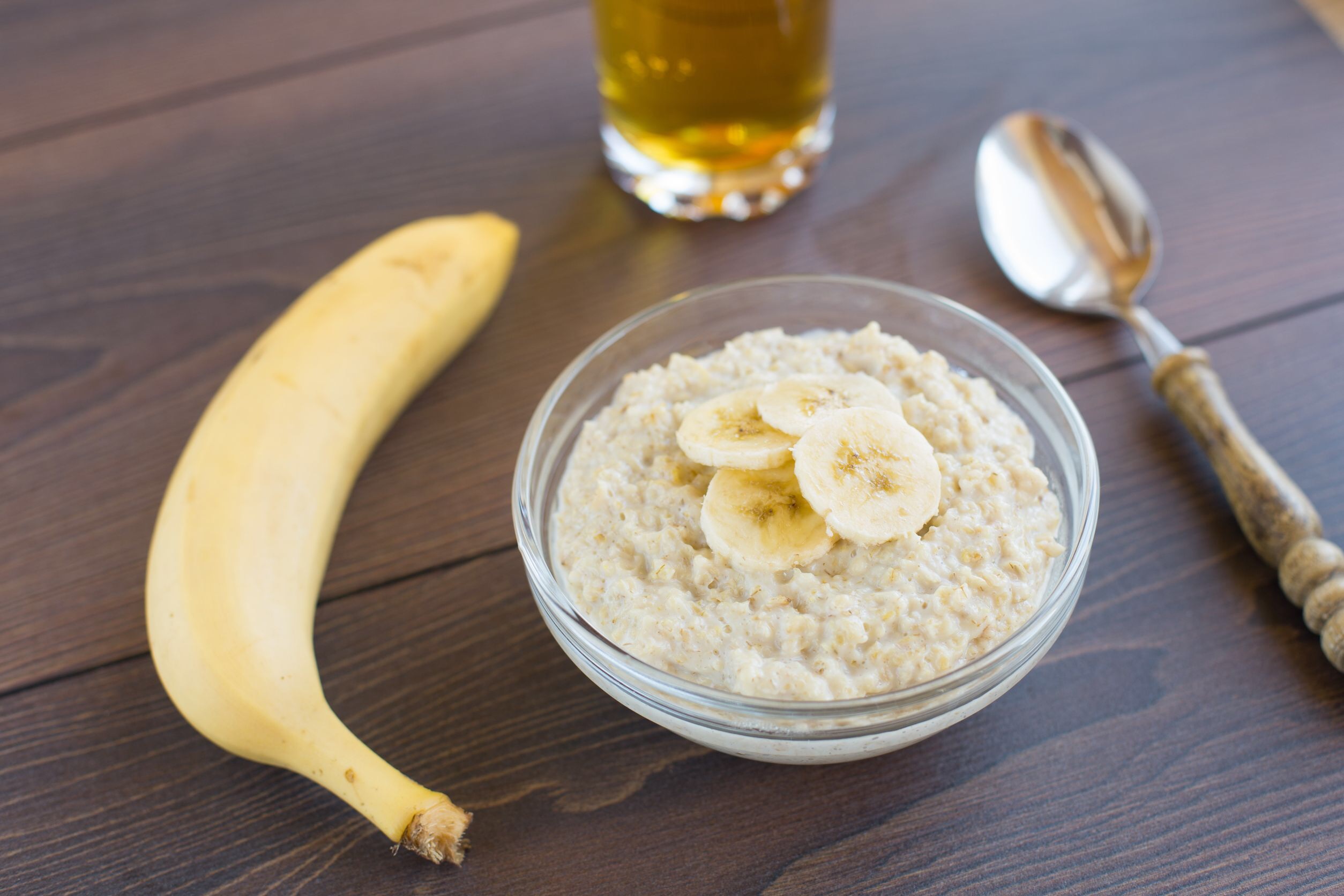

What’s the Problem with My “Healthy” Bowl of Oatmeal?


Food manufacturers have clever ways to market foods to us. Unfortunately, many foods that have a reputation for being healthy are no more than junk food disguised as a healthy food choice. I commonly see people under the influence of a “health halo” effect. This is due to strategic marketing efforts. People overestimate the nutritional value of a food that is labeled “good for you” or they underestimate the negative impact of a food because it contains a healthful ingredient, like flaxseed or fiber. In fact, a recent study from the University of Houston found that terms on food labels such as antioxidants, all-natural, and gluten-free often are used to give an otherwise standard food a "healthy" halo, and influence consumption from the well- intended consumer.

Case in point-- oatmeal. We’ve all heard about the cholesterol lower benefits from soluble fiber contained in oatmeal. It’s blasted all over packages with a paid endorsement from The American Heart Association. However, that’s not the whole story. Most people enjoy a cup of oatmeal with one to two tablespoons of added sugar and fruit such as a ripe, yellow banana. In other words, let’s enjoy a bowl of “send my blood sugar through the roof” high glycemic oatmeal. The glycemic index of oatmeal is 55, and instant oatmeal is 83. Top that with more table sugar, glycemic index 58-65 and better yet top that with a high glycemic, ripe banana with a GI of 62.

Preparing one packet of regular instant oatmeal with one tablespoon of sugar and a medium ripe banana five days per week would result in the sugar equivalent of more than 5 1/2 cups of sugar per month!

Furthermore, the story many Americans are missing is all of that sugar intake, from their so-called “healthy” bowl of oatmeal, actually raises small-dense LDL cholesterol particles, increases blood sugar and contributes to insulin resistance, faulty gut flora, and belly fat.

How do we improve upon our bowl of oatmeal? Enjoy a bowl of hot coconut flaxseed cereal, eggs any variety of ways, or last night’s leftover salmon and vegetables.

The Cureality program provides tools, guidance, and support that does not follow the party line but rather offers nutrition solutions that address the underlying causes for proliferation of many chronic diseases.

Power in Numbers


In his book, The Wisdom of Crowds, author James Surowiecki begins with the story of an ox judging competition in which 800 people—not ox experts nor breeders, just ordinary people attending a county fair—were asked to guess the weight of the ox. The competition was conducted by a scientist, Francis Galton, who held a low opinion of the intelligence of the average person, remarking that “the stupidity and wrong-headedness of many men and women being so great as to be scarcely credible.” He hoped to prove, by examining the various guesses, that the average person had no idea of how to judge the real answer. After all participants casted their written votes, Galton tallied up the total and averaged the result: 1,197 pounds—just one pound off from the real weight of 1,198 pounds. Few individuals actually guessed the correct weight themselves but, when the opinions of many were combined, the result was near-perfect.

Crowds can also be a source of irrational behavior, panic, and stampede. Witness any modern football or soccer game, for instance, in which fights break out over an issue as minor as a disputed call or a heckle. Or go back through history to the countless events when mass hysteria ruled, such as the Salem Witch Trials or Orson Welles’ War of the Worlds radio broadcast.

Let’s put aside examples of mass emotional chaos of the sort that causes crowds to stampede store doors on Black Friday. Let’s focus instead on conscious, considered, thoughtful opinions. We all accept that there are as many opinions on issues as there are people, not uncommonly with widely divergent views. But can we, as Galton’s famous experiment did, combine the opinions of many and come away with some fruitful insight—the correct answer? Just as the people participating in Galton’s experiment were not experts, so Cureality participants—a crowd-sourced collection of opinions—are not experts. If we were to poll everyone to identify their area of expertise or experience, it would likely include finance, the retail industry, raising children, or teaching—but not health. Yes, we have experts curating the direction of content, but we also crowd-source collective opinion.

Right now, Cureality is based on existing science, the philosophy of self-directed health, combined with guidance and community to help the participant along in the sometimes complex world of health questions. But as our processes and procedures improve, can we—like Galton’s ox weight guessers—come away with coalescent wisdom, answers to our health questions, near-perfect solutions to health conditions that have eluded the “experts” for centuries?

I think that we can. No, I know that we can. We enter a new age in information and harness the power of the crowd-sourcing of solutions, even when no single individual has the complete answer herself.

Use This Trick to Boost Exercise Motivation


Are you been struggling to get your workouts in? 

Do you belong to a gym and find that you're not going?

Do you have exercise equipment sitting in your basement collecting dust because you find that you just can’t get yourself down there?

If you answered, “yes” to any of these questions you are not alone. Many people struggle with finding the motivation to exercise.

The problem here is that you have head trash going on. Head trash is that voice inside your head coming up with a million excuses that inhibit you from carving out a bit of time to take care of yourself.

Head trash will tell you that you’re too tired, even though a workout would give you a boost of energy.

Head trash will tell you that you’re too busy, even though you just spent a half hour on Facebook.

Head trash is barking at you to take care of others, even thought you know your health is important for you well being.

Head trash is a real conflict that can get in the way of our health and fitness goals. We start an exercise program with the intentions of a long-term commitment. But after the initial excitement wears off, we find our workouts occurring less frequently. Head trash begins to take over and soon we find ourselves not exercising at all.

Here is my secret for winning the battle over the head trash that keeps getting in way of your workouts. Tell yourself that you are only going to exercise for 10 minutes and evaluate if you want to continue. If you're truly too tired you can stop after 10 minutes. If you're truly too busy you can stop and move onto a task that needs your attention.

Making this deal with your mind that you are only going to exercise for 10 minutes seems reasonable. The head trash will become quite because your mind is convinced it has an out within 10 minutes.

I've used this 10-minute trick myself. I grind through the first few minutes, but then the magic happens. Once you hit the 10-minute mark your body takes over. Exercise feels amazing and your body is energized and enjoying the movement. You have tricked your mind to get over the hurdle of starting and now you’re in the exercise groove.

Try the 10-minute trick next time your head trash is getting in the way of your workout. You'll be amazed how your workout consistency improves.

All posts by william-davis

How much omega-3s are enough?

The basic dose we advocate for the Track Your Plaque program is 1200 mg per day of EPA + DHA, the essential omega-3 fatty acids.

1200 mg EPA+DHA is generally obtainable by taking 4 capsules of 1000 mg of fish oil, since the majority of preparations contain 180 mg EPA and 120 mg DHA per capsule.

But how will you know if a higher dose wouldn't be even better?

The principal parameter to look at is triglycerides. If triglycerides remain above 60 mg/dl, we usually consider increasing fish oil.

Another measure that's very important is intermediate-density lipoprotein, or IDL, also called "remnant lipoproteins" on a VAP panel. Persistence of any IDL or remnant lipoproteins is reason to consider more fish oil. Most commonly, if there is some persistence of either, we increase fish oil to 6000 mg per day of a standard preparation, or 1800 mg/day of EPA+DHA.

The only time we see persistence of IDL or remnant lipoproteins with this higher dose is when triglycerides are really high. If starting triglycerides are, for instance, 500 mg/dl, then even this higher dose may be insufficient. This is when more highly concentrated preparations of fish oil may be necessary, occasionally even the prescription form, Omacor. (We currently use Omacor only when high doses of EPA+DHA are required, most because of its outrageous cost. Two capsules per day costs around $120 per month; three capsules per day to provide 1800 mg/day of EPA+DHA costs $180 per month. I think this is outrageous and so we use it only when absolutely necessary.)

You might even argue that a higher dose of 1800 mg EPA+DHA, or 6000 mg of a standard capsule, might be preferable for more assured reduction of heart attack risk--even when triglycerides and IDL are perfectly under control. I wouldn't argue with you. But you won't observe any measurable feedback that tells you that a heightened effect is being obtained. I take that dose myself, in fact, despite the fact that elimination of wheat products and weight loss was sufficient to drop my triglycerides to the target level. I figure it's a small additional effort for added peace of mind.

Repentance for past sins

If you are new to the Track Your Plaque program and would like to jump start your effort, or if you are struggling with losing weight and excess weight is a part of the situation that created your CT heart scan score, then don't forget about fasting.

Fasting is the cessation of eating. However, recall from the Track Your Plaque Special Report, Fasting: Fast Track to Control Plaque at http://www.cureality.com/library/fl_04-012fasting.asp, there are many variations on fasting that permit some intake of healthy foods. (Thus, they are not, in the strict sense, "fasting". Accurate or no, there are variations that may be more palatable or do-able in the real world by real people.)

My personal favorite method to fast is to use a low-sugar, low-fat soy milk such as Light Silk, available at most major grocery stores. This high-protein, low-fat, low-sugar soy milk takes the edge off hunger and provides a minimal quantity of calories. A minimum of 72 hours is required for substantial results. (My one reservation about this brand of soy milk is that the Fanatic Cook claims that the manufacturer, Dean Foods, is a factory farm operation that abuses livestock--a discussion for another day.)

Fasting yields more than weight loss. It refreshes your appreciation for food. It reawakens you to the amount and quality of food you've been putting in your body. Fasting also allows you to recognize just how bad you might feel from the diet you were eating.

You also emerge from a fast with a reduced appetite and a renewed sense of appreciation for food. It makes the discipline of healthy eating a lot easier when you break your fast.

I tell people that fasting is not punishment. It is a form of enlightenment, of re-experiencing food and life. Fasting allows you to "catch up" on all the indiscretions you've been guilty of over the years.

It also provides enormous advantage in gaining control over coronary plaque.

A fanatic for Fanatic Cook

If you haven't already done so, I'd urge you to peruse the wonderfully insightful, sophisticated, and biting commentary provided by the Fanatic Cook Blog at http://fanaticcook.blogspot.com.

She (I assume it's a she) has been discussing the proposed Safe Food Act recently, an effort to address all the dangers in foods that have come to attention lately, like melamine in pet food and E. coli in bagged spinach. Her most recent post is:

Nebraska Farm Bureau Thinks Food Safety Act Bad Idea, the latest in a series of posts exploring this issue.

I'd like to know who the Fanatic Cook is, or "Bix" as she calls herself. (I assume it's a "she" but I don't really know that for a fact.) I've corresponded with her and she prefers to remain anonymous for unspecified reasons. I'd like to know who this person is both for a more secure sense of credibility, as well as I'd simply like to know who can write so intelligently and why. I suspect that she's a professional nutrition scientist or something along those lines, since the level of insight into many scientific issues is quite impressive. Her Blogs will make great material for a book, if compiled and organized. Watch out for this one.

Erectile dysfunction and coronary plaque

Erectile dysfunction (ED), previously known as "impotence," and coronary atherosclerotic plaque go hand in hand.

A recent study in men with advanced coronary disease showed that 93% experienced ED. The participants in the Track Your Plaque program, for the most part, do not have advanced coronary atherosclerosis, but have an earlier form detected by a CT heart scan.

What proportion of men with asymptomatic coronary plaque as measured by a CT heart scan have ED? Around 50%. In other words, it's not a rare occurrence.

The conversation about ED (and even its renaming from impotence) really gained momentum with the development of ED-drugs like Viagra and Cialis. The drugs are reasonably effective and safe. However, you will hear little about all the strategies that can either precede your need for these drugs and/or enhance your response to these drugs if the response is partial. That part of the conversation, of course, doesn't yield loads of drug company revenues.

One of the most helpful and specific nutritional supplements available that can partially restore the nitric oxide-deficiency of ED is l-arginine. L-arginine is the body's source of nitric oxide (NO), the master dilator (relaxing agent) for all arteries of the body. NO dilates penile arteries, it dilates coronary arteries. Lack of NO disables the penile capacity for erection and encourages growth of coronary atherosclerotic plaque. Track Your Plaque Members are already familiar with l-arginine as a facilitator of coronary plaque regression.

We will detail the supplements that you can use safely in your Track Your Plaque program to both enhance erectile function if you suffer ED, as well as impact positively on coronary health, in an upcoming and detailed Special Report on the www.cureality.com website.

An exercise in optimism

Followers of the Track Your Plaque program already know that maintaining an optimistic viewpoint is important in gaining control over coronary plaque.

In fact, I believe that, in many cases, a sense of optimism may make or break your CT heart scan score-reducing efforts. Pessimists rarely drop their score, while optimists do so all the time.

This week posed a challenge to my optimism. I spent the last week on jury duty hearing the details of a murder case. For four days, I listened to blow-by-blow testimony about the totally pointless, unprovoked death of a young man by a drug-dealing thug. Much of the witness testimony was from people who shared the hopeless, violent world of the defendant.

I was, however, completely impressed by the dedication of the prosecuting attorney, a 50-some year old man who was clearly deeply dedicated to his mission and didn't once provide any indication that he was grandstanding or looking for some personal glory. He was doing his job and trying to obtain justice for the fallen victim. I was equally impressed by the judge, who seemed unfazed by the events but carefully explained why the system worked the way it did. After the trial, he provided some further insights to us jury members and I saw him as a human being who, like the prosecutor, was trying to make a small contribution to making the world better.

Though many of the witnesses who testified against the defendant shared his world, I was impressed with their courage in coming forward. They face the threat of reprisals, I'm sure, for coming forward to the law and testifying against a known career criminal. Several of them said that they were not after any reward, but simply wished to do the right thing and provide testimony that proved damning against the defendant.

I acted as the jury foreman and I was proud of how the jury members listened carefully, asked intelligent and probing questions, and then helped us render a confident and expeditious sentence: guilty.

If anything, despite the tragic circumstances, I was much heartened at how all the participants in this process played their part and justice (at least in the legal sense) was served.

Let optimism prevail, even in dire circumstances.

No need to re-invent the wheel

I seem to be repeating myself lately, but I think this does bear repeating:

There's no need to re-invent the wheel when it comes to gaining control over your heart scan score.

The Track Your Plaque program is the most powerful approach known to help you gain control over your coronary atherosclerotic plaque and CT heart scan score, bar none. While 100% of people do not drop their score, more and more people every week are doing so. (One of the admitted weaknesses of the Track Your Plaque website is our failure to list more success stories; we're working on it.)

The basic program is quite simple:

--The Rule of 60 for lipids (LDL 60 mg/dl; HDL 60 mg/dl or greater; triglycerides 60 mg/dl or less)

--Identify hidden causes of plaque, esp. small LDL, Lp(a), and IDL, followed by specific corrective action

--Fish oil--minimum 1200 mg per day of EPA + DHA

--Normal vitamin D3 blood levels (We aim for 25-OH-vitamin D3 of 50-60 ng/ml)

--Normal blood sugar (<100 mg/dl)

--Normal blood pressure (<130/80)

--An optimistic attitude


Much of the other stuff--vitamin K, matrix metalloproteinase reducing strategies, flavonoid strategies, exercise-induced hypertension, etc.--are, for the majority, fluff. Their real role is in people who may have failed in stopping the rise of their heart scan score just doing the basics of the program.

If you neglect the basics, hoping to find some magic potion, I'm afraid the overwhelming likelihood is that you will fail. I've seen it happen time and again. Someone will come to my office with an extraordinary list of supplements--hawthorne, dozens of anti-oxidants, EDTA, concentrated flavonoid preparations, and on and on. Not only is it shockingly expensive to do this, it's also unnecessary and foolhardy. This kind of unfocused, hocus-pocus in the hopes of getting it right fail time after time.

The Track Your Plaque program, while not foolproof, is the best I know of. Stick to the basics and wander off when the basics fail. But there's extraordinary power in just achieving the basics.

Are we a front for drug companies?

I was shocked recently when someone accused me and the Track Your Plaque website of being nothing more than a front for the drug industry, that we are promoting concepts with the hidden pharmacuetical agenda behind us.

Don't make me laugh. How in the world that kind of impression could be gotten from either the Heart Scan Blog or the Track Your Plaque website is beyond me.

But I occasionally do need to state explicity: We do not promote drugs, neither this Blog nor the Track Your Plaque website has ever sought nor been backed by pharmaceutical money. The only money that supports this website is our own and that from paying Track Your Plaque members.

In fact, I am quite proud of the unbiased content and commentary on both venues. I challenge anyone to point out how and where there is any suggested relationship to a hidden source of commercial backing. I assure you, there is none.

If I say a drug is worth you and your doctor considering, then I say so with a true belief in it, not because somebody or some company paid me to say so. If I say a drug stinks, I believe that too. If we use a specific supplement in the program, it's because we believe it truly adds value to a plaque-reversal program. We receive no money from drug, supplement, or other commercial interests to promote their products. Period.

What is "normal"?

When it comes to laboratory values and medical testing, a common dilemma is knowing what is "normal." Let me explain.

First of all, when you receive a laboratory result for a test, a "reference range" or "normal range" is usually provided. Where did that range come from?

It varies from test to test. For instance, a low potassium is easy, because low potassium levels can lead to life threatening consequences, e.g., dangerous heart rhythms. High potassium likewise, because dangerous phenomena develop when potassium generally exceeds 5.5 mg/dl or so.

But what about something like HDL or LDL. Here's where confusion reigns. Often, "normal" is obtained by taking the average and saying that any value plus or minus two standard deviations (remember that painful class?) represents normal or reference range.

If that were true, what if we applied that principle to body weight. If we weighed several thousand adult women, the average would be in the neighborhood of 172 lbs (no kidding). Does that mean that 172 lbs plus or minus two standard deviations is normal? No, of course not.

There is therefore a distinction between "normal" and "desirable". For HDL cholesterol, your laboratory report might say that an HDL cholesterol of 40-60 mg/dl is normal. But is it desirable? I don't think so. The most frequent HDL level for a male with a heart attack is 42 mg/dl--hardly desirable.

Let's take triglycerides. The average triglyceride level in the U.S. is somewhere around 140 mg/dl. For those of us who do a lot of lipoprotein testing, we can tell you that triglycerides at this level, though generally regarded as being within the normal range, are associated with flagrant and obvious excesses of several abnormal lipoprotein particles that contribute to coronary plaque growth (VLDL and often IDL; small LDL; drop in HDL and shift towards small HDL).

So, always take the so-called "normal" or "reference" values on a lab report as crude guidelines that often have little or nothing to do with health or desirability. Unfortunately, many physicians are not aware of this and will declare any value within the normal or reference range as okay. An HDL of 40 mg is not okay. A triglyceride level of 140 mg is also not okay.

What is okay? What is desirable? That depends on the parameter being examined. From a basic lipid standpoint, of course, we regard desirable as 60-60-60. Desirability from a lipoprotein standpoint we will cover in a more thorough Track Your Plaque Special Report in future.

The wisdom of the masses

My sister sent me these quotes:


"We don't like their sound, and guitar music is on the way out."

Decca Recording Co. rejecting the Beatles, 1962


"Stocks have reached what looks like a permanently high plateau."

Irving Fisher, Professor of Economics, Yale University, 1929


"Airplanes are interesting toys but of no military value."

Marechal Ferdinand Foch, Professor of Strategy, Ecole Superieure de Guerre, France


"Everything that can be invented has been invented."

Charles H. Duell, Commissioner, US Office of Patents, 1899


No doubt, conventional wisdom can often be laughably (tragically?) wrong. The problem is that, as absurd as all the above sentiments seem to us now and in retrospect, they represented the view of many people years ago. These views were held by many, including many people in positions of power and decision-making responsibility.

A more relevant but nonetheless laughable and widely held belief in 2007: coronary heart disease should be treated with hospital procedures.

Why is a disease that requires 30 years to develop treated only at the final moments with a procedure? Do you only change your car's oil when the engine is on its last legs? Or, do periodic, relatively effortless oil changes during the life of the car make better sense?

I witness just how brainwashed the public has become with this crazed notion when I meet someone socially at, say a fundraiser or cocktail party. When they ask what I do, I tell them I'm a cardiologist. The invariable response: "Oh, what hospital do you work out of?"

I tell them I don't, that I take care of the majority of heart disease right from the office. 99% of the time I get a puzzled look. If we had comic bubbles above our heads revealing our internal thoughts, it would read "Yeah, right. What a kook."

The notion that coronary heart disease is something that is manageable with simple tools for the majority of us in the early stages is entirely foreign to almost everybody. The hospitals and the medical industry have so succeeded in dazzling the public with images of staff in scrubs, rushing from emergency to emergency, lights flashing, scalpels flying. . . how can you possibly accomplish this at home or anywhere outside of the high-tech world of the hospital?

Well, I'm a cardiologist and I do it every day. We all need a figurative dose of electroshock therapy to shake ourselves of this crazy notion.

How important is l-arginine?

Perhaps more than any other supplement, l-arginine causes frustration and confusion. It’s difficult to find, sometimes quite expensive, and some preparations cause loose stools.

Just how necessary is it?

L-arginine, you’ll recall, is a source of nitric oxide, or NO. Though it’s the same stuff as in car exhaust, NO provides a critical signaling role in your body’s cells that regulate a multitude of functions. Among the important roles of NO is to powerfully dilate, or relax, arteries. A constant flow of NO is required for health, particularly since each molecule persists only a few seconds.

L-arginine is the body’s source of nitric oxide. In addition, a peculiar but very effective blocker of l-arginine called asymmetric dimethylarginine, or ASDM, has recently been discovered to prevent the production of NO. Varied conditions like hypertension, diabetes, high cholesterol, excessive saturated fat or processed carbohydrate intake all lead to heightened levels of ASDM, often several-fold greater levels, and thereby effectively blocking NO production.

The “Arginine Paradox” is the name that some researchers in this field have given to the unusual property of l-arginine supplementation to “overpower” the blocking effects of ASDM. This is somewhat unusual in biologic systems in that an agent that blocks a receptor cannot usually be outmuscled by providing excess material for a reaction. Kind of like hoping that your car runs faster simply by topping up the gas tank.

Concrete observable benefits have been made for l-arginine in clinical trials, such as arterial relaxation that results in arterial enlargement (which can actually be seen in the cath lab); anti-inflammatory effects; reduction of blood pressure; enhancement of insulin responses, etc. All of these effects can be connected to beneficial properties that may facilitate atherosclerotic plaque regression and, indeed, there are limited data to document that this is true.

Drug companies may be greedy, but they’re not stupid. They’ve been vigorously pursuing this line of research for some years, a research path that led inadvertently to the erectile dysfunction agent, sildenafil (Viagra), and all its subsequent competitors. (Erectile dysfunction is another expression of endothelial dysfunction, since male erections are driven by the ability to dilate penile arteries.) The wonderful properties of NO enhancement continue to occupy research labs around the world.

Wow. So what’s the reluctance? In the early years of the Track Your Plaque program (meaning just a short 7-8 years ago), I was thoroughly convinced that l-arginine was a crucial, necessary part of a plaque regression program. Without it, you would rarely succeed. With it, the odds were tipped in your favor.

However, something curious has emerged recently. I’ve seen more and more people dropping their heart scan scores. Not just a little bit, but a huge amount. Witness our most recent record holder, Neal, who dropped his score 51% in 15 months. Just five years ago, this magnitude of reversal was unimaginable. Granted, Neal is our record holder, but others are obtaining 10, 18, 24, 30% drops in scores all the time. Many have done it without l-arginine.

Now, how about the people who have failed to stop a rising score? Would they do better with l-arginine as part of the mix? I believe so, but sometimes we never quite know except in retrospect. It has been a great dilemma for us trying to predict from the starting gate who will or who won’t drop their heart scan score.

My view from the trenches is that l-arginine packs its greatest atherosclerosis-fighting punch in the first year or two of use, when “endothelial dysfunction” is likely to be present (abnormal artery constriction). But as all other strategies take hold—fish oil, correction of lipid and lipoprotein abnormalities, weight loss (big effect), vitamin D (another very big effect), etc.—endothelial behavior improves over time. Perhaps l-arginine becomes a less necessary component over time.

There’s no doubt that uncertainty still surrounds the use and science surrounding l-arginine. However, if you’re interested in stacking the odds in your favor, particularly during the first year or two of your plaque-reducing efforts, I think that l-arginine is worth considering. It is cumbersome, it can be expensive, some preparations may even be foul. But in the big picture of life, with hospitals trying every possible ploy to get your body on a table for a procedure, doctors perverting their mission by signing employment contracts with hospitals and agreeing to usher you into the hospital as a paying patient whenever possible, and drug companies viewing you and me as a market for medications which may or may not be helpful, l-arginine is surely not that big a burden.