e image this clearly did not work. After a mere two days the green bananas were no longer green. What I found works best is placing the green bananas in the fridge. This halts the ripening process. The skin of the banana will turn brown, which is normal, but the fruit inside is still good. I’ve kept bananas in my fridge for up to 8 days and they hold up well other than the brownish black discoloring that develops on the skin. The banana will be firm and require a knife to cut the skin off the banana.

If you’d like to learn more about prebiotics and strategies to support resolution of common gastrointestinal complaints read the recently release Cureality Guide to Healthy Bowel Flora by Dr. Davis. This guide is one of the many valuable resources available exclusively to Cureality.com members.
---Lisa Grudzielanek, MS, RDN,CD,CDE
Cureality Nutrition Specialist

Something is Better Than Nothing



This past weekend I attended a fitness conference with an amazing lineup of presenters. Even after 11 years in the fitness industry, I love attending these events. I’m a lifetime student always learning more and honing my craft.

I went to a presentation by Al Vermeil about joint mobility, not knowing anything about him. To my surprise, Al was the strength and conditioning coach for the Chicago Bulls and the San Francisco 49ers the years these teams won championships in their respective sports. That’s a pretty impressive resume.

Al was a great presenter, full of fun and practical advice. During his presentation, Al said the following statement:

“Every time you miss a workout, the next one is easier to miss.”

This statement really hit home because I’ve seen this time and time again working in the fitness industry and in my own life. One workout is missed, then an entire week of workouts are missed, then it’s been an entire month of never setting foot back into the gym.

It’s easy to get thrown off your workout routine when life gets busy and days get long. So what do you do? Do you just trash your workout plan?

The all or nothing attitude is common when it comes to making health changes. Either you’re following your plan 100% or you not. I’m here to tell you that doing something is better than nothing. Doing part of your workout or a mini workout is better than missing an entire workout.

The other day I had the choice to do something or nothing. I had a full day of work meetings, video, and family commitments. Here is what happened. I did shorter variation of my joint mobility routine. I followed that with a quick kettlebell circuit of 25 kettlebell swings, 12 kettlebell overhead presses, and 12 kettlebell goblet squats. I did three rounds of this circuit. That’s it! The following day, I got back to my regular exercise routine.

Be consistent with movement and you’ll always see improvements. That’s the magic of exercise. You'll get better if you just do it.
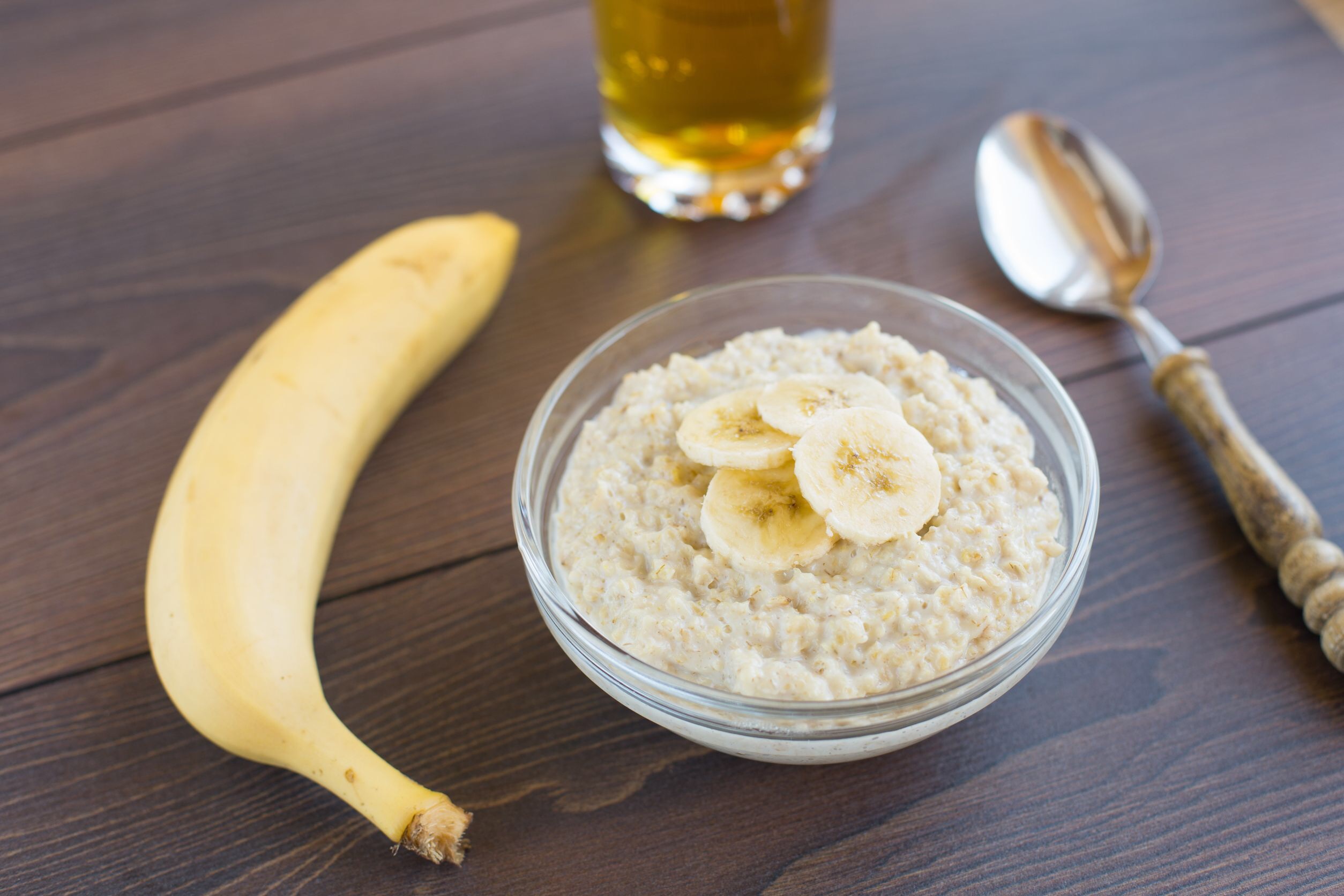

What’s the Problem with My “Healthy” Bowl of Oatmeal?


Food manufacturers have clever ways to market foods to us. Unfortunately, many foods that have a reputation for being healthy are no more than junk food disguised as a healthy food choice. I commonly see people under the influence of a “health halo” effect. This is due to strategic marketing efforts. People overestimate the nutritional value of a food that is labeled “good for you” or they underestimate the negative impact of a food because it contains a healthful ingredient, like flaxseed or fiber. In fact, a recent study from the University of Houston found that terms on food labels such as antioxidants, all-natural, and gluten-free often are used to give an otherwise standard food a "healthy" halo, and influence consumption from the well- intended consumer.

Case in point-- oatmeal. We’ve all heard about the cholesterol lower benefits from soluble fiber contained in oatmeal. It’s blasted all over packages with a paid endorsement from The American Heart Association. However, that’s not the whole story. Most people enjoy a cup of oatmeal with one to two tablespoons of added sugar and fruit such as a ripe, yellow banana. In other words, let’s enjoy a bowl of “send my blood sugar through the roof” high glycemic oatmeal. The glycemic index of oatmeal is 55, and instant oatmeal is 83. Top that with more table sugar, glycemic index 58-65 and better yet top that with a high glycemic, ripe banana with a GI of 62.

Preparing one packet of regular instant oatmeal with one tablespoon of sugar and a medium ripe banana five days per week would result in the sugar equivalent of more than 5 1/2 cups of sugar per month!

Furthermore, the story many Americans are missing is all of that sugar intake, from their so-called “healthy” bowl of oatmeal, actually raises small-dense LDL cholesterol particles, increases blood sugar and contributes to insulin resistance, faulty gut flora, and belly fat.

How do we improve upon our bowl of oatmeal? Enjoy a bowl of hot coconut flaxseed cereal, eggs any variety of ways, or last night’s leftover salmon and vegetables.

The Cureality program provides tools, guidance, and support that does not follow the party line but rather offers nutrition solutions that address the underlying causes for proliferation of many chronic diseases.

Power in Numbers


In his book, The Wisdom of Crowds, author James Surowiecki begins with the story of an ox judging competition in which 800 people—not ox experts nor breeders, just ordinary people attending a county fair—were asked to guess the weight of the ox. The competition was conducted by a scientist, Francis Galton, who held a low opinion of the intelligence of the average person, remarking that “the stupidity and wrong-headedness of many men and women being so great as to be scarcely credible.” He hoped to prove, by examining the various guesses, that the average person had no idea of how to judge the real answer. After all participants casted their written votes, Galton tallied up the total and averaged the result: 1,197 pounds—just one pound off from the real weight of 1,198 pounds. Few individuals actually guessed the correct weight themselves but, when the opinions of many were combined, the result was near-perfect.

Crowds can also be a source of irrational behavior, panic, and stampede. Witness any modern football or soccer game, for instance, in which fights break out over an issue as minor as a disputed call or a heckle. Or go back through history to the countless events when mass hysteria ruled, such as the Salem Witch Trials or Orson Welles’ War of the Worlds radio broadcast.

Let’s put aside examples of mass emotional chaos of the sort that causes crowds to stampede store doors on Black Friday. Let’s focus instead on conscious, considered, thoughtful opinions. We all accept that there are as many opinions on issues as there are people, not uncommonly with widely divergent views. But can we, as Galton’s famous experiment did, combine the opinions of many and come away with some fruitful insight—the correct answer? Just as the people participating in Galton’s experiment were not experts, so Cureality participants—a crowd-sourced collection of opinions—are not experts. If we were to poll everyone to identify their area of expertise or experience, it would likely include finance, the retail industry, raising children, or teaching—but not health. Yes, we have experts curating the direction of content, but we also crowd-source collective opinion.

Right now, Cureality is based on existing science, the philosophy of self-directed health, combined with guidance and community to help the participant along in the sometimes complex world of health questions. But as our processes and procedures improve, can we—like Galton’s ox weight guessers—come away with coalescent wisdom, answers to our health questions, near-perfect solutions to health conditions that have eluded the “experts” for centuries?

I think that we can. No, I know that we can. We enter a new age in information and harness the power of the crowd-sourcing of solutions, even when no single individual has the complete answer herself.

Use This Trick to Boost Exercise Motivation


Are you been struggling to get your workouts in? 

Do you belong to a gym and find that you're not going?

Do you have exercise equipment sitting in your basement collecting dust because you find that you just can’t get yourself down there?

If you answered, “yes” to any of these questions you are not alone. Many people struggle with finding the motivation to exercise.

The problem here is that you have head trash going on. Head trash is that voice inside your head coming up with a million excuses that inhibit you from carving out a bit of time to take care of yourself.

Head trash will tell you that you’re too tired, even though a workout would give you a boost of energy.

Head trash will tell you that you’re too busy, even though you just spent a half hour on Facebook.

Head trash is barking at you to take care of others, even thought you know your health is important for you well being.

Head trash is a real conflict that can get in the way of our health and fitness goals. We start an exercise program with the intentions of a long-term commitment. But after the initial excitement wears off, we find our workouts occurring less frequently. Head trash begins to take over and soon we find ourselves not exercising at all.

Here is my secret for winning the battle over the head trash that keeps getting in way of your workouts. Tell yourself that you are only going to exercise for 10 minutes and evaluate if you want to continue. If you're truly too tired you can stop after 10 minutes. If you're truly too busy you can stop and move onto a task that needs your attention.

Making this deal with your mind that you are only going to exercise for 10 minutes seems reasonable. The head trash will become quite because your mind is convinced it has an out within 10 minutes.

I've used this 10-minute trick myself. I grind through the first few minutes, but then the magic happens. Once you hit the 10-minute mark your body takes over. Exercise feels amazing and your body is energized and enjoying the movement. You have tricked your mind to get over the hurdle of starting and now you’re in the exercise groove.

Try the 10-minute trick next time your head trash is getting in the way of your workout. You'll be amazed how your workout consistency improves.

All posts by william-davis

Vitamin D deficiency is rampant

Today alone I've seen several people with severe deficiencies of vitamin D.

We're now checking everyone's blood vitamin D level at the start of the program. The measure that most accurately reflects your vitamin D status is 25-OH-vitamin D3. This is very confusing to many physicians, who traditionally have thought of 1,25-di-Hydroxy vitamin D3 as the standard test to measure. What they're failing to recognize is that this second measure is a kidney product, not a reflection of vitamin D status.

Using 25-OH-vitamin D3, several people today alone had levels of <10 ng/ml, clearly in the category of severe deficiency (generally regarded as <20ng/ml).

The majority of people we see in the office are Wisconsin residents. It's no wonder they're deficient. Although it's mid-May, we've seen the sun only a handful of days this year. And most of the days have been too chilly to wear short sleeves and shorts to permit sufficient surface area for UV exposure.

Living in a sunny climate, however, is no guarantee that you have sufficient blood vitamin D levels. Two recent studies have shown that 30-50% of the residents of sunny southern Florida and Hawaii are also deficient. (Why, I'm not sure.)

Although our experience thus far is anecdotal in several hundred people, my impression is that people who have normal blood levels of vitamin D (we regard normal as 45-50 ng/ml) have a far easier time of halting or regressing coronary plaque.

Vitamin D is among the most exciting nutritional tools we've come across in a long time. The conversation is making the media, which impresses me tremendously, given the fact that nobody stands to profit financially to any significant degree through vitamin D supplementation.

For a wonderful collection of discussions on vitamin D, go to Dr. John Cannell's website, www.vitaminDcouncil.com. You'll find a huge quantity of scientific background and conversation on the whole idea. I believe you will be thoroughly impressed with just how powerful the argument in favor of vitamin D has become.

What if wheat products were illegal?

Imagine if anything made of wheat were illegal: bread, bagels, crackers, pasta, pretzels, donuts, Shredded Wheat cereal, Raisin Bran, pastry, cookies, cakes, cupcakes. . . Your grocery store would then be unable to carry any of these products.

How empty would the grocery store shelves be?

There would be very little. The stores would be filled instead with vegetables and fruits, meats, and dairy products. But aisle after aisle would be empty. There'd be no cereal aisle. There'd be no snack chip aisle. The ordinarily overcrowded bread shelves wouldn't be there.

Bakery? Nope, not there either. Pasta and noodles? Empty. How about cakes and pastries? Also gone.

Getting the picture? American groceries are dominated by wheat products. What would happen to your health and the health of your family if wheat were abruptly removed from your choices? Would you be less healthy?

No. In fact, your health would be hugely improved. You'd lose a significant quantity of weight. Extraordinary numbers of people would lose diabetic or pre-diabetic tendencies. Feelings of sluggishness, sleepiness, and moodiness would dissolve. Blood pressure would be reduced. The incidence of cancer, skin disease, and inflammatory diseases would plumet.

From a plaque control perspective, your HDL cholesterol would rise, triglycerides drop. Small LDL would improve dramatically.

The message: Slash wheat products from your diet. Yes, you'll miss the smell and taste of freshly baked bread. But you'll do it for many more healthy years. And you may do it without a 14 inch scar in your chest.

The sobering tale of small LDL

Every day, I learn to respect small LDL more and more.

Small LDL particles, and its evil partner, low HDL, is among the most common reasons why someone fails to fully gain control of coronary plaque and heart disease risk.

Just yesterday, I saw a slender businessman (6 feet 1 inch in height, 186 lb.) whose small pattern persisted despite niacin, fish oil, oat bran, and raw almonds. We generally think of small LDL as an overweight person's pattern, but in some people the genetics are quite powerful and it can be expressed even in slender people.

The solution: More physical activity and exercise; cut back on processed carbohydrates, particularly wheat products like breads, pasta, crackers, breakfast cereals; think about magnesium (see our two recent reports on magnesium on the www.cureality.com membership website, the latest report to be posted this week); be sure sleep is adequate (gauge this by whether you're energetic during the day and don't fall asleep watching TV or movies). Lack of sufficient physical activity in people with sedentary jobs is probably among the most common reason the small LDL pattern persists.

Ignore small LDL and it can be like a hidden cancer in your body, growing and metastasizing (not literally, of course), fueling coronary plaque growth. Be sure your doctor assesses whether you have small LDL if you hope to gain control of your coronary risk.

Burn off the fat

If you've ever wondered just how many calories you're burning with various activities like yard work, driving, climbing stairs, etc. go to this great website that will calculate it for you: http://www.caloriecontrol.org/exercalc.html.

Here are some examples:


Dancing for 30 minutes(fast, e.g., tango): 193 calories
Yoga for 30 minutes: 204 calories
Washing the car for 30 minutes: 173 calories
Vacuuming for 30 minutes: 88 calories

(All are for a 170 lb person.)

As you see, physical activity does not necessarily have to consist of exercise. It doesn't require fancy equipment or expensive outfits. But it does require you to keep moving. Sedentary work is among the most common reasons I see in my patients for failing to control weight and its associated lipoprotein patterns, like low HDL and small LDL.

If your work is sedentary, then a minimum of 60 minutes of physical activity per day is necessary to begin to correct weight-related patterns. If you gauge by calories burned, then a useful goal is 500 calories per day in physical activity--at a minimum.

Go the distance!

How long should it take to stop or reverse coronary plaque growth? How long will it require to stop your heart scan score of, say, 350, from increasing at the expected rate of 30% per year, slow it down (we say "decelerate") to less than 30%, or stop it altogether? Or, actually reduce your score?

It can vary widely. Several simple patterns do seem to emerge, however. Our experience is that lower scores, particularly less than 100 at the start, are easier to gain control over. Scores of 50 or less, in fact, commonly can return to zero.

Higher scores, particularly those >1000, are more difficult to slow or reduce, though we've done it many times. You'll generally have to try harder and it may take longer. It's not uncommon to not stop plaque growth with a starting score this high until your 2nd or 3rd year of effort.

Sometimes it may take even longer. An occasional person requires four or five years to gain control. And there are, unfortunately, some people who never really gain complete control. They slow plaque growth compared to what it would have been with conventional efforts, but never completely halt growth. Why? Sometimes it's a matter of less than full commitment. Other times, we just don't know. Thankfully, these especially difficult cases are few and the majority enjoy substantial slowing or reversal.

Since, in some people, success may take time, you've got to stick it out. Have you ever gotten lost in a strange city only to find out later that the place you were looking for was right around the corner? It can be the same way with stopping coronary plaque growth. If you start with a score of 1000 and, after two years of effort, you've only slowed growth to 11% per year and then give up in frustration, you may have missed the opportunity to have stopped growth entirely in your third year.

All we can do is tip the scales heavily in your favor. We provide you with the best tools known. You've got to provide the commitment, the consistent effort of taking your supplements or medication, making the lifestyle changes, choosing the right foods and avoiding the wrong ones. But you've got to go the distance and not give up too easily.

What you need is an expert in health!

Where can you find an expert in health?

In my experience, they're hard--very hard--to find.

Your hospital? Certainly not the hospitals I know. The hospitals I know are experts in disease, but not in health. Hospitals are helpful when you're sick. But if you're well and would like to stay that way, there's no reason to hang around a hospital. Prevent cancer, prevent heart disease, stay well? There's no place for this conversation in a hospital.

In fact, hospital staff are among the most unhealthy people I come across. Obesity is a nationwide problem affecting millions of Americans. But it's especially a problem among people who work in hospitals. I shudder in horror when I go to a hospital cafeteria and witness the sorts of food they serve in hospitals and see what the staff eat. Should they be regarded as experts in health?

How about doctors? If you associate with physicians like the ones I know, most have lots of knowledge about disease, but little understanding of health. A rare one has insight and interest in health.

I went to a recent meeting with my cardiology colleagues. Food served: pizza, Coca-Cola, spaghetti, fried onion rings, white bread with butter. They all dug in without hesitation. Over half were miserably overweight. Several were, in fact, diabetic; several more, pre-diabetic. I know that at least several are smokers. Experts in health?

Drug companies? Well, they're interested in health only as far as it provides profits. But health for its own sake? Ask anybody from a drug manufacturer about their views on the nutritional supplement movement and watch them sneer.

Food manufacturers? You mean like Coca-Cola, Pepsi-Cola, Nabisco, and General Mills? How about fast-food operations like McDonald's, Pizza Hut, and KFC?

The message: Know where to look for genuine information on health. You won't get it from hospitals. You won't get it from drug company marketing. For the most part, you can't even get it from your physician.

Instead, you're going to witness a broad movement towards self-empowerment in health, fueled by the internet and services like ours (Track Your Plaque). These are information resources that are not driven by profit, intent on providing truth, and not afraid to reject prevailing views.

It does not mean that hospitals are unnecessary, or that food manufacturers are evil, or that fast food should be legislated out of existence. We live in a capitalistic society, driven by supply and demand. Hopefully, demand is borne from educated choices from informed consumers. That's where information that's reliable, credible, and not profit driven come in.

Lipoprotein(a) and small LDL

It's been my suspicion for some time that the combination of lipoprotein(a), or Lp(a), in combination with small LDL particles is a really bad risk for heart disease. People with this combination seem to have much higher heart scan scores for age than others. This seems to be a pattern that we'll see in the occasional woman less than 50 years old who already has a high heaert scan score. (It's unusual for women to have detectable coronary plaque before age 50.)

Very little data exists to support this idea and we are in the process of performing a small study to see whether it's true or not. My gut sense: it's among the most potent causes of coronary plaque around.

Case in point: Even though I spend a great deal of my time and energy advocating heart disease prevention, I still maintain my hospital privileges and skills. I had to cover one of the emergency rooms in town this past weekend (a requirement to maintain my hospital privileges).

One of the patients I saw was a 40-year old man--we'll call him Roland-- suffering a very large heart attack, a so-called "anterior myocardial infarction", or a heart attack involving the most important front portion of the heart. Thankfully, he came to the ER within 45 minutes after his chest pain started. The situation was immediately obvious and I was called to the ER. We quickly took him to the cardiac catheterization laboratory and put a stent in the left anterior descending artery and flow was restored. His chest pain dissipated over the next few minutes.

Nonetheless, Roland was left with a large area of reduced contraction of his heart muscle. Only time will tell how much recovery he'll have.

Roland was extremely lucky. The majority of people with closure of the artery that he'd experienced die within minutes. He did, in fact, "arrest" briefly, i.e., his heart became electrically unstable, though he recovered promptly.

Along with the multiple tubes of blood we required to run tests for his heart attack management, we had Roland's lipids and other measures sent off, as well. Wouldn't you know: Lp(a) and small LDL. This may have accounted for a heart attack at age 40.

Keep a lookout for this when you have lipoprotein testing. Conveniently, niacin can be used to treat both patterns, though higher doses are generally required for the Lp(a) part of the pattern. It's also my belief that the sort of Lp(a) measurement performed by the Liposcience laboratory (www.liposcience.com) is superior. They use a particle number based measure, not a weight-based measure. It is therefore independent of particle size, which can vary. Further work will, I believe, reveal some very important insights into the dreaded Lp(a).

"Please don't tell my doctor I had a heart scan!"

I overheard this recent conversation between a CT technologist and a 53-year old woman (who I'll call Joan) who just had a scan at a heart scan center:


CT Tech: It appears to me that you have a moderate quantity of coronary plaque. But you should know that this is a lot of plaque for a woman in your age group. A cardiologist will review your scan after it's been put through a software program that allows us to score your images.

Joan: (Sighing) I guess now I know. I've always suspected that I would have some plaque because of my mother. I just don't want to go through what she had to.

CT Tech: Then it's really important that you discuss these results with your doctor. If you wrote your doctor's name on the information sheet, we'll send him the results.

Joan: Oh, no! Don't send my doctor the results! I already asked him if I should get a scan and he said there was no reason to. He said he already knew that my cholesterol was kind of high and that was everything he needed to know. He actually got kind of irritated when I asked. So I think it's best that he doesn't get involved.


This is a conversation that I've overheard many times. (I'm not intentionally an eavesdropper; the physician reading station at the scan center where I interpret scans--Milwaukee Heart Scan--is situated so that I easily overhear conversations between the technologists and patients as they review images immediately after undergoing a scan.)

If Joan feels uncomfortable discussing her heart scan results with her doctor, where can she turn? Get another opinion? Rely on family and friends? Keep it a secret? Read up about heart disease on the internet? Ignore her heart scan?

I've seen people do all of these things. Ideally, people like Joan would simply tell their doctor about their scan and review the results. He/she would then 1) Discuss the implications of the scan, 2) Identify all concealed causes of plaque, and then 3) Help construct an effective program to gain control of plaque to halt or reverse its growth. Well, in my experience, fat chance. 98% of the time it won't happen.

I think it will happen in 10-20 years as public dissatisfaction with the limited answers provided through conventional routes grows and compels physicians to sit up and take notice that people are dying around them every day because of ignorance, misinformation, and greed.

But in 2006, if you're in a situation like Joan--your doctor is giving you lame answers to your questions or dismissing your concerns as neurotic--then PLEASE, PLEASE, PLEASE take advantage of the universe of tools in the Track Your Plaque program.

People tell me sometimes that our program is not that easy--it requires reading, thinking, follow-through, and often asking (persuading?) your doctor that some extra steps (like blood work) need to be performed. The alternative? Take Lipitor and keep your mouth shut? Just accept your fate, grin and bear it, hoping luck will hold out? To me, there's no rational choice here.

Doctor, why do I have heart disease?

I see a great many people in my practice who come for a 2nd opinion regarding their coronary disease.

When I ask patients whether they ever asked their primary doctor or cardiologist why they have heart disease in the first place, I get one of several responses:

1) My doctor said it from high cholesterol.

2) My doctor said it was "genetic" or "part of your family history" and so unidentifiable and uncorrectable. Tough luck.

3) I didn't ask and they didn't tell me.


Let's talk about each of these.

Can heart disease be only from high cholesterol and, if so, can taking a statin cholesterol drug be a "cure"? In the vast majority of cases, in my experience, cholesterol by itself is rarely the only identifiable cause of coronary disease.

Most people have a multitude of causes (e.g., small LDL, low HDL, vitamin D deficiency, concealed pre-diabetic patterns, etc.). This explains why many people with high LDL don't have heart disease and why others with low HDL do have heart disease. High LDL cholesterol is only part of the cause.

Does "genetic" or being part of your family's history also mean unidentifiable and uncorrectable? Absolutely not.

What your doctor is really saying is "I don't know enough to diagnose the causes because I haven't kept up with the scientific literature", or "I don't want to be bothered with this because it takes a lot of time and pays me very little money; I'd rather wait until you need a stent ", or "The drug representatives haven't told me about any new drugs". This is ignorance and laziness at best, greed and profiteering at worst. Don't fall for it. I hope that by now you recognize that the great majority of causes of heart disease are identifiable and correctable.

If you didn't think to ask, now you know that you should. If you and your doctor don't think about why you have coronary plaque in the first place, how can you develop a program to control it?

You need to ask. And you need to get confident answers. "I don't know" or "It's genetic" and the like are unacceptable.

Pill pushers

Have you read the latest cover story from Forbes magazine? It's entitled "Pill Pushers: How the drug industry abandoned science for salesmanship".

It's great reading. (A condensed version is available at the www.forbes.com website: http://www.forbes.com/business/forbes/2006/0508/094a.html. They require you to provide your e-mail address though it's free.)

Drug industry advertising has raised consciousness of all the prescription therapies available for us--that's good. However, they've gone so far overboard trying to squeeze more and more revenues out of drugs that they've cost this country a huge amount in increased health care costs and even lost lives. (Forbes does a great job of summarizing some of these instances.)

Drugs like Lipitor, Crestor, Zocor; diabetes agents; anti-hypertensive agents, etc., that is, medications taken chronically, a huge financial bonanzas for drug companies. Not only do they get $100-200 per month, but they get it month after month after month. That's per drug.

Now not all medications are bad or unnecessary. There are times when they can be truly necessary and beneficial. But don't rely on drug company advertising to tell us when.
