> (0)


Biofeedback is a wonderful, natural way to gain control over multiple physiological phenomena, a means of tapping into your body’s internal resources. You can, for instance, use biofeedback to reduce anxiety, heart rate, and blood pressure, and achieve a sense of well-being that does not involve drugs, side-effects, or even much cost.

Biofeedback simply means that you are tracking some observable physiologic phenomenon—heart rate, skin temperature, blood pressure—and trying to consciously access control over it. One very successful method is that of bringing the beat-to-beat variation in heart rate into synchrony with the respiratory cycle. In day-to-day life, the heart beat is usually completely out of sync with respiration. Bring it into synchrony and interesting things happen: you experience a feeling of peace and calm, while many healthy phenomena develop.

A company called HeartMath has applied this principle through their personal computer-driven device that plugs into the USB port of your computer and monitors your heart rate with a device clipped on your earlobe. You then regulate breathing and follow the instructions provided and feedback is obtained on whether you are achieving synchrony, or what they call “coherence.” As the user becomes more effective in achieving coherence over time, positive physiological and emotional effects develop. HeartMath has been shown, for instance, to reduce systolic and diastolic blood pressure, morning cortisol levels (a stress hormone), and helps people deal with chronic pain. Downside of the HeartMath process: a $249 price tag for the earlobe-USB device.

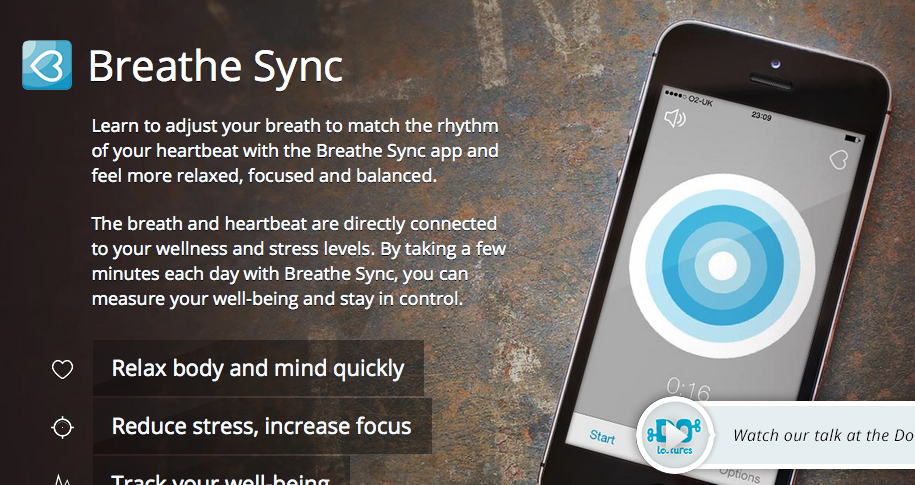
But this is the age of emerging smartphone apps, including those applied to health. Smartphone apps are perfect for health monitoring. They are especially changing how we engage in biofeedback. An app called Breathe Sync is available that tracks heart rate using the camera’s flash on the phone. By tracking heart rate and providing visual instruction on breathing pattern, the program generates a Wellness Quotient, WQ, similar to HeartMath’s coherence scoring system. Difference: Breathe Sync is portable and a heck of a lot less costly. I paid $9.99, more than I’ve paid for any other mainstream smartphone application, but a bargain compared to the HeartMath device cost.

One glitch is that you need to not be running any other programs in the background, such as your GPS, else you will have pauses in the Breathe Sync program, negating the value of your WQ. Beyond this, the app functions reliably and can help you achieve the health goals of biofeedback with so much less hassle and greater effectiveness than the older methods.

If you are looking for a biofeedback system that provides advantage in gaining control over metabolic health, while also providing a wonderful method of relaxation, Breathe Sync, I believe, is the go-to app right now.

How did Cureality get its start?


In the Cureality program, we embrace information and strategies that empower you in health without drugs, without hospitals, without procedures. We convert your doctor from director of healthcare to your assistant in health. He or she is there when you need help, but you largely direct your own health future.

How did we gain the know-how, information, tools, even chutzpah to take on such an ambitious project?


It started around 10 years ago with the awkwardly named Track Your Plaque program. In fact, some of the current followers of the Cureality program are former Track Your Plaque members, having learned of the wonderful list of strategies that can be adopted to gain better control over, even reverse, coronary atherosclerotic plaque and risk for heart attack. They also learned that something special happens when you engage with other people with similar interests, all sharing ideas, insights, and resources to get the self-directed health job done. Over time, what started out as simply a source of better information for coronary health evolved into a self-directed coronary disease management program. We never set out to create something as wildly ambitious as a do-it-yourself-at-home coronary disease risk management program, but that is how it inadvertently turned out.

How we went from Information Provider to Health Empowerment Program

So we never intended to take on something so seemingly impossible as managing coronary risk on your own. But, because we armed people with such empowering, profound insights into better ways to manage their heart disease risk beyond “don’t smoke, cut saturated fat, be active, and take a statin drug”—the typical advice offered by doctors—they returned after an interaction with their doctors disappointed: doctors often declared such strategies unnecessary, or the doctor didn’t understand them—even when there were clear-cut clinical data already available to support their use. In other words, the patients—everyday people, not experts—knew more than their doctors. 

This flip-flop in the balance of knowledge made for some very interesting stories, like “Harold” (not his real name) who, having survived a heart attack and received a stent, was told by his doctor to cut his fat intake, eat more whole grains, exercise, take aspirin and a beta blocker drug, and reduce his cholesterol values with a statin drug. Upon learning all the additional information from the Track Your Plaque program, Harold returned to his doctor and asked “I’m not so ready to just go along with this idea of ‘reducing cholesterol’ to address heart disease risk. Because my goal is to gain as much control over coronary disease as possible, maybe even reverse it, I’d like to address some additional issues that I believe may be important. I’d like to have my advanced lipoproteins drawn to measure the proportion of small LDL particles I have, whether I have lipoprotein(a), an omega-3 fatty acid index and 25-hydroxy vitamin D level, and a thyroid assessment. Oh, and I believe I should also have an assessment of my inflammation status, perhaps a c-reactive protein and phospholipase A2, and my blood sugar status measured with a fasting glucose, insulin, and hemoglobin A1c.” Harold’s doctor was dumbfounded and speechless. Rather than reveal his ignorance, his doctor advised Harold that none of that was necessary, sending him on his way and telling him that he was fine.

But this left Harold with a sour taste in his mouth, having engaged in many online discussions with people who had followed conventional advice that resulted in more heart attack, more heart procedures—the conventional answers simply did not work. He also discussed his situation with people who had successfully obtained the additional information he sought, added it to their program and enjoyed dramatically improved health, including freedom from more heart attacks, heart symptoms, and heart procedures, as well as improved overall health. So Harold found an easy way to obtain the testing on his own. Within a couple of weeks, he returned to his online community and shared all his information. Within moments, he was provided useful discussion to help him understand the values, all leading to changes in nutrition, nutritional supplement choices, how and where to get the simple tools necessary, such as iodine and vitamin D supplements. He even entered his data, choosing which values he was willing to share with others, which remained private, allowing him to compare his own follow-up values several months later. Engaged in this process, self-directed but collaborative, he witnessed marked transformations in his health. Not only did he never again—over several years—ever re-develop heart symptoms nor require any more trips back to the cath lab, he lost weight, reversed a pre-diabetic sugar profile, improved his cholesterol values without drugs, got rid of the acid reflux symptoms he endured for many years, dropped his blood pressure to normal, enjoyed better mood, energy, and sleep. Slender, healthier, all accomplished without his doctor. 

Harold returned to his doctor for a routine follow-up. Slender, energetic, without complaints, on no drugs except the aspirin for his stent, the basic laboratory assessment his doctor ordered in front of him, his doctor admitted,” Well, I don’t know how you’re doing it, but these values look like a 20-year old substituted his blood for yours. They’re unbelievable. What drugs are you taking to do this?” “No drugs,” Harold replied, “I’m following a program to reverse heart disease, but it means doing some things that are different from conventional solutions.” His doctor closed their meeting with the signature response of doctors nationwide: “Well, I don’t understand what you are doing, but just keep doing it.”

Yes, Harold knew more about how to control heart disease than his doctor, more than his cardiologist. The cardiologist knew how to insert a stent or defibrillator. But deliver information that empowered Harold in all aspects of health from head to toe, while also dramatically reducing, perhaps eliminating, his coronary disease risk? As you now know, that is not what conventional healthcare does, nor is it interested in doing so, as it would relinquish control and threaten to cut off this hugely profitable revenue stream that drives “healthcare.”

Having managed to inadvertently create a self-directed coronary risk management program with such spectacular results and in probably one of the most difficult areas of all—heart disease—it became clear that a similar approach could be even more easily applied to many other areas of health, such as weight loss, bone health, cholesterol and blood pressure issues, diabetes and pre-diabetes, hormonal health, autoimmune conditions, and others. You can do it when empowered by safe, effective information, and supported by a community of sharing and collaboration. We don’t fire our doctors; they are there when we need them when, for instance, we get injured or catch pneumonia, or as an occasional resource. But doctors should no longer be able to get away with neglect, misinformation, or blindly directing you to the next revenue-generating procedure because you are empowered by the information and support you receive in Cureality.

As we get more effective in delivering this information and new tools to you, just imagine what we can accomplish in this new age of information and self-empowerment. The future for us is bright with ambitions for better interactive tools with Cureality expert staff, better ways to crowd source health answers, provide more engaging community conversation, all while the health insights that help accomplish our self-directed health goals get better and better. Each person that joins Cureality helps make this service more effective because your wisdom, insights, and experience are added to the collective knowledge. We are more powerful together than we are as individuals.

If you are already a Cureality Member, please add your comments and questions to the growing conversation. If you are not a Member, consider joining our discussions, as each new voice gets us closer and closer to better answers to take back control over health.

Power in Numbers


In his book, The Wisdom of Crowds, author James Surowiecki begins with the story of an ox judging competition in which 800 people—not ox experts nor breeders, just ordinary people attending a county fair—were asked to guess the weight of the ox. The competition was conducted by a scientist, Francis Galton, who held a low opinion of the intelligence of the average person, remarking that “the stupidity and wrong-headedness of many men and women being so great as to be scarcely credible.” He hoped to prove, by examining the various guesses, that the average person had no idea of how to judge the real answer. After all participants casted their written votes, Galton tallied up the total and averaged the result: 1,197 pounds—just one pound off from the real weight of 1,198 pounds. Few individuals actually guessed the correct weight themselves but, when the opinions of many were combined, the result was near-perfect.

Crowds can also be a source of irrational behavior, panic, and stampede. Witness any modern football or soccer game, for instance, in which fights break out over an issue as minor as a disputed call or a heckle. Or go back through history to the countless events when mass hysteria ruled, such as the Salem Witch Trials or Orson Welles’ War of the Worlds radio broadcast.

Let’s put aside examples of mass emotional chaos of the sort that causes crowds to stampede store doors on Black Friday. Let’s focus instead on conscious, considered, thoughtful opinions. We all accept that there are as many opinions on issues as there are people, not uncommonly with widely divergent views. But can we, as Galton’s famous experiment did, combine the opinions of many and come away with some fruitful insight—the correct answer? Just as the people participating in Galton’s experiment were not experts, so Cureality participants—a crowd-sourced collection of opinions—are not experts. If we were to poll everyone to identify their area of expertise or experience, it would likely include finance, the retail industry, raising children, or teaching—but not health. Yes, we have experts curating the direction of content, but we also crowd-source collective opinion.

Right now, Cureality is based on existing science, the philosophy of self-directed health, combined with guidance and community to help the participant along in the sometimes complex world of health questions. But as our processes and procedures improve, can we—like Galton’s ox weight guessers—come away with coalescent wisdom, answers to our health questions, near-perfect solutions to health conditions that have eluded the “experts” for centuries?

I think that we can. No, I know that we can. We enter a new age in information and harness the power of the crowd-sourcing of solutions, even when no single individual has the complete answer herself.

What is Cureality all about?


“Looking over your medical record, Nancy, I’m a bit concerned about your risk for osteoporosis and hip fracture. It looks like your mom had a hip fracture at age 67. Is that right? ”

“Yes, she did,” Nancy responded. “And her life was never quite the same for the 15 years she lived after that.

“You’re 53 year old. Bone thinning develops over many years. Let’s get you scheduled for a bone scan.”

Two weeks later:

“Your z-score is 1.5, Nancy. This means you’ve got a mild form of osteoporosis called ‘osteopenia.’ Here: This is a prescription for alendronate, what used to be called Fosamax.”

“Aren’t there side-effects with that drug? A friend of mine said that her mom had a leg fracture from it.”

“Well, yes. All prescription drugs have potential side-effects. They’re rare, but they can happen and we can’t predict it. Besides leg fracture, there’s something called jaw osteonecrosis in which the jawbone dies and has to be surgically replaced. But would you rather run the risk of a hip fracture?”

“Before we jump to drugs, aren’t there natural things I could do first?”

(Big sigh.) “You can take calcium, but that only helps a bit. You’ve got to make a choice: Take the drug or risk a hip fracture.”

“I’m going to explore some natural remedies on my own first.”

Nancy’s dialogue with her doctor is fictional but based on similar encounters that occur thousands of times every day nationwide. Identify a problem, prescribe a drug. Natural remedies? “They don’t work.” “I don’t know anything about that.” “None of that is proven.” “I only practice evidence-based medicine.” You’ve probably heard a few of these explanations yourself if you ever question the wisdom of conventional medical care.

Each of Nancy’s fictitious interactions were no more 10 minutes long. If she is like most people, she will have one or two such interactions over the course of a year, unless she develops some acute illness. So she’s got something like 20-30 minutes per year to compress all of her “health” advice into the time allotted. 20-30 minutes per year to discuss bone health, nutrition, blood sugar issues, cholesterol issues, blood pressure, female issues, and all the other facets of health. Perhaps she has developed some chronic gastrointestinal complaints, too, and an odd rash on her elbows, maybe headaches a few times per week that she didn’t have before. Regardless, she’s going to have to make do with those few minutes, likely receiving one or more prescriptions or imaging procedures for each.

Such is the nature of modern healthcare: Provide the minimum interaction, address only a few, perhaps no more than one, problem, then prescribe a drug. This is, more often than not, wrong. Plain wrong. Tragically, awfully, unethically, unnecessarily wrong.

Let’s pick up again with Nancy. Upon learning of her osteopenia and long-term risk for hip fractures of the sort that changed her mom’s life and health irretrievably, Nancy started searching for solutions. Not only did she discover that, yes, there are indeed a number of safe and effective ways to deal with osteopenia. She also learned that such strategies have even been examined in clinical trials, some of the strategies pitted head-to-head with drugs and performed on a par, sometimes better, than prescription drugs. She also found that there are online communities that she could join and discuss her health situation with people all sharing the same health interests. During one such interaction at the start of her effort, when she was still a bit unsure and tentative, a woman she didn’t know but who shared a similar interest in restoring bone health, commented to Nancy, “Don’t sweat it, Nancy. I was in your shoes a little over a year ago. I followed a program for bone health: vitamin D, vitamin K2, magnesium, I made sure that I included leafy green vegetables at least once or twice per day, and I added strength training for a few minutes twice per week. I started with osteoporosis. My most recent bone density test showed that I reversed it completely—it’s entirely normal! So hang in there and be sure to share your questions and concerns with us here.”

THAT is what Cureality is all about. Cureality fills the gap of knowledge in health that is not being provided in a few minute-long medical interaction. Cureality reveals the astounding amount of credible, safe, scientific information that allows you to participate, sometimes take over completely, various aspects of health. You don’t have to fire your doctor; these efforts supplement the information and advice you obtain (or don’t obtain) in the doctor’s office. While critics may sometimes say that this can be dangerous or that misdiagnoses and dangerous treatments might be risked, our experience is the exact opposite: People do better by taking the reins of health themselves, choosing to use the health care system for acute or catastrophic illness—but not necessarily for health.

Our fictional woman, Nancy, returns to her doctor one year later after undergoing a repeat bone scan. The doctor opened her chart, clearly expecting to scold her for her foolhardy and careless attitude. Instead, he was speechless. After a pause, he said, “I don’t know how you did it, but your bone density is now normal, the density of a healthy 30-year old woman. Just continue doing what you’re doing.” He closed the chart and walked out.

Yes: “Just continue what you are doing”—not “Please tell me what you did so that I might learn something new,” or “Where did you learn about such strategies? I knew nothing about this!” Just “do what you’re doing.” Too often, that is the response you get that defines what modern health care has become.

You don’t want that kind of health care. Sure, it’s reassuring to know that the doctor and hospital are there in case you injure yourself or develop pneumonia. But obtain day-to-day health advice of the sort that keeps you slender, keeps blood pressure normal, maintains normal insulin and blood pressure responses, helps keep bowel health ideal, can even be used to reverse conditions such as autoimmune joint pain, diabetes, osteoporosis, or skin rashes, while costing next to nothing and yielding health care benefits for you and your family in multiple areas of health? That is the kind of health care you want.

That’s why we developed Cureality.


William Davis, MD
Author of 
#1 New York Times Bestseller Wheat Belly: Lose the wheat, lose the weight and find your path back to health, The Wheat Belly Cookbook, and Wheat Belly 30-Minute (or Less!) Cookbook published by Rodale, Inc.  
Author, Track Your Plaque: The only heart disease prevention program that shows how the new CT heart scans can be used to detect, track, and control coronary plaque

Omega-3 fatty acids likely NOT associated with prostate cancer

A weakly constructed study was reported recently that purportedly associated higher levels of omega-3 fatty acid blood levels and prostate cancer. See this CBS News report, for instance.

Lipid and omega-3 fat expert, Dr. William Harris, posted this concise critique of the study, exposing some fundamental problems:

First, the reported EPA+DHA level in the plasma phospholipids in this study was 3.62% in the no-cancer control group, 3.66% in the total cancer group, 3.67% in the low grade cancer group, and 3.74% in the high-grade group. These differences between cases and controls are very small and would have no meaning clinically as they are within the normal variation. Based on experiments in our lab, the lowest quartile would correspond to an HS-Omega-3 Index of <3.16% and the highest to an Index of >4.77%). These values are obviously low, and virtually none of the subjects was in “danger” of having an HS-Omega-3 Index of >8%. So to conclude that regular consumption of 2 oily fish meals a week or taking fish oil supplements (both of which would result in an Index above the observed range) would increase risk for prostate cancer is extrapolating beyond the data.

This study did not test the question of whether giving fish oil supplements (or eating more oily fish) increased PC risk; it looked only a blood levels of omega-3 which are determined by intake, other dietary factors, metabolism and genetics.


The authors also failed to present the fuller story taught by the literature. The same team reported in 2010 that the use of fish oil supplements was not associated with any increased risk for prostate cancer. A 2010 meta-analysis of fish consumption and prostate cancer reported a reduction in late stage or fatal cancer among cohort studies, but no overall relationship between prostate cancer and fish intake. Terry et al. in 2001 reported higher fish intake was associated with lower risk for prostate cancer incidence and death, and Leitzmann et al. in 2004 reported similar findings. Higher intakes of canned, preserved fish were reported to be associated with reduced risk for prostate cancer. Epstein et al found that a higher omega-3 fatty acid intake predicted better survival for men who already had prostate cancer, and increased fish intake was associated with a 63% reduction in risk for aggressive prostate cancer in a case-control study by Fradet et al). So there is considerable evidence actually FAVORING an increase in fish intake for prostate cancer risk reduction.

Another piece of the picture is to compare prostate cancer rates in Japan vs the US. Here is a quote from the World Foundation of Urology:


"[Prostate cancer] incidence is really high in North America and Northern Europe (e.g., 63 X 100,000 white men and 102 X 100,000 Afro-Americans in the United States), but very low in Asia (e.g., 10 X 100,000 men in Japan).”

Since the Japanese typically eat about 8x more omega-3 fatty acids than Americans do and their
blood levels are twice as high, you’d think their prostate cancer risk would be much higher...
but the opposite is the case.


Omega-3 fatty acids are physiologically necessary, normalizing multiple metabolic phenomena including augmentation of parasympathetic tone, reductions of postprandial (after-meal) lipoprotein excursions, and endothelial function. It would indeed make no sense that nutrients that are necessary for life and health exert an adverse effect such as prostate cancer at such low blood levels. (Recall that an omega-3 RBC index of 6.0% or greater is associated with reduced potential for sudden cardiac death.)

I personally take 3600 mg per day of EPA + DHA in highly-purified, non-oxidized triglyceride form (Ascenta Nutrasea liquid) that yields an RBC omega-3 index of just over 10%, the level that I believe the overwhelming bulk of data suggest is the ideal level for humans.

Are statins and omega-3s incompatible?

French researcher, Dr. Michel de Lorgeril, has been in the forefront of thinking and research into nutritional issues, including the Mediterranean Diet, the French Paradox, and the role of fat intake in cardiovascular health. In a recent review entitled Recent findings on the health effects of omega-3 fatty acids and statins, and their interactions: do statins inhibit omega-3?, he explores the question of whether statin drugs are, in effect, incompatible with omega-3 fatty acids.

Dr. Lorgeril makes several arguments:

1) Earlier studies, such as GISSI-Prevenzione, demonstrated reduction in cardiovascular events with omega-3 fatty acid supplementation, consistent with the biological and physiological benefits observed in animals, experimental preparations, and epidemiologic observations in free-living populations.

2) More recent studies (and meta-analyses) examining the effects of omega-3 fatty acids have failed to demonstrate cardiovascular benefit showing, at most, non-significant trends towards benefit.

He points out that the more recent studies were conducted post-GISSI and after agencies like the American Heart Association's advised people to consume more fish, which prompted broad increases in omega-3 intake. The populations studied therefore had increased intake of omega-3 fatty acids at the start of the studies, verified by higher levels of omega-3 RBC levels in participants.

In addition, he raises the provocative idea that the benefits of omega-3 fatty acids appear to be confined to those not taking statin agents, as suggested, for instance, in the Alpha Omega Trial. He speculates that the potential for statins to ablate the benefits of omega-3s (and vice versa) might be based on several phenomena:

--Statins increase arachidonic acid content of cell membranes, a potentially inflammatory omega-6 fatty acid that competes with omega-3 fatty acids. (Insulin provocation and greater linoleic acid/omega-6 oils do likewise.)
--Statins induce impaired mitochondrial function, while omega-3s improve mitochondrial function. (Impaired mitochondrial function is evidenced, for instance, by reduced coenzyme Q10 levels, with partial relief from muscle weakness and discomfort by supplementing coenzyme Q10.)
--Statins commonly provoke muscle weakness and discomfort which can, in turn, lead to reduced levels of physical activity and increased resistance to insulin. (Thus the recently reported increases in diabetes with statin drug use.)

Are the physiologic effects of omega-3 fatty acids, present and necessary for health, at odds with the non-physiologic effects of statin drugs?

I fear we don't have sufficient data to come to firm conclusions yet, but my perception is that the case against statins is building. Yes, they have benefits in specific subsets of people (none in others), but the notion that everybody needs a statin drug is, I believe, not only dead wrong, but may have effects that are distinctly negative. And I believe that the arguments in favor of omega-3 fatty acid supplementation, EPA and DHA (and perhaps DPA), make better sense.


DHA: the crucial omega-3

Of the two omega-3 fatty acids that are best explored, EPA and DHA, it is likely DHA that exerts the most blood pressure- and heart rate-reducing effects. Here are the data of Mori et al in which 4000 mg of olive oil, purified EPA only, or purified DHA only were administered over 6 weeks:


□ indicates baseline SBP; ▪, postintervention SBP; ○, baseline DBP; •, postintervention DBP; ⋄, baseline HR; and ♦, postintervention HR.

In this group of 56 overweight men with normal starting blood pressures, only DHA reduced systolic BP by 5.8 mmHg, diastolic by 3.3 mmHg.

While each omega-3 fatty acid has important effects, it may be DHA that has an outsized benefit. So how can you get more DHA? Well, this observation from Schuchardt et al is important:

DHA in the triglyceride and phospholipid forms are 3-fold better absorbed, as compared to the ethyl ester form (compared by area-under-the-curve). In other words, fish oil that has been reconstituted to the naturally-occurring triglyceride form (i.e., the form found in fresh fish) provides 3-fold greater blood levels of DHA than the more common ethyl ester form found in most capsules. (The phospholipid form of DHA found in krill is also well-absorbed, but occurs in such small quantities that it is not a practical means of obtaining omega-3 fatty acids, putting aside the astaxanthin issue.)

So if the superior health effects of DHA are desired in a form that is absorbed, the ideal way to do this is either to eat fish or to supplement fish oil in the triglyceride, not ethyl ester, form. The most common and popular forms of fish oil sold are ethyl esters, including Sam's Club Triple-Strength, Costco, Nature Made, Nature's Bounty, as well as prescription Lovaza. (That's right: prescription fish oil, from this and several other perspectives, is an inferior product.)

What sources of triglyceride fish oil with greater DHA content/absorption are available to us? My favorites are, in this order:

Ascenta NutraSea
CEO and founder, Marc St. Onge, is a friend. Having visited his production facility in Nova Scotia, I was impressed with the meticulous methods of preparation. At every step of the way, every effort was made to limit any potential oxidation, including packaging in a vacuum environment. The Ascenta line of triglyceride fish oils are also richer in DHA content. Their NutraSea High DHA liquid, for instance, contains 500 mg EPA and 1000 mg DHA per teaspoon, a 1:2 EPA:DHA ratio, rather than the more typical 3:2 EPA:DHA ratio of ethyl ester forms.

Pharmax (now Seroyal) also has a fine product with a 1.4:1 EPA:DHA ratio.

Nordic Naturals has a fine liquid triglyceride product, though it is 2:1 EPA:DHA.


Does staying up late make you fat?

Lack of sleep makes you crabby.

But can staying up late make you fat? Or diabetic? Or increase heart disease risk?

Can forcing your body to ignore its evolutionarily-programmed day-night/sleep-wakefulness cycle also distort health, even when sleep is adequate?

Yet another study adds to the growing clinical literature documenting the lack of sleep, or, in this case, the "violation" of circadian rhythms that occurs with unpredictable or shifting sleep patterns.

In this small study of 10 men and women, forcing them to sleep on an unnatural 28-hour per "day" schedule, causing a dyssynchrony with natural day-night cycles, yielded increased glucose (blood sugar) levels, poor response to insulin, increased blood pressure. It also led to a decrease in leptin levels, a phenomenon that can trigger increased appetite.

Such circadian misalignment was meant to recreate the distorted day-night cycles of shift workers, a group that is unusually prone to diabetes and heart disease. This study further confirms that there are indeed unhealthy physiologic consequences of defying normal day-night sleep cycles.

This study suggests that, not only is sufficient sleep important for health, but the predictability and concordance with normal circadian cycles is also important.

Add to this previous studies demonstrating an association with sleep deprivation and low HDL/high triglycerides (Kaneita Y, et al 2008) and increased likelihood of having a positive heart scan (coronary calcium) score (King CR et al 2008), and it is increasingly clear that sleep is a crucial factor for overall health. It may even be a helpful strategy to control weight.

A full report on the importance of sleep is planned for the Track Your Plaque website.

Vitamin D Project: Grassroots Health

Here's an interesting project a Track Your Plaque Member brought to my attention: Grassroots Health.

Carole Baggerly, Director of GrassrootsHealth, is a breast cancer survivor who has engineered an impressive project to collect and tabulate vitamin D blood levels in thousands, perhaps millions of people, over the next 5 years. Anyone can participate at a cost of $30 twice a year to get a vitamin D home test kit. (A fingerprick is required. I've tried the test kit--it's easy and painless to use.) They simply ask you to provide some basic health information that will be accumulated and analyzed.

Here's a graph they feature on their website showing the vitamin D blood levels distributed among the first 300 participants:


(Click to enlarge.)

Ms. Baggerly is apparently working with vitamin D pioneer, Dr. Reinhold Vieth, of the University of Toronto.

This sounds like a really great idea. Should you enroll, please come back here and let us know about your experience.

Statin Diary

Here are a sampling of some of the comments I've received from people taking statin drugs:


Barkeater said:

On Lipitor since 1997, and pretty sure I had no side effects. Hey, I am a man, I don't complain.

Work has gotten real challenging (but they pay me well). At age 52, 2 years ago, I was fed up with working hard, cranky, and wanted to quit. Very low tolerance for frustration. A year ago, I hit a low spot again, but knowing that quitting was not an option, I started pestering my wife about things married people quarrel about other than money. No matter how great she was, every month or so I would get in a complete funk about it. Meanwhile, my brother had an MI, freaking me out, so at my doctor's suggestion I doubled the Lipitor dose (to 40 mg a day), bringing LDL below 100 and total chol. to 162 (40% below what God's original design of me produced). Plus, I ached a lot after exercise with severe "arthritis" in my hip, and these pains took days to go away, and still I got mad every few weeks at my wife and otherwise into a depressed funk (one morning I wrote an essay about suicide, which was much on my mind). Mood swings could be sudden.

She finally asked whether it might be the Lipitor, which I dismissed as very unlikely because I wanted to believe I was controlling my anger and depression better at that point (not really so) and besides everyone knows that statins have very few side effects. But, I did poke around a bit, and saw that kooky internet people seemed to have a lot of statin side effects, including depression. So, I thought I would quit, as an experiment. Like the JUPITER study, the results were so stunning I had to end the experiment in just 48 hours, except unlike JUPTIER, the clear result was that statins are nasty poisins that were ruining my life. I quickly concluded that no statin would again pass my lips. Depression, gone immediately (I am now 45 days off Lipitor). Relationship with wife, great (maybe "saved" is the word). Athletic performance, vastly better (adjusted for my modest natural abilities), with aches reduced vastly. Ability to withstand frustration, zoomed way way up. I feel totally different, and better; I think of my high cholesterol as my friend, protecting my from the abyss.

The other exciting thing is that I was depending on Lipitor to prevent heart disease, but I see now that it was only a raffle in which I had one ticket, with 75 or 100 other ticket holders in the NNT raffle (to prevent a survivable coronary in the next ten years, but not to prevent death -- that is not a prize in this raffle). There are obviously way better things I can do for prevention, at low cost and no negative side effects (plenty of positive ones, though).

I feel ten years younger. I refer to quitting Lipitor as my "miracle cure." I feel a moral obligation to warn others.


Anonymous said:

It was the craziest thing, my elbows felt like they needed to pop but couldn't. I was taking 20mgs of Zocor, and the first couple of months the elbows were fine, but one day I realized they hurt and wouldn't pop. I enjoy tennis and will occasionally shoot baskets with the boys - working elbows are a requirement for both sports. I told my doctor the problem and he said to stop taking Zocor, and after two weeks he will have me try a different statin. Avoiding Zocor brought relief. After a week of being statin free the elbows stopped aching.

I havn't gone back to my doctor to receive a prescription for that new statin. After learning more about heart disease prevention from this site and others, my starting LDL was low to begin with right around 80, and so decided to take a different natural approach to lower my LDL and more importantly for me raise HDL. I cleaned up my diet and began taking nutritional supplements. It worked, today cholesterol levels are great, and I have working elbows.


Tom said:

Two weeks after I started 10mg/day of Lipitor I developed tinnitus. I had never noticed a ringing in my ears before and now all of a sudden it was LOUD. After three months I saw my doctor for a cholesterol retest (it went way down) and complained of the tinnitus. He said he hadn't heard of this side effect, but I told him the web said 2% complain of it. He suggested I go to 5mg/day to see if it helped. I tried this for a few months, then went totally off for a few weeks, and the tinnitus got better, but never went away. I'm still on a 5mg dose after 9 months and I still have tinnitus. My fear is that the damage is done and the tinnitus will never go away.


Veedubmom said:

I got sun sensitivity from taking Simvastatin. Wherever my skin is exposed to the sun, it turns red and starts itching intensely and my skin looks like giant hives. I have to wear long sleeves, gloves, turtlenecks, etc.


Jegan said:

I was on Lipitor, but as a result of a recent study, asked to go on Simvastatin. I too have never suffered tinnitus until taking statins. I perceive it most at night. It sounds either like a pure high pitched white noise, or often like being stuck in an aviary with a million high pitched birds. I did not suffer any pains, but I clearly am more forgetful. I also feel depressed, and really don;t care about anything... Paying bills, family, cleaning, you name it. Also, my rosacea seems to act up a lot more.


Terri SL said:

Statin side effects are, in my personal experience, vastly under-reported. What Dr. in practice takes the time to fill out FDA complaint forms or contacts independent researchers about a pts. side effects? What pt. even knows that they can do so, whether their Dr. wants them to or not? No surprise about that 80% if you've taken statins!

I've personally taken two different statins (Pravachol, Zocor/Vytorin) and developed horrendous muscle aches even while taking CoQ-10 200 mgs. daily in divided dose. I also experienced mental fuzziness, gait instability and near complete GI shutdown, when Dr. doubled statin dosage against my protests. Stop the drug = complete reversal within ~three days!

What seems to be consistent is the dosage of the statin... the higher the dose, or the more potent the statin (Lipitor, Crestor), the greater the chance of adverse side effects. The other consistency is that Drs. out there in practice are not recommending CoQ-10 to their patients on statins, or at least that has been my experience.


Am I advocating that everyone stop their statin drug? No, I am not.

What I am advocating is that statins be used carefully, after all efforts at correction of lipid/lipoprotein patterns have been made, with an assessment of true coronary risk (not such nonsense as the Framingham score). A more reasonable application of statin drug prescription would shrink the market from its current $27 billion to a tiny fraction of that.

These drugs can be useful but are miserably and tragically overused.
For a discussion of an alternative to statins for LDL cholesterol reduction, see my post, Which is better?

How apathy saved a life

John from California left this comment recently on my Wacky statin effects post. He tells such a vivid, compelling story that I had to pass it on.


I started taking statins a couple of years ago. A friend told me that he heard that they caused Alzheimers-like symptoms. I didn't think that I exhibited any effects like that, so I pretty much ignored it, except to raise the issue with my doctor.

During the last two years, I gradually lost interest in pretty much everything. It wasn't that I was forgetful, I just didn't much care about anything. Didn't care about my hobbies, quit my job, only paid bills when I felt like it, left a rental property vacant for 1 1/2 years and other similar issues.

I am normally a pretty active person with lots of pursuits. When I spoke to my doctor about my 'lack of interest and motivation', she suggested putting me on testosterone and later a mood enhancer. (I'm 60 and I lost my wife to breast cancer about 3 years ago, so I guess the thinking was either that I was going through male menopause or just depressed over her passing.)

Although I never had the muscle aches or liver problems that are considered the side effects of statins, gradually I began to feel weaker (not uncommon at 60) and more lackadaisical in my approach to bills and responsibilities. I also began suffering continual intense tinnitus and insomnia. I became crankier and more vehement in my dealings with other people and dangerously aggressive while driving.

Oddly enough, my lack of concern with paying bills led to the pharmacist telling me that Blue Shield had canceled me. Although I could easily have called the doctor for a prescription for $5 statins through KMart, I just couldn't be bothered, so I discontinued my medication.

It's been about 2 1/2 weeks since my prescription ran out. Within 4 days I began feeling better and my thinking became clearer. I no longer have tinnitus, my good mood has returned and I actually accept life's small annoyances again. Finally, I feel better physically and am more motivated. (Unfortunately, now I have to clean up all the financial garbage I've accumulated in the last year or so.)

If you take statins and begin to suffer any of the symptoms that I've noted above. Tell your doctor to take you off for a month. If your symptoms improve, you'll know why.

Although I no longer have medical insurance, one requirement of the coverage was that my cholesterol be controllable with statins. I'd rather have a heart attack or stroke and die than to go back to being the useless walking zombie that I was.


Imagine the consequences of of everyone take a statin drug, even "putting it in the water," advocated by some of my colleagues.

Make no mistake about it: The widespread, indiscriminate use of statin drugs is not without profound implications for many people. The popular notion of "the more statin agent, the better" that has propagated, thanks to the billions of dollars spent on marketing and "research," will lead to more unfortunate experiences like John.

Statins are drugs with real effects and very real side-effects.

Wheat hell


Can including wheat in your diet create hell on earth?

Was The Inferno nothing more than Danté’s prediction for the state of the U.S. diet circa 2009?

I’m kidding on The Inferno allusion, but the American diet nonetheless sure does create an inferno of unhealthy phenomena.

If we define hell on earth as constant, nagging pain and discomfort; energy depleted sufficient to impair daily function; chronic bloating and diarrhea; leg swelling, peculiar rashes; progression of a multitude of diseases ranging from annoying all the way to fatal . . . well, that’s a pretty bleak picture.

I have indeed witnessed it all. Inclusion of wheat products in the human diet in many (not all--I'd estimate 70% of people) yields devastating health effects. In a few, it shortens life. In the majority, it leads to a slow, miserable hell of inflammatory diseases like arthritis, coronary disease, and cancer.

I have also witnessed dramatic reversal of these phenomena with complete removal of wheat from the diet.

(For clarity, I am not only referring to gluten sensitivity, the immune reaction gone haywire that plagues people with celiac disease. Celiac disease is indeed another variety of wheat-induced hell on earth, but there’s far more to it than that.)

Among the effects I’ve seen with wheat removal:

--Increased clarity of thought—I can vouch for this effect personally. Focus, concentration, the capacity for prolonged application of effort is restored with elimination of wheat.

--ADHD—Marked improvement in attention deficit disorder can occur in children and adults with this focus-depriving condition. Elimination of sugars and cornstarch may be necessary for full effect. While it doesn’t seem to work in everybody, the effect is powerful enough?and the implications so profound?that it is worthy of consideration in any child with this condition.

--Improved bowel health?Many people plagued by chronic bloating, diarrhea, and urgency experience complete relief. In its most extreme form, it is expressed as celiac disease. But there are a larger number of people who do not have celiac who are plagued by this lesser form of intestinal intolerance.

--Weight loss?Patients have told me that they were actually frightened when they eliminated wheat, meaning weight dropped so rapidly that they thought something was wrong. Nothing is wrong. The weight loss simply represents the removal of this bizarre, unphysiologic trigger of appetite, blood sugar, insulin, and weight gain.


Relevant to heart health, wheat elimination effects include:

--LDL cholesterol reduction?Yes, I know that it’s not what the “official” agencies say. “Reduce fat, reduce saturated fat and cholesterol will drop.” That’s barely true; reductions of saturated fat reduce LDL cholesterol, but rarely more than 20 mg/dl. In contrast, elimination of wheat yields LDL reductions of 40, 50, even 100 mg/dl. And the type of LDL reduced is the small particle variety, the kind mostly likely to lead to heart disease. (Cutting fat generally reduces large LDL, the more benign form.)

--Triglyceride reduction?Triglyceride reductions of 50, 100, even 1000 mg/dl can be achieved with elimination of wheat (though elimination of cornstarch, sugars, and other processed carbohydrates may be necessary for full benefit).

--HDL increase?A variable response, but increase of 5-10 mg/dl are common.

--Reduced inflammation?This phenomenon expresses itself in a number of ways, including dramatic reductions of the common inflammatory marker, c-reactive protein. While the media focuses on the JUPITER trial of rosuvastatin’s (Crestor) ability to reduce CRP 50-60%, wheat elimination can easily match this?without drugs.


What's more, you just feel better. Less commonly, I've seen arthritis (both common osteoarthritis and rheumatoid arthritis), skin rashes, and sleep disorders improve. I've had pre-diabetics become non-pre-diabetics, diabetics become non-diabetics.

It's not so much whether that food is carbohydrate-rich or protein-rich. It really comes down to calories, a very simple message.'
— Dr. Frank Sacks

While some advocate the notion that only calories count and diet composition makes no difference, I offer this possibility: Whether or not weight is lost by diet, there can be enormous health effects independent of weight based on the composition of diet. Inclusion or exclusion of wheat is one such crucial factor.


Image courtesy Wikipedia, The Eighth Circle of Hell.

Unique vitamin D observations

It seems not a single day passes that I don’t learn something new about this unique hormone (mis)named “vitamin D.”

From its humble beginnings recognized only as the factor responsible for bone maturation (with deficiency leading to childhood rickets), vitamin D now commands a recognized role in almost every conceivable aspect of health and disease.

Among the unique observations I’ve made over the past several years, having corrected vitamin D in well over 1000 people:

--Ankylosing spondylitis—This fairly rare genetic disease programs a peculiar solidification of the spinal column that leads to disabling restriction of spinal mobility, accompanied by incapacitating pain. A physician came to my office after reading my Life Extension summary of vitamin D’s cardiovascular benefits, After reading it, he put himself on vitamin D 10,000 units per day and verified “therapeutic” levels with a blood test. He came to my office (he requested a consultation) and proudly showed me his near-normal spine flexibility that, until approximately 2 months earlier, had left him rigid and unable to even tie his shoes. He also reported that the chronic pain that had left him completely dependent on anti-inflammatory agents and narcotics was nearly entirely gone.

--Aortic valve disease—The list of people with either aortic valve stenosis (stiffness) or insufficiency (leakiness) that develops later in life (not congenitally deformed or bicuspid aortic valves) continues to grow. Not everyone responds, but some of the cases I’ve seen have been nothing short of miraculous. One man had severe aortic valve insufficiency (severe leakiness). After one year of vitamin D, 8000 units per day that yielded a blood level of 67 ng/ml, the insufficiency was down to a minimal level. Before vitamin D, I had never witnessed “spontaneous” reversal of aortic valve disease before.

--Chest pain—Not the chest pain of heart disease, but a chronic gnawing, toothache-like pain in the sternum that is relieved within days of initiating vitamin D. I don’t know precisely why this happens, but I speculate that, with vitamin D deficiency, there is disordered calcium metabolism, and perhaps the sternal pain represents cellular (osteoclastic) activity that is eroding sternal calcium for the purpose of maintaining blood calcium, since intestinal absorption of calcium is poor. Replace vitamin D and the abnormal calcium uptake ceases. Just my guess.

--Relief from claustrophobia—This one has me stumped. But one man’s vivid description of his previously terrifying experiences in elevators and other enclosed spaces, now entirely gone raises some fascinating questions. For instance, how much psychological disease is nothing more than the expression of disordered metabolism from vitamin D deficiency?

--Immunity from viral infections--I first learned of this association from Dr. John Cannell of the Vitamin D Council (www.vitamindcouncil.com). Dr. Cannell recounts his experience with the 2006 flu epidemic in the hospital in northern California, where he is a psychiatrist charged with the health of 200 inpatients held in closed wards. While the flu spread like wildfire to the patients in all the other wards, the 200 patients in Dr. Cannell’s ward failed to contract a single episode of flu while taking 2000 units of vitamin D per day.

I was a little skeptical at first, having been disappointed by the failure of several nutritional agents like zinc, vitamin C (perhaps, at best, a minimal effect). Now, three years into my vitamin D experience, I am absolutely convinced that Dr. Cannells’ early observation was correct: Vitamin D enhances immunity enormously. Not only have I personally not had a virus in several years, the majority of my staff and patients have been happily free of viral infections. There have been a few, to be sure. But the usual winters of hacking, coughing, and sneezing in the office have become largely a memory. It is a rare person who comes to the office with viral symptoms.


With new lessons being learned every day, it is inevitable that other fascinating new vitamin D observations have yet to be made.

Dr. Michael Eades on the Paleolithic diet

Dr. Michael Eades has posted an absolutely spectacular commentary on the Paleolithic diet concept:

Rapid health improvements with a Paleolithic diet

The post was prompted by publication of a study that tried to recreate a Paleolithic-like diet experience over a brief study period:

Metabolic and physiologic improvements from consuming a paleolithic, hunter-gatherer type diet.

Dr. Eades discussion is wonderfully insightful and comprehensive and there's little to say to improve on his discussion.

I'd make one small point: From what I see in my experience, the improvements in lipid patterns seen in the brief period of this study are very likely to have been primarily due to the removal of wheat. Followers of this blog know that wheat elimination is among the most powerful cholesterol-reducing strategies available.

What vitamin D form?

In response to questions regarding why don't vitamin D tablets work, here are my observations.

When I first started correcting vitamin D levels around 3 1/2 years ago, people would begin with starting 25-hydroxy vitamin D blood levels of around 20 ng/ml.

Taking, say, 6000 units vitamin D as tablets over 3 months yielded blood levels of 24-30 ng/ml. Taking 6000 units in an oil-based form, and blood levels would commonly be 60-70 ng/ml.

In other words, tablets are very poorly absorbed. I also saw very erratic absorption with tablets, with tremendous variation in blood levels.

I witnessed this effect many times. I finally began telling patients to avoid the tablets altogether. It's simply not worth it. Taking dose X of tablets, you cannot predict what the blood level of vitamin D will be.

Now, you can sometimes make the tablets get absorbed by either taking with a teaspoon of oil (e.g., olive, flaxseed) or taking with an oil-rich meal. However, I am uncertain just how consistent the absorption is under these circumstances, not having done this enough times to know.

Oil-filled gelcaps are no more expensive than tablets (or perhaps a dollar more). Health food store employees and pharmacists don't know this. I have had many patients come to the office claiming they changed to tablets because that's all their health food store or pharmacy carried and the person behind the counter assured them it was the same. Blood level of vitamin D to confirm: right back down to the starting level or near it--little or no absorption.

The only way to know whether a preparation is absorbed is to check a blood level. But, in my experience, having checked vitamin D blood levels thousands of times, gelcaps never fail; tablets fail over 80% of the time.

Vitamin D for the pharmaceutically challenged

Most Heart Scan Blog readers already know:

Your doctor has been brainwashed by the pharmaceutical industry.

Your doctor more than likely has spent the better part of his or her career in the Guantanamo Bay of healthcare, water-boarded by seductive sales representatives, enticed with promises of fame and riches, threatened with ostracism from the clubby internal halls of healthcare if--gasp!--he or she didn't subscribe to the "rule" that only drugs are good, anything else is bad.

The same FDA-approval-is-necessary-to-be-good brand of nonsense is gaining popularity among my colleagues who, having caught some mention (on the Today Show, Oprah, or similar source of medical information), hope to join the vitamin D hoopla.

People will proudly declare that they are taking a high dose of vitamin D: 50,000 units once per week.

No. They are taking a barely useful form: D2, ergocalciferol.

Studies examining the reliability of the D2 form differ:

There's the Heaney study suggesting that D2 is less effective than D3:
Vitamin D2 is much less effective than vitamin D3 in humans

Then there's the Holick study showing they are equivalent:
Vitamin D2 is as effective as vitamin D3 in maintaining circulating concentrations of 25-hydroxyvitamin D.

My experience is more in line with the Heaney study: Little or no real effect with D2.

One particularly illustrative case I witnessed was a woman who was mistakenly prescribed D2 at 50,000 units per day. She told me that she'd been taking it for a year. I fully expected to see clear-cut signs of toxicity (e.g., high blood calcium levels). Curiously, she showed no signs of toxicity. Nor did she show any vitamin D at all in her blood: 25-hydroxy D level of zero--literally zero.

I've witnessed similar phenomena several times: plenty of vitamin D2 . . . very little vitamin D in the blood.

All in all, I suppose that D2 is better than No-D at all. But you are far better off joining the ranks of the pharmaceutically challenged and go with the stuff that really works: D3.

D3, or cholecalciferol, yields confident increases in blood levels. It is inexpensive, safe, and an exact copy of the human form of vitamin D. (Of course, gelcap or drops only, NEVER tablets.)

There is absolute NO reason to take vitamin D2, the form that sometimes works, sometimes doesn't, the facsimile plant form issued by the drug industry.

Why don't stents prevent heart attack?


No study has ever documented that stents prevent future heart attack. But, in day-to-day practice, stents are frequently implanted for just this reason.

A little clarification. Stents do prevent heart attack--if the heart attack is already underway, either as an "acute myocardial infarction" or "unstable angina."

In other words, a plaque in a coronary artery can rupture just like a little volcano. Rather than spewing lava, the underlying plaque contents--fibrous tissue, inflammatory cells, cholesterol crystals, fatty material, debris--are exposed to flowing blood and trigger spasm of the artery and blood clot formation. A ruptured plaque is typically found in people who go to the emergency room with severe chest pain or have difficulty breathing.

A heart catheterization is performed, a severe (e.g., 90-100%--completely closed) is found. A stent in this situation is of clear-cut benefit.

What is not clearly beneficial is someone with no symptoms, symptoms only with physical activity that has been present for at least several months, or someone with a high heart scan score and no symptoms. In these circumstances, stent implantation does not reduce risk for future heart attack.

Why?


Take a look at this angiogram of a right coronary artery. You can seen plaque all along the artery (represented by areas that appear pinched off. There are at least 4 visible.)

Putting one 15 millimeter stent in the artery will only affect the area of artery stented. (Stents vary in length, but typically are 12-18 millimeters in length.) The right coronary artery is about 10 times or more this length. There are also two other arteries of similar length. A stent at one location will do nothing to affect the potential for rupture in any of the other plaque-laden areas.

Say a stent is implanted in the "worst" blockage in this right coronary artery, the plaque located at around 9 o'clock. What about all the other plaques? They can still rupture.

Why not put in many stents, say, 4 or 5, and stent all the visible plaques?

Two reasons: 1) Plaque you can't even see on an angiogram can still rupture, and 2) it is very costly (easily $30,000 at the very least), 3) incurs greater procedural risk, and 4) messes up the artery for future procedures, since a steel-lined artery that develops more disease in future will be more difficult to re-implant stents, bypass, or perform other procedural manipulations.

The point: Putting in stents does not reduce potential for plaque rupture in the entire artery.

What can prevent plaque rupture? That's the whole point of following an effective prevention program: prevent plaque rupture.

(Of course, this discussion cannot encompass the wide variety of potential situations that may cause your doctor to individualize your approach. Nonetheless, when advised to have an elective heart procedure, a healthy dose of skepticism and is clearly a good practice.)

Top image courtesy National Heart, Lung, and Blood Institute.
All posts by william-davis

Fanatic Cook on the American Heart Association

The Fanatic Cook has posted a stinging criticism of the American Heart Association (AHA):

American Heart Association My Fat Translator

Beyond the nonsensical nutritional recommendations (e.g., substitute small French fries for large French fries), she lists the major financial contributors to the AHA, a Who's Who in the pharmaceutical and processed food industry.


"For an organization that brought in close to a billion dollars last year, you'd think they could come up with something a little more pronounced. If I was more cynical I'd say the AHA had an interest in keeping Americans fat . . . or at least dependent on a highly-processed, fast food diet, requiring drugs to tweak lab values."

To be sure, the AHA does a great deal of good in funding research and educating the public about the prevalence of heart and vascular disease. But their fund raising interests have clearly subverted the honesty of their nutritional advice. Sadly, it is the AHA dietary advice that hospital dietitians use in counseling people with heart disease after their heart attack, stent, or bypass surgery. After my patients are discharged from the hospital for any reason, I tell them to please forget everything the nice hospital dietitian told them. It is not okay to eat the factory farm-raised hamburger on the sugar-equivalent enriched flour bun. Low-fat ice cream is not a healthy substitute for full-fat ice cream.

The AHA is no different than the USDA and the American Diabetes Association, "official" organizations that have, in effect, sold out to industry.

Sleep for heart health

Sleep is a fascinating phenomenon.

Virtually all animals, certainly all mammals, sleep. While the form and shape of sleep can vary, sleeping is a universal phenomenon. Even fish sleep, though their eyes remain open.

Sleep disorders like sleep apnea ("apnea" = without breathing) are growing in prevalence nationwide as the country gets fatter and fatter. Our throats assume a smaller diameter, even our tongues get obese. This results in intermittent obstruction to the airway during sleep, causing snoring. It also results in sleep interruption, particularly during attempts to "descend" down to the deepest phases of sleep. Dire health and cardiac consequences can sometimes emerge, such as high blood pressure, higher blood sugar, abnormal heart rhythms, impaired heart muscle function, even sudden death.

We are all familiar with the perceptible effects of sleep deprivation: edginess, crabbiness, diminished attention span, slowed reaction time. I'm not talking about sleep apnea or sleep disorders, but just simple duration of sleep. Data are emerging that both sleep deprivation and sleep excess may trigger undesirable changes in lipids (cholesterol values):


Associations of usual sleep duration with serum lipid and lipoprotein levels.

Kaneita Y, Uchiyama M et al.

STUDY OBJECTIVES: We examined the individual association between sleep duration and a high serum triglyceride, low HDL cholesterol, or high LDL cholesterol level. DESIGN AND SETTING: The present study analyzed data from the National Health and Nutrition Survey that was conducted in November 2003 by the Japanese Ministry of Health, Labour and Welfare. This survey was conducted on residents in the districts selected randomly from all over Japan. PARTICIPANTS: The subjects included in the statistical analysis were 1,666 men and 2,329 women aged 20 years or older. INTERVENTION: N/A. MEASUREMENTS AND RESULTS: Among women, both short and long sleep durations are associated with a high serum triglyceride level or a low HDL cholesterol level. Compared with women sleeping 6 to 7 h, the relative risk of a high triglyceride level among women sleeping <5 h was 1.51 (95% CI, 0.96-2.35), and among women sleeping > or =8 h was 1.45 (95% CI, 1.00-2.11); the relative risk of a low HDL cholesterol level among women sleeping <5 h was 5.85 (95% CI, 2.29-14.94), and among women sleeping > or =8 h was 4.27 (95% CI, 1.88-9.72). On the other hand, it was observed that the risk of a high LDL cholesterol level was lower among men sleeping > or =8 h. These analyses were adjusted for the following items: age, blood pressure, body mass index, plasma glucose level, smoking habit, alcohol consumption, dietary habits, psychological stress, and taking cholesterol-lowering medications. CONCLUSIONS: Usual sleep duration is closely associated with serum lipid and lipoprotein levels.

Triglycerides go up with too little or too much sleep. Note especially the extraordinary association of low HDL cholesterol with sleeping <5 hours (nearly 6-fold increased risk) or sleeping >8 hours (more than 4-fold increased risk).

Why do these effects develop? Does sleep deprivation, for instance, trigger higher adrenaline levels, encourage carbohydrate cravings or binges, make us less likely to engage in physical activity? Cortisol is elevated; could this be a factor? I know that I am a different person when sleep-deprived: irritable, less clear-thinking, quicker to anger, more critical, and I develop carbohydrate cravings. It's curious that triglycerides increase when sleep excess is present; what might that represent?

Anyway, the data are growing: Sleep is an important facet of health, both for maintaining a bright outlook and to discourage development of low HDL and high triglycerides. Though not specifically examined in this study, we know that low HDL/high triglycerides are, as a rule, associated with the undesirable small LDL particle pattern.

As a practical matter, you may also find sleep and waking from sleep more satisfying and restful if you sleep in increments of 90 minutes, e.g., 7 1/2 hours (rather than 7 or 8 hours). This is because the full cycle of sleep, from phase 1 to REM (rapid-eye movement sleep), requires 90 minutes for completion. That doped feeling that sometimes develops when awaking will disappear if you sleep according to your sleep cycle, which is usually 90 minutes long.

Is normal TSH too high?

There's no doubt that low thyroid function results in fatigue, weight gain, hair loss, along with rises in LDL cholesterol and other fractions of lipids. It can also result in increasing Lp(a), diabetes, and accelerated heart disease, even heart failure.

But how do we distinguish "normal" thryoid function from "low" thyroid function? This has proven a surprisingly knotty question that has generated a great deal of controversy.

Thyroid stimulating hormone, or TSH, is now the most commonly used index of the adequacy of thyroid gland function, having replaced a number of older measures. TSH is a pituitary gland hormone that goes up when the pituitary senses insufficient thyroid hormone, and a compensatory increase of thyroid hormone is triggered; if the pituitary senses adequate or excessive thyroid hormone, it is triggered to decrease release of TSH. Thus, TSH participates in a so-called "negative feedback loop:" If the thyroid is active, pituitary TSH is suppressed; if thyroid activity is low, pituitary TSH increases.

An active source of debate over the past 10 years has been what a normal TSH level is. In clinical practice, a TSH in the range of 0.4-5.0 mIU/L is considered normal. (Lower TSH is hyperthyroidism, or overactive thyroid; high TSH is hypothyroidism, or underactive thyroid.)

The data from a very fascinating and substantial observation called the HUNT Study, however, is likely to change these commonly-held thyroid "rules."

The association between TSH within the reference range and serum lipid concentrations in a population-based study. The HUNT Study

In this study, over 30,000 Norwegians without known thyroid disease were enrolled. TSH levels and lipid (cholesterol) levels were measured.

In this large and extraordinary observation, increasing TSH levels were associated with increasing levels of LDL cholesterol and triglycerides, and decreasing HDL. At what level of TSH did this relationship start? At TSH levels as low as 1.0!

In other words, there were perturbations in standard lipid measures even with TSH levels ordinarily regarded as "normal," even "perfect."

A subsequent observation from the HUNT Study was even more recently published:

Thyrotropin Levels and Risk of Fatal Coronary Heart Disease: The HUNT Study

Abstract:

Background Recent studies suggest that relatively low thyroid function within the clinical reference range is positively associated with risk factors for coronary heart disease (CHD), but the association with CHD mortality is not resolved.

Methods In a Norwegian population-based cohort study, we prospectively studied the association between thyrotropin levels and fatal CHD in 17 311 women and 8002 men without known thyroid or cardiovascular disease or diabetes mellitus at baseline.

Results During median follow-up of 8.3 years, 228 women and 182 men died of CHD. Of these, 192 women and 164 men had thyrotropin levels within the clinical reference range of 0.50 to 3.5 mIU/L. Overall, thyrotropin levels within the reference range were positively associated with CHD mortality (P for trend = .01); the trend was statistically significant in women (P for trend = .005) but not in men. Compared with women in the lower part of the reference range (thyrotropin level, 0.50-1.4 mIU/L), the hazard ratios for coronary death were 1.41 (95% confidence interval [CI], 1.02-1.96) and 1.69 (95% CI, 1.14-2.52) for women in the intermediate (thyrotropin level, 1.5-2.4 mIU/L) and higher (thyrotropin level, 2.5-3.5 mIU/L) categories, respectively.

Conclusions Thyrotropin levels within the reference range were positively and linearly associated with CHD mortality in women. The results indicate that relatively low but clinically normal thyroid function may increase the risk of fatal CHD.


In other words, the findings of this substantial observation suggest that the ranges of TSH usually regarded as normal contribute to coronary events, cardiac death, as well as lipid patterns. While several other studies have likewise shown a relationship of higher TSH/lower thyroid function with lipid abnormalities and overt heart disease, no previous study has plumbed the depth of TSH to this low level and to such a large scale.

I believe that these findings are enough cause to begin thinking seriously about monitoring thyroid function more seriously to uncover "borderline" TSH increases in the "normal" range. While higher TSH levels predict cardiovascular events, does thyroid replacement at these levels reduce it? Critics will say it's a big leap, but I think that it is worth at least considering.

Stay tuned for a lengthy Special Report followed by a full booklet on these issues on the www.cureality.com website.


Copyright 2008 Wiliam Davis, MD

Talking heads

Tne Philadelphia NBC affiliate's website carried this commentary from a colleague of mine:


Mark from the Lehigh Valley is curious about scans that can detect heart disease.

He asked, "I am in my early 50s. My father had a heart attack in his 40s. I am healthy with no symptoms of heart disease, should I consider a heart scan?"

"Well, Mark, occasionally family history needs to be considered more closely. If your father had coronary disease at a relatively young age at the absence of any known risk factor for heart disease for example diabetes, smoking, obesity, high blood pressure, than your level of risk should be considered more closely," Dr. Kevin Shinal, a cardiologist, said.

"There are a number of studies available to access [sic] your level of risk. One such study is a calcium score. A calcium score is a form of a CAT scan that access [sic] the calcium burden or presence of calcium in your coronary arteries. It assigns you a score and score is translated into a level of cardiovascular risk," Shinal said.

But the doctor warned because Mark doesn't have active symptoms, the scan probably wouldn't be covered by insurance.


Was there an understandable answer in there? I certainly couldn't find it.

Why pick on some yokel responding inarticulately to the local media's quest for content? Because this is, all too often, what the public hears: Ill-informed blather from someone who has little or no understanding of the issues. Maybe this doctor wanted his practice group to get some free publicity. "Doctor, could you just answer a few questions from viewers?"

Unfortunately, it's not just local media who are guilty of consulting with know-nothings with only passing knowledge of an issue. National media are guilty of it, too. The need to fill airtime with content is better filled with talking heads who present a compelling story, whether or not it is accurate or insightful, rather than an expert with deep insight into a topic who might not present as pretty a story. I've seen this countless times. A good portion of my day, in fact, is occupied responding to patient questions based on the misinformation presented in some media report.

My message of this brief rant: Be very careful of the messages delivered by the media, even if provided by some supposed "expert." In fact, I regard "experts" in health about as believable as politicians. Sure, sometimes they provide accurate information. But they often do not, or provide information with limited understanding. Or, worse, information intended to serve some hidden agenda.

Were the media to ask me to respond to the question, however, I would say:

"Yes, you should absolutely have a heart scan--yesterday! With your family history, there is no other way to accurately, easily, and inexpensively quantify the amount of coronary atherosclerosis in your heart's arteries. A stress test only uncovers advanced disease. A heart catheterization is overkill and absolutely not indicated in an asymptomatic man. Judging the presence of heart disease from cholesterol values is folly.

"What's left? A CT heart scan. So, yes, you need a CT heart scan ASAP with no doubt whatsoever."

But they didn't ask.

Vitamin D Newsletter-Autism and Vitamin D

Although Dr. John Cannell's most recent Vitamin D Newsletter concerns the connection between autism and vitamin D, and has nothing to do with coronary plaque reversal, this fascinating discussion between a mother of an autistic boy and Dr. Cannell is so enlightening that I thought that it was still worth passing on.

I also feel very deeply for parents with autistic children, who I see struggle with the developmental difficulties their children encounter. (I even have several patients who are parents of 2 or 3 autistic children.)

As always, Dr. Cannell is at the cutting-edge of converting hard scientific information into practical use. You will note several points or questions raised:

1) Dr. Cannell advocates a powdered capsule form of vitamin D. In my experience, most powdered or tablet forms do not work. But some do. He apparently has success with the brand he specifies.

2) Are there vitamin D-receptor (VDR) genotypes that respond differently? Should there be different 25 (OH) vitamin D blood level targets for different VDR genotypes? Nobody knows yet, but it will be an important question to explore in the future.

3) Is heavy metal toxicity, at least in its milder forms, a surrogate for vitamin D deficiency? (Are chelationists unwittingly treating vitamin D deficiency?)

4) If this is a genuine association, and vitamin D replenishment exerts profound neurologic effects in autistic children, does a similar, though less marked effect, hold in non-autistic children? Will children perform better, learn more effectively, etc. with vitamin D supplementation to normal levels?

5) Vitamin A--Is vitamin A with vitamin D good or bad? This one I do not have an answer to. Reading the literature Dr. Cannell cites didn't help much. (Dr. BG--Any comments? Dr. BG is a vitamin A advocate.)


Perhaps, should the association between autism and vitamin D hold, it raises more questions than it settles. But, true to my experience with vitamin D, every day I stumble on some unique, fascinating effect, all beneficial. We continue to learn new lessons about vitamin D and Dr. Cannell's insights as a practicing psychiatrist deeply concerned with vitamin D issues have helped enormously.

(Sorry, but I did not copy the links to the literature Dr. Cannell cites. To obtain the links, go to the original Vitamin D Newsletter.)

The Vitamin D Newsletter
June 2008


This month we feature a remarkable series of letters from a mother of an autistic son who treated her child with vitamin D. It is the first case report in the medical literature suggesting vitamin D has a treatment effect in autism.

First, a brief case report and then a more detailed exchange of emails between the mother and me.

Case Report:

John is a seven-year old boy living in the northeastern U.S. with a long-standing diagnosis of autism. Symptoms include temper tantrums, repetitive self-stimulatory behavior, impaired language, mood swings, fear of being alone, toileting problems, dysbacteriosis, and impaired muscle strength. John spends a lot of time outdoors starting in the spring and his mother noticed a distinct seasonal variation in his symptoms in that he improved in the summer and regressed in the winter. A 25-hydroxy-vitamin D in April of 2008 was 25 ng/ml and obtained after John had begun to play outside. Due to the seasonality of John's symptoms the mother consulted me. I advised the mother to stop all products containing vitamin A including cod liver oil and begin John on 5,000 IU of vitamin D3 per day for two weeks followed by 2,000 IU per day in the form of powdered vitamin D dissolved in juice. Within a week of starting the vitamin D, John's language began to return and he was no longer as fearful of being alone. At the end of two weeks his language showed further improvement, he began to toilet himself, counted to 10 and knew the spelling of his name. After three weeks language continued to improve and some improvements were noted in his dysbacteriosis. After four weeks of vitamin D treatment, the mother noted improvements in muscle strength as well as continued improvements in language. A repeat 25-hydroxy-vitamin D is pending while John continues taking 2,000 IU of vitamin D per day.

Before you read the series of emails between the mother and me, I'd like to caution that this is only a case report of sorts and does not prove a treatment effect. Spontaneous remissions, while rare in autism, have been reported, thus the supplemental vitamin D may have had nothing to do with his improvement. If the response is due to vitamin D, there is no assurance it will prove lasting. I think it unlikely that older autistic children or individuals with severe autism will show these sorts of apparent improvements. Furthermore, autism is a multifactorial disease with strong genetic roots and it is highly unlikely that treatment of vitamin D deficiency in all autistic children will result in similar improvements. Finally, I did not examine this child, and I am relying on the child's mother to report both his condition and his apparent response to vitamin D treatment. However, the mother agreed to speak with the press about her son and allow for independent confirmation of the apparent treatment response.

Below are the emails, edited for brevity, clarity, and confidentiality.


Dear Dr. Cannell:

I am writing because I believe my son John is strongly affected by vitamin D and I need some advice. John is seven and autistic and weighs 50 pounds. We live in the northeastern part of the United States . He starts spending lots of time outside in May and continues until September. Every year, like clockwork, he has the same patterns of behavior and ability. After about six weeks of sun exposure, every July, he begins feeling much better, seems to be comfortable in his skin, does not have as much self-stimulatory behavior, can eat a variety of foods and has language. This past summer, he was using 14-word sentences. By the end of November, he can't even ask you for a cup of juice. He becomes more exclusive, has emotional highs and lows, has tantrums and is easily frustrated.

His 25(OH)D level on April 15th was 25 ng/ml but he had already been going out in the sun so his level must have been lower in the winter. I have had his genetics tested (Nutrigenomic) and he has mutations in his vitamin D receptors:

VDR Bsm/Taq ++
VDR Fok --
VDR Taq ++

My first question, does it sound like the changes in his behaviors and abilities could be caused by lack of vitamin D? Could you elaborate on the time it would take to get adequate amounts of vitamin D to start seeing positive results? For example, even if he starts going out in the sun in May, it's usually not until July that I see positive changes. Then would it take a month or two to go back to being deficient, thus explaining his 'regression' by the time November comes around. Secondly, I am looking at different forms of vitamin D therapy: a vitamin D lamp, vitamin D3 cream, or oral vitamin D. Can you tell me what might be the best form during the winter months?

Thank you very much for your time and attention.

Jane, Boston MA


Dear Jane:

Yes, it is possible your son's autism is related to vitamin D. Such seasonality has been reported before in autism, both in an individual and in autistic children at a summer camp. Although suggestive, such seasonality does not prove a vitamin D connection. Sun exposure, unless it is full body, takes several months to get vitamin D levels up. If sunblock or clothes are worn sun exposure will not get 25(OH)D levels much above 30 ng/ml. As far as the "mutations" you list, they are actually vitamin D receptor (VDR) polymorphisms and not referred to as mutations although all such changes occurred through mutations at some time in the past. VDR polymorphisms are simply the different structures of the vitamin D receptor that different people have and they are widely distributed. A pilot study of actual VDR receptor mutations did not detect VDR mutations in 24 autistic individuals but they did not assess for VDR polymorphisms. However, a highly significant association exists between one VDR polymorphism and larger head size. Mean head circumference is larger in autism.

Yan J, et al. Vitamin D receptor variants in 192 patients with schizophrenia and other psychiatric diseases. Neurosci Lett 2005;380(1-2):37-41.

Handoko HY, et al. Polymorphisms in the vitamin D receptor and their associations with risk of schizophrenia and selected anthropometric measures. Am J Hum Biol 2006;18(3):415-7.

Lainhart JE, et al. Head circumference and height in autism: a study by the Collaborative Program of Excellence in Autism. Am J Med Genet A 2006;140(21):2257-74.

Lainhart JE, et al. Macrocephaly in children and adults with autism. J Am Acad Child Adolesc Psychiatry 1997;36(2):282-90.

I emailed the world's foremost expert on VDR polymorphisms asking him about your son's polymorphisms and his reply, quite technical, is below.


Dear John:

I apologize for the delay in getting back to you regarding VDR polymorphisms. Initial studies by Eisman and coworkers many years ago suggested that several of the polymorphs identified above in the VDR gene (Bsm/Tag) correlated strongly with osteoporosis. Despite the hoopla, subsequent analyses by many different investigators did not really confirm these results, i.e. only a very modest (3%) correlation. This spawned multiple studies searching for correlations between VDR polymorph's and cancer, autoimmune disease and so forth. It is fair to say from all of these studies that the correlation is at best weak, and in most cases non-existent. Part of this may be due to the fact that the Bsm and Taq polymorphs are located in VDR gene introns and as a first approximation cannot affect the VDR protein's function. This is not an absolute statement, however, as our work is now showing that regulatory regions that control the VDR's expression are located within introns as well as upstream. Therefore the possibility exists that these polymorphs could affect expression, although we have not found these regions to contain enhancers yet. This is clearly where gene and disease studies are going. The only polymorph that could affect function is the Fok1 site, which we identified many years ago following our initial cloning and structural analysis of the human VDR gene. The presence of this site leads to the expression of a shorter VDR protein (424 aa) that is purported to have a slight increase in transcriptional activity (10%?) vs the large protein (427 aa). The above analysis suggests that this polymorph is absent, leading to production of the larger perhaps less active protein. On a single patient basis, it is really difficult to conclude anything regarding this finding. Indeed, despite large numbers of patients, the VDR polymorph have not really revealed any significant insight. Given the summer correlations, it is probably more likely that the individual is low in vitamin D3 in winter.

Sincerely,

Professor John Doe


Thus, one of your son's polymorphisms may have less functionality but that should be easily overcome by higher vitamin D levels. The first thing to do is stop all vitamin A, multivitamins containing vitamin A, or cod liver oil and start vitamin D. As you will see below, vitamin A antagonizes the action of vitamin D and he should have plenty of vitamin A if he eats colorful vegetables, colorful fruit, eggs and fortified oatmeal. As far as vitamin D, I think the easiest way to give vitamin D is powdered capsules, not a cream. You can open the capsule and put the powder in about anything, such as juice. To buy the capsules, go toBio Tech Pharmacal and buy both a bottle of the 5,000 and the 1,000 IU capsules. He should take one 5,000 IU capsule a day for two weeks then take 2,000 IU per day. After a month, go to the doctor and have another 25-hydroxy-vitamin D blood test. Do not let your doctor order a 1,25-dihydroxy-vitamin D as it will give you and your doctor false information about your son's vitamin D status. The other option is buying a Sperti vitamin D light. Daily use of the light on both sides of his trunk will raise levels fairly quickly but he should still have a 25(OH)D blood test every month to assure his levels rise to the mid level of normal ranges, about 70 ng/ml. Vitamin D is very safe. Your son would have to take more than 10,000 IU a day for more than a year to have any risk of toxicity. If he improves and his level is 50 ng/ml, the next question is would he improve even more if his level was 70 ng/ml? Some lifeguards have levels of 80-100 ng/ml; normal ranges in the labs in the USA are 30 -100 ng/ml (ideal ranges are 50 -100 ng/ml.) If you have any more questions, let me know. I certainly want to know how he is doing.

Sincerely,

John Cannell


Dear Dr. Cannell:

It has been one week on 5,000 IUs of vitamin D3 daily and already we're getting some language back! We haven't had original language since probably around the end of November. The only language we have had in the past five months has been verbal scripting. Today John has already told me "turn off the TV" and "clean up the water". This is all very exciting. Will it last? I will continue to keep you updated on progress and change in behavior. One more thing, all winter long he was afraid to be by himself anywhere. Now he is starting to be able to be in another room or outside by himself.

Thanks so much,

Jane


Dear Jane:

I can't tell you how happy I am for you. I suspect John will continue to improve. Do you have any parent rating scales or does his treating pediatrician have any objective rating scales? If you have before and after rating scales or his treating doctor does then it becomes important to track his progress on an objective measure. Jane, if you are a member of any autism discussion groups, you should post about this, including doses used. If your son's case is typical, then hundreds of thousands of autistic children may be helped with vitamin D.

John Cannell


Dear Dr. Cannell:

It has been two weeks on 5,000 IU per day and I want to inform you that we are having continued success with language. Continued in the sense that it is consistent, it wasn't just a one day fluke. In addition, he is taking himself to the bathroom; this is another thing that goes away in winter months. I usually have to catch him holding it in and then suggest he go, but now he is going completely by himself. In therapy last week, he started drawing again. He drew a bee and then ran around the room buzzing. His toileting is consistent with his therapists, not just mommy. Last night, I asked him to count to 10 for me and he did - quite enthusiastically. Then I said what does J-O-H-N spell? It took him a bit but then he said "John."

Unfortunately, the last scale taken was when he was 3 when he had his first developmental evaluation. But we do track behavior and language on a weekly basis. The forms we fill out give a good indication as to how he is doing.

I belong to a parent forum. It was created by a doctor named Amy Yasko. She's a PhD, a researcher, not a medical doctor. It was through her that I got John's genetics tested. She advocates vitamin D as being very crucial. I will post something on her forum for the parents there. However, if the parents on the forum are following her recommendations, they should be taking it already - 2000 IUs in winter and 1000 IUs in summer is her recommendation. I will post something on the forum to really emphasize how important vitamin D is.

Jane


Dear Jane:

I'm glad the improvements are continuing. I see Dr. Yasko recommends 10,000 IU of vitamin A/day as well as cod liver oil. I strongly disagree. Make sure your son is taking neither vitamin A nor cod liver oil. Rather, make sure he eats colored fruits and vegetables as well as fortified oatmeal. Vitamin A interferes with vitamin D's function, especially at the doses Dr. Yasko recommends.

Vitamin A antagonizes the action of vitamin D. In humans, even the vitamin A in a single serving of liver impairs vitamin D’s rapid intestinal calcium response. Furthermore, the consumption of preformed retinols, even in amounts consumed by many Americans in both multivitamins and cod liver oil appears to be causing low-grade, but widespread, bone toxicity, perhaps through its antagonism of vitamin D. In a recent dietary intake study, Kyungwon et al found high retinol intake completely thwarted vitamin D’s otherwise protective effect on distal colorectal adenoma and they found a clear relationship between vitamin D and vitamin A intakes as the women in the highest quintile of vitamin D intake also ingested almost 10,000 IU of retinols/day. As early as 1933, Hess et al warned about vitamin A consumption, concluding, “as to a requirement of thousands of units of vitamin A daily, the unquestionable answer is that this constitutes therapeutic absurdity, which, happily, will prove to be only a passing fad.”

Rohde CM, Deluca HF. All-trans retinoic acid antagonizes the action of calciferol and its active metabolite, 1,25-dihydroxycholecalciferol, in rats. J Nutr. 2005;135(7):1647-1652.

Johansson S, Melhus H. Vitamin A antagonizes calcium response to vitamin D in man. J Bone Miner Res. 2001;16(10):1899-1905.

Penniston KL, Tanumihardjo SA. The acute and chronic toxic effects of vitamin A. Am J Clin Nutr. 2006;83(2):191-201.

Oh K, Willett WC, Wu K, Fuchs CS, Giovannucci EL. Calcium and vitamin D intakes in relation to risk of distal colorectal adenoma in women. Am J Epidemiol. 2007;165(10):1178-1186.

Hess AF, Lewis JM, Barenberg LH. Does our dietary require vitamin A supplement? JAMA. 1933;101:657-663.

Unfortunately, Hess’s prophecy of a passing fad proved premature and many Americans continue to consume “absurd” and dangerous quantities of vitamin A. For example, multivitamins, until recently, had small amounts of vitamin D (200 to 400 IU) but high amounts of preformed retinols (5,000 to 10,000 IU). This pales in comparison to a tablespoon of modern cod liver oil, which contains sub-physiological amounts of vitamin D (400 to 1200 IU) but supra-physiological amounts of completely preformed retinols (5,000 to 15,000 IU or in some cases 30,000 IU).

John Cannell


Dear Dr. Cannell:

It has been three weeks and he went from 5,000 IU of vitamin D per day to 2,000 IU per day a week ago. His language is increasing. He's now back to saying the things he wants with some prompting. He also has gut dysbiosis and I'm sure the D is helping with microbes in his gut. He has a lot of problems with his immune system and bacteria and viruses. Also, doesn't vitamin D aid in the production of glutathione? I feel that could be a big part of his increased language.

Jane


Dear Jane:

Yes, abnormal immune responses are associated with both autism and vitamin D deficiency. For example, autistic individuals have immune abnormalities that show a striking similarity to the immune functions affected by vitamin D. Animal evidence indicates some vitamin D deficiency induced brain damage may be malleable, that is, vitamin D may partially reverse the brain damage, if given early enough. These studies offer hope that sunlight or oral vitamin D, especially in young autistic children, may have a treatment effect.

Ashwood P, et al. The immune response in autism: a new frontier for autism research. J Leukoc Biol 2006;80(1):1-15.

Cantorna MT, et al. Vitamin D status, 1,25-dihydroxyvitamin D3, and the immune system. Am J Clin Nutr 2004;80(6 Suppl):1717S-20S.

Burne TH, et al. Combined prenatal and chronic postnatal vitamin D deficiency in rats impairs prepulse inhibition of acoustic startle. Physiol Behav 2004;81(4):651-5.

Both the brain and the blood of autistic individuals show evidence of ongoing chronic inflammation and oxidative stress. That is, the disease process is probably increasingly destructive. Further hope for a treatment effect rests in activated vitamin D's powerful anti-inflammatory properties. Its administration reduces production of inflammatory cytokines in the brain, which have consistently been associated with cognitive impairment. Furthermore, activated vitamin D is remarkably neuroprotective by stimulating neurotropin release, reducing toxic cellular calcium levels in the brain, inhibiting the production of nitrous oxide, and by its immunomodulating properties, especially in reducing inflammatory cytokines and by increasing brain glutathione.

Moore ME, Piazza A, McCartney Y, Lynch MA. Evidence that vitamin D3 reverses age-related inflammatory changes in the rat hippocampus. Biochem Soc Trans 2005;33(Pt 4):573-7.

Cohen-Lahav M, Shany S, Tobvin D, Chaimovitz C, Douvdevani A. Vitamin D decreases NFkappaB activity by increasing IkappaBalpha levels. Nephrol Dial Transplant 2006;21(4):889-97

Kalueff AV, Eremin KO, Tuohimaa P. Mechanisms of neuroprotective action of vitamin d(3). Biochemistry (Mosc) 2004;69(7):738-41.

This last function of vitamin D, increasing cellular levels of glutathione, may explain the purported link between heavy metals, oxidative stress, and autism. For example, activated vitamin D reduces iron-induced and zinc-induced oxidative injuries in rat brain. The primary route for the neurotoxicity of most heavy metals is through depletion of glutathione and subsequent generation of reactive oxygen and nitrogen species. Besides its function as a master antioxidant, glutathione acts as a chelating (binding) agent to remove heavy metals. Several studies indicate autistic individuals have difficulty excreting heavy metals, especially mercury. If vitamin D deficient brains are unable to utilize glutathione properly, and thus unable to remove heavy metals, they may be oxidatively damaged by heavy metal loads normal children easily excrete. The amount of activated vitamin D in the brain directly depends on how much vitamin D is made in the skin or put in the mouth.

Garcion E, Wion-Barbot N, Montero-Menei CN, Berger F, Wion D. New clues about vitamin D functions in the nervous system. Trends Endocrinol Metab 2002;13(3):100-5.

Chen KB, Lin AM, Chiu TH. Systemic vitamin D3 attenuated oxidative injuries in the locus coeruleus of rat brain. Ann N Y Acad Sci 2003;993:313-24.

Lin AM, Chen KB, Chao PL. Antioxidative effect of vitamin D3 on zinc-induced oxidative stress in CNS. Ann N Y Acad Sci 2005;1053:319-29.

Valko M, Morris H, Cronin MT. Metals, toxicity and oxidative stress. Curr Med Chem 2005;12(10):1161-208

Kern JK, Jones AM. Evidence of toxicity, oxidative stress, and neuronal insult in autism. J Toxicol Environ Health B Crit Rev 2006;9(6):485-99.

Sincerely,

John Cannell


Dear Dr. Cannell:

It has been a month now and John's Improvements are continuing. In the last week, he has been using his muscles more, he goes on the swing outside and lifts his legs and bends in ways that take core muscle strength. This is yet another skill or interest that left and is returning. I will report more next week.
Jane


Conclusion:

It is too early to say vitamin D has a treatment effect in autism. However, a simple risk/benefit analysis suggests that autistic children should be diagnosed and aggressively treated for vitamin D deficiency. If readers want to learn more about vitamin D and autism, they can obtain the entire paper on the link below. Unfortunately, Elsevier charges $31.50 to download it. You can read a similar document for free on the website, where we first published the theory a year ago.

Cannell JJ. Autism and vitamin D. Med Hypotheses. 2008;70(4):750-9.

http://vitamindcouncil.org/newsletter/2007-may.shtml

In summation, autistic children should be given enough vitamin D to get their 25(OH)D levels up to the mid to high range of normals, that is, 70 ng/ml (175 nmol/L in countries that use the metric system). In the absence of sun exposure, this usually requires long-term administration of about 1,000 IU/day per 20 pounds of body weight with a loading dose of 2,000 IU of vitamin D/day for every 20 pounds of body weight for the first two weeks. As individual variation in response is very high, they should have 25(OH)D blood tests every month until their level has stabilized around 70 ng/ml. They should stop all products containing preformed retinols (vitamin A), especially cod liver oil.

John Cannell, MD
The Vitamin D Council

This is a periodic newsletter from the Vitamin D Council, a non-profit trying to end the epidemic of vitamin D deficiency. If you don't want to get the newsletter, please hit reply and let us know. As we are a 501(3)(c) non-profit corporation, dedicated to ending vitamin D deficiency and not making money, the Vitamin D Council does not copyright this newsletter. Please reproduce it and post it on Internet sites. If this newsletter proves useful to a child you know with autism, the Vitamin D Council asks for a donation as we have not been able to secure a grant and our bank account balance is again below $5,000. Send your tax-deductible contributions to:

The Vitamin D Council
9100 San Gregorio Road
Atascadero, CA 93422

"Make big money fast with CT scans"

Rather than the headline New Study Could Change Heart Disease Diagnosis And Treatment being run in Utah TV and newspapers, instead it should read:


Make big money fast with CT scans!

Is your bottom line shrinking? Have you fallen on hard economic times? Is competition from other hospitals and providers threatening your financial health?

Then we have a solution: Do a CT coronary angiogram on everybody! Look for disease in people with no symptoms, scare the heck out of them, and voila! Instant need for bypass surgery!

Ka-ching!! That'll be $100,000, please.

Do it again, and again, and again, and your hospital will be quickly in the black in no time!

And, for the savvy marketer, tell the newspapers that you're going to conduct a study to see if this approach works--even before the study gets started! Even if the study pans, you'll come out a winner because you did it in the name of "research"!


Apparently a group of cardiologists at the Intermountain Medical Center and LDS Hospital in Salt Lake City, with the financial assistance of Siemens, a manufacturer of CT scanners, is funding a 1000-patient study of diabetics, all without symptoms of heart disease, half of whom will undergo "screening" CT coronary angiograms (not heart scans) followed by bypass surgery, if "needed". The other half will receive conventional, "aggressive" medical therapy. "Aggressive" means cholesterol treatment, blood pressure control, and blood sugar control (no kidding).

The outcomes of the two groups will be compared after two years.

To understand the absurdity of this study, note that they are proposing what amounts to "prophylactic" bypass surgery, since the participants are without symptoms. Since there are no stress tests, a measurement of flow or functional capacity (exercise tolerance) cannot be factored in. Decisions will be made on the basis of severity of "blockages" in asymptomatic people, a hazardous notion that has never been shown to provide benefit. No doubt: Some diabetics with extensive disease may obtain benefit from screening, but many more will undergo what amounts to unnecessary bypass that provides no benefit. We already know from studies dating back over 20 years to the days of the original CASS (Coronary Artery Surgery Study) that putting asymptomatic people through bypass surgery willy-nilly does not reduce mortality.

Of course, the "aggressive" preventive treatment they propose is more like the least common denominator level of treatment. In fact, I would characterize the "aggressive" preventive treatment as ridiculous. Doing less would be malpractice. Much more could be done, but doing a lot more would pose a real challenge to the bypass arm of the trial.

But the smell of money drives such efforts: More CT angiograms, more hospitalization for bypass surgery. The payoff to the hospitals from this effort is likely to exceed $5 to $10 million, all money that they might not have otherwise seen. The ill-informed people in the local media gush with enthusiasm, the hospital acts like they are at the cutting edge of medical technology, the doctors pose as saviors.

All this time, real preventive efforts go unmentioned. No fish oil (28% reduction in heart attack, 45% reduction in sudden death from heart attack), no genuine diet efforts (i.e., not the diabetes-promoting American Diabetes Association diet), no effort to identify sources of coronary risk beyond LDL cholesterol (low HDL,small LDL,and postprandial or after-eating abnormalities, for instance, are prominent sources of risk in diabetics), no vitamin D. In my view, the preventive arm of the study amounts to doing virtually nothing beyond prescribing statin drugs.

Don't fall for it.

Is DHEA dangerous?


The Fountain of Youth, Louis Cranach the Younger (1546)


In the Track Your Plaque program, we sometimes use the adrenal hormone, DHEA. It is a fascinating and--surprisingly--an over-the-counter hormone that can be useful and safe when used properly.

DHEA can be useful for:

--Reduction of Lp(a)--Though more effective in females, it can also be useful in males. In the women, DHEA often reduces Lp(a) 15-18%, somewhat less in males. The lower the starting DHEA, the greater the Lp(a) reduction.

--Improved libido--in both men and women. The effect is modest. It's magnified when used with other strategies. Although this is not specifically a goal in the program, it sure helps to get side-benefits like this, rather than unwanted side-effects.

--Increased energy and mood--The boost in mood is, for many, the most perceptible effect: More ambition, more stamina, greater staying power in work and exercise.

--Reduction in abdominal (visceral) fat--A modest effect, but one that, over a long period of use (>6 months) can yield improved insulin responses.


Most commonly, I will suggest DHEA supplementation when blood levels allow. Some people, however, Google "DHEA" and come back horrified that I would suggest such a dangerous supplement.

"I read that it makes women grow mustaches and makes their voices deeper!"

And it does--if you take a lot.

10-15 years ago, when the benefits of DHEA became apparent, some people wanted to believe that DHEA was the fountain of youth. People interested in the anti-aging potential for DHEA figured that, if 50 mg per day made you feel energized and vigorous, what would be the effect of 1000 mg, 2000 mg, or 3000 mg per day? A number of clinical trials were conducted using these doses and, interestingly, depression can lift, men and women increase muscle mass, there is a slight increase in bone density, even pain symptoms from rheumatoid arthritis and lupus may improve. But . . . women grow mustaches, become sexually aggressive, and develop deep voices. Men can become hyperaggressive or overly emotional.

No wonder: Any hormone taken in extraordinary, supraphysiologic doses will exert wacky effects. Imagine taking testosterone or estrogen at 50 times the usual dose.

The doses we use for the above benefits, including Lp(a) reduction, range from 25-100 mg per day; most people do fine with 50 mg. We also adjust doses to starting blood levels. In this dose range, I have never seen any of the above side-effects.

The only side-effects I see at these doses are 1) excessive assertiveness or crabbiness, and 2) insomnia if taken at bedtime.

In my experience, DHEA is a benign hormone, provided it is taken in limited doses and not abused. An occasional female younger than 55 years old will be able to tolerate only 10-20 mg per day before developing the edgy side-effects, but I've never witnessed masculinizing side-effects at these low doses, nor have I ever seen excessive increases in testosterone in men or women. (Women can raise testosterone levels slightly, but almost never enough to exert much effect beyond modestly increased libido.)


Copyright 2008 William Davis, MD

Wheat addiction: 140 lbs lost

Here is detailed comment from a reader who figured out the wheat (and dairy) issue on her own with impressive results.

Though it seems an unpardonable over-simplification of diet, this concept of eliminating wheat-based products (along with obvious unhealthy foods like candy and soda) yields unexpectedly large results, as our reader relates.


Hi Dr. Davis,

Several years ago, chronic untreated asthma infections hospitalized me. I thought it was recurring bronchitis as I'd never had asthma in my life. Killed much of the alveoli... took awhile to de-crap the lungs and regrow the alveoli. Got assigned a cardiologist sort-of by accident while in the hospital for that (couple days of constant heated steroid, stress, a pain + situation combined, elevated my heart rate to 298 for a brief time). When I went to see him, he wrote me a prescription for the Eades' PPLP [Protein Power LifePlan] book.

It's taken awhile, since it's required radical gradual changes in most aspects of my overly Type-A life, but I'm now about 140 lbs lighter, and hopefully much more in the future.

Miraculously, after 10 days on a hard meat-eggs-cheese-veggie-berry approach (which I sadly confess was mostly pepperoni & mozz nuked... I was busy! ;-)), all my medical symptoms disappeared too. Acid reflux, acne, brain-fog, rashes, 'severe asthma', allergies, etc. etc. By trial and error I realized I wrongly attributed that to lowcarbing when it was getting off gluten that actually did it for me. Which since I'm lowcarb also means all the crap my celiac boyfriend can eat, I can't. Lowcarb does many great things for me (just dropping all the bloating and increasing the energy level are awesome), but getting off wheat was critical.

I've since found that a single tablespoon of "milk" in the morning, or something with wheat (say a tortilla), will make me ravenous *specifically for milk and wheat* all day. Conversely, I can be eating lowcarb and then eat total junk--but something without gluten--and not have it bother me much at all. But one pumpernickel slice at Outback and I am DOOMED. It doesn't always happen that instant; will-power has some sway; but the odds of my making a 'poor decision that leads to cascade failure and totally abandoning my eating plan' in the next 48 hours is astronomically higher if milk or wheat were involved. Oddly, cheese does not seem to affect me this way.

When I was younger (I'm 42 now) I had to stop drinking milk. If I drank some I wanted more. If I drank more I needed more. If I drank more, that was it: I'd be stumbling to the kitchen in the dark at 3am, drinking out of the carton, falling gasping against the refrigerator after several long gulps, like a heroin addict who just got a fix. I finally realized that since I'd lived on a ton of milk my whole life, maybe this was a milk problem; so I usually stayed away from it. So then it turned out wheat/gluten were an issue too. Which made me realize how much of my life was filled with not-eating most of the time (very busy, workaholic, but very sedentary), but when I did eat, ingesting amazing amounts of wheat products. I'm astounded that my whole life I mostly ate things I am apparently intolerant to "or something." Sometimes I wonder how much different even my brain would be if it'd been different.

This might contribute to my ending up weighing 500# at one point. The only amazing thing is that I didn't get a disease. (Well I did--obesity--but I mean any others.) I'm from a family of people who are mostly fat, mostly alcoholic, and mostly dead of cancer. I'm just fat, worse than the others but otherwise seemingly ok. Now I'm starting to think that maybe my whole family may have some 'issue' with the primary foods of our culture.

I tell friends that my horrible chronic acid reflux was solved merely by getting off gluten. They nearly all say, "I could never give up bread!" (Isn't it funny, you never hear people say, "Oh man, I could never give up broccoli!") I tried to convince one young friend to try it; her doctor told her eating more protein and fat was unhealthy, and gave her a prescription (this is lifetime--it doesn't cure it, merely treats the symptom) to a drug to help with acid reflux. I said you're kidding me, you think taking a drug the rest of your life is healthier than trading your pasta for a steak?? Go figure.

I still haven't figured out the milk connection (or why I seem ok with cheese for some reason; maybe there is a dosage-difference, or the sugar combined with it has some effect), but I think it's pretty clear that dropping milk and wheat has very radically changed my life for the better. I may actually live, which being a single mom to an awesome 11 year old girl, is a good thing.

Best,
P.

Diet: Don't be angry, be GRATEFUL


Given the confusion over what constitutes the "ideal" diet, a discussion that has been hotly debated for decades, some people become very angry that we still don't agree on what is truly healthy.

"Why should I even try if the experts don't agree? They say something is bad one day, then say it's okay the next!"

But that's a short-sighted half-truth born of frustration. We have certainly zigzagged in our understanding of diet over the years. The grand national experiment in low-fat eating, for instance, clearly failed to improve our health. In fact, the opposite occurred: The largest epidemic of obesity and diabetes in world history. You could get angry from this failed experiment . . . or you could learn from it, take what lessons we can and improve on it.

Step back for a moment and consider: In what other age could we even have this discussion?

If we lived in a world where you were hungry, your children were hungry, and you didn't know where the day's food was to be found, we would have no need whatsoever for this conversation: You would take whatever you could find, kill, or steal.

Say you woke up this morning and your cabinets and refrigerator were empty. The stores were far away or non-existent. You and your family would have to improvise, to forage or hunt your day's food. It would require hours. You wouldn't fuss about glycemic index, or saturated fat, or whether or not sugar or wheat was present. You would just eat whatever you could get your hands on. When caloric deprivation threatens, we take what is available.

But we live in a world of plenty--of enormous excess--that allows us choices. It is a world that encourages eating more than is required for existence, a world tailored more to indulgence than to simple satiety or sustenance. That's when distinctions among food types and quality make a difference. But it is a dilemma born of riches.

Starvation and caloric deprivation would settle the argument for us very quickly. It doesn't mean that we shouldn't continue to debate the finer points of diet. But don't do it with anger or frustration. Do it GRATEFULLY, recognizing that we are lucky to be able to have such a conversation in the first place.


Image courtesy Food and Agriculture Organization of the United Nations.

HDL for Dummies

I frequently peruse conventional health websites to keep track of their message. One painfully conventional (read "drug company-supported") website that echoes the standard advice on heart disease and heart health is Everyday Health .

Since I subscribe to the newsletters for many conventional sites, I received an e-mail that took me to this Q & A about HDL cholesterol:

Q: I'm 36 years old and my good cholesterol is too low. What can I do?
– Nilsa, Florida

Dr. Lori Mosca of New York-Presbyterian Hospital responds:

A: A woman's HDL goal should be greater than 50 mg/dL (greater than 40 mg/dL in men). You can raise your HDL levels by eating a diet low in saturated fat and trans fat but high in monounsaturated fats. Lose weight if you need to and get at least 30 minutes of moderate-intensity exercise on a minimum of four days per week. If you smoke, quit. Despite positive lifestyle changes, though, some individuals may still be candidates for HDL-raising drug therapy because they are at increased risk for cardiovascular disease. Discuss your options with your health care provider.


Are you satisified with that answer? I certainly am not.

First of all, is this something you've never heard before? "Eat right, exercise, cut your unhealthy fats." Then why do people who follow this sort of conventional advice often still fail? Is the next step always medication?

Here's the part that Dr. Mosca and other conventional, drug-minded "authorities" have left out:

To raise HDL powerfully--not to 40 mg/dl for males or 50 mg/dl for females, but to 60, 70 or 80 mg/dl--think about the following strategies:

--Eliminate wheat and cornstarch products. I have droned on endlessly about this concept, but it is enormously effective. While the weight loss that inevitably follows elimination of these foods adds to the HDL-raising effect, there is also an independent effect, as well.

--Fish oil--The omega-3 fatty acids in fish oil reduce triglycerides. Triglycerides accelerate the destruction of HDL. Remove triglycerides, HDL goes up. (Though krill oil may share, even surpass this effect, we need more data than the single manufacturer-sponsored study.) Of course, this requires real doses, not the namby-pamby doses you often read about.

--Vitamin D--Achieving normal levels of 25(OH) vitamin D raises HDL with power I have never witnessed from any other strategy before, barring weight loss of 30+ lbs. Readers of the Heart Scan Blog know that just taking vitamin D is not enough. Verification with blood levels is an absolute necessity, particularly if raising HDL maximally is among your goals.

--Adding back saturated fat. I say "adding back" since most of us (including myself) went too far down the "saturated fat is bad" path over the past few years. While I do not advocate a carte blanche approach to saturated fat, I believe that adding back eggs (preferably free-range and/or omega-3 rich), lean meats, and hard cheeses is a good idea. The saturated fat in these foods raise HDL 5 or more mg/dl.

--Dark chocolate--Or other cocoa prepartions. What a cool way to raise HDL! Reach for the lowest-sugar, highest cocoa preparations.

--Alcoholic beverages--I am partial to the red wine/flavonoid-rich concept, being a wine drinker. Although all alcoholic beverages raise HDL due to the ethanol content, for benefits beyond alcohol (as well as to avoid wheat-based drinks like beer), I do believe that the bulk of data argue for flavonoid-rich red wines from southern France, Italy, and California.

--Achieve ideal weight--The toughest of all. But eliminating wheat and cornstarch makes it far easier.


Follow the conventional advice of those like Dr. Lori Mosca, and the majority of people will fail. ("It just so happens that I have a prescription drug just for that purpose!")

Buck the conventional advice, adopt strategies that won't be found in the drug ads, nor be provided by the conventionally-thinking, and you can succeed to heights you never thought possible.


Copyright 2008 William Davis, MD
All posts by william-davis

A new Track Your Plaque record: 63% reduction

Stress can booby-trap the best efforts at reducing your CT heart scan score.

But Amy, our newest Track Your Plaque record holder, defied the effects of an overwhelmingly life stress to drop her heart scan score from 117 to 43--an amazing 63% reduction.

Amy beat our previous record holder, Neal, who achieved a 51% reduction. Though Neal had dropped his score from 339 to 161, a drop of 178 and more than Amy's 74 point drop, on a percentage basis Amy holds the record.

I'm also especially gratified that a woman now holds our record. I'm uncertain why, but the ladies have been shy and the men remain the dominant and vocal participants in our program. Speak up, ladies!

Amy's complete story can be found in our latest Track Your Plaque Newsletter to be released later this week, as well as an upcoming feature on the www.cureality.com website. (We've got to toot our horn about successes like this!)

The Ornish diet made me fat

I got that kind of question today that tempts me to roll my eyes and say, "Not again!"

"If I want to reverse my heart scan score, should I do the Ornish diet?" You know, the one by Dr. Dean Ornish: Dr. Dean Ornish's Program for Reversal of Heart Disease.

I personally followed the Ornish program way back in the early 1990s. I reduced fat intake of all sorts to <10% of calories; eliminated all fish and meats, vegetable oils, and nuts; ate vegetables and fruits; and upped my reliance on whole grains. I used many of his recipes. I exercised by running 5 miles per day. (Far more than I do now!) I avoided sweets like candies and fruit juices.

What happened?

I gained 31 lbs, going from 155 to 186 lbs (I'm 5 ft 8 inches tall), my abdomen developed that loose, fleshy look, hanging over my beltline. My HDL plummeted to 28 mg/dl, triglycerides skyrocketed to 336 mg/dl, and I developed a severe small LDL pattern. I experienced a mental fogginess every afternoon. I felt tired and crabby much of the time. I sometimes struggled to suppress an irrational anger and frustration over the silliest things. I required huge amounts of coffee just to function day to day.

Hundreds of my patients suffered similar phenomena.

Few of us wear bell-bottomed jeans, tie-dyed t-shirts, or say "groovy". Rowan and Martin's Laugh-in is an "oldie", it's no longer cool to hold your index and middle fingers up in the "V" sign of peace. Even Ladybird Johnson has passed.

So should go the misadventures of the ultra low-fat diet, as articulated by Dr. Ornish. His day came and went. We learned from our mistakes. Now let's do something better.

Keep your eyes open for the New Track Your Plaque Diet.

Do lower heart scan scores grow faster?

If Mary's heart scan score increases from 2 to 4 in one year, it represents a 100% increase in score.

If Jane's heart scan score increases from 1002 to 1004 over the same period, it represents <1% increase, even though the true growth is the same: 2 points.

This quirk of arithmetic needs to be factored in whenever you and your doctor try to puzzle out the meaning of an increasing CT heart scan score. Lower numbers, particularly those <100, can grow at seemingly much faster rates if viewed by percent per year increase. If no effort is taken to stop the growth in your coronary plaque, then scores of 10, 20, 30, or the like can easily grow 50-100% per year.

In contrast, scores of 1000, 1500, and 2000 tend to grow at "slower" rates of 20% or so per year without corrective efforts, even though the absolute growth may be substantial. (Obviously, this bit of confusion can be best eliminated by reducing your heart scan score, but it doesn't always work out that way.)

If we were all adept at advanced math, we should probably rely on logarithmic measures of plaque increase, rather than percent increase. Or, you can just keep in mind that the rate of plaque growth must always be viewed in the context of the absolute score.

Mr. Salazar: Check your Lp(a)

Marathon star Alberto Salazar was just released from the hospital following a heart attack and a heart catheterization that led to a stent. The MSNBC version of the report can be viewed at http://www.msnbc.msn.com/id/19653682/.

At 48 years old and holder of several American records for marathon times, Salazar's story is eerily reminiscent of Jim Fixx, who died at age 52 after writing a bestselling book, The Complete Book of Running. Thankfully, Salazar's story has a happier ending.

Fixx died at a time when prevention of heart disease was quite primitive. Lipoprotein analysis was not broadly available to the public, CT heart scans had not yet been invented. Even statin drugs were just a gleam in the pharmaceutical industry's eye.

But not so with Salazar. This Cuban-born marathoner experienced his heart attack at at a time when enormously useful steps can be taken to 1) document the extent of disease with a CT heart scan (the presence of a stent just means that one artery can't be "scored"), and 2) identify the causes of his disease.

I suspect that the fact that yet another marathoner in the limelight will once again prompt the (likely non-sensical) conversation about long-distance running and the increased risk of heart disease. Unfortunately, I fear that the real cause will be left unidentfied and untreated: Lipoprotein(a), or Lp(a).

It's almost certain that Fixx had Lp(a), given the fact that his dad had a heart attack at age 35. Running simply postponed the untreated inevitable.

I hope Mr. Salazar is surrounded by doctors who have his true interests in mind (not just procedural excitement) and ask the crucial question: Why?

The answer is almost certain to be Lp(a).

Heart Scan Curiosities #8: Fat heart

Here's a curious incidental finding on a heart scan: an unusual fat accumulation around the heart.


The arrows point to an unusually large accumulation of fat tissue on either side of the heart. This man was mildly but not excessively overweight at 5 ft 10 inches and 201 lbs.

I know of no specific implications of this curiosity. It makes me wonder if he was very obese at one time and has since lost the weight.

Chocolate and blood pressure

A recent very detailed and clean study on the effects of a small serving of dark chocolate on blood pressure was just published in the Journal of the American Medical Association.

I was going to do a little Blogging on this interesting study but I read the Fanatic Cook's wonderfully insightful comments. I'd direct you to her discussion, instead: A small daily dose of dark chocalate lowers blood pressure at http://fanaticcook.blogspot.com/. I couldn't have said it any better.

By the way, the authors of the study had no financial ties to the chocolate or cocoa industry. Refreshing.

Does prevention save money?

Prevention and reversal of heart disease are undoubtedly preferable to the current crash and repair model currently followed by doctors and hospital, the model that has created an enormous medical device industry to support it.

But does it save money? This debate often boils down to a metric of "lives saved per $100,000". Thus, the statin drugs (of course) have been subjected to such analyses and have been shown to be "cost-effective."

But how does a powerful heart disease prevention and reversal program like Track Your Plaque compare to the current crash and repair procedural approach to heart disease? This is a very difficult analysis, one that is subject to enormous variation, depending on the population studied and the prevalence of disease, the local practice habits (e.g., in the northwest Cleveland suburb of Lorain, virtually everybody going to the hospital for any heart problem gets one or several heart catheterizations), and other factors.

There's also the difficulty of what should constitute a prevention program. Is it like that used in the COURAGE Trial of "optimal medical therapy" that included nitroglycerin, aspirin, a beta blocker, and statin drug (which we regard as a laughably silly approach), or one like Track Your Plaque in which we try to correct the causes of heart disease, not just palliate (BandAid) them? Costs vary. The "optimal medical therapy" is very costly due to its reliance on medications to treat symptoms. Our program is somewhat costly because of the reliance on a CT heart scan and lipoprotein analysis (though, in the long perspective, our costs are modest).

We asked this question and came up with a lengthy analysis. Bottom line: Following the Track Your Plaque program saves enormous sums of money. Because of the complexity of the analysis, which is theoretical and not a real-world test, we confined our analysis to men in the 40-59 year old age group. If this group alone were to subscribe to a intensive but rational program of prevention like Track Your Plaque, over $20 billion dollars per year would be saved.

If the analysis were extended to women of all ages and men older than 59, the numbers would balloon to many more tens of billions of dollars. Such a savings wouldn't cure the healthcare system's growing financial crisis, but it sure would be a big help. Sort of like converting to a hydrid car--you don't eliminate the need for gas, but you'll save a lot in fuel costs.

The Track Your Plaque approach makes sense because it is, bar none, the most powerful approach to gaining hold of heart disease risk available. But it also makes sense from a financial standpoint. Now, if we can only convince the hospitals, the $30 million annual salary device manufacturer CEO, and my procedure-crazy colleagues that this way makes more sense.

Watch for our analysis on an upcoming Track Your Plaque Special Report.

Where should fiber come from?

Ray had the usual protuberant belly overhanging his beltline of someone who was over-reliant on processed starches, particularly wheat.

After all, he ran a sandwich bakery. He sheepishly admitted that he ate the products of his own production line every day while at work, even bringing a few sandwiches home.

At 5 ft 10 inches, 201 lbs, he wasn't terribly overweight, but all the excess was in his beltline. He had the lipoproteins to match: HDL 38 mg/dl, triglycerides 180 mg/dl, 83% of all LDL particles were small, excess VLDL and IDL. Blood pressure: 140/88. Blood sugar: 112 mg/dl.

With a CT heart scan score of 698, Ray had some work to do.

Among the strategies we discussed was a need to dramatically reduce, perhaps eliminate, wheat products and other high-glycemic index foods.

"You've got to be kidding me!" Besides the inconsistency with his business, he was puzzled on what foods were edible for his pattern. We discussed how he could easily replace his reliance on wheat and breads with more vegetables, more fruits, more lean proteins, and more healthy oils.

"But I won't get any fiber!" he declared. That was why he tried to choose whole wheat bread for his sandwiches.

This is a common concern when we discuss how grains, particuarly wheat, need to be sharply reduced. In the most recent edition of his Paleo Diet Newsletter, Dr. Loren Cordain has laid out a wonderful graph that beautifully illustrates the issue:


(From The Paleo Diet Newsletter at http://www.thepaleodiet.com/newsletter/back_issues.shtml)


In other words, reducing or eliminating "fiber-rich" grains and replacing their calories dramatically increases fiber content of your diet.

For Ray, whose livelihood depends on promoting and perpetuating the use of wheat breads, it will be tough to keep him on the right track. My prediction: the results he will see will be substantial and it will become difficult to return to eating his own products.

There's no doubt that this concept can be economically disruptive for many people, including Ray. It's a tough situation we've created: a huge industrial complex based on growing grains and wheat, processing it into breakfast cereals, bagels, pretzels, crackers, and sandwiches. But it has also contributed to the epidemic of obesity and the patterns that people like Ray have.

But the startling fact remains: If replaced with vegetables and fruits, reducing grains increases the fiber content of your diet, and not jsut a little bit, but enormously. If green peppers and spinach had brand names like "Fiber One" and "Smart Start" along with flashy boxes, then maybe it would be an easier concept to grasp.

To sign up for Dr. Cordain's wonderfully informative newsletter, go to http://www.thepaleodiet.com/newsletter/back_issues.shtml.

The Detection Gap

You've heard of the Generation Gap, the Income Gap, the Technology Gap, the Gender Gap, and the Achievement Gap.

How about the Detection Gap?

Haven't heard of it? That's the gap between coronary heart disease detected by conventional methods widely practiced in the community and the real prevalence of the disease.

The standard approach to coronary heart disease detection is a relatively simple formula. One of three things are sought:

1) Symptoms of heart disease like chest pain or breathlessness.
2) An abnormal EKG or abnormal stress test.
3) A catastrophe like heart attack or sudden cardiac death.

By this equation, the American Heart Association (AHA) estimates that 36% of American men and women have coronary disease.

However, we say the number is more like 48%. That's the number we arrive at when we ask: How many men and women have CT heart scan scores above zero?

The difference is the Detection Gap. Though only around 12%, it amounts to millions of people. The problem is that, by the conventional approach to detection of heart disease, you often don't know you have it until you're lying on a hospital gurney being wheeled off to a major procedure. Or your friends, family or neighbors find your body.

If heart disease is detected by a CT heart scan, it tends to be early, before catastrophe strikes. You can use tools like niacin, vitamin D, flaxseed, etc., all the components of the Track Your Plaque approach.

If heart disease is detected by waiting for the appearance of symptoms, then a stress test (usually nuclear) is followed by a heart catheterization, stents, bypass, etc. So there's more than a Detection Gap. There's also a difference in the sorts of therapies chosen. There's certainly a difference in cost.

In my view, there is no rational reason not to close the Detection Gap. While CT heart scan scores aren't perfect, they're damn close. The Detection Gap could be closed to around 2%. We'd also save billions of dollars.

Apoprotein B on VAP

We've just received an announcement that, if your Vertical Auto Profile lipoprotein test (Atherotech) is provided through the national Quest laboratories (a large national laboratory company), they will include an apoprotein B.

This represents an improvement over the previous "direct LDL," a measured LDL cholesterol. Recall that standard lipid panels obtained in hospitals and doctors' offices is a calculated LDL, based on the 40-some year old Friedewald calculation. In my view, the Friedewald calculated LDL is a dinosaur that is virtually useless and needs to be retired.

Direct, or measured, LDL is a slight improvement. It removes some of the inaccuracy introduced by the assumptions built into the calculated value.

Apoprotein B (also called apoprotein B100) is yet another improvement. Apo B's have been available for years, but was not provided on the VAP. The Atherotech people have done a good job of making VAP more broadly available through "drawing stations" and proponents like Life Extension. Adding an ApoB is a favorable development, since it incorporates the risk of other ApoB-containing particles, like VLDL, IDL, and Lp(a). Several studies like the Quebec Cardiovascular Study have shown that ApoB is a superior predictor of heart disease compared to calculated LDL.

I still believe that the gold standard for assessing risk from an LDL standpoint is the LDL particle number along with the other measures provided by the NMR assay (Liposcience). However, the addition of the ApoB to VAP adds greater confidence to the measures provided by this technique. Those of you who rely on the VAP assay provided by Quest for your Track Your Plaque program for control of CT heart scan scores therefore have access to this improved panel.