. The skin of the banana will turn brown, which is normal, but the fruit inside is still good. I’ve kept bananas in my fridge for up to 8 days and they hold up well other than the brownish black discoloring that develops on the skin. The banana will be firm and require a knife to cut the skin off the banana.

If you’d like to learn more about prebiotics and strategies to support resolution of common gastrointestinal complaints read the recently release Cureality Guide to Healthy Bowel Flora by Dr. Davis. This guide is one of the many valuable resources available exclusively to Cureality.com members.
---Lisa Grudzielanek, MS, RDN,CD,CDE
Cureality Nutrition Specialist

Something is Better Than Nothing



This past weekend I attended a fitness conference with an amazing lineup of presenters. Even after 11 years in the fitness industry, I love attending these events. I’m a lifetime student always learning more and honing my craft.

I went to a presentation by Al Vermeil about joint mobility, not knowing anything about him. To my surprise, Al was the strength and conditioning coach for the Chicago Bulls and the San Francisco 49ers the years these teams won championships in their respective sports. That’s a pretty impressive resume.

Al was a great presenter, full of fun and practical advice. During his presentation, Al said the following statement:

“Every time you miss a workout, the next one is easier to miss.”

This statement really hit home because I’ve seen this time and time again working in the fitness industry and in my own life. One workout is missed, then an entire week of workouts are missed, then it’s been an entire month of never setting foot back into the gym.

It’s easy to get thrown off your workout routine when life gets busy and days get long. So what do you do? Do you just trash your workout plan?

The all or nothing attitude is common when it comes to making health changes. Either you’re following your plan 100% or you not. I’m here to tell you that doing something is better than nothing. Doing part of your workout or a mini workout is better than missing an entire workout.

The other day I had the choice to do something or nothing. I had a full day of work meetings, video, and family commitments. Here is what happened. I did shorter variation of my joint mobility routine. I followed that with a quick kettlebell circuit of 25 kettlebell swings, 12 kettlebell overhead presses, and 12 kettlebell goblet squats. I did three rounds of this circuit. That’s it! The following day, I got back to my regular exercise routine.

Be consistent with movement and you’ll always see improvements. That’s the magic of exercise. You'll get better if you just do it.
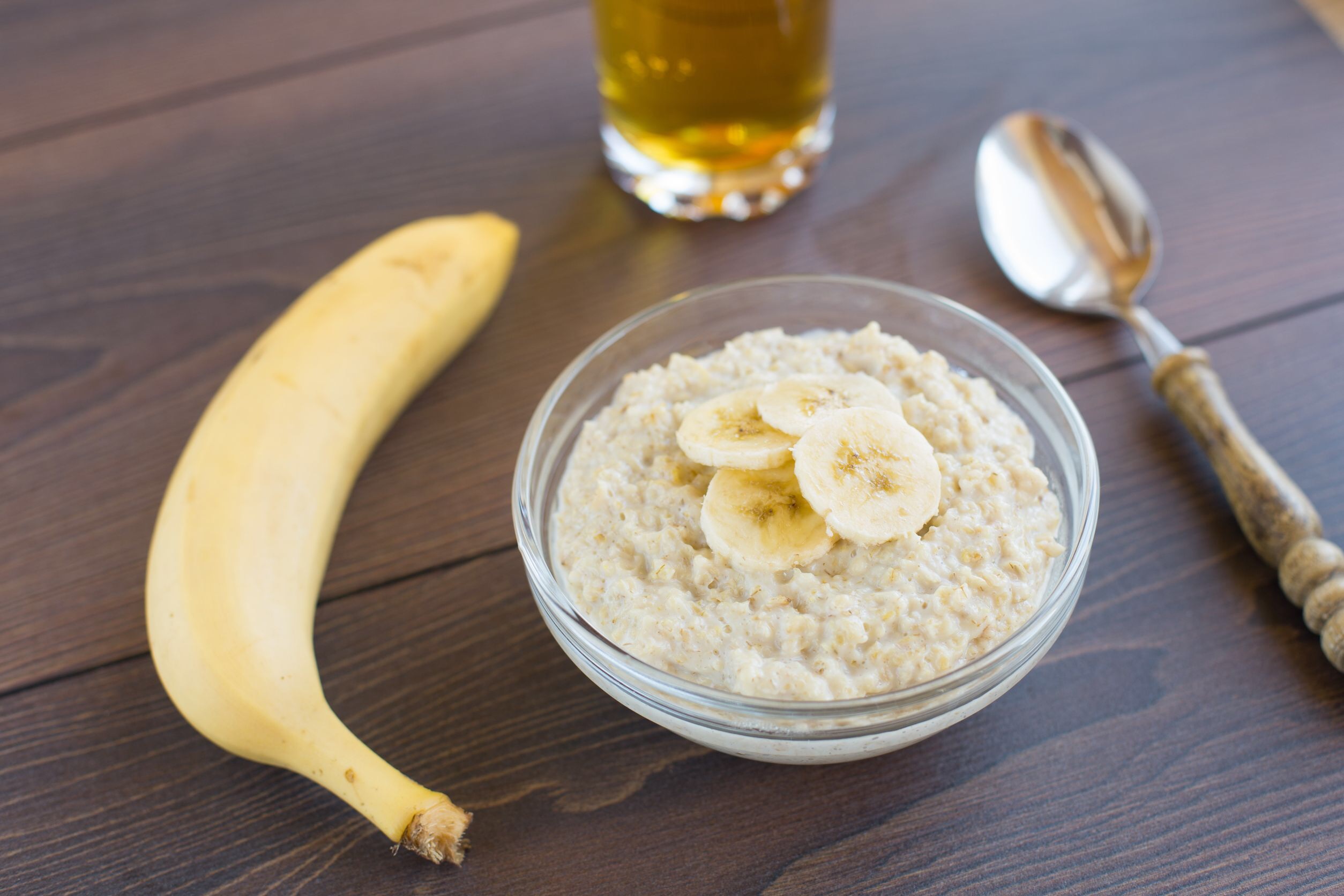

What’s the Problem with My “Healthy” Bowl of Oatmeal?


Food manufacturers have clever ways to market foods to us. Unfortunately, many foods that have a reputation for being healthy are no more than junk food disguised as a healthy food choice. I commonly see people under the influence of a “health halo” effect. This is due to strategic marketing efforts. People overestimate the nutritional value of a food that is labeled “good for you” or they underestimate the negative impact of a food because it contains a healthful ingredient, like flaxseed or fiber. In fact, a recent study from the University of Houston found that terms on food labels such as antioxidants, all-natural, and gluten-free often are used to give an otherwise standard food a "healthy" halo, and influence consumption from the well- intended consumer.

Case in point-- oatmeal. We’ve all heard about the cholesterol lower benefits from soluble fiber contained in oatmeal. It’s blasted all over packages with a paid endorsement from The American Heart Association. However, that’s not the whole story. Most people enjoy a cup of oatmeal with one to two tablespoons of added sugar and fruit such as a ripe, yellow banana. In other words, let’s enjoy a bowl of “send my blood sugar through the roof” high glycemic oatmeal. The glycemic index of oatmeal is 55, and instant oatmeal is 83. Top that with more table sugar, glycemic index 58-65 and better yet top that with a high glycemic, ripe banana with a GI of 62.

Preparing one packet of regular instant oatmeal with one tablespoon of sugar and a medium ripe banana five days per week would result in the sugar equivalent of more than 5 1/2 cups of sugar per month!

Furthermore, the story many Americans are missing is all of that sugar intake, from their so-called “healthy” bowl of oatmeal, actually raises small-dense LDL cholesterol particles, increases blood sugar and contributes to insulin resistance, faulty gut flora, and belly fat.

How do we improve upon our bowl of oatmeal? Enjoy a bowl of hot coconut flaxseed cereal, eggs any variety of ways, or last night’s leftover salmon and vegetables.

The Cureality program provides tools, guidance, and support that does not follow the party line but rather offers nutrition solutions that address the underlying causes for proliferation of many chronic diseases.

Power in Numbers


In his book, The Wisdom of Crowds, author James Surowiecki begins with the story of an ox judging competition in which 800 people—not ox experts nor breeders, just ordinary people attending a county fair—were asked to guess the weight of the ox. The competition was conducted by a scientist, Francis Galton, who held a low opinion of the intelligence of the average person, remarking that “the stupidity and wrong-headedness of many men and women being so great as to be scarcely credible.” He hoped to prove, by examining the various guesses, that the average person had no idea of how to judge the real answer. After all participants casted their written votes, Galton tallied up the total and averaged the result: 1,197 pounds—just one pound off from the real weight of 1,198 pounds. Few individuals actually guessed the correct weight themselves but, when the opinions of many were combined, the result was near-perfect.

Crowds can also be a source of irrational behavior, panic, and stampede. Witness any modern football or soccer game, for instance, in which fights break out over an issue as minor as a disputed call or a heckle. Or go back through history to the countless events when mass hysteria ruled, such as the Salem Witch Trials or Orson Welles’ War of the Worlds radio broadcast.

Let’s put aside examples of mass emotional chaos of the sort that causes crowds to stampede store doors on Black Friday. Let’s focus instead on conscious, considered, thoughtful opinions. We all accept that there are as many opinions on issues as there are people, not uncommonly with widely divergent views. But can we, as Galton’s famous experiment did, combine the opinions of many and come away with some fruitful insight—the correct answer? Just as the people participating in Galton’s experiment were not experts, so Cureality participants—a crowd-sourced collection of opinions—are not experts. If we were to poll everyone to identify their area of expertise or experience, it would likely include finance, the retail industry, raising children, or teaching—but not health. Yes, we have experts curating the direction of content, but we also crowd-source collective opinion.

Right now, Cureality is based on existing science, the philosophy of self-directed health, combined with guidance and community to help the participant along in the sometimes complex world of health questions. But as our processes and procedures improve, can we—like Galton’s ox weight guessers—come away with coalescent wisdom, answers to our health questions, near-perfect solutions to health conditions that have eluded the “experts” for centuries?

I think that we can. No, I know that we can. We enter a new age in information and harness the power of the crowd-sourcing of solutions, even when no single individual has the complete answer herself.

Use This Trick to Boost Exercise Motivation


Are you been struggling to get your workouts in? 

Do you belong to a gym and find that you're not going?

Do you have exercise equipment sitting in your basement collecting dust because you find that you just can’t get yourself down there?

If you answered, “yes” to any of these questions you are not alone. Many people struggle with finding the motivation to exercise.

The problem here is that you have head trash going on. Head trash is that voice inside your head coming up with a million excuses that inhibit you from carving out a bit of time to take care of yourself.

Head trash will tell you that you’re too tired, even though a workout would give you a boost of energy.

Head trash will tell you that you’re too busy, even though you just spent a half hour on Facebook.

Head trash is barking at you to take care of others, even thought you know your health is important for you well being.

Head trash is a real conflict that can get in the way of our health and fitness goals. We start an exercise program with the intentions of a long-term commitment. But after the initial excitement wears off, we find our workouts occurring less frequently. Head trash begins to take over and soon we find ourselves not exercising at all.

Here is my secret for winning the battle over the head trash that keeps getting in way of your workouts. Tell yourself that you are only going to exercise for 10 minutes and evaluate if you want to continue. If you're truly too tired you can stop after 10 minutes. If you're truly too busy you can stop and move onto a task that needs your attention.

Making this deal with your mind that you are only going to exercise for 10 minutes seems reasonable. The head trash will become quite because your mind is convinced it has an out within 10 minutes.

I've used this 10-minute trick myself. I grind through the first few minutes, but then the magic happens. Once you hit the 10-minute mark your body takes over. Exercise feels amazing and your body is energized and enjoying the movement. You have tricked your mind to get over the hurdle of starting and now you’re in the exercise groove.

Try the 10-minute trick next time your head trash is getting in the way of your workout. You'll be amazed how your workout consistency improves.

Cureality | Real People Seeking Real Cures

Who lost weight?

The results of the latest Heart Scan Blog poll are in.


I went wheat-free and I . . .


Gained weight 6 (3%)

Lost no weight 41 (21%)

Lost less than 10 lbs 28 (14%)

Lost more than 10 lbs 34 (17%)

Lost more than 20 lbs 22 (11%)

Lost more than 30 lbs 28 (14%)

I'm still losing weight! 30 (15%)

(189 respondents)


This means that, by eliminating wheat:

24% had no success

31% had moderate success (less than 10 lbs or more than 10 lbs)

25% had extravagant results with 20 lbs or more lost


It would be interesting to know where along the weight-loss spectrum the last category, "I'm still losing weight," group falls. (Anyone with a good story please speak up!)

I believe we can conclude from this casual exercise that, as a simple strategy, wheat elimination is surprisingly effective.

Why would 3% gain weight? Well, without knowing the details, there are several possible explanations:

1) Weight gain developed through other foods. For instance, I've had people eliminate wheat only to replace it with fattening gluten-free alternatives. Remember: wheat-free is not gluten-free. Others load up on the wrong foods, e.g., Craisins and other dried fruit; overdo dairy; or snack on wheat-free but unhealthy foods like ice cream and chips.

2) Too much alcohol

3) Hypothyroidism--A lot more common than you'd think. In fact, this has been the case with a majority of people who have done everything right, yet either failed to lose weight or gained weight.

Those are the biggies.

I'd like to hear your personal stories of wheat elimination--the ups and downs, your success or failure, how you felt during the process, how easy or difficult, your eventual results. Just post them as a response to this blog post.

A niacin primer

A reader of Life Extension reminded me of a piece I wrote about niacin a couple of years back.

Anyone desiring a primer on how and why to use niacin to correct lipid and lipoprotein patterns might find this useful.

While some people, no matter what they do, cannot tolerate niacin (about 10% of people), many others enjoy spectacular benefits.


Q: I recently had a cholesterol profile blood test and learned that I may be at risk of heart disease because my levels of beneficial HDL (high-density lipoprotein) are too low. I read that niacin could help increase my HDL, but my doctor said niacin is dangerous. Whom should I believe?

A: Your doctor would be right—if we were still living in 1985. Since then, however, we have learned how to use niacin (vitamin B3) safely and effectively. Unfortunately, many physicians have not yet caught up, or are still trapped by the idea that cholesterol-lowering statin drugs are the only way to decrease cardiovascular disease risk. I have personally prescribed niacin for thousands of patients as part of our program to reverse coronary disease. In fact, niacin is the closest thing we have available to a perfect treatment that corrects most of the causes of coronary heart disease.

Continued here.

What would life be like . . . ?

What if coronary heart disease could be prevented--no eliminated--applying methods that were accessible, easy, and cheap?

What if coronary heart disease and, thereby, angina, heart attack, sudden cardiac death, ventricular tachycardia, heart failure, and the cerebrovascular equivalent, stroke, could be eliminated using readily available tools available to virtually everyone in the U.S.? And, over a year, it cost less than a once-a-week latte at Starbucks?

How would the healthcare landscape change? What would become of hospitals, manufacturers of the billions of dollars of hospital equipment necessary to supply the cardiovascular hospital industry (e.g., stent manufacturers, catheter manufacturers, defibrillator and pacemaker manufacturers, pharmaceutical manufacturers who no longer have to produce the volume of antiplatelet agents, inotropic drugs, antiarrhythmic agents, etc.)?

How would our lives change? What would the end of life look like if people stopped dying of heart attack, sudden cardiac death, congestive heart failure at age 55, 65, or 75, but lived out their lives to die of something unrelated?

What if the solution had little or nothing to do with drugs but evolved from simple nutritional strategies, supplements meant to correct the deficiencies that accompany modern lifestyles, and a few unique strategies targeted towards the genetic predispositions that lead to heart disease?

What if all this were possible at a cost of a few hundred dollars per year?

It would certainly be a cataclysmic change. Hospitals would shrink to a small remnant of their current gargantuan, dozens-per-city presence. The need for hospital staff would be slashed by over half. The rare cardiologist would tend to congenital heart disease sufferers and other unusual forms of heart disease and he or she might have a colleague or two in all of a major city.

Healthcare costs would plummet, no longer having to sustain the enormous cardiovascular healthcare machine of hospitals, staff, industry, and long-term care. Health insurance, private or public, would drop by 50%.

It would free up nearly a trillion dollars that could be redirected towards other pursuits, like schools and research. Extraordinary leaps forward in quality of life and science would emerge, given that magnitude of funding.

It's not as grand a thought experiment as Alan Weisman's The World Without Us, in which he imagines what the world would be like without humans altogether.

How long would it take to recover lost ground and restore Eden to the way it must have gleamed and smelled the day before Adam, or Homo habilis, appeared? Could nature ever obliterate all our traces? How would it undo our monumental cities and public works, and reduce our myriad plastics and toxic synthetics back to benign, basic elements?

But I believe this thought experiment--what would life be like without heart disease because it was eliminated using inexpensive tools-- is more plausible, more likely to occur. In fact, it has already begun to occur.

See those vines growing up the side of the hospital?

Are jelly beans heart healthy?

Total Fat

3 g or less

Less than 6.5 g


Saturated Fat


1 g or less

1 g or less


Cholesterol

20 mg or less

20 mg or less


Sodium

480 mg or less per RACC* & labeled serving

480 mg or less per RACC* & labeled serving


Nutrients

Contain 10 percent or more of the daily value of 1 of 6 nutrients; vitamin A, vitamin C, iron, calcium, protein or dietary fiber


Contain 10 percent or more of the daily value of 1of 6 nutrients; vitamin A, vitamin C, iron, calcium, protein or dietary fiber


Trans fat

Less than 0.5 g per RACC* and labeled serving


Less than 0.5 g per RACC* and labeled serving


Whole Grain

N/A


51 percent by weight/RACC*


Minimum Dietary Fiber


N/A

1.7 g/RACC of 30 g

2.5 g/RACC of 45 g

2.8 g/RACC of 50 g

3.0 g/RACC of 55 g


(RACC=Reference Amount Customarily Consumed)

Thyroid correction: The woeful prevailing standard

Rich has been taking Synthroid or levothyroxine for many years.

When Rich came to my office for continuing management 10 years after his bypass surgery, I checked his thyroid panel:

TSH 7.44 uIU/L

Free T4 1.88 ng/dl (Ref range 0.80-1.90 ng/dl)

Free T3 2.0 pg/ml (Ref range 2.3-4.2 pg/ml)


Rich's thyroid hormone distortions--high TSH, low T3--are sufficient to account for a tripling of heart attack risk long-term.

As Richs' thyroid was being managed by his primary care physician, I notified this doctor of Rich's panel. He therefore increased Rich's levothyroxine from 75 mcg per day to 100 mcg per day. Another thyroid panel several months later showed:

TSH 0.98 uIU/L

Free T4 2.38 ng/dl

Free T3 2.0 pg/ml


As you would expect, increasing the intake of the T4 hormone (levothyroxine) increased free T4 and suppressed TSH.

But what about T3? It's unchanged.

Indeed, Rich says that he feels no better and, in fact, wakes up in the morning foggy and requires a nap in the afternoon.

In my experience, the majority (approximately 70%, but not 100%) experience subjective improvement when T3 is added in some form and the free T3 level is increased. While the data (summarized here) are conflicted on whether there is objective benefit to T3 management and supplementation, there seems to be a poorly-quantified subjective improvement.

Rich's increased levothyroxine dose decreased (calculated) LDL cholesterol by 10 mg/dl. Based on my experience, I'll bet that his lipid panel would likely be further improved with T3 correction.

What I find incredible is the absolutely rabid resistance waged by primary care physicians and endocrinologists against this notion of T3, mostly due to fears of the remote likelihood of inducing atrial fibrillation and osteoporosis, while they are ready to prescribe lifelong statin drugs without a moment's hesitation.

Launch of new Track Your Plaque newsletter: Cardiac Confidential

Track Your Plaque has just launched a new version of our newsletter. We call it Cardiac Confidential.

Cardiac Confidential is meant to be a no-holds-barred, go-for-the-throat exposé of the world of heart disease. We will expose the dishonest, reveal what we view as the underlying truth. We'll even have an occasional "undercover" report of what goes on in hospitals and the go-for-the-money world of heart procedures.

Read the first issue here (open to everyone) in which "Laurie" describes her encounter with a sleazy, profiteering cardiologist. She survives, but not without paying a dear price.

Thyroid: Be a perfectionist

If you'd like to reduce LDL cholesterol with nearly as much power as a statin drug, think thyroid.

When thyroid is corrected to ideal levels, LDL cholesterol drops 20, 30, 40 mg/dl or more, depending on how poor thyroid function and how high LDL are at the start. The poorer the thyroid function (the higher the TSH or the lower the T3 and T4) and the higher the LDL cholesterol, the more LDL drops with thyroid correction.

(For those of you minding LDL particle size, such as Track Your Plaque Members, the "dominant" LDL species will drop: If you are genetic small LDL, small LDL will drop. If you have mostly large LDL because of being wheat-free and sugar-free, then large LDL will drop.)

One of the problems is that many healthcare providers blindly follow what the laboratory says is "normal" or the "reference range," which is usually nothing more than a population average (actually the mean +/- 2 standard deviations, a common method of developing references ranges). In other words, a substantial degree of low thyroid function, or hypothyroidism, can be present when your doctor adheres to the reference range provided by the laboratory.

What does it mean to achieve ideal thyroid status? My list includes:

--Normal oral temperature of 97.3 F first upon arising. (The thyroid is the body's thermoregulatory organ.)
--TSH 1.0 mIU/L or less
--Free T3 upper half "normal" range
--Free T4 upper half "normal" range
--You feel good: mental clarity, energy, upbeat mood. You lose weight when you try.

Iodine replacement should be part of any thyroid health effort. Iodine is not an optional trace mineral, no more than vitamin C is optional (else your teeth fall out). The only dangers to iodine replacement are to those who have been starved of iodine for many years; increase iodine and the thyroid can over-respond. I've seen this happen in 2 of the last 300 people who have supplemented iodine.

In my view, neglecting T3 replacement is absurd. While it is not clear to me why many otherwise healthy people have low T3 at the low range of "normal" or even in the below-normal range, people feel better and have better health--faster weight loss, reduced LDL, reduced triglycerides, they are happier and enjoy more energy--when T3 is increased to the upper half of the reference range. (Crucial question: Why is the 5'-deiodinase enzyme that converts T4 to T3 inhibited, resulting in reduced free T3? What is in our diets or environment that is exerting this effect? I don't have answer, but we sorely need one.)

It pays to be a perfectionist when it comes to thyroid. Not only do you feel better, but LDL cholesterol can drop with a statin-like magnitude, but with none of the adverse effects.

If interested, Track Your Plaque offers fingerstick blood spot testing that you can perform in your own home. Each test kit will test for: TSH, free T3, free T4, along with a thyroid peroxidase antibody (a marker for Hashimoto's thyroiditis, an autoimmune inflammatory condition of the thyroid).

Nutrition Syllogism

What do you think of these chains of logic?

Cyanide is a potent lethal poison; carbon monoxide is a less lethal poison.
Therefore: plenty of carbon monoxide is good.


Having uterine cancer is a bad thing. Having uterine fibroids is a less bad thing.
Therefore: plenty of uterine fibroids are good.


These are obvious examples of seriously flawed logic. Students of logic and philosophy will recognize the above erroneous sequences as examples of the twisted arguments often used to persuade an argumentative opponent of the logic of a premise. As long ago as 335 B.C., Greek philosopher, Aristotle, recognized the pitfalls of thinking in such arguments. You think we’d know better by now.

Try this one:

White enriched flour is a bad for health; whole grains are less bad for health.
Therefore: plenty of whole grains are good for health.


Ouch!

In the 1960s, we all ate hot dogs on white buns, white flour Wonder Bread® sandwiches, Mom made cookies and cupcakes with white flour. Then, during the 1970s and 1980s, clinical studies were performed demonstrating that whole wheat and whole grains reduced colon cancer, high blood pressure, diabetes, and heart disease compared to white flour. In other words, add back fiber and B vitamins and health benefits develop: No argument here.

Therefore: whole grains must be good for health. Further, lots of whole grains?unlimited quantities of whole grains many times per day, every day?must be even better. Even the USDA says so on their nutrition pyramid, with 8-11 servings of grains per day, 4 of which should be whole grains, at the widest portion of the pyramid.

But what happens when you follow this logic through and fill your diet with whole grains?

Look around you and it’s easy to see: Appetite increases, people become obese, blood sugar increases, diabetes develops, HDL cholesterol plummets, triglycerides skyrocket, inflammatory patterns (e.g., c-reactive protein, or CRP) increase, small LDL (the number one cause for heart disease in the obese U.S.!) shoots through the roof.

I would no more fill my diet with “healthy whole grains” than I would close my garage door with the car running.

Is pomegranate juice healthy?


Pomegranate juice, 8 oz:

Sugars, total 31.50 g

Sucrose 0.00 g

Glucose (dextrose) 15.64 g

Fructose 15.86 g


In your quest to increase the flavonoids in your diet, do you overexpose yourself to fructose?

Remember: Fructose increases LDL cholesterol, apoprotein B, small LDL, triglycerides, and substantially increases deposition of visceral fat (fructose belly?). How about a slice of whole grain bread with that glass of pomegranate juice? The Heart Association says it's all low-fat!


(Coming on the Track Your Plaque website: A full in-depth Special Report on fructose in all its glorious forms and whether this is truly an issue for your health. Fructose tables and the scientific data to establish a safe "threshold" value will be included.)

Image courtesy Wikipedia

Honeydew melon


Honeydew melon:

Sugars, total 51.97 g

Sucrose 15.87 g

Glucose 17.15 g

Fructose 18.94 g

Because sucrose is half fructose (the other half is glucose), there are approximately 26 grams of fructose per one-half honeydew melon.


Image courtesy Wikipedia