tes results in increased production of the fat storage hormone insulin.  Increased insulin levels create the perfect recipe for weight gain. By swapping out high carbohydrate grain foods that cause spikes in insulin with much lower carbohydrate foods, insulin release is subdued and allows the body to release fat.

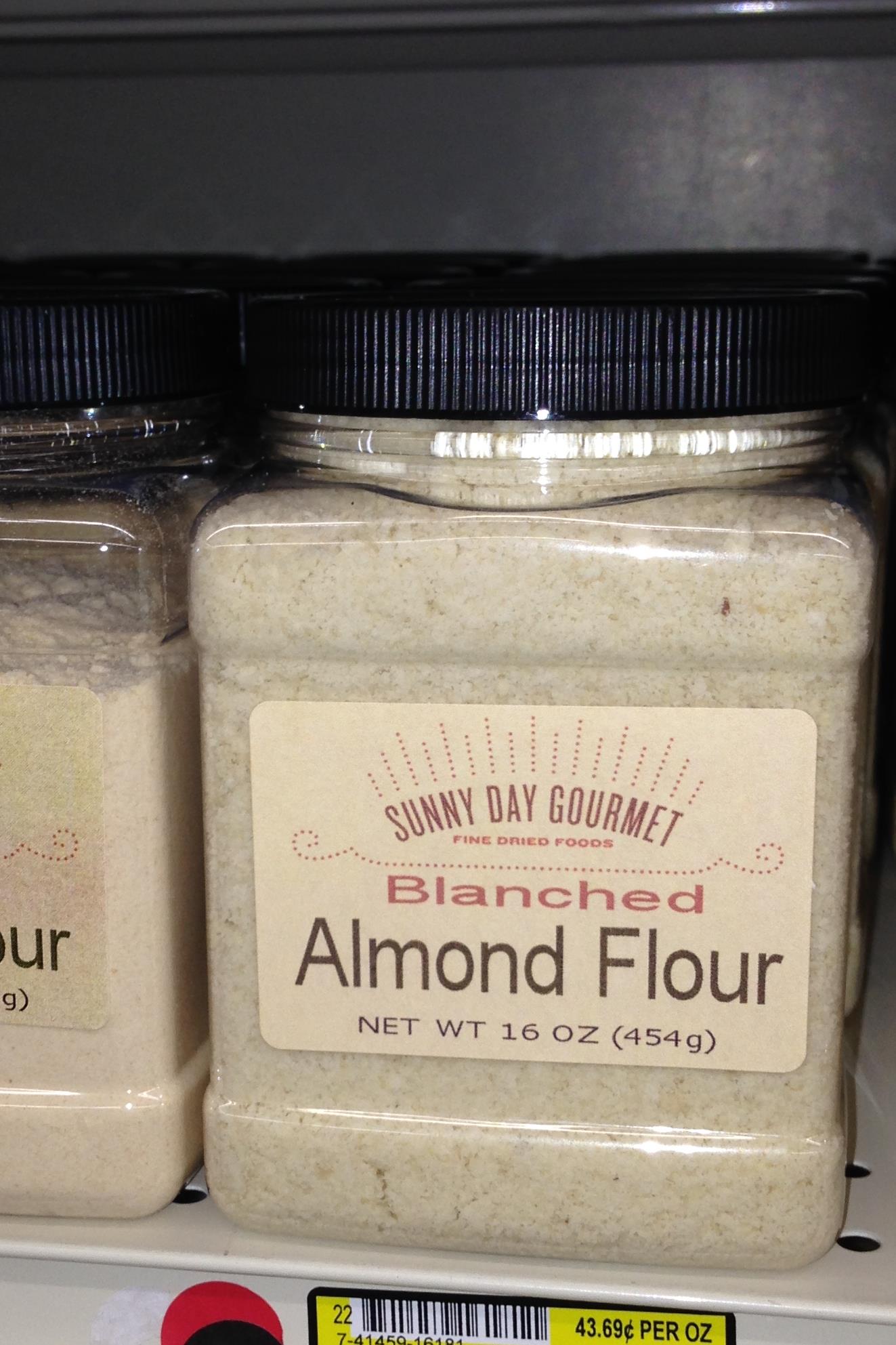
1. Swap wheat-based flour with almond flour/meal


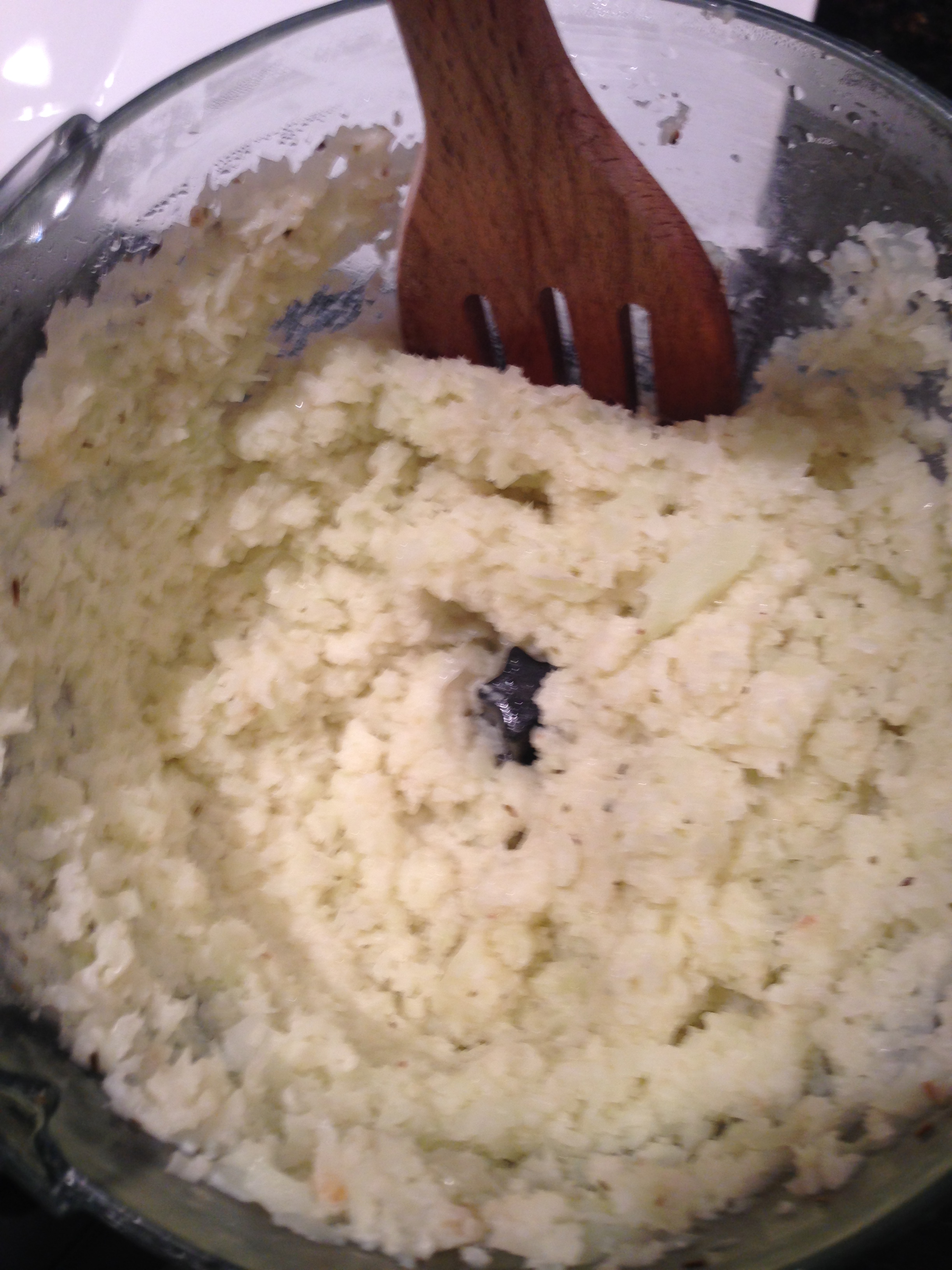
2. Swap potatoes and rice for cauliflower

3. Swap pasta for shirataki noodles and zucchini


Lisa Grudzielanek, MS,RDN,CD,CDE
Cureality Nutrition Specialist

Not so fast. Don’t make this mistake when going gluten free!

Beginning last month, the Food and Drug Administration began implementing its definition of “gluten-free” on packaged food labels.  The FDA determined that packaged food labeled gluten free (or similar claims such as "free of gluten") cannot contain more than 20 parts per million of gluten.

It has been years in the making for the FDA to define what “gluten free” means and hold food manufactures accountable, with respect to food labeling.  However, the story does not end there.

Yes, finding gluten-free food, that is now properly labeled, has become easier. So much so the market for gluten-free foods tops $6 billion last year.   However, finding truly healthy, commercially prepared, grain-free foods is still challenging.

A very common mistake made when jumping into the gluten-free lifestyle is piling everything labeled gluten-free in the shopping cart.  We don’t want to replace a problem: wheat, with another problem: gluten free products.

Typically gluten free products are made with rice flour (and brown rice flour), tapioca starch, cornstarch, and potato flour.  Of the few foods that raise blood sugar higher than wheat, these dried, powdered starches top the list.

 They provide a large surface area for digestion, thereby leading to sky-high blood sugar and all the consequences such as diabetes, hypertension, cataracts, arthritis, and heart disease. These products should be consumed very rarely consumed, if at all.  As Dr. Davis has stated, “100% gluten-free usually means 100% awful!”

There is an ugly side to the gluten-free boom taking place.  The Cureality approach to wellness recommends selecting gluten-free products wisely.  Do not making this misguided mistake and instead aim for elimination of ALL grains, as all seeds of grasses are related to wheat and therefore overlap in many effects.

Lisa Grudzielanek MS, RDN, CD, CDE
Cureality Health & Nutrition Coach

3 Foods to Add to Your Next Grocery List

Looking for some new foods to add to your diet? Look no further. Reach for these three mealtime superstars to encourage a leaner, healthier body.

Microgreens

Microgreens are simply the shoots of salad greens and herbs that are harvested just after the first leaves have developed, or in about 2 weeks.  Microgreen are not sprouts. Sprouts are germinated, in other words, sprouted seeds produced entirely in water. Microgreens are grown in soil, thereby absorbing the nutrients from the soil.

The nutritional profile of each microgreen depends greatly on the type of microgreen you are eating. Researchers found red cabbage microgreens had 40 times more vitamin E and six times more vitamin C than mature red cabbage. Cilantro microgreens had three times more beta-carotene than mature cilantro.

A few popular varieties of microgreens are arugula, kale, radish, pea, and watercress. Flavor can vary from mild to a more intense or spicy mix depending on the microgreens.  They can be added to salads, soup, omelets, stir fry and in place of lettuce.  

Cacao Powder

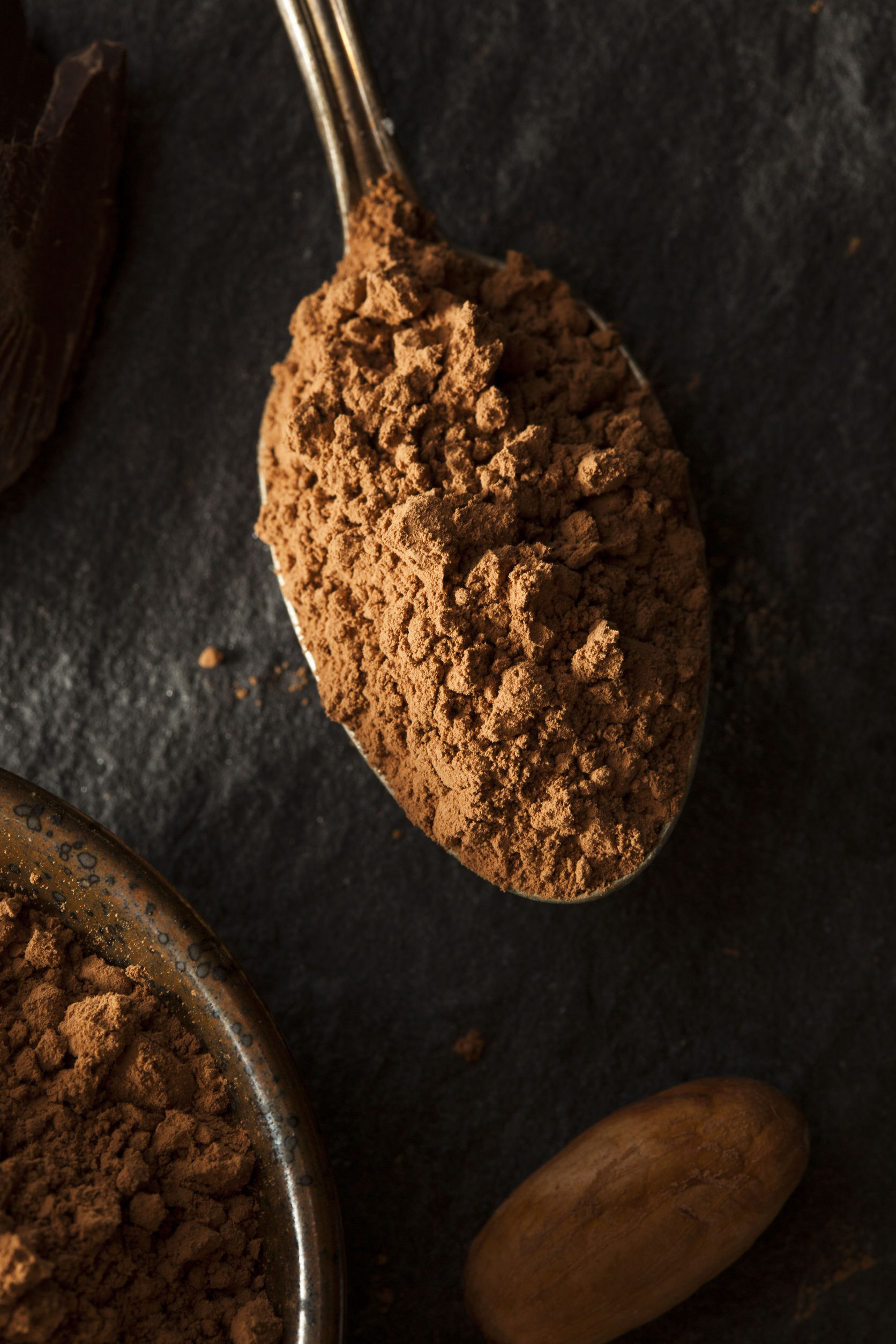
Cocoa and cacao are close enough in flavor not to make any difference. However, raw cacao powder has 3.6 times the antioxidant activity of roasted cocoa powder.  In short, raw cacao powder is definitely the healthiest, most beneficial of the powders, followed by 100% unsweetened cocoa.

Cacao has more antioxidant flavonoids than blueberries, red wine and black and green teas.  Cacao is one of the highest sources of magnesium, a great source of iron and vitamin C, as well as a good source of fiber for healthy bowel function.
Add cacao powder to milk for chocolate milk or real hot chocolate.  Consider adding to coffee for a little mocha magic or sprinkle on berries and yogurt.


Shallots


Shallots have a better nutrition profile than onions. On a weight per weight basis, they have more anti-oxidants, minerals, and vitamins than onions. Shallots have a milder, less pungent taste than onions, so people who do not care for onions may enjoy shallots.

Like onions, sulfur compounds in shallot are necessary for liver detoxification pathways.  The sulfur compound, allicin has been shown to be beneficial in reducing cholesterol.  Allicin is also noted to have anti-bacterial, anti-viral, and anti-fungal activities.

Diced then up and add to salads, on top of a bun less hamburger, soups, stews, or sauces.  Toss in an omelet or sauté to enhance a piece of chicken or steak, really the possibilities are endless.  

Lisa Grudzielanek,MS,RDN,CD,CDE
Cureality Nutrition & Health Coach

3 Band Exercises for Great Glutes

Bands and buns are a great combination.  (When I talk about glutes or a butt, I use the word buns)  When it comes to sculpting better buns, grab a band.   Bands are great for home workouts, at gym or when you travel.  Check out these 3 amazing exercises that will have your buns burning. 

Band Step Out

Grab a band and place it under the arch of each foot.  Then cross the band and rest your hands in your hip sockets.  The exercise starts with your feet hip width apart and weight in the heels.  Slightly bend the knees and step your right foot out to the side.  Step back in so that your foot is back in the starting position.  With each step, make sure your toes point straight ahead.  The tighter you pull the band, the more resistance you will have.    You will feel this exercise on the outside of your hips. 

Start with one set of 15 repetitions with each foot.  Work on increasing to 25 repetitions on each side and doing two to three sets.


Band Kick Back

This exercise is performed in the quadruped position with your knees under hips and hands under your shoulders.    Take the loop end of the band and put it around your right foot and place the two handles or ends of the band under your hands.  Without moving your body, kick your right leg straight back.  Return to the starting quadruped position.  Adjust the tension of the band to increase or decrease the difficulty of this exercise. 

Start with one set of 10 repetitions with each foot.  Work on increasing to 20 repetitions on each side and doing two to three sets. 


Band Resisted Hip Bridge

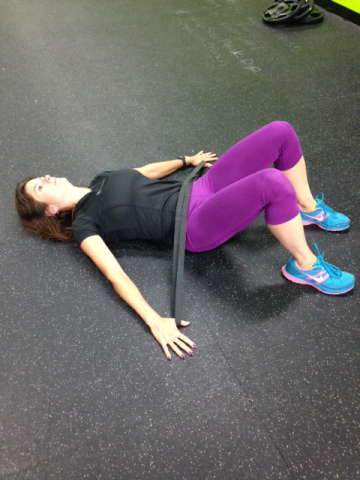
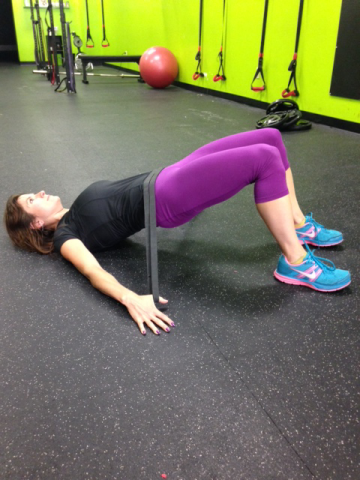
Start lying on your back with feet hip distance apart and knees bent at about a 45-degree angle.  Adjust your hips to a neutral position to alleviate any arching in your lower back.  Place the band across your hipbones.  Hold the band down with hands along the sides of your body.  Contract your abs and squeeze your glutes to lift your hips up off the ground.  Stop when your thighs, hips and stomach are in a straight line.  Lower you hips back down to the ground. 

Start with one set of 15 repetitions.  Work on increasing to 25 repetitions and doing two to three.  Another variation of this exercise is to hold the hip bridge position.  Start with a 30 second hold and work up to holding for 60 seconds.
All posts by william-davis

Heart health for stupid people

I'm kidding.

What I'm referring to is the incredibly lame information I come across that passes as "heart health" on the internet, magazines, and other media. Just to keep abreast of what is being said, I subscribe to multiple newsletters and magazines and I witness the sorts of advice offered to the reading public.

A recent long-winded article on a popular website listed the "exciting" strategies available for a healthy heart:

Eat healthy--by eating a "balanced" diet low in saturated fat

Don't smoke

Exercise

Don't ignore chest pain symptoms or breathlessness

Know your numbers! meaning your cholesterol numbers. "If your cholesterol is high, you may need to speak to your doctor about medication to reduce it."


Surely they must all believe we're stupid. Otherwise, why would they repeat the same obvious information over and over again? Quit smoking? Gee, you think so?

How about some real heart healthy advice:

Get a heart scan--since we have to accept that cholesterol values are a miserable failure in detecting hidden heart disease. So is waiting for symptoms to appear.

If you have any measure of coronary plaque, ask your doctor to assess lipoproteins, not lipids (cholesterol).

Take fish oil for omega-3 fatty acids--At a dose of 1000 mg or more of EPA + DHA, heart attack risk is reduced by at least 28%.

Eliminate wheat and other processed carbohydrates --Small LDL has emerged as the number one cause of coronary plaque, not high cholesterol from saturated fat.

Get vitamin D assessed--The effects are huge--HUGE. There's already a study in a kidney disease population that showed a substantial reduction in mortality with vitamin D supplementation. More data are coming, including our own.


That's a start--truly effective, practical heart healthy strategies that go way beyond the conventional bland advice.


Copyright 2007 William Davis, MD

Money, money, money, money

I've been asked the question numerous times:

Why aren't heart scans more popular?

First, let me qualify by saying that heart scan have indeed grown in popularity over the past decade. I think the real question is:

Given the enormous usefulness of CT heart scanning to detect hidden, asymptomatic coronary atherosclerotic plaque, why haven't they more readily been incorporated into conventional medical practice?

That's easy: There's no money in it.


Say, for instance, your doctor orders a heart scan and somehow receives a $1000 for the test. Scan centers would be scanning 100 people a day, falling over themselves to do scans.

This would be similar to a heart catheterization. Order a catheterization, do 30 minutes of work, and get $1000. Or, order a nuclear stress test. Depending on how its done and where, $1800-4000 is paid by the insurer.

Order a CT heart scan and how much is paid to the doctor? Usually nothing. At most, a nominal fee might be paid if the doctor reads the scan.

With heart scans, there simply is no big payoff.

We learned the implications of this situation 10 years ago when I was trying to help my friend, Steve Burlingame, the owner of Milwaukee Heart Scan. (I am NOT and NEVER WAS an owner.) Steve was trying to let everybody know about this great new $2 million dollar heart scan device in the Milwaukee area.

The first few years were tough for Steve: Carrying the substantial expense of this device while doctors essentially gave the technology the cold shoulder. It simply did not fit into the financial equation. Why change the way things were, particularly when there was virtually no financial reason to do so? To counter this, Milwaukee Heart Scan followed the model many other scan centers have followed and marketed directly to the public.

I see this as yet another example of why people need to take control of health care away from doctors and hospitals, the current controllers of the system who are providing a disservice to the public they are supposed to be serving. These institutions, for the most part, serve their self-serving financial interests, not your health interests. It's the same equation that drives food manufacturers to make more and more processed carbohydrate foods that they sell for substantial markups, not green peppers and cucumbers that make little money.

I regard heart scans as among the greatest self-empowering tools in health ever conceived. It was that way in 1997; it remains that way in 2007.

The many faces of LDL

Ginnie came in for an opinion about her heart scan score of 393. At age 57, this put her in the 99th percentile, a high score.

As usual, we did a lipoprotein analysis by NMR (Liposcience). Some numbers:

LDL cholesterol: 96 mg/dl
This value puts Ginnie's LDL in the most favorable 25% in the country.


LDL particle number: 2140 nmol/l
This value is in the worst 25% of the country and is the equivalent of an LDL cholesterol of 214 mg/dl (take off the zero).

In addition, over 90% of Ginnie's LDL particles fell into the small class.

Had we run some other values, how would they have turned out? These are my estimates (since we didn't actually run them in Ginnie), but having run side-by-side numbers in past, reasonable estimates would have put:

Apoprotein B somewhere in the 120 to 140 mg/dl range

Direct LDL 100-130 mg/dl range.


In other words, conventional calculated LDL is the least reliable of all the ways of examining low-density lipoprotein.

It can also go the other way: High calculated LDL, low LDL particle number or ApoB or direct LDL. And, indeed, these other measures have proven superior in their ability to predict "events" like heart attack over conventional calculated LDL.

Unfortunately, relying on conventional LDL is like a broken speedometer on your car. You really can't gauge accurately how fast you're going; sometimes you could be way off. While insurance companies and many physicians still continue to balk at this argument, the data have already been generated that show that lipoprotein analysis (my bias is NMR) is not just superior, but enormously superior for accuracy and event prediction.

In addition, lipoprotein analysis has proven a crucial tool that accounts for our extraordinary success in reducing and controlling CT heart scan scores in the Track Your Plaque program. I doubt that we could have achieved the same level of success using conventional lipids.

I'm also aware of the logistical difficulties obtaining lipoprotein testing in a world enthusiastically supportive of hospital procedures and smugly ignorant of superior prevention tools like lipoprotein analysis. I've learned just how difficult it can be in our Track Your Plaque Member Forum; I've also learned about some strategies for obtaining these tests that I hadn't been aware of, thanks to the resourcefulness of our Members.

We will be working on some solutions in the coming months.


Copyright 2007 William Davis, MD

What does "Success" mean in the Track Your Plaque program?

Say you begin with a CT heart scan score of 400.

You correct your lipoprotein pattterns, take fish oil, correct 25-OH-vitamin D3 to 50 ng/ml, correct your other hidden patterns, follow a diet suited to your patterns.

One year later, you get another heart scan. What score would constitute "success"?

With all of our recent talk about record-setting reductions in heart scan scores, is it really necessary to drop your score that much to succeed?

For instance, is our latest record-setting 63% drop in score better than "only" a 10% drop in score? Both represent reversal of coronary plaque. Both signify huge reductions in risk for plaque rupture, or heart attack.

You can read about how we view the various forms of success in the program by reading our latest Track Your Plaque Special Report, Winning Your Personal War with Heart Disease: The Track Your Plaque 5 Stages of Success.

We are making the Report available to everyone. Just go to the www.cureality.com homepage.

Is health the absence of disease?

It sounds like a word game, but is health the absence of disease?

In other words, if you're not sick, you must be well. If you don't have cancer, heart disease (overtly, that is, like angina and heart attack), the flu, diarrhea, fevers, pain someplace . . . well then, you must be well.

Of course, most of us would disagree. You can be quite unhealthy yet have no overt, explicit disease. Yet this is the philosophy followed in conventional medicine when it comes to many aspects of health.

With regards to heart disease, if you have no chest pain or breathlessness, you don't have heart disease. "Oh, all right, we'll perform a stress test to be sure." Track Your Plaque followers, as well as former President Bill Clinton, recognize the enormous pitfalls of this approach: It fails to identify the vast majority of hidden heart disease. In heart disease, the apparent lack of overt, sympatomatic "disease" does NOT equal the true absence of disease, even life-threatening.

How about nutritional supplements? Vitamin D is a perfect example. Blood levels of vitamin D of 10 ng/ml--profound deficiency--are common, yet people feel fine. Beneath the surface, blood sugar rises because of poor insulin response, hidden inflammatory responses are magnified, HDL is lower and triglycerides are higher, coronary plaque grows at an accelerated rate, colon cancer activity is heightened . . . Though you feel fine.

Can an abnormal "endothelial response" be present while you feel fine? You bet it can. This refers to the abnormal constrictive behavior of arteries that is present in many people who have hidden coronary plaque or risk for coronary plaque, but is entirely beneath consciousness.

How about a triglyceride level of 200 mg/dl, fatally high from the Track Your Plaque experience? (We aim for <60 mg/dl.) This is typical in people who follow the diets endorsed by agencies like the American Heart Association and the American Diabetes Association, organizations too eager to keep the money flowing from corporate sponsors and thereby offer us their advice based more on politics and less on health. Triglyceride levels of 200 mg/dl cause no symptoms.


At so many levels, the absence of disease is NOT the same as health. Health is something that is expressed by, yes, feeling good, but it's also measured by so many other factors hidden beneath the surface. An annual physical is one lame effort to address this aspect of "health." But it needs to go farther, much farther.

Heart scan, lipoprotein testing, vitamin D blood level--those are the basic requirements to go beyond the shortsighted practice of the conventional approach in the world of heart disease.

Cuckoo for Cocoa Puffs


Take a look at the list of ingredients in Cocoa Puffs: corn, sugar, corn syrup--all high glycemic index foods.

In other words, Cocoa Puffs is the physiologic equivalent of pure table sugar. Sure, it comes packaged with this wacky bird and the back of the box usually has fun games and offers. There's also the clever, fast-paced TV commercials to remind you of how fun Cocoa Puffs can be.


What is the actual consequence of a breakfast of a food like Cocoa Puffs in a cup of skim milk? That's easy: A big surge in insulin and blood sugar (from the corn and sugar), a drop in HDL cholesterol, surge in triglycerides (from the sugar and sugar-equivalents), increase in small LDL. Beyond this, you raise blood pressure and experience an insatiable increase in appetite. Then you get fat.

Obviously, none of this is desirable. Then why does the American Heart Association allow its Heart CheckMark endorsement on the package?

The Heart Association is trapped in 1982. Low-fat was in, saturated fat was the sole enemy of heart disease.

In 1982, the evils of small LDL, for instance, were unappreciated. LDL cholesterol was LDL cholesterol--all of it was bad and saturated fats seem to raise LDL. But the story has evolved enormously since then: LDL is not all the same. Small LDL is among the principal culprits in heart disease, the same small LDL hugely magnified by Cocoa Puffs and other similar products that fill 70% of supermarket shelves.

The American Heart Association needs to get with the times. The conversation on healthy diets has progressed considerably. Yet garbage foods that wreak havoc on health like Cocoa Puffs continue to be endorsed by an organization that still carries substantial clout with the American consumer.

My advice: Until they change their tune, anything that carries the endorsement of the American Heart Association should be eliminated from your diet.

Further validation of the Track Your Plaque 60:60:60 targets

The latest analysis of the data from Treat to New Targets (TNT) Trial shows that higher HDL cholesterol values are associated with reduced risk of heart attack, even in those with low LDL cholesterol values.

This counters the argument that some have made that, if a person takes a statin drug, raising HDL adds no additional benefit.

In the 9770-participant trial (randomized, double-blind), participants were given atorvastatin (Lipitor®) 10 mg or 80 mg per day. The study was sponsored by Pfizer, the manufacturer of Lipitor®. All participants were survivors of heart attacks, significant coronary disease by heart catheterization, or had previously undergone coronary angioplasty, stent placement, or bypass surgery—a high-risk group.

At the third month of enrollment, lipid (cholesterol panel) values were obtained and used as the basis for analysis. Participants on 80 mg atorvastatin achieved an average LDL cholesterol (Friedewald) of 77 mg/dl; participants taking 10 mg achieved a level of 101 mg/dl. Using these values, 8.7% of participants taking the higher dose of drug experienced an event, compared to 10.9% on the lower dose (which the investigators called a 22% relative reduction).

However, when the groups were re-analyzed by HDL cholesterol levels, higher HDLs remained predictive of less heart attack and other events, with the group having the highest HDL of =55 mg/dl experiencing 25% less events. Most interestingly, this effect was upheld even in participants with very low LDL cholesterols of <70 mg/dl.

I'm always a bit leery of drug company-sponsored studies, especially ones in which virtually all the participants tolerated a drug like Lipitor 80 mg, a dose in my experience that is very poorly tolerated for more than a few months. (Muscle aches are, in my experience, inevitable. I do not even recommend this dose.) In other words, the data are, in that respect, too good to believe.

Anyway, despite my reservations about these big money studies, there was nothing to gain from the HDL observation. (Of course, at one time, there would have been, given Pfizer's efforts to commercialize the now-kaput torcetrapib, scrapped because of excess mortality in phase II trials.)

Thankfully, there's other data that likewise suggest that the higher the HDL, the better. Yet more validation for the Track Your Plaque lipid targets of LDL 60 mg/dl, triglycerides 60 mg/dl or less, HDL 60 mg/dl or greater.


Copyright 2007 William Davis,MD

My sister called today . . .

My younger sister, aged 48 years (sorry, sis), called this morning.

"I'm going to my doctor today. What labs should I tell him to draw?" she asked.

"Why do you have to tell him? Can't you just ask him what he thinks should be drawn?"

"No," she said. "He just draws what I tell him to."


Maybe my sister is bossier than most. But I've heard this from many patients, as well. They go to their primary care physician and end up requesting this or that test. Sometimes their doctor complies. Often, they resist and refuse to do so.

I've heard many complaints from patients about doctors refusing to order even fairly benign tests like a vitamin D blood level or lipoproteins, even a C-reactive protein.

The number of these sorts of complaints seems to be growing. Ten years ago, it rarely happened. Today, I hear this nearly every day.

I think it is symptomatic of the growing discontent we all have with the status quo in healthcare. We are all expected to submit to the paternalistic, what-can-you-possibly-know mentality that still rules the day in medical offices. Only 40-50 years ago, if you wanted to look at a medical book, you'd have to ask the librarian for special permission so that they could make sure you weren't just a pervert trying to look at naked bodies. Today, every manner of medical and health information can be found online. Quite a contrast.

We are entering a new age, one in which people are far better informed, have surfed the internet and read media reports on health topics, have been exposed to drug company advertising, and know a fair amount about nutritional supplements. I think the system needs to change to accommodate this rapidly growing hyper-knowledgeable society.

In past, when a health problem turned up, you'd turn to your doctor first. I predict that,in the next few years, we will use the doctor as a place of last resort, the person we turn to when all else has failed, after you've exhausted your information sources.

I hope that the Track Your Plaque process will become one of the engines of change, an information resource that provides empowering tools that don't replace your doctor, but provide many information tools that are superior and may minimize your reliance on a health care provider.


Copyright 2007 William Davis, MD

Failure to diagnose

I picked up a hospital publication today. Featured prominently on the cover was a glossy photo of an attorney and his wife, both smiling.

The headline: "Atorney grateful for the lifesaving work of the ______ Hospital."

The story detailed the near-tragic story of how this 59-year old man was exercising at his local gym, only to lose consciousness after stepping off one of the exercise machines. Bystanders--hospital employees, as luck would have it--checked the man's pulse: none. They performed CPR. Ambulance called, blah blah blah.

Severe coronary disease discovered, extensive atherosclerotic plaque in all three coronary arteries, a 12-inch chest incision later and he and his wife are eternally grateful for the fine work done at X hospital. And so they should be for a job well done.

But wait a minute. After the urgent hospital dust settled, did anyone ask the one crucial question: Why wasn't this man's far-advanced heart disease identified? Why did he have to die and be resuscitated before his disease was recognized?

If this man was an indigent, homeless alcoholic . . . well, perhaps it would be no surprise. Health is neglected in this population. But a successful attorney?

Detecting hidden coronary atherosclerotic plaque simply isn't that tough. In Milwaukee, $199 would have diagnosed his disease unequivocally.

Unfortunately, we still have to set off drumrolls and crash cymbals to even begin to get the attention of the practicing physicians around us who continue to fail to diagnose hidden coronary disease. I wouldn't be at all surprised to hear if this man had a $4000 nuclear stress recently that was normal. Why would a nuclear stress test be normal? Easy: Wrong test.

The hidden message: The failure to diagnose paid somebody and some hospital over $100,000. So, why bother detecting disease before the payoff?

The profit motive in all this is all too obvious. The only other explanation is the enormous, repetitive, and systematic stupidity of the conventional approach to heart disease detection. You have the solution, at least for you and the people around you, in a CT heart scan and in the Track Your Plaque program.


Copyright 2007 William Davis, MD

Interview with world heart scan authority, Dr. John Rumberger


Dr. John Rumberger has, from its start, been a good friend of the Track Your Plaque program.

We are very proud to have his friendship. Dr. Rumberger is not only a world-renowned scientist in the world of cardiac imaging and heart scanning, but also a humanitarian and gentleman. From the very first day I met Dr. Rumberger many years ago, when he answered my many silly and naive questions about heart scans, I came to appreciate his deep and genuine interest in improving the world of heart disease detection.

I tracked Dr. Rumberger down from his busy schedule, now on a new project at the Princeton Longevity Center in Princeton, New Jersey.


TYP: Dr. Rumberger, we understand that your career has taken a new direction. Can you tell us about your current project?

Dr. Rumberger: I have not really taken a new direction, but further expanded on my opportunities.

I remain Medical Director of PrevaHealth Wellness Diagnostic Center (formerly Healthwise) in Columbus, Ohio. At that center, we see patients referred by their doctors for further refinement in cardiac risk stratification using heart and body scanning. However, by only doing scans alone there are limited opportunities for me to react in a meaningful way with the individual patients and thus I miss opportunities to do direct one-on-one teaching.

Currently, I spend most of my time in Princeton, NJ as Director of Cardiac Imaging for the Princeton Longevity Center. At the PLC, we perform comprehensive medical examinations along with screening CT scans, blood work, fitness and diet consultation to affect a more thorough one-on-one experience. Each patient then receives a comprehensive de-briefing.

In addition, since I have been involved with cardiac CT for now nearly 24 years, the PLC also affords me an opportunity to develop a CT coronary angiography training program for cardiologists and radiologists (www.cardiaccta.us). Together, these new efforts are merely an extension of my interests in prevention, patient care, and teaching.


TYP: Based on your book, The Way Diet, we understand that you advocate gravitating away from processed foods and incorporating more nuts, monounsaturated oils, lean proteins like fish, and a reduction in processed carbohydrates. You’ve also been a proponent of the Mediterranean diet that demonstrated a dramatic reduction in cardiovascular events in the Lyon Heart Study.

Has your philosophy or practice regarding nutritional strategies evolved or changed in any way since your book was published?

Dr. Rumberger: No, the strategies put forward in The Way Diet have, if anything, been reinforced by further and further research in selecting foods that are naturally high in anti-oxidants with lean sources of protein and reduced intake of processed sugar-containing preparations. The book, however, is what I call a ‘philosophy’ book which looks at three major aspects: proper diet, adequate exercise, and stress management. I also include some recipes which follow the dietary plans, but are done using ingredients that are commonly found in the average home.


TYP: We regard you as the source of much of the wisdom in heart scanning as the basis for early heart disease detection. Much of the original and subsequent scientific data, in fact, bears your name. Can you touch on some of the new directions your research has taken over the past couple of years?

Dr. Rumberger: We have come a long way from the beginning and there is a long way to go to get this incorporated into routine preventive care in the United States.

The most recent research has provided not so much more information as continuing to reinforce the old research. As I always say: if your research continues to show the same thing, then maybe there is a clear pattern here! The biggest challenge is getting this message into the mainstream and also trying to get cardiologists (and internists and, in fact, the general public) away from ‘stenosis’ detection to define the real cause of heart attacks (plaque) and into ‘plaque detection.’ This is where basic heart scanning has the greatest potential to reduce the expanding burden of heart disease.

You may be aware of our SHAPE initiave in which an international group of cardiologists and scientists have advocated getting a heart scan FIRST and then, if abnormal, checking your cholesterol values; rather than using cholesterol (which is valuable, but highly variable in predictive power) to determine who needs medications or further testing. The heart scan can define the current level of plaque and THEN you can determine what to do about it. [See the Track Your Plaque report on the release of the Shape Guidelines at SHAPE Guidelines]


TYP: We understand that you are performing CT coronary angiography in your center. What are your thoughts on the role of CTA in 1) screening for coronary disease, and 2) its role in the diagnostic process?

Dr. Rumberger: CT coronary angiography (CTA) is an incredible method to really define the extent of disease, beyond just coronary calcium. Its role is most appropriate in ruling OUT a significant ‘stenosis’ while really defining the absence or presence (and thus ‘how much’) of plaque. It is the ultimate ‘plaque detector’. CTA is best used in patients who have some symptoms, but in whom the clinician feels may NOT have clear cardiac chest pain. By risk-stratifying using CTA, we also gain information about heart size, heart function, whether there is prior heart damage, as well as other important information. This then becomes a very universal means to risk-stratifying individuals.


TYP: Thanks for your wonderful insights, Dr. Rumberger! We look forward to hearing about your future projects and research directions.


About John Rumberger, PhD, MD:

Dr. Rumberger is among the world's leading authorities on cardiac and vascular imaging using EBT and CT Scanning. Dr. Rumberger was among the first to pioneer the use of new CT technologies for heart scanning. He currently serves as Director of Cardiac Imaging at the Princeton Longevity Center, Princeton, NJ.

Dr. Rumberger is formerly Professor of Medicine and Consultant in the Department of Cardiovascular Diseases at the Mayo Clinic in Rochester, Minnesota. Dr. Rumberger received his doctorate in engineering from The Ohio State University in 1976 and graduated from the University of Miami School of Medicine in 1978.

During his over 20 year career as a clinician, educator, and researcher, Dr. Rumberger has published nearly 500 scientific papers and book chapters. He has lectured worldwide on EBT, early heart disease diagnosis, and wellness. He is an Established Investigator of the American Heart Association and a Founding Member of the International Society of Atherosclerosis Imaging. Dr Rumberger is an active Reviewer for the Journal of the American Medical Association, Archives of Internal Medicine, and the New England Journal of Medicine.