ion Locked="false" Priority="65" SemiHidden="false" UnhideWhenUsed="false" Name="Medium List 1 Accent 2"/>

To Change, You Need to Get Uncomfortable

Sitting on the couch is comfortable.  Going through the drive thru to pick up dinner is comfortable.  But when you notice that you’re out-of-shape, tired, sick and your clothes no longer fit, you realize that what makes you comfortable is not in align with what would make you happy.   

You want to see something different when you look in the mirror.  You want to fit into a certain size of jeans or just experience your day with more energy and excitement.  The current condition of your life causes you pain, be it physical, mental or emotional.  To escape the pain you are feeling, you know that you need to make changes to your habits that keep you stuck in your current state.  But why is it so hard to make the changes you know that will help you achieve what you want?  

I want to lose weight but….

I want a six pack but…

I want more energy but….

The statement that follows the “but” is often a situation or habit you are comfortable with.  You want to lose weight but don’t have time to cook healthy meals.  So it’s much more comfortable to go through the drive thru instead of trying some new recipes.   New habits often require a learning curve and a bit of extra time in the beginning.  It also takes courage and energy to establish new routines or seek out help.  

Setting out to achieve your goals requires change.  Making changes to establish new habits that support your goals and dreams can be uncomfortable.  Life, as you know it, will be different.  Knowing that fact can be scary, but so can staying in your current condition.  So I’m asking you to take a risk and get uncomfortable so that you can achieve your goals.  

Realize that it takes 21 days to develop a new habit.  I believe it takes triple that amount of time to really make a new habit stick for the long haul.  So for 21 days, you’ll experience some discomfort while you make changes to your old routine and habits.  Depending on what you are changing, discomfort could mean feeling tired, moody, or even withdrawal symptoms.  However, the longer you stick to your new habits the less uncomfortable you start to feel.  The first week is always the worst, but then it gets easier.

Making it through the uncomfortable times requires staying focused on your goals and not caving to your immediate feelings or desires.  I encourage clients to focus on why their goals important to them.  This reason or burning desire to change will help when old habits, cravings, or situations call you back to your old ways.
Use a tracking and a reward system to stay on track.  Grab a calendar, journal or index card to check off or note your daily successes.  Shoot for consistency and not perfection when trying to make changes.  I encourage my clients to use the 90/10 principle of change and apply that to their goal tracking system.  New clothes, a massage, or a day me-retreat are just a few examples of rewards you can use to sticking to your tracking system.  Pick something that really gets you excited.  

Getting support system in place can help you feel more comfortable with being uncomfortable.  Hiring a coach, joining an online support group, or recruiting family and friends can be very helpful when making big changes.  With a support system in place you are not alone in your discomfort.  You’re network is there for you to reach out for help, knowledge, accountability or camaraderie when you feel frustrated and isolated.  

I’ve helped hundreds of people change their bodies, health and lives of the eleven years I’ve worked as a trainer and coach.  I know it’s hard, but I also know that if they can do it, so can you.  You just need to step outside of your comfort zone and take a risk. Don’t let fear create uncomfortable feelings that keep you stuck in your old ways.  Take that first step and enjoy the journey of reaching your goals and dreams.  

Amber Budahn, B.S., CSCS, ACE PT, USATF 1, CHEK HLC 1, REIKI 1
Cureality Exercise Specialist

The 3 Best Grain Free Food Swaps to Boost Fat Burning

You can join others enjoying substantial improvements in their health, energy and pant size by making a few key, delicious substitutions to your eating habits.  This is possible with the Cureality nutrition approach, which rejects the idea that grains should form the cornerstone of the human diet.  

Grain products, which are seeds of grasses, are incompatible with human digestion.  Contrary to what we have been told for years, eating healthy whole grain is not the answer to whittle away our waists.  Consumption of all grain-based carbohydrates results in increased production of the fat storage hormone insulin.  Increased insulin levels create the perfect recipe for weight gain. By swapping out high carbohydrate grain foods that cause spikes in insulin with much lower carbohydrate foods, insulin release is subdued and allows the body to release fat.

1. Swap wheat-based flour with almond flour/meal

  • One of the most dubious grain offenders is modern wheat. Replace wheat flour with naturally wheat-free, lower carbohydrate almond flour.  
  • Almond flour contains a mere 12 net carbs per cup (carbohydrate minus the fiber) with 50% more filling protein than all-purpose flour.
  • Almond flour and almond meal also offer vitamin E, an important antioxidant to support immune function.

2. Swap potatoes and rice for cauliflower

  • Replace high carb potatoes and pasta with vitamin C packed cauliflower, which has an inconsequential 3 carbs per cup.  
  • Try this food swap: blend raw cauliflower in food processor to make “rice”. (A hand held grater can also be used).  Sautee the “riced” cauliflower in olive or coconut oil for 5 minutes with seasoning to taste.
  • Another food swap: enjoy mashed cauliflower in place of potatoes.  Cook cauliflower. Place in food processor with ½ a stick organic, grass-fed butter, ½ a package full-fat cream cheese and blend until smooth. Add optional minced garlic, chives or other herbs such as rosemary.
3. Swap pasta for shirataki noodles and zucchini

  • Swap out carb-rich white pasta containing 43 carbs per cup with Shirataki noodles that contain a few carbs per package. Shirataki noodles are made from konjac or yam root and are found in refrigerated section of supermarkets.
  • Another swap: zucchini contains about 4 carbs per cup. Make your own grain free, low-carb noodles from zucchini using a julienne peeler, mandolin or one of the various noodle tools on the market.  

Lisa Grudzielanek, MS,RDN,CD,CDE
Cureality Nutrition Specialist

Not so fast. Don’t make this mistake when going gluten free!

Beginning last month, the Food and Drug Administration began implementing its definition of “gluten-free” on packaged food labels.  The FDA determined that packaged food labeled gluten free (or similar claims such as "free of gluten") cannot contain more than 20 parts per million of gluten.

It has been years in the making for the FDA to define what “gluten free” means and hold food manufactures accountable, with respect to food labeling.  However, the story does not end there.

Yes, finding gluten-free food, that is now properly labeled, has become easier. So much so the market for gluten-free foods tops $6 billion last year.   However, finding truly healthy, commercially prepared, grain-free foods is still challenging.

A very common mistake made when jumping into the gluten-free lifestyle is piling everything labeled gluten-free in the shopping cart.  We don’t want to replace a problem: wheat, with another problem: gluten free products.

Typically gluten free products are made with rice flour (and brown rice flour), tapioca starch, cornstarch, and potato flour.  Of the few foods that raise blood sugar higher than wheat, these dried, powdered starches top the list.

 They provide a large surface area for digestion, thereby leading to sky-high blood sugar and all the consequences such as diabetes, hypertension, cataracts, arthritis, and heart disease. These products should be consumed very rarely consumed, if at all.  As Dr. Davis has stated, “100% gluten-free usually means 100% awful!”

There is an ugly side to the gluten-free boom taking place.  The Cureality approach to wellness recommends selecting gluten-free products wisely.  Do not making this misguided mistake and instead aim for elimination of ALL grains, as all seeds of grasses are related to wheat and therefore overlap in many effects.

Lisa Grudzielanek MS, RDN, CD, CDE
Cureality Health & Nutrition Coach

3 Foods to Add to Your Next Grocery List

Looking for some new foods to add to your diet? Look no further. Reach for these three mealtime superstars to encourage a leaner, healthier body.

Microgreens

Microgreens are simply the shoots of salad greens and herbs that are harvested just after the first leaves have developed, or in about 2 weeks.  Microgreen are not sprouts. Sprouts are germinated, in other words, sprouted seeds produced entirely in water. Microgreens are grown in soil, thereby absorbing the nutrients from the soil.

The nutritional profile of each microgreen depends greatly on the type of microgreen you are eating. Researchers found red cabbage microgreens had 40 times more vitamin E and six times more vitamin C than mature red cabbage. Cilantro microgreens had three times more beta-carotene than mature cilantro.

A few popular varieties of microgreens are arugula, kale, radish, pea, and watercress. Flavor can vary from mild to a more intense or spicy mix depending on the microgreens.  They can be added to salads, soup, omelets, stir fry and in place of lettuce.  

Cacao Powder

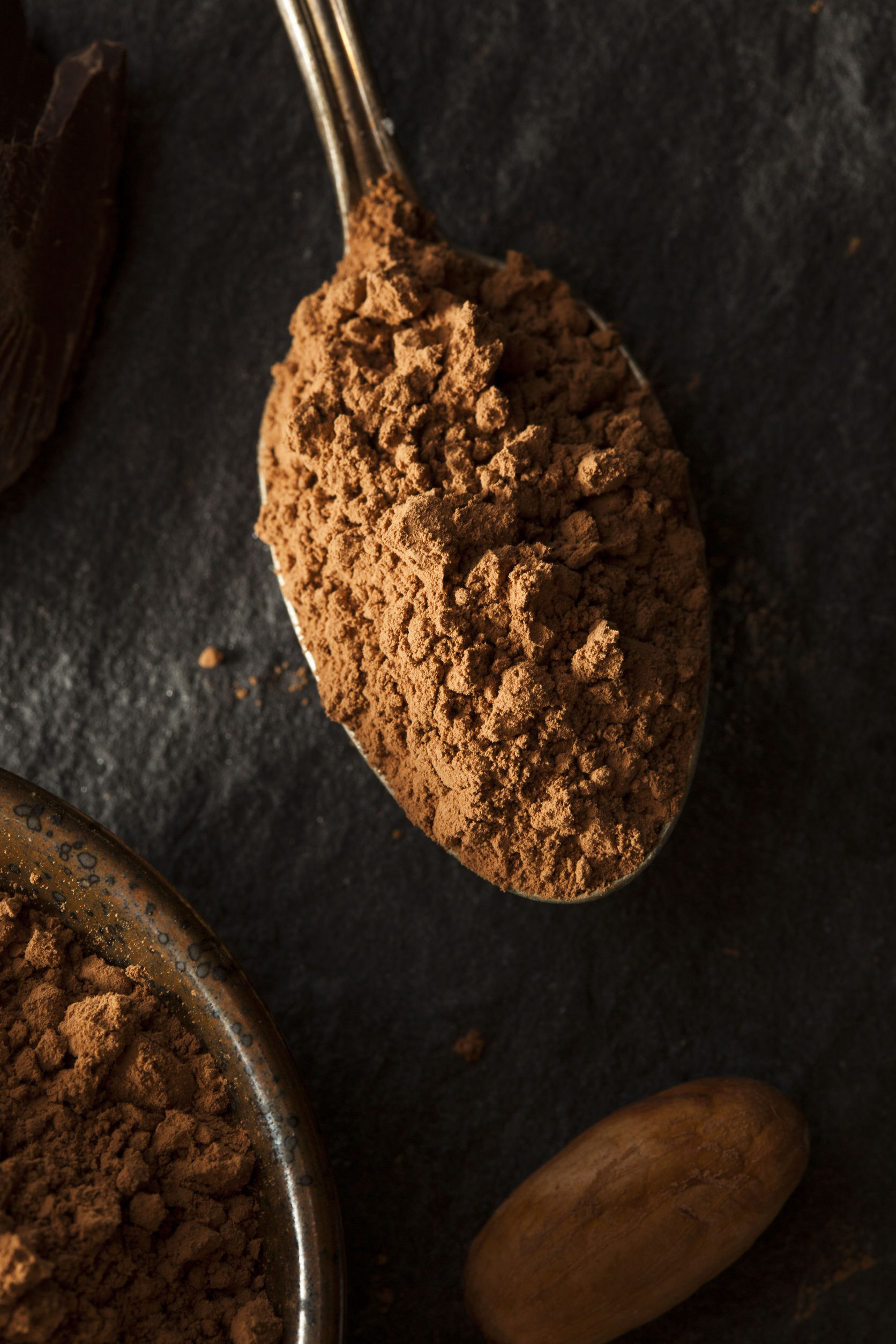
Cocoa and cacao are close enough in flavor not to make any difference. However, raw cacao powder has 3.6 times the antioxidant activity of roasted cocoa powder.  In short, raw cacao powder is definitely the healthiest, most beneficial of the powders, followed by 100% unsweetened cocoa.

Cacao has more antioxidant flavonoids than blueberries, red wine and black and green teas.  Cacao is one of the highest sources of magnesium, a great source of iron and vitamin C, as well as a good source of fiber for healthy bowel function.
Add cacao powder to milk for chocolate milk or real hot chocolate.  Consider adding to coffee for a little mocha magic or sprinkle on berries and yogurt.


Shallots


Shallots have a better nutrition profile than onions. On a weight per weight basis, they have more anti-oxidants, minerals, and vitamins than onions. Shallots have a milder, less pungent taste than onions, so people who do not care for onions may enjoy shallots.

Like onions, sulfur compounds in shallot are necessary for liver detoxification pathways.  The sulfur compound, allicin has been shown to be beneficial in reducing cholesterol.  Allicin is also noted to have anti-bacterial, anti-viral, and anti-fungal activities.

Diced then up and add to salads, on top of a bun less hamburger, soups, stews, or sauces.  Toss in an omelet or sauté to enhance a piece of chicken or steak, really the possibilities are endless.  

Lisa Grudzielanek,MS,RDN,CD,CDE
Cureality Nutrition & Health Coach

3 Band Exercises for Great Glutes

Bands and buns are a great combination.  (When I talk about glutes or a butt, I use the word buns)  When it comes to sculpting better buns, grab a band.   Bands are great for home workouts, at gym or when you travel.  Check out these 3 amazing exercises that will have your buns burning. 

Band Step Out

Grab a band and place it under the arch of each foot.  Then cross the band and rest your hands in your hip sockets.  The exercise starts with your feet hip width apart and weight in the heels.  Slightly bend the knees and step your right foot out to the side.  Step back in so that your foot is back in the starting position.  With each step, make sure your toes point straight ahead.  The tighter you pull the band, the more resistance you will have.    You will feel this exercise on the outside of your hips. 

Start with one set of 15 repetitions with each foot.  Work on increasing to 25 repetitions on each side and doing two to three sets.


Band Kick Back

This exercise is performed in the quadruped position with your knees under hips and hands under your shoulders.    Take the loop end of the band and put it around your right foot and place the two handles or ends of the band under your hands.  Without moving your body, kick your right leg straight back.  Return to the starting quadruped position.  Adjust the tension of the band to increase or decrease the difficulty of this exercise. 

Start with one set of 10 repetitions with each foot.  Work on increasing to 20 repetitions on each side and doing two to three sets. 


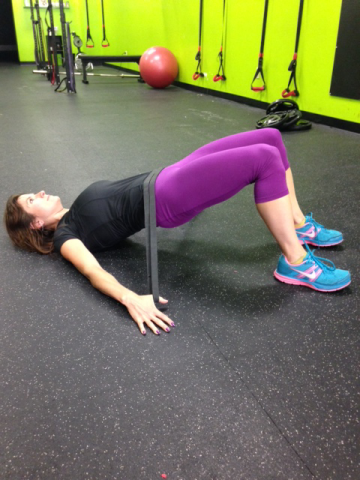
Band Resisted Hip Bridge

Start lying on your back with feet hip distance apart and knees bent at about a 45-degree angle.  Adjust your hips to a neutral position to alleviate any arching in your lower back.  Place the band across your hipbones.  Hold the band down with hands along the sides of your body.  Contract your abs and squeeze your glutes to lift your hips up off the ground.  Stop when your thighs, hips and stomach are in a straight line.  Lower you hips back down to the ground. 

Start with one set of 15 repetitions.  Work on increasing to 25 repetitions and doing two to three.  Another variation of this exercise is to hold the hip bridge position.  Start with a 30 second hold and work up to holding for 60 seconds.

Copyright © 2026 Cureality.com

/15/look-like-jimmy-stewart.html">Look like Jimmy Stewart

"This diet works great," Don declared. "But I think I've lost too much weight."

At 67 years old and 5 ft. 11 inches, Don began the program weighing 228 lbs (BMI 31.9). Because of high triglycerides, high blood sugar, high c-reactive protein, and excessive small LDL, I instructed Don to eliminate all wheat products from his diet, along with cornstarch and sweets. His intake of lean meats, eggs, vegetables, oils, raw nuts, etc. was unlimited.

Don now weighed 194 lbs, down 34 lbs over 6 months (BMI 27.1). Triglycerides, blood sugar, blood pressure, and well-being had improved dramatically; small LDL, however, had dropped only 30%--still room for improvement.

"My friends say I'm too skinny. They ask if I have cancer!"

I've heard this many times: Someone loses weight in a relatively short period of time and friends and family tell you you're too skinny. "It must be cancer. Nobody loses weight like that."

Unfortunately, many Americans have forgotten what normal looks like. Normal is certainly not a 190-lb, 5 ft 4 in woman, nor is it a 228 lb, 5 ft 11 inch man. But Americans have put on so much weight that the prevailing view of what constitutes "normal" weight has been revised upward. Normal is closer to what we see in old movies from the 1940s and '50s with people like Jimmy Stewart and Donna Reed. That's what we are supposed to look like.

So Don actually remains mildly overweight but is judged as "too skinny," or even cancer-ridden, by friends and family.

Ignore such comments. As you lose pounds and approach a truly desirable weight, realize that you are returning to the normal state, not the vision of "normal" now held by most Americans.

Getting vitamin D right

Vitamin D is, without a doubt, the most incredible "vitamin"/prohormone/neurosteroid I have ever encountered. Frankly, I don't know how we got anything accomplished in health pre-D.

Unfortunately, people I meet rarely take their vitamin D in a way that accomplishes full restoration of vitamin D blood levels. It really isn't that tough.

Here's a list of common tripping points with vitamin D:

"I take vitamin D: 1000 units a day."
This is probably the most common mistake I see: Taking a dose that is unlikely to yield a desirable blood level. (We use 60-70 ng/ml of 25-hydroxy vitamin D as our target.) Most men and women require 6000 units per day to achieve this level. There is substantial individual variation, however, with an occasional person needing much more, a rare person requiring as little as 1000 units.


"I bought some vitamin D on sale. They were white tablets."
Time and again, patients in my office who initially have had successful vitamin D replacement, despite being reminded that only oil-based forms should be taken, switch to tablets. While they initially showed a 25-hydroxy vitamin D blood level, for instance, of 67 ng/ml on 8000 units per day with an oil-based capsule, they switch to a tablet form and the next blood level is 25 ng/ml. In other words, tablets are very poorly or erratically absorbed.

I have had people use tablets successfully, however, by taking their vitamin D tablets with a teaspoon of oil, e.g., olive oil. Oil is necessary for full absorption.


"I'm going to Florida. I'll stop my vitamin D because I'm going to lay in the sun."
Wrong. 90% of adults over 40 years old have lost the majority of their ability to activate vitamin D in the skin. A typical response might be an increase in blood level from 25 to 35 ng/ml--a 10 ng increase with a dark brown tan.

There is an occasional person who, with sun exposure, increases blood levels substantially. This can occur in both fair-skinned and dark-skinned people, though I've never seen it happen in an African-American person. The occasional person who maintains the ability to convert vitamin D with sun exposure, or young people, should seasonally adjust their vitamin D dose, e.g., 6000 units winter, 3000 units summer, or some other regimen that maintains desirable blood levels. You can see that monitoring blood levels (we check levels every 6 months for the first 2 years) is crucial: You cannot know what your vitamin D needs are unless you assess 25-hydroxy vitamin D levels.


"I drink plenty of milk. I don't think I need to take vitamin D."
Oh, boy. This is so wrong on so many levels.

First of all, no adult should be drinking plenty of cow's milk. (A discussion for another day.) Second of all, cow's milk averages 70 units of vitamin D, often the D2 form (ergocalciferol), per 8 oz. Even if the FDA-mandated 100 units per day were present, an average adult dose of 6000 units would require 60 glasses of milk per day. Can you say "diarrhea"?

Likewise, other food sources of vitamin D, such as fish (300-400 units per serving) and egg yolks (20 units per yolk), are inadequate. This makes sense: Humans are not meant to obtain vitamin D from food, but from sun exposure over a large body surface area. And this is a phenomenon that is meant to occur only in the youthful, ensuring that nature takes its course and us older folks get old and make way for the young (i.e., unless we intervene by taking vitamin D supplements).


"My doctor said that my vitamin D blood level was fine. It was 32 ng/ml."

Let's face it: By necessity, your overworked primary care physician, who manages gout, hip arthritis, migraine headaches, stomach aches, prostate enlargement, H1N1, depression, etc., is an amateur at nearly everything, expert in nothing. Nobody can do it all and get it right. Likewise vitamin D. The uncertain primary care physician will simply follow the dictates of the laboratory form that specifies "30-100 ng/ml" as the "normal" or "reference range." Unfortunately, the laboratory often quotes population distributions of a lab measure, not an ideal or desirable level.

To illustrate the folly of population distributions of a measure, imagine you and I want to know what women weigh. We go to a local mall and weigh several thousand women. We tally up the results and find that women weigh 172 lbs +/- 25 lbs (the mean +/- 2 standard deviations). (That's true, by the way.) Is that desirable? Of course it isn't. Population average or population distribution does not necessarily mean ideal or desirable.


"My husband's doctor said he should take 4000 units per day. So I just take the same dose."
That would be fine if all adults required the same dose. However, individual needs can vary enormously. A dose that is grossly insufficient for one person may be excessive for another. Once again, vitamin D dose needs can be individualized by assessing 25-hydroxy vitamin levels in the blood.


"I don't need to take vitamin D. I already take fish oil."
I suspect this mistaken belief occurs either because people confuse fish oil with cod liver oil, which does contain some vitamin D. (Cod liver oil is not the best source of vitamin D, mostly because of the vitamin A content; also a discussion for another time), or because they've heard that eating fish provides vitamin D. However, fish oil capsules do not contain vitamin D unless it is added, in which case it should be prominently and explicitly stated on the label.


"I don't have to take vitamin D. It's summer."

For most people I know, if it's a bright, sunny July day, where are they likely to be? In an office, store, or home--NOT lying in the sun with a large body surface area exposed. Also, most people expose no more than 5-10% of surface area in public. I doubt you cut the grass in a bathing suit. Because of modern indoor lifestyles and fashion, the majority of adults need vitamin D supplementation year-round.


I advise everyone that gelcap vitamin D is preferable. Some, though not all, liquid drop forms have also worked. Take a dose that yields desirable blood levels. And blood levels of 25-hydroxy vitamin D are ideally checked every 6 months: in summer and in winter to provide feedback on how much sun activation of D you obtain.

If your doctor is unwilling or unable to perform vitamin D testing, fingerstick vitamin D test kits can be obtained from Track Your Plaque.

Jimmy Moore's thyroid adventure

My friend, Jimmy Moore of Living La Vida Low Carb, describes his thyroid experience here.

As Jimmy points out, he was looking for a way to jump-start a 50-lb weight loss. In my experience, low thyroid hormone levels ("hypothyroidism") are an exceptionally common cause for weight gain. Correcting even marginal hypothyroidism can facilitate weight loss, often resulting in 10 or more pounds of weight loss within the first month.

Unfortunately, Jimmy's thyroid hormone panel proved normal: TSH 1.3, thyroid hormones free T3 and free T4 in the mid- to upper-half of the reference range.

I say "unfortunately" because it is really an easy, inexpensive, and benign solution for losing weight. (I don't, of course, wish that Jimmy or anyone else develops a thyroid condition. But it really can provide gratifying weight loss results when thyroid function is low.) Jimmy might consider taking his oral temperature first thing in the morning as another means of assessing the adequacy of thyroid function.

Perhaps you will be luckier than Jimmy and have thyroid dysfunction that can be corrected and jump-start your weight loss program. Fingerstick thyroid test kits like the one Jimmy used are available here from Track Your Plaque.

What's that in your mouth?


Fat = triglycerides

In other words, eat fat, whether it's saturated, hydrogenated, polyunsaturated, or monounsaturated, and blood levels of triglycerides will go up over the next 6 hours. This remains true if there are carbohydrates in the meal, or if there are NO carbohydrates in the meal. It also remains true if you chronically consume fats.

While fats are the primary determinant of postprandial (after-eating) triglycerides, carbohydrates are the primary determinant of fasting triglycerides.

So, if your triglycerides are high on a fasting cholesterol (lipid) panel, it's most likely because you overconsume carbohydrates.


Thanks to cartoonist Eli Stein, who has generously allowed me to reprint his artwork on these pages. Mr. Stein has published his work in dozens of magazines and newspapers, including the Wall Street Journal, Barron's, and Good Housekeeping. More of his work can be found at Eli Stein Cartoons.

De Novo Lipo-what?

Humans have limited capacity to store carbohydrates. Beyond the glucose and glycogen in our blood and tissues, we have relatively little carbohydrate to draw from in time of energy need. That's why long-distance runners and triathletes have to carry sugar sources to keep blood sugar from plummeting.

Fat, of course, is different. We have virtually unlimited capacity to store energy as fat.

Because we have limited carbohydrate storage capacity, what can the body do with the excessive quantities of carbohydrates that Americans ingest? What becomes of a bagel for breakfast, wheat crackers for snacks, a whole wheat sandwich for lunch, pretzels, and whole wheat pasta that many people eat every day, not to mention the chips, soft drinks, and juices?

Excess carbohydrates are diverted to an interesting metabolic pathway called de novo lipogenesis (DNL). This refers to the liver's ability to make triglycerides from excessive carbohydrates in the diet. Triglycerides are packaged for release into the blood as VLDL. VLDL, in turn, interacts with other lipoproteins, creating small LDL particles, reduced HDL and smaller, less protective HDL. High VLDL will be measured on a standard cholesterol panel as higher triglycerides.

A University of California (Berkeley, San Francisco) group has done much of the work describing DNL.

A diet weighed towards carbohydrates, especially if 50% or greater calories are carbohydrate, is sufficient to provoke plenty of DNL, even in slender people. DNL is a big part of the reason why low-fat (and, thereby, high-carbohydrate) diets result in higher triglycerides. DNL really gets turned on many-fold if the carbohydrates are "simple," rather than "complex."

Overweight people, however, can demonstrate five-fold greater DNL even with lesser quantities of carbohydrate intake (e.g., 40% fat, 46% carbohydrate, 14% protein):


From Schwarz et al 2003. Mean (± SEM) fractional de novo lipogenesis in lean normoinsulinemic (NI), obese NI, and obese hyperinsulinemic (HI) subjects after 5 d of consuming a high-fat, low-carbohydrate diet and in different lean NI and obese HI subjects after 5 d of consuming a low-fat, high-carbohydrate diet. Values with different superscript letters are significantly different.


Excessive carbohydrates, a la standard low-fat diets, are good for nobody. The concept of de novo lipogenesis fills in a theoretical hole that now explains why people who eat carbohydrates have higher triglycerides, VLDL, and, eventually, insulin resistance and diabetes.

Gretchen's postprandial diet experiment II

I previously posted Gretchen's postprandial diet experiment, in which she consumed a low-fat diet for a day, followed by a low-carbohydrate diet for a day. Grethen monitored blood glucose and triglycerides with fingerstick checks. (Blood glucose can be checked on any widely available glucose monitor; triglycerides can be monitored with the Cardiochek device.)

Let's now discuss what happened.

On the low-carb, high-fat day, there was an initial surge in triglycerides to 250 mg/dl late morning, followed by a secondary peak several hours following dinner. Because fat is mostly triglycerides, Gretchen's high-fat (sausage, bacon, butter, whole-fat yogurt) breakfast provided a large quantity of triglycerides that needed to be absorbed. This generally occurs over approximately 6 hours, varying depending on body weight, how accustomed you are to fat, activity level during the day, the kind of fat in the meal. The high content of saturated fat in Gretchen's high-fat breakfast likely caused the somewhat slower drop in triglycerides over approximately 7 1/2 hours.

As Gretchen herself had noted, triglycerides the following day were lower, a typical low-carb response. Blood sugar throughout showed only minor variation, with only small postprandial increases.

Thus, Gretchen experienced what we'd expect with a low-carb, high-fat diet: an initial high surge in triglycerides, followed by a decline in fasting levels, while blood sugar shows a normal contour.


Now, the more confusing low-fat experience:


Blood glucose makes a striking peak at 200 mg/dl after the low-fat breakfast of pasta and rice, in contrast to the low-carb breakfast. Triglycerides behaved very differently from the low-carb experiment: While there was no initial postprandial surge, there was a late surge developing 6-24 hours later. The late surge continued into the next day, with fasting levels the following morning (210 mg/dl) exceeding the starting triglyceride level (60 mg/dl).

The one potentially confusing aspect of all this is Gretchen's late rise in triglycerides on the low-fat diet. This phenomenon is due to something called de novo lipogenesis, or the liver's conversion of carbohydrates to triglycerides that occurs when an excessive carbohydrate load comes through diet. Because the human body cannot store anything beyond a minor quantity of carbohydrates (as glucose and glycogen), carbohydrates are converted to fats.

Another factor causing the late triglyceride increase is insulin resistance, given the high blood sugar response. When insulin resistance is present, the activity of the enzyme, lipoprotein lipase, is reduced. Less lipoprotein lipase activity allows slower VLDL degradation, allowing VLDL (and thereby triglycerides contained in VLDL) to "stack up" in the blood. Thus, the higher triglycerides late after eating and into the next morning.

One issue to be aware of: Acute responses can differ from chronic responses. In other words, had Gretchen had the luxury (and time and money) to conduct the experiment over, say, 4 weeks, rather than a single day, there would be somewhat different responses. The best data on this come from Dr. Jeff Volek of the University of Connecticut, in which 4 weeks of low-carbohydrate eating modify fasting and postprandial responses over time.

Several conclusions can be made from Gretchen's experience:

1) Low-carb, high-fat acutely generates extravagant postprandial triglyceride responses.
2) Low-fat causes a late triglyceride surge and higher fasting triglycerides.
3) Low-fat leads to high blood sugars and, by implication, diabetes.


Both the low-carb and the low-fat responses are undesirable, both leading to increased risk for heart disease. Which is worse? I believe that low-fat is more destructive, since it leads over time to both high triglycerides and diabetes, while low-carb/high-fat only leads to postprandial triglyceride surges, at least acutely.

How to best balance the responses to reduce risk for heart disease? That's a discussion for future.


Again, my thanks to Gretchen and the substantial amount of effort that went into generating these numbers. More of Gretchens' own writing can be found on her blogs:
http://wildlyfluctuating.blogspot.com
http://www.healthcentral.com/diabetes/c/5068

A wheat-free 2010

A Heart Scan Blog reader sent this fascinating description of his wheat-free adventure.

Whenever I discuss this notion of going wheat-free and the incredible health effects that develop, I invariably receive comments or emails saying something like "I eat wheat and feel fine. That can't be true." The problem is that not everybody needs to go wheat-free. 20-30% of people can include wheat in their diet and suffer little more than weight gain, some not at all.

But stories like Michael's (below) are commonplace in my experience. I've had many patients who, at first, refused to believe that wheat exposure might be the underlying cause for health struggles. But they finally give it a try and find that rashes, arthritis, acid reflux, irritable bowel symptoms, mood swings, anger, etc. are miraculously improved or gone.

Anyway, hear what Michael has to tell us:


Dr. Davis,

I want to thank you. I was browsing the web a while back and happened to stumble upon your blog post about wheat belly. The first thing that caught my attention was that I thought you had somehow gotten a photograph of me. The young man you posted an image of looked exactly like me. So I read what you had to say. After reading, I thought "Four weeks isn’t so bad. I think I can handle this."

It has now been nine weeks and all I can say is that I am completely amazed. Let me say first that twice in the past twenty years I have been tested for allergies. The first time I was tested I showed a slight reaction to Timothy Grass, but not enough to cause me any problems. The second testing I did not show a reaction to anything. So, I have always assumed that my chronic sinus problem were due to sensitivities to environmental pollutions. Now I am not so sure. I would like to list for you everything that has happened to me since I eliminated wheat from my diet.

1. I have lost a total of 12 pounds in the last 9 weeks.
2. I have lost 1 ¼ inches of belly fat
3. I have lost a tremendous amount of fat from my neck.
4. My entire life I have had problems with oily hair. I could wash my hair and three hours later I looked as if I hadn’t washed in a week. Now my hair stays clean and soft for two to three days without shampoo.
5. My hair was always flat and stringy. Now it has lots of body.
6. I used to have thick layers of dry skin on my scalp. It would come loose in chunks as large as a fingernail. That dry scalp is gone.
7. I used to have dry flaky skin that seemed to secrete oil. That no longer happens. My skin is now soft and smooth.
8. I have lived with bad acne for at least 35 years. Now it is hard to find a pimple on my body.
9. I have always had to fight dehydration. That is no longer a problem.
10. I used to drink two large cups of coffee every morning just to be able to function. I now have enough energy that I have eliminated caffeine from my diet.
11. I sleep more soundly than ever before and my dreams are clear and vivid.
12. My thought processes are more active and clear than they have ever been.
13. My chronic sinus issue is now a thing of the past.
14. I used to have problems with getting the “shakes” if I had gone more than a couple of hours without eating. It was as if I was suffering from low blood sugar. I would even be afraid that I would pass out. Now all I feel is hunger. I can go all day without eating and never feel in danger of losing consciousness.


Today is Thursday. This past Monday my wife and I were eating out and I ordered a burger without a bun. What I didn’t realize was that the burger would arrive covered in onion rings. I knocked the mountain of onion rings onto the plate but there were still a couple that were embedded in the cheese. I decided, what the hell, a couple of onion rings shouldn’t make that much of a difference. I will not make that mistake again anytime soon. Within 30 minutes I felt like there was a steel spike going through my left eye socket. I don’t remember ever being in that much pain. My sinuses were exploding. This morning, as I write this, I still feel the vestiges of that pain. Just enough that I know it is there. But after two and a half days, I am at least able to function again.

I owe you a debt of gratitude. You may have just saved my life. In the very least you have given me the means to improve my life in ways that I never thought possible.

Thank you so much,
Michael B.


Now, if wheat exposure can do that in Michael, what damage can it do in other people?

Personally, I previously experienced many of the same symptoms that Michael suffered, all gone with wheat elimination.

My advice: If you have any inkling that you might have a wheat sensitivity, make a New Year's resolution to stay wheat-free for 4 weeks and see whether you can feel any difference. Not everybody will, but many will be telling us about the dramatic health turnarounds they experienced.

Lipoprotein lipase and you

Lipoprotein lipase can make the difference between having heart disease and not having it. Having sky-high triglycerides or normal triglycerides. It can mean dinner hanging around for over 12 hours in the bloodstream, rather than the usual 4-6 hours.

If you take niacin, you must exercise

We use a lot of niacin in the Track Your Plaque program.

Niacin:

--Increases HDL and shifts HDL towards the large, protective fraction

--Reduces small LDL--In fact, niacin is the best treatment we have to reduce small LDL after wheat elimination and carbohydrate reduction.

--Reduces fasting and postprandial (after-eating) triglycerides

--Reduces heart attack risk by 20-28%--even as a sole agent.


But . . . niacin also triggers higher blood sugar because it partially blocks the effects of insulin (insulin "resistance").

While the net effect of niacin remains positive, the provocation of insulin resistance is not such a good thing. Can it be minimized or eliminated?

Yes, through exercise. Here's one interesting observation in obese (BMI 34.0), sedentary men given placebo, exercise, niacin (1500 mg Niaspan, once per day), or niacin + exercise:


From Plaisance et al 2008.

Blood was drawn following a high-fat meal challenge. (Yes, a high-fat challenge, not a carbohydrate challenge. In this study, there were only 17 grams carbohydrates in the test meal, but 100 grams fat. More on this in future.) Exercise consisted of walking for 50 minutes at a moderate pace one hour prior to the meal challenge.

You can see from the graph that exercise partially corrected the increased insulin level provoked by niacin.

Judging from this and other studies, exercise can help minimize the insulin-blocking effects of niacin. It doesn't take much, just moderate exercise for at least 30 minutes.

Adequate sleep can also help, since sleep deprivation is a potent trigger for insulin resistance, only worsened in the presence of niacin. Vitamin D supplementation to achieve desirable blood levels (which I define as 60-70 ng/ml) is also an effective means to minimize this effect.

Copyright © 2026 Cureality.com