Condition Afflicts Millions: Do you have “YBS”?

After one of the harshest winters, spring has finally arrived.  The welcomed warmer temperatures and longer daylight hours infuse us with a sense of renewal and new beginnings.   Low and behold we begin to come out of hibernation and start the mad dash to engage in positive lifestyle changes such as eating better, exercising, proper sleep and taking appropriate nutritional supplements.  But invariably, life happens.  

Yep, just when you were about to get started, it happens.  YBS sets in.   I see this “condition” all too often with clients attempting to enter or re-enter into any number of behavior changes.  I will go so far as to say we all have been afflicted at one point or another in our lives.  I call this condition Yeah But Syndrome, or “YBS”.    It is often paralyzing and prevents those afflicted from moving into action, instead remaining in a state of inertia.  

There are many symptoms of YBS but the following are some of the most common.  

• Yeah I planned to go to the gym today BUT, the kids needed a ride to practice.  
• Yeah I really want to eat better BUT I don’t have the time.   
• Yeah I didn’t plan to eat the cake BUT my husband wanted too, so I did also.   
• Yeah I really meant to go to the grocery shopping BUT I was too tired, so I hit the drive- thru.  
• Or this is a good one. Yeah I meant to start today BUT, I’ll start tomorrow.  

But tomorrow never comes.  You get the drift.  We can all come up with a million yeah buts, in other words, excuses.    The good news is the treatment for YBS is simple--just do it!  Take action.  The reality o

Synthroid, Armour Thyroid, and the battle for T3

In the last Heart Scan Blog post on thyroid issues, Is normal TSH too high?, the provocative findings of the the HUNT Study were discussed. The text of the study can be found at:

The association between TSH within the reference range and serum lipid concentrations in a population-based study. The HUNT Study

Hypothyroidism, or low thyroid that is signaled by high thyroid-stimulating hormone, TSH, is proving far more prevalent an issue than previously thought. While previous estimates put hypothyroidism as affecting only about 3% of younger populations, 10-20% of older populations (women more so), data like the HUNT Study suggest that, if lower and lower TSH levels (higher thyroid) are necessary for perfect heart health, then many more people stand to benefit than we used to think.

But another crucial issue in the world of hypothyroidism: Is T4 (thyroxine) enough? Or should we be supplementing T3 (triiodothyronine) along with T4?

Your friendly neighborhood primary care doctor or endocrinologist would likely argue vehemently that T4 (as Synthroid, Levoxyl, levothyroxine, and others) is adequate and not subject to the impurities and contaminants of natural thyroid extracts. They would also argue that T4 is effectively converted to T3 at the tissue level, and exogenous supplementation is unnecessary.

Others--most of all thyroid patients themselves, along with thyroid advocates like Mary Shomon and Janie Bowthorpe, along with some physicians--argue that supplementing T3 along with T4 can be very important. They argue that people feel better, have more physical energy, lose weight more effectively, and more completely resolve many of the phenomena of hypothryoidism with T3 added. There are also some data that argue the same.

Adding T3 to the mix may address the presumed poor conversion of T4 to T3 that is peculiar to some people. It may overcome the "reverse T3" phenomenon, the production of a useless look-alike T3 that occurs in some people. It may also (anecdotally) exert greater effects on some lipid/lipoprotein parameters, such as Lp(a).

My experiences adding T3 to T4 have been mixed: Some feel better, others do not. Some show objectf today’s 24-7 planet is there will always be something.  The kids, work commitments, family obligations and various projects that need your attention will perpetually be present in some shape or form.  The difference to make the difference is to learn to dance in the rain, not wait for the rain to pass.  When will all the stars align so that your world will be “just right” to start?  If not NOW, WHEN will you begin?  

The key word here is begin.   Far too frequently, I coach clients that shoot themselves in the foot before they start.   Instead of consuming yourself with all the barriers to entry, select reasonable, low-hanging fruit that is “doable.”    The art of lifestyle change is to avoid all-or-nothing thinking and begin to appreciate what you CAN do, versus focusing energy on what you can’t do.  What is one action you can do TODAY to move toward your wellness goal(s)?  Start to focus on what you can do in the mist of your existing life demands. This mantra is a friendly reminder: BE-DO-HAVE.  Be committed.  Do what it takes.  And you will have results.  

Lastly, if you think removing cereal from your morning routine it is too difficult and you can’t do it. Guess what-- you’re likely right.   What you think is what you get!   But what if you think instead, “I can do this.  There are many truly healthy options for breakfast to replace cereal such as eggs and veggies that will help me look and feel my best.”  Then guess what--you will!  This simple change in mind-set can start a tidal wave of change and prevent you from abandoning ship when life tosses you into rough waters.  Ongoing support is hugely important to sustain lifestyle changes.  Join the conversations in the Cureality Forum to engage the support of health coaches and Cureality Members to stay on track. 
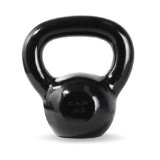
We Need More.....Kettlebell

You either love them or you hate them.

When you are in love with kettlebells, like I am, you enjoy the multi-muscle group movements.  Kettlebell workouts are fluid, like a dance, putting together a chain of movements that leave your heart pounding and sweat pouring.  Yes, there’s some sneaky cardio component to a kettlebell workout.   A great blend of aerobic and anaerobic conditioning.

If you hate kettlebells it’s because kettlebell exercises keep you honest with proper exercise execution.  Form is imperative to moves like the kettlebell swing or the kettlebell snatch.  Do it incorrectly and you’ll be either sore or have bruised wrists the next day.  But this is no reason to shy away from the kettlebell.  You have way too much to gain from this odd looking piece of exercise equipment.  

You will get a mega -caloric burn.  The American council on Exercise states that the average kettlebell workout burns 20 calories per minute.  That’s 1200 calories in just one hour.   Kettlebell workouts utilize many muscle groups to give you an efficient, total body conditioning workout.  

If you’re looking for a toned back side get a kettlebell.  The classic kettlebell swing works all the posterior muscles like your glutes, hamstrings, and lower back.  But only if you use correct form.  Otherwise you'll find yourself with nagging back pain, instead of a better butt.  

Kettlebell exercises are functional movements that will allow you to play hard without getting injured.  If you are an athlete, a nature enthusiast, or just want to keep up with the kids then you need to give kettlebells a try.  During a workout, the exercises will target movements that will make getting up and down off the floor easier, as well as bending over to pick something up.

If you are interested in doing kettlebell workouts start with a coach or take class.  You can’t fake form with kettlebell exercises or you could end up hurt.  I’m not trying to scare anyone away because good form is easy to learn.   Your body will memorize the correct movement pattern and you’ll be on your way to a successful kettlebell workout.  

Thyroid and the gut: Hidden health partners

Though I have personally dealt with both auto-immune thyroiditis (Hashomoto’s) and several gut issues (wheat sensitivity, gastritis, etc.), it was not until recently that I discovered how close the thyroid and gut work together to keep you healthy – and how problems with one can affect the other along with your overall health.
 
Most of us understand that the primary function of the gut, that 25 to 30 feet of “tubing” that includes everything from your stomach to your large intestines, is to process the food we eat and allow the “good stuff” (essential nutrients) to pass into our blood stream while keeping the “bad stuff” (harmful proteins) out. However, it may surprise some that the gut also holds as much as 70% of all the immune tissue in the body.
 
Now, imagine all the health havoc that could ensue if, suddenly, the gut stopped doing its job – particularly if it failed to stop toxic proteins from entering the blood stream and then mounted an overzealous immune response against them.  Sometimes, those overzealous immune responses reach beyond their intended targets to attack otherwise healthy tissues and organs – like the thyroid gland.
 
Recent studies indicate that thyroid hormones play a significant role in maintaining gut integrity, preventing leaky gut that can, in some cases, lead to auto-immune attacks against the thyroid.  A properly functioning gut also aids the production of thyroid hormones by converting some of the inactive “T4” thyroid hormone into the functional “T3” hormone.  Failure to simultaneously maintain both a healthy gut and a healthy thyroid can create a vicious cycle leading to chronic health problems and declining vitality.
 
What it all means is that to enjoy optimal health, you must promote good thyroid health to promote good gut health and vice versa.  Unfortunately, traditional medicine tends to focus on one issue to the exclusion of others.  A typical endocrinologist may treat your under active thyroid without spending a moment to address underlying gut issues.  A gastroenterologist will work alleviate a gut problem but will rarely address a potential thyroid problem.
 
This illustrates, once again, how our bodies work as a system and why it is necessary to bridge the “healthcare gaps” in traditional medicine by becoming personally responsible for your health.  I encourage everyone to consult the Cureality Program Guide and online Cureality Diet and Thyroid Health Tracks to learn more about how to optimize both your gut and thyroid health on your journey to realizing complete, whole-body health.

Omega-3 fatty acids likely NOT associated with prostate cancer

A weakly constructed study was reported recently that purportedly associated higher levels of omega-3 fatty acid blood levels and prostate cancer. See this CBS News report, for instance.

Lipid and omega-3 fat expert, Dr. William Harris, posted this concise critique of the study, exposing some fundamental problems:

First, the reported EPA+DHA level in the plasma phospholipids in this study was 3.62% in the no-cancer control group, 3.66% in the total cancer group, 3.67% in the low grade cancer group, and 3.74% in the high-grade group. These differences between cases and controls are very small and would have no meaning clinically as they are within the normal variation. Based on experiments in our lab, the lowest quartile would correspond to an HS-Omega-3 Index of <3.16% and the highest to an Index of >4.77%). These values are obviously low, and virtually none of the subjects was in “danger” of having an HS-Omega-3 Index of >8%. So to conclude that regular consumption of 2 oily fish meals a week or taking fish oil supplements (both of which would result in an Index above the observed range) would increase risk for prostate cancer is extrapolating beyond the data.

This study did not test the question of whether giving fish oil supplements (or eating more oily fish) increased PC risk; it looked only a blood levels of omega-3 which are determined by intake, other dietary factors, metabolism and genetics.


The authors also failed to present the fuller story taught by the literature. The same team reported in 2010 that the use of fish oil supplements was not associated with any increased risk for prostate cancer. A 2010 meta-analysis of fish consumption and prostate cancer reported a reduction in late stage or fatal cancer among cohort studies, but no overall relationship between prostate cancer and fish intake. Terry et al. in 2001 reported higher fish intake was associated with lower risk for prostate cancer incidence and death, and Leitzmann et al. in 2004 reported similar findings. Higher intakes of canned, preserved fish were reported to be associated with reduced risk for prostate cancer. Epstein et al found that a higher omega-3 fatty acid intake predicted better survival for men who already had prostate cancer, and increased fish intake was associated with a 63% reduction in risk for aggressive prostate cancer in a case-control study by Fradet et al). So there is considerable evidence actually FAVORING an increase in fish intake for prostate cancer risk reduction.

Another piece of the picture is to compare prostate cancer rates in Japan vs the US. Here is a quote from the World Foundation of Urology:


"[Prostate cancer] incidence is really high in North America and Northern Europe (e.g., 63 X 100,000 white men and 102 X 100,000 Afro-Americans in the United States), but very low in Asia (e.g., 10 X 100,000 men in Japan).”

Since the Japanese typically eat about 8x more omega-3 fatty acids than Americans do and their
blood levels are twice as high, you’d think their prostate cancer risk would be much higher...
but the opposite is the case.


Omega-3 fatty acids are physiologically necessary, normalizing multiple metabolic phenomena including augmentation of parasympathetic tone, reductions of postprandial (after-meal) lipoprotein excursions, and endothelial function. It would indeed make no sense that nutrients that are necessary for life and health exert an adverse effect such as prostate cancer at such low blood levels. (Recall that an omega-3 RBC index of 6.0% or greater is associated with reduced potential for sudden cardiac death.)

I personally take 3600 mg per day of EPA + DHA in highly-purified, non-oxidized triglyceride form (Ascenta Nutrasea liquid) that yields an RBC omega-3 index of just over 10%, the level that I believe the overwhelming bulk of data suggest is the ideal level for humans.

Are statins and omega-3s incompatible?

A very insightful book, recently published, says it all in its title: "Mistakes were made (but not by me)."

From the intensity of the comments on this topic, it is clear that we are in the middle of a battlefield. It is to be hoped that the facts will become visible before too much smoke obscures the field, and before the patients are all dead.

George Orwell said it correctly, back in 1946:

“We are all capable of believing things which we know to be untrue, and then, when we are finally proved wrong, imprudently twisting the facts so as to show that we were right. Intellectually, it is possible to carry on this process for an indefinite time: the only check on it is that sooner or later a false belief bumps up against solid reality usually on a battlefield.”

And, after several posts that preventive care with EBT would be too costly.....

*Heroic*

Prevention is what matters, but it is not very heroic. A hospital that advertises the highest volumes in heart bypasses and other heart "repair" procedures, sounds to many like a go-to place when one gets into trouble with one's heart.

Cardiologists who perform impressive surgical procedures are heroes. Not unlike fire-fighters. We celebrate them (deservedly!) for rescues and life saving heroic actions.

We tend to not pay much attention to the folks that work hard to minimize risk of calamities in the first place.

Similarly, we recently learned that it is too costly to build schools that are earthquake resistant in China. Parents had to look at their children's bodies, crushed.

Is it too graphic to imagine 20,000 American bodies, who died of heart disease, piled up on a field?

What will it take before we make prevention our first priority?

AL, Ann Arbor, Michigan


The reader also tells me that, prompted by his father's death from heart attack while following conventional advice after heart catheterization, he has lost 50 lbs and corrected his lipid patterns on the Track Your Plaque program. The reader is currently struggling with full correction of his severe small LDL pattern and is following some of the advice we discussed on our webinar recently.

Another Heart Scan Blog reader, Stan the Heretic, posted this quote from scientist, Max Planck, in his comment:


"A new scientific truth does not triumph by convincing its opponents and making them see the light, but rather because its opponents eventually die and a new generation grows up that is familiar with it." - M. Planck

(Max Planck was a German physicist who developed quantum theory, a disruptive set of ideas that supplanted other explanations of energy mechanics of the day.)


I fear that may prove to be the case for heart disease. The revenue-generating formula for heart disease management that dominates practice in cardiovascular medicine today is so deeply ingrained into the thinking and revenue expectations of practicing cardiologists that a preventive or reversal approach just won't cut it--even if it is vastly superior.

That's why it is important for you to take control yourself. You will be the one who obtains and applies the information that saves your life or the lives of those around you. It is, in all likelihood, NOT your doctor who will save your life, but YOU.

Body count

Imagine the following headline:

War in Iraq a growing success: 20,000 Americans now dead!


If a newspaper ran that headline, we would all be outraged, and rightly so. Deaths in war are a tragedy. They are not something we celebrate.

Then why do we hear hospitals boasting about the number of bypass operations performed every year, number of heart catheterizations performed, number of heart attacks treated?


"_______ Hospital breaks 1000-heart bypass per year milestone"

"We treat more heart attacks than other other hospital in the state!"

"More people come to ________ Hospital than any other in the region!"


I hear this stuff on the radio, on TV, see it in newspapers and magazines, even on highway billboards every single day in Milwaukee.

Heart procedures, like deaths in war, are casualties of health.

They are not successes (though, of course, you can have a "successful" bypass). I see most procedures as a failure of prevention.

Death from heart attack is a failure of prevention. Tim Russert's death was a (unnecessary) failure of prevention. But so are bypass surgery, stents, and the like.

Such is the perverse state of affairs in hospitals and health: They celebrate illness. They glamorize it with ads displaying high-tech equipment, efficient staff in scrubs, "caring and friendly staff." But it is illness they are celebrating. Why? Because it has become a business necessity, a necessary strategy to remain competitive and profitable in the business called "healthcare" that makes money from treating people. The biggest return is from major procedures like bypass operations.

Every success in prevention denies the hospital an $80,000+ opportunity. You'll never hear that advertised.

Dr. Bill Blanchet: A ray of sunshine

Another heated discussion is ongoing at The Heart.org, this one about Tim Russert's untimely death: Media mulls Russert's death as cardiologists weigh in

Although I posted a couple of brief comments there, I quickly lost patience with the tone of many of the other respondents. Should you choose to read the comments, you will see that many still cling to old notions like heart attack is inevitable, defibrillators should be more widely available, "vulnerable" plaques cannot be identified before heart attacks, etc.

I quickly lose patience with this sort of outdated rhetoric. However, our good friend, Dr. Bill Blanchet of Boulder, Colorado, has a far stronger stomach for this than I do.

Here, a sample of his wonderfully persuasive comments:


Heart disease cannot be stopped but we can certainly do better!

Goals we must achieve if we hope to solve the Rube Goldberg of coronary disease:

1. Find something more reliable than Framingham risk factors to determine who is at risk. Framingham risk factors are wrong more often than they are right. If you are comfortable treating 40% of the patients destined to have heart attacks, continue to rely on “traditional” risk factors only.

2. Treat to new standards beyond NCEP/ATP-III. These accepted standards prevent at best 40% of heart attacks in patients treated. This is unacceptable, and arguably why Tim is dead today! Why prevention protocols emphasize LDL and more or less ignore HDL, triglycerides and underemphasize blood pressure eludes me.

3. Motivate patients to participate in coronary prevention. Saying “you need to get exercise and lose weight” is not adequate motivation, it hasn't worked to date and probably won't work tomorrow. If you are satisfied saying it is "the patient's fault for not listening to me" so be it, that excuse doesn't work for me!

Currently “good results” consist of being able to convince 50% of patients at risk by traditional risk factors to participate in prevention and hopefully 30% will be treated to goal. Of those treated to goal, 60% of the heart attacks will still happen anyway. Mathematically we can hope to prevent <10% of heart attacks with this approach!

I have personally found a solution to this dilemma. It goes like this:

1. EBT-CAC [electron-beam tomography coronary artery calcium] is the most reliable predictor of coronary events period, the end! Anyone who disagrees has not objectively read the literature. The only test more predictive than the initial calcium score is the follow up score 12 to 36 months later. EBT predicted Tim Russert’s event 10 years before it happened; passing his stress test gave him inappropriate reassurance 2 months before he died. If only Tim had the benefit of a second EBT sometime over the last 10 years he and his doctor would have known that what they were doing was insufficient and improvements could have been made.

2. I treat to the standard of stable calcified plaque by EBT (<15% annualized progression, preferably <1% annualized progression). This correlates with a very low incidence of coronary events. Even the ACC/AHA 2007 position paper agrees with this. This is accomplished with aspirin, omega-3 fatty acids, diet, exercise, weight control, smoking cessation, treatment of sleep apnea, stress reduction, control of HDL, triglycerides and LDL cholesterol and excellent control of BP and insulin resistance plus the recent addition of vit D-3. Meeting an LDL goal of 70 is easy but prevents only a minority of events, treating to the goal of stable CAC by EBT is a challenge but when achieved, the reward is near elimination of heart attacks and ischemic strokes. This has indeed been my personal experience!

3. A picture of plaque in the coronary artery is a monumental motivator for patients to get on board to make things better. The demonstration of progression of that plaque despite our initial therapies gets all but a few suicidal patients interested in doing a better job. I think that similar motivational results can be had with carotid imaging; the difference is that CAC by EBT is clinically validated as being a much stronger predictor of events with progression and non-events with stability than any ultrasound test including IVUS.


Wow! I couldn't have said it better.

Sadly, I doubt even Dr. Blanchet's persuasive words will do much to convince my colleagues on this forum. And the cardiologists on this forum are likely among the more inquisitive and open-minded. The ones stuck in the cath lab day and night, or implanting defibrillators, are even less inclined to entertain such conversations.

While I admire Dr. Blanchet's energy for continuing to argue with my colleagues, the lesson I take is: Take charge of health yourself. If you wait for your doctor to do it for you, you could be in the same situation as poor Tim Russert. This is an age when your physician should facilitate your success, not prevent it or leave you wallowing in ignorance.

The Russert Protocol at work

Without a concerted effort at prevention, heart scan scores (coronary calcium scores) grow like weeds. The average rate of growth is 30% per year.

Keith is an illustrative case. At age 39, Keith's heart scan score was 29, in the 99th percentile due to his young age. (In other words, young people before age 40 have no business having plaque. If they do, it's bad.)

True to conventional practice, Keith's doctor prescribed a cholesterol drug (Zocor), asked him to take a baby aspirin, and prescribed a blood pressure medicine. He asked Keith to cut the fat in his diet. His doctor even exceeded conventional (ATP-III) LDL cholesterol treatment targets.

Keith, an intelligent and motivated businessman, happily complied with his doctor's instructions. Eighteen months later, a 2nd heart scan showed a score of 68, representing an increase of 135%, or 76% per year.

This is the very same approach that the late Mr. Tim Russert's doctors employed: treat (calculated) LDL cholesterol with a statin drug, treat high blood pressure, reduce saturated fat, take aspirin. It was a miserable failure in Keith, whose plaque continued to grow at a frightening rate of 76% per year. It was also an obvious failure in poor Tim Russert.

Further investigation in Keith uncovered:

--Severe small LDL--80% of all LDL was small (despite a favorable HDL of 58 mg/dl)
--Measured LDL particle number (NMR) showed that "true" LDL was actually about 60 mg/dl higher than suggested by the crude calculated LDL
--An after-eating (postprandial) disorder (IDL)
--A pre-diabetic blood sugar and insulin
--Severe vitamin D deficiency
--Very low testosterone

All these patterns were present despite the steps Keith and his doctor had instituted. It's no wonder his plaque was undergoing explosive growth.

The conventional approach to coronary disease prevention is inadequate, more often than not a mindless adherence to one-size-fits-all template crafted to a great degree by drug industry interests and "experts" who often stand at arm's length from real live patients.

Keith's "residual" abnormalities are all readily correctable. He has since made dramatic improvements in all parameters. Among the strategies used is a wheat- and cornstarch-free diet that resulted in 12 lbs lost within the first few weeks of effort.

If you are on the "Russert Protocol," have a serious conversation with your doctor about the continued advisability of remaining on this half-assed approach to heart disease. Or, consider finding another doctor.

Petition to the National Institutes of Health

A petition to the National Institutes of Health (NIH) is being circulated in response to the mis-statement made in an NIH-sponsored study, ACCORD.

The ACCORD Trial included over 10,000 type II diabetics and compared an intensive, multiple-medication group to achieve a target HbA1c of <6.0%, with a less intensively treated group with a target HbA1c of 7-7.9%. (HBA1c is a long-term measure of glucose, averaging approximately the last 3 months glucose levels.) To the lead investigators' surprise, the intensively treated group experienced more death and heart attack than the less intensive group. The conclusion suggested that intensive management of diabetes may not be a desirable endpoint and may result in greater risk for adverse events.

The petitioners argue that the problem was not with intensive glucose control per se, but the use of multiple side-effect-generating medications. Unfortunately, the ACCORD conclusions give the impression that loose control over blood sugar may be desirable.

The petition originates from the Nutrition and Metabolism Society, a non-profit organization seeking to promote carbohydrate restriction.


The petition reads:

National Institute of Health re: the ACCORD Diabetes Study: "Intensively targeting blood sugar to near-normal levels ... increases risk of death. "

This statement is untrue. This study lowered blood glucose levels only by aggressive drug treatment.

Preventative measures and proven non-drug treatments are being ignored by the NIH, ADA and many other governing agencies.

There is abundant scientific evidence proving a carbohydrate restricted diet can be as effective as drugs in lowering blood glucose levels safely. Many times diet is more effective than medication in controlling diabetes - all without side effects or increased risk of death.

I ask that the NIH publicly retract the above statement. It is misleading the public.

I also request that the NIH acknowledge the existing science and fund more research by the experts who have experience with carbohydrate restriction as a means of treatment for diabetes.

For more info, or to help people with diabetes, please e-mail info@nmsociety.org .

Thank you.


I added my comment:

In my preventive cardiology practice, I have been employing strict carbohydrate restriction in both diabetics and non-diabetics. This results in dramatic improvement in lipids and lipoprotein abnormalities, substantial weight loss, and improved insulin sensitivity. This experience has been entirely different from the heart disease-causing and diabetes-causing low-fat diets that I used for years.

I have a substantial number of diabetics who have been to reduce their reliance on prescription medication for diabetes or even eliminate them. In my experience, the power of carbohydrate-restricted diets is profound.

However, better clinical data to further validate this approach is needed, particularly as diabetes and pre-diabetes is surging in prevalence. I ask that more funding to further explore and validate this research be made available if we are to have greater success on a broader basis.


If you are interested in adding your voice, you can also electronically sign the petition. It is optional, but you can also add your own comments regarding your own views or experiences.

Wheat withdrawal

It happens in the hospital every so often: A clean-cut, law-abiding person is hospitalized for, say, pneumonia, kidney stones, knee surgery, etc.

Everything's fine until . . . they're running down the hospital hallway stark naked, screaming about snakes on the wall, accusing nurses of trying to kill him, all while yanking out IV's and monitor patches.

It's called alcohol withdrawal. Alcohol withdrawal can range from tremulousness and sweatiness, all the way to delirium tremens, the full-blown form that leads to disorientation, seizures, fever, even death. Withdrawal can also be associated with a number of chronically used agents, such as sedatives/sleeping pills, pain medication/opiates, among others.

How about wheat?

I wouldn't have believed it, but after witnessing this effect countless times, I am convinced there is such a phenomenon: Wheat withdrawal.

You'll recognize it in someone who previously ate bread and other wheat flour-containing products freely, then eliminates them. This is followed by extreme cravings, usually for bread, cookies, or cake; profound fatigue; shakiness; mental fogginess; blue moods. The syndrome can last for up to one week.

Then, bam! Sufferers of wheat withdrawal report mental clarity superior to their wheat-crazed days, improved energy, decreased appetite and cravings, heightened mood, and, of course, fantastic drops in weight.

Why would removal of wheat from the diet trigger a withdrawal phenomenon? I can only speculate, but I believe that at least part of this response is due to a physical conversion from a glycogen (sugar)-burning metabolism to that of a fatty acid (fat mobilizing) metabolism. People who lived in the up-and-down cycle of craving and eating wheat constantly fed the sugar furnace for years and are enzymatically impaired in fat burning; they've been growing fat stores. Eliminating wheat deprives the body of this easy source of glycogen, forcing it to mobilize fatty acids in the fatty tissues. Sluggish at first, people feel fatigue, mental fogginess, etc. Once the enzymatic capacity for fat mobilization revs up, then these feelings dissipate.

Could it also relate to the opioid sequences apparently present in wheat? I wasn't even aware of this fact until a reader of The Heart Scan Blog, Anne, left this comment:

Wheat protein contains a number of opiod peptides which can be released during digestion. Some of these are thought to affect the central and peripheral nervous systems.

When I gave up gluten, I felt much worse for a few days. This is a very common reaction in those who stop eating gluten cold turkey.


Dr. BG provides a fascinating commentary on the addictive/opioid aspect of wheat addictions in her Animal Pharm Blog.

Whatever the mechanism, I believe it is a real phenomenon. It can, at times, be so overwhelming that about 20% of people who try to eliminate wheat find they are simply unable to do it without being incapacitated. Of course, that might be a lesson in itself: If withdrawal is so profound, it hints that there must be something very peculiar going on in the first place.