ody text">

Biofeedback is a wonderful, natural way to gain control over multiple physiological phenomena, a means of tapping into your body’s internal resources. You can, for instance, use biofeedback to reduce anxiety, heart rate, and blood pressure, and achieve a sense of well-being that does not involve drugs, side-effects, or even much cost.

Biofeedback simply means that you are tracking some observable physiologic phenomenon—heart rate, skin temperature, blood pressure—and trying to consciously access control over it. One very successful method is that of bringing the beat-to-beat variation in heart rate into synchrony with the respiratory cycle. In day-to-day life, the heart beat is usually completely out of sync with respiration. Bring it into synchrony and interesting things happen: you experience a feeling of peace and calm, while many healthy phenomena develop.

A company called HeartMath has applied this principle through their personal computer-driven device that plugs into the USB port of your computer and monitors your heart rate with a device clipped on your earlobe. You then regulate breathing and follow the instructions provided and feedback is obtained on whether you are achieving synchrony, or what they call “coherence.” As the user becomes more effective in achieving coherence over time, positive physiological and emotional effects develop. HeartMath has been shown, for instance, to reduce systolic and diastolic blood pressure, morning cortisol levels (a stress hormone), and helps people deal with chronic pain. Downside of the HeartMath process: a $249 price tag for the earlobe-USB device.

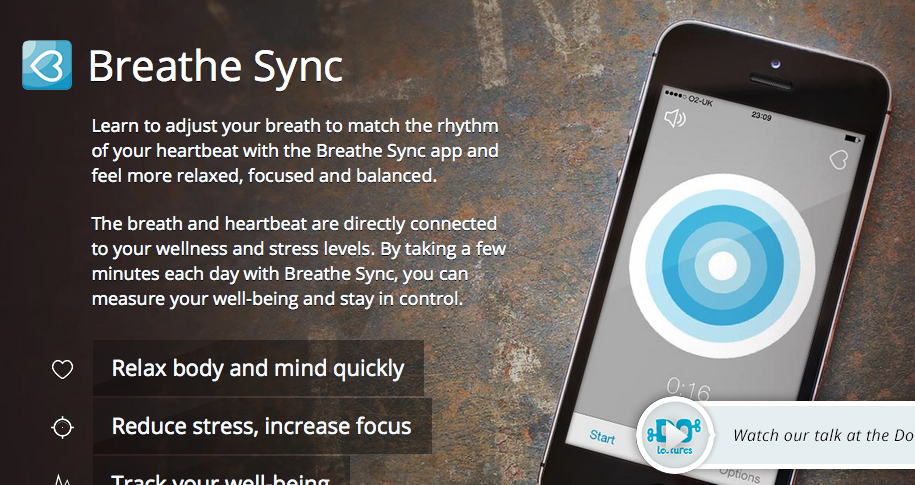
But this is the age of emerging smartphone apps, including those applied to health. Smartphone apps are perfect for health monitoring. They are especially changing how we engage in biofeedback. An app called Breathe Sync is available that tracks heart rate using the camera’s flash on the phone. By tracking heart rate and providing visual instruction on breathing pattern, the program generates a Wellness Quotient, WQ, similar to HeartMath’s coherence scoring system. Difference: Breathe Sync is portable and a heck of a lot less costly. I paid $9.99, more than I’ve paid for any other mainstream smartphone application, but a bargain compared to the HeartMath device cost.

One glitch is that you need to not be running any other programs in the background, such as your GPS, else you will have pauses in the Breathe Sync program, negating the value of your WQ. Beyond this, the app functions reliably and can help you achieve the health goals of biofeedback with so much less hassle and greater effectiveness than the older methods.

If you are looking for a biofeedback system that provides advantage in gaining control over metabolic health, while also providing a wonderful method of relaxation, Breathe Sync, I believe, is the go-to app right now.

How did Cureality get its start?



In the Cureality program, we embrace information and strategies that empower you in health without drugs, without hospitals, without procedures. We convert your doctor from director of healthcare to your assistant in health. He or she is there when you need help, but you largely direct your own health future.

How did we gain the know-how, information, tools, even chutzpah to take on such an ambitious project?


It started around 10 years ago with the awkwardly named Track Your Plaque program. In fact, some of the current followers of the Cureality program are former Track Your Plaque members, having learned of the wonderful list of strategies that can be adopted to gain better control over, even reverse, coronary atherosclerotic plaque and risk for heart attack. They also learned that something special happens when you engage with other people with similar interests, all sharing ideas, insights, and resources to get the self-directed health job done. Over time, what started out as simply a source of better information for coronary health evolved into a self-directed coronary disease management program. We never set out to create something as wildly ambitious as a do-it-yourself-at-home coronary disease risk management program, but that is how it inadvertently turned out.

How we went from Information Provider to Health Empowerment Program

So we never intended to take on something so seemingly impossible as managing coronary risk on your own. But, because we armed people with such empowering, profound insights into better ways to manage their heart disease risk beyond “don’t smoke, cut saturated fat, be active, and take a statin drug”—the typical advice offered by doctors—they returned after an interaction with their doctors disappointed: doctors often declared such strategies unnecessary, or the doctor didn’t understand them—even when there were clear-cut clinical data already available to support their use. In other words, the patients—everyday people, not experts—knew more than their doctors. 

This flip-flop in the balance of knowledge made for some very interesting stories, like “Harold” (not his real name) who, having survived a heart attack and received a stent, was told by his doctor to cut his fat intake, eat more whole grains, exercise, take aspirin and a beta blocker drug, and reduce his cholesterol values with a statin drug. Upon learning all the additional information from the Track Your Plaque program, Harold returned to his doctor and asked “I’m not so ready to just go along with this idea of ‘reducing cholesterol’ to address heart disease risk. Because my goal is to gain as much control over coronary disease as possible, maybe even reverse it, I’d like to address some additional issues that I believe may be important. I’d like to have my advanced lipoproteins drawn to measure the proportion of small LDL particles I have, whether I have lipoprotein(a), an omega-3 fatty acid index and 25-hydroxy vitamin D level, and a thyroid assessment. Oh, and I believe I should also have an assessment of my inflammation status, perhaps a c-reactive protein and phospholipase A2, and my blood sugar status measured with a fasting glucose, insulin, and hemoglobin A1c.” Harold’s doctor was dumbfounded and speechless. Rather than reveal his ignorance, his doctor advised Harold that none of that was necessary, sending him on his way and telling him that he was fine.

But this left Harold with a sour taste in his mouth, having engaged in many online discussions with people who had followed conventional advice that resulted in more heart attack, more heart procedures—the conventional answers simply did not work. He also discussed his situation with people who had successfully obtained the additional information he sought, added it to their program and enjoyed dramatically improved health, including freedom from more heart attacks, heart symptoms, and heart procedures, as well as improved overall health. So Harold found an easy way to obtain the testing on his own. Within a couple of weeks, he returned to his online community and shared all his information. Within moments, he was provided useful discussion to help him understand the values, all leading to changes in nutrition, nutritional supplement choices, how and where to get the simple tools necessary, such as iodine and vitamin D supplements. He even entered his data, choosing which values he was willing to share with others, which remained private, allowing him to compare his own follow-up values several months later. Engaged in this process, self-directed but collaborative, he witnessed marked transformations in his health. Not only did he never again—over several years—ever re-develop heart symptoms nor require any more trips back to the cath lab, he lost weight, reversed a pre-diabetic sugar profile, improved his cholesterol values without drugs, got rid of the acid reflux symptoms he endured for many years, dropped his blood pressure to normal, enjoyed better mood, energy, and sleep. Slender, healthier, all accomplished without his doctor. 

Harold returned to his doctor for a routine follow-up. Slender, energetic, without complaints, on no drugs except the aspirin for his stent, the basic laboratory assessment his doctor ordered in front of him, his doctor admitted,” Well, I don’t know how you’re doing it, but these values look like a 20-year old substituted his blood for yours. They’re unbelievable. What drugs are you taking to do this?” “No drugs,” Harold replied, “I’m following a program to reverse heart disease, but it means doing some things that are different from conventional solutions.” His doctor closed their meeting with the signature response of doctors nationwide: “Well, I don’t understand what you are doing, but just keep doing it.”

Yes, Harold knew more about how to control heart disease than his doctor, more than his cardiologist. The cardiologist knew how to insert a stent or defibrillator. But deliver information that empowered Harold in all aspects of health from head to toe, while also dramatically reducing, perhaps eliminating, his coronary disease risk? As you now know, that is not what conventional healthcare does, nor is it interested in doing so, as it would relinquish control and threaten to cut off this hugely profitable revenue stream that drives “healthcare.”

Having managed to inadvertently create a self-directed coronary risk management program with such spectacular results and in probably one of the most difficult areas of all—heart disease—it became clear that a similar approach could be even more easily applied to many other areas of health, such as weight loss, bone health, cholesterol and blood pressure issues, diabetes and pre-diabetes, hormonal health, autoimmune conditions, and others. You can do it when empowered by safe, effective information, and supported by a community of sharing and collaboration. We don’t fire our doctors; they are there when we need them when, for instance, we get injured or catch pneumonia, or as an occasional resource. But doctors should no longer be able to get away with neglect, misinformation, or blindly directing you to the next revenue-generating procedure because you are empowered by the information and support you receive in Cureality.

As we get more effective in delivering this information and new tools to you, just imagine what we can accomplish in this new age of information and self-empowerment. The future for us is bright with ambitions for better interactive tools with Cureality expert staff, better ways to crowd source health answers, provide more engaging community conversation, all while the health insights that help accomplish our self-directed health goals get better and better. Each person that joins Cureality helps make this service more effective because your wisdom, insights, and experience are added to the collective knowledge. We are more powerful together than we are as individuals.

If you are already a Cureality Member, please add your comments and questions to the growing conversation. If you are not a Member, consider joining our discussions, as each new voice gets us closer and closer to better answers to take back control over health.

Power in Numbers


In his book, The Wisdom of Crowds, author James Surowiecki begins with the story of an ox judging competition in which 800 people—not ox experts nor breeders, just ordinary people attending a county fair—were asked to guess the weight of the ox. The competition was conducted by a scientist, Francis Galton, who held a low opinion of the intelligence of the average person, remarking that “the stupidity and wrong-headedness of many men and women being so great as to be scarcely credible.” He hoped to prove, by examining the various guesses, that the average person had no idea of how to judge the real answer. After all participants casted their written votes, Galton tallied up the total and averaged the result: 1,197 pounds—just one pound off from the real weight of 1,198 pounds. Few individuals actually guessed the correct weight themselves but, when the opinions of many were combined, the result was near-perfect.

Crowds can also be a source of irrational behavior, panic, and stampede. Witness any modern football or soccer game, for instance, in which fights break out over an issue as minor as a disputed call or a heckle. Or go back through history to the countless events when mass hysteria ruled, such as the Salem Witch Trials or Orson Welles’ War of the Worlds radio broadcast.

Let’s put aside examples of mass emotional chaos of the sort that causes crowds to stampede store doors on Black Friday. Let’s focus instead on conscious, considered, thoughtful opinions. We all accept that there are as many opinions on issues as there are people, not uncommonly with widely divergent views. But can we, as Galton’s famous experiment did, combine the opinions of many and come away with some fruitful insight—the correct answer? Just as the people participating in Galton’s experiment were not experts, so Cureality participants—a crowd-sourced collection of opinions—are not experts. If we were to poll everyone to identify their area of expertise or experience, it would likely include finance, the retail industry, raising children, or teaching—but not health. Yes, we have experts curating the direction of content, but we also crowd-source collective opinion.

Right now, Cureality is based on existing science, the philosophy of self-directed health, combined with guidance and community to help the participant along in the sometimes complex world of health questions. But as our processes and procedures improve, can we—like Galton’s ox weight guessers—come away with coalescent wisdom, answers to our health questions, near-perfect solutions to health conditions that have eluded the “experts” for centuries?

I think that we can. No, I know that we can. We enter a new age in information and harness the power of the crowd-sourcing of solutions, even when no single individual has the complete answer herself.

What is Cureality all about?


“Looking over your medical record, Nancy, I’m a bit concerned about your risk for osteoporosis and hip fracture. It looks like your mom had a hip fracture at age 67. Is that right? ”

“Yes, she did,” Nancy responded. “And her life was never quite the same for the 15 years she lived after that.

“You’re 53 year old. Bone thinning develops over many years. Let’s get you scheduled for a bone scan.”

Two weeks later:

“Your z-score is 1.5, Nancy. This means you’ve got a mild form of osteoporosis called ‘osteopenia.’ Here: This is a prescription for alendronate, what used to be called Fosamax.”

“Aren’t there side-effects with that drug? A friend of mine said that her mom had a leg fracture from it.”

“Well, yes. All prescription drugs have potential side-effects. They’re rare, but they can happen and we can’t predict it. Besides leg fracture, there’s something called jaw osteonecrosis in which the jawbone dies and has to be surgically replaced. But would you rather run the risk of a hip fracture?”

“Before we jump to drugs, aren’t there natural things I could do first?”

(Big sigh.) “You can take calcium, but that only helps a bit. You’ve got to make a choice: Take the drug or risk a hip fracture.”

“I’m going to explore some natural remedies on my own first.”

Nancy’s dialogue with her doctor is fictional but based on similar encounters that occur thousands of times every day nationwide. Identify a problem, prescribe a drug. Natural remedies? “They don’t work.” “I don’t know anything about that.” “None of that is proven.” “I only practice evidence-based medicine.” You’ve probably heard a few of these explanations yourself if you ever question the wisdom of conventional medical care.

Each of Nancy’s fictitious interactions were no more 10 minutes long. If she is like most people, she will have one or two such interactions over the course of a year, unless she develops some acute illness. So she’s got something like 20-30 minutes per year to compress all of her “health” advice into the time allotted. 20-30 minutes per year to discuss bone health, nutrition, blood sugar issues, cholesterol issues, blood pressure, female issues, and all the other facets of health. Perhaps she has developed some chronic gastrointestinal complaints, too, and an odd rash on her elbows, maybe headaches a few times per week that she didn’t have before. Regardless, she’s going to have to make do with those few minutes, likely receiving one or more prescriptions or imaging procedures for each.

Such is the nature of modern healthcare: Provide the minimum interaction, address only a few, perhaps no more than one, problem, then prescribe a drug. This is, more often than not, wrong. Plain wrong. Tragically, awfully, unethically, unnecessarily wrong.

Let’s pick up again with Nancy. Upon learning of her osteopenia and long-term risk for hip fractures of the sort that changed her mom’s life and health irretrievably, Nancy started searching for solutions. Not only did she discover that, yes, there are indeed a number of safe and effective ways to deal with osteopenia. She also learned that such strategies have even been examined in clinical trials, some of the strategies pitted head-to-head with drugs and performed on a par, sometimes better, than prescription drugs. She also found that there are online communities that she could join and discuss her health situation with people all sharing the same health interests. During one such interaction at the start of her effort, when she was still a bit unsure and tentative, a woman she didn’t know but who shared a similar interest in restoring bone health, commented to Nancy, “Don’t sweat it, Nancy. I was in your shoes a little over a year ago. I followed a program for bone health: vitamin D, vitamin K2, magnesium, I made sure that I included leafy green vegetables at least once or twice per day, and I added strength training for a few minutes twice per week. I started with osteoporosis. My most recent bone density test showed that I reversed it completely—it’s entirely normal! So hang in there and be sure to share your questions and concerns with us here.”

THAT is what Cureality is all about. Cureality fills the gap of knowledge in health that is not being provided in a few minute-long medical interaction. Cureality reveals the astounding amount of credible, safe, scientific information that allows you to participate, sometimes take over completely, various aspects of health. You don’t have to fire your doctor; these efforts supplement the information and advice you obtain (or don’t obtain) in the doctor’s office. While critics may sometimes say that this can be dangerous or that misdiagnoses and dangerous treatments might be risked, our experience is the exact opposite: People do better by taking the reins of health themselves, choosing to use the health care system for acute or catastrophic illness—but not necessarily for health.

Our fictional woman, Nancy, returns to her doctor one year later after undergoing a repeat bone scan. The doctor opened her chart, clearly expecting to scold her for her foolhardy and careless attitude. Instead, he was speechless. After a pause, he said, “I don’t know how you did it, but your bone density is now normal, the density of a healthy 30-year old woman. Just continue doing what you’re doing.” He closed the chart and walked out.

Yes: “Just continue what you are doing”—not “Please tell me what you did so that I might learn something new,” or “Where did you learn about such strategies? I knew nothing about this!” Just “do what you’re doing.” Too often, that is the response you get that defines what modern health care has become.

You don’t want that kind of health care. Sure, it’s reassuring to know that the doctor and hospital are there in case you injure yourself or develop pneumonia. But obtain day-to-day health advice of the sort that keeps you slender, keeps blood pressure normal, maintains normal insulin and blood pressure responses, helps keep bowel health ideal, can even be used to reverse conditions such as autoimmune joint pain, diabetes, osteoporosis, or skin rashes, while costing next to nothing and yielding health care benefits for you and your family in multiple areas of health? That is the kind of health care you want.

That’s why we developed Cureality.


William Davis, MD
Author of 
#1 New York Times Bestseller Wheat Belly: Lose the wheat, lose the weight and find your path back to health, The Wheat Belly Cookbook, and Wheat Belly 30-Minute (or Less!) Cookbook published by Rodale, Inc.  
Author, Track Your Plaque: The only heart disease prevention program that shows how the new CT heart scans can be used to detect, track, and control coronary plaque

Omega-3 fatty acids likely NOT associated with prostate cancer

A weakly constructed study was reported recently that purportedly associated higher levels of omega-3 fatty acid blood levels and prostate cancer. See this CBS News report, for instance.

Lipid and omega-3 fat expert, Dr. William Harris, posted this concise critique of the study, exposing some fundamental problems:

First, the reported EPA+DHA level in the plasma phospholipids in this study was 3.62% in the no-cancer control group, 3.66% in the total cancer group, 3.67% in the low grade cancer group, and 3.74% in the high-grade group. These differences between cases and controls are very small and would have no meaning clinically as they are within the normal variation. Based on experiments in our lab, the lowest quartile would correspond to an HS-Omega-3 Index of <3.16% and the highest to an Index of >4.77%). These values are obviously low, and virtually none of the subjects was in “danger” of having an HS-Omega-3 Index of >8%. So to conclude that regular consumption of 2 oily fish meals a week or taking fish oil supplements (both of which would result in an Index above the observed range) would increase risk for prostate cancer is extrapolating beyond the data.

This study did not test the question of whether giving fish oil supplements (or eating more oily fish) increased PC risk; it looked only a blood levels of omega-3 which are determined by intake, other dietary factors, metabolism and genetics.


The authors also failed to present the fuller story taught by the literature. The same team reported in 2010 that the use of fish oil supplements was not associated with any increased risk for prostate cancer. A 2010 meta-analysis of fish consumption and prostate cancer reported a reduction in late stage or fatal cancer among cohort studies, but no overall relationship between prostate cancer and fish intake. Terry et al. in 2001 reported higher fish intake was associated with lower risk for prostate cancer incidence and death, and Leitzmann et al. in 2004 reported similar findings. Higher intakes of canned, preserved fish were reported to be associated with reduced risk for prostate cancer. Epstein et al found that a higher omega-3 fatty acid intake predicted better survival for men who already had prostate cancer, and increased fish intake was associated with a 63% reduction in risk for aggressive prostate cancer in a case-control study by Fradet et al). So there is considerable evidence actually FAVORING an increase in fish intake for prostate cancer risk reduction.

Another piece of the picture is to compare prostate cancer rates in Japan vs the US. Here is a quote from the World Foundation of Urology:


"[Prostate cancer] incidence is really high in North America and Northern Europe (e.g., 63 X 100,000 white men and 102 X 100,000 Afro-Americans in the United States), but very low in Asia (e.g., 10 X 100,000 men in Japan).”

Since the Japanese typically eat about 8x more omega-3 fatty acids than Americans do and their
blood levels are twice as high, you’d think their prostate cancer risk would be much higher...
but the opposite is the case.


Omega-3 fatty acids are physiologically necessary, normalizing multiple metabolic phenomena including augmentation of parasympathetic tone, reductions of postprandial (after-meal) lipoprotein excursions, and endothelial function. It would indeed make no sense that nutrients that are necessary for life and health exert an adverse effect such as prostate cancer at such low blood levels. (Recall that an omega-3 RBC index of 6.0% or greater is associated with reduced potential for sudden cardiac death.)

I personally take 3600 mg per day of EPA + DHA in highly-purified, non-oxidized triglyceride form (Ascenta Nutrasea liquid) that yields an RBC omega-3 index of just over 10%, the level that I believe the overwhelming bulk of data suggest is the ideal level for humans.

Are statins and omega-3s incompatible?

French researcher, Dr. Michel de Lorgeril, has been in the forefront of thinking and research into nutritional issues, including the Mediterranean Diet, the French Paradox, and the role of fat intake in cardiovascular health. In a recent review entitled Recent findings on the health effects of omega-3 fatty acids and statins, and their interactions: do statins inhibit omega-3?, he explores the question of whether statin drugs are, in effect, incompatible with omega-3 fatty acids.

Dr. Lorgeril makes several arguments:

1) Earlier studies, such as GISSI-Prevenzione, demonstrated reduction in cardiovascular events with omega-3 fatty acid supplementation, consistent with the biological and physiological benefits observed in animals, experimental preparations, and epidemiologic observations in free-living populations.

2) More recent studies (and meta-analyses) examining the effects of omega-3 fatty acids have failed to demonstrate cardiovascular benefit showing, at most, non-significant trends towards benefit.

He points out that the more recent studies were conducted post-GISSI and after agencies like the American Heart Association's advised people to consume more fish, which prompted broad increases in omega-3 intake. The populations studied therefore had increased intake of omega-3 fatty acids at the start of the studies, verified by higher levels of omega-3 RBC levels in participants.

In addition, he raises the provocative idea that the benefits of omega-3 fatty acids appear to be confined to those not taking statin agents, as suggested, for instance, in the Alpha Omega Trial. He speculates that the potential for statins to ablate the benefits of omega-3s (and vice versa) might be based on several phenomena:

--Statins increase arachidonic acid content of cell membranes, a potentially inflammatory omega-6 fatty acid that competes with omega-3 fatty acids. (Insulin provocation and greater linoleic acid/omega-6 oils do likewise.)
--Statins induce impaired mitochondrial function, while omega-3s improve mitochondrial function. (Impaired mitochondrial function is evidenced, for instance, by reduced coenzyme Q10 levels, with partial relief from muscle weakness and discomfort by supplementing coenzyme Q10.)
--Statins commonly provoke muscle weakness and discomfort which can, in turn, lead to reduced levels of physical activity and increased resistance to insulin. (Thus the recently reported increases in diabetes with statin drug use.)

Are the physiologic effects of omega-3 fatty acids, present and necessary for health, at odds with the non-physiologic effects of statin drugs?

I fear we don't have sufficient data to come to firm conclusions yet, but my perception is that the case against statins is building. Yes, they have benefits in specific subsets of people (none in others), but the notion that everybody needs a statin drug is, I believe, not only dead wrong, but may have effects that are distinctly negative. And I believe that the arguments in favor of omega-3 fatty acid supplementation, EPA and DHA (and perhaps DPA), make better sense.


DHA: the crucial omega-3

Of the two omega-3 fatty acids that are best explored, EPA and DHA, it is likely DHA that exerts the most blood pressure- and heart rate-reducing effects. Here are the data of Mori et al in which 4000 mg of olive oil, purified EPA only, or purified DHA only were administered over 6 weeks:


□ indicates baseline SBP; ▪, postintervention SBP; ○, baseline DBP; •, postintervention DBP; ⋄, baseline HR; and ♦, postintervention HR.

In this group of 56 overweight men with normal starting blood pressures, only DHA reduced systolic BP by 5.8 mmHg, diastolic by 3.3 mmHg.

While each omega-3 fatty acid has important effects, it may be DHA that has an outsized benefit. So how can you get more DHA? Well, this observation from Schuchardt et al is important:

DHA in the triglyceride and phospholipid forms are 3-fold better absorbed, as compared to the ethyl ester form (compared by area-under-the-curve). In other words, fish oil that has been reconstituted to the naturally-occurring triglyceride form (i.e., the form found in fresh fish) provides 3-fold greater blood levels of DHA than the more common ethyl ester form found in most capsules. (The phospholipid form of DHA found in krill is also well-absorbed, but occurs in such small quantities that it is not a practical means of obtaining omega-3 fatty acids, putting aside the astaxanthin issue.)

So if the superior health effects of DHA are desired in a form that is absorbed, the ideal way to do this is either to eat fish or to supplement fish oil in the triglyceride, not ethyl ester, form. The most common and popular forms of fish oil sold are ethyl esters, including Sam's Club Triple-Strength, Costco, Nature Made, Nature's Bounty, as well as prescription Lovaza. (That's right: prescription fish oil, from this and several other perspectives, is an inferior product.)

What sources of triglyceride fish oil with greater DHA content/absorption are available to us? My favorites are, in this order:

Ascenta NutraSea
CEO and founder, Marc St. Onge, is a friend. Having visited his production facility in Nova Scotia, I was impressed with the meticulous methods of preparation. At every step of the way, every effort was made to limit any potential oxidation, including packaging in a vacuum environment. The Ascenta line of triglyceride fish oils are also richer in DHA content. Their NutraSea High DHA liquid, for instance, contains 500 mg EPA and 1000 mg DHA per teaspoon, a 1:2 EPA:DHA ratio, rather than the more typical 3:2 EPA:DHA ratio of ethyl ester forms.

Pharmax (now Seroyal) also has a fine product with a 1.4:1 EPA:DHA ratio.

Nordic Naturals has a fine liquid triglyceride product, though it is 2:1 EPA:DHA.


Wheat brain

Among the most common effects of wheat are those on the brain.

Consume wheat and susceptible individuals will experience a subtle euphoria. Others experience mental cloudiness or sleepiness. (This is what I personally get.)

It gets worse. Children with ADHD and autism have difficulty concentrating on a task and have behavioral outbursts after a cookie. Schizophrenics experience paranoid delusions, auditory hallucinations, and worsening of social detachment. People with bipolar disorder can have the manic phase triggered by a breadcrumb. All these effects are blocked by administering drugs that block the brain's opiate receptors. (This is why, by the way, a drug company is planning to release an oral agent, naltrexone, formerly administered to heroin addicts to help control addiction, for weight loss: block the euphoric effect, take away the temptation, lose weight.)

Here is Heart Scan Blog reader, Nicole's, mental fog story:

I have been grain-free (no gluten free grains either) for quite a long time (about a year and a half). Earlier this week, I decided to try white bread and pasta. The experiment only lasted two days. I had horrible terminal insomnia both nights, causing me on the second night to wake up at 2:30 am unable to get back to sleep at all. I felt drugged and in a mind-fog all the next day and even dozed off a few times! Luckily I had the day off work.

I had very bad forgetfulness also. I forgot that I left my bag and groceries at work, so I had to go back for them. Then I had to use my husband's keys to get in because I thought my keys were in my bag, but it turns out they were in my pocket. Then I got my bag, set the alarm, locked the door and then realized I forgot my groceries. So I had to re-open the door, unset the alarm, and go back for the groceries. Then I locked the door, forgetting to set the alarm, so I had to unlock it, open up and set the alarm. It was just ridiculous, I am NEVER like that!

In addition to the insomnia and forgetfulness, I also had horrible anxiety and paranoia, almost to the point of panic. Which I NEVER have, I am usually very easy-going, even-tempered, and worry-free. But this was horrible, I really was quite paranoid and anxious about everything. Weird!

And the worst, was that in just two days of eating wheat, I gained 4 lbs and 2% bodyfat!! It's two days wheat-free now, and it's finally going back down, but wow. Just two days of wheat-eating caused that much weight and fat gain!

Anyway, I've learned my lesson and will continue to avoid grains (including gluten free grains) entirely.


Eat more "healthy whole grains"? Modern dwarf Triticum aestivum, perverted even further by agricultural geneticists and modern agribusiness, subsidized by the U.S. government to permit $5 pizza, is better than any terrorist plot to discombobulate the health and performance of the American people.

The Westman Diet

Dr. Eric Westman has been a vocal proponent of carbohydrate restriction to gain control over diabetes, as have Drs. Richard Bernstein, Mary Vernon, Richard Feinman, and Jeff Volek.

Several studies over the years have demonstrated that reductions in carbohydrate content of the diet yield reductions in weight and HbA1c (glycated hemoglobin, a reflection of average blood glucose over the preceding 60-90 days).

Among the more important recent clinical studies is a small experience from Duke University's Dr. Eric Westman. In this study, obese type 2 diabetics reduced carbohydrate intake to 20 grams per day or less: no wheat, oats, cornstarch, or sugars. Participants ate nuts, cheese, meats, eggs, and non-starchy vegetables.

After 6 months, average weight loss was 24.4 lbs, BMI was reduced from 37.8 to 34.4. At the end of the study, 95% of participants on this severe carbohydrate restriction reduced or eliminated their diabetes medications.

That was only after 6 months. Note that the ending BMI was still quite well into the obese range. Imagine what another 6-12 months would do, or achieving BMI somewhere closer to ideal.

Curiously, this idea of severe low-carbohydrate restriction to cure or minimize diabetes is not new. Sir William Osler, one of the founders of Johns Hopkins Hospital and author of the longstanding authoritative text, Principles and Practice of Medicine, advocated an diet identical to Dr. Westman's diet. So did Dr. Frederick Banting, discoverer of the pancreatic extract, insulin, to treat childhood diabetics. Before insulin, Banting and his colleagues at the University of Toronto used carbohydrate elimination (less than 10 g per day) to prolong the lives of children with diabetes.

This lesson was also learned many times during war time, when staples like bread were unavailable. The Siege of Paris in 1870 yielded cures for diabetes in many (or at least they stopped passing urine that tasted--yes, tasted--sweet and attracted flies), only to have it recur after the siege was over.

These are lessons we will have to relearn. As long as the American Diabetes Association and most physicians continue to advocate a diet of reduced fat, increased carbohydrate that includes plenty of "healthy whole grains," diabetics will continue to be diabetics, taking their insulin and multiple medications while developing neuropathy (nervous system degeneration), nephropathy (kidney disease and failure), atherosclerosis and heart attack, cataracts, and die 8 to 10 years earlier than non-diabetics.

All the while, we've had the combined wisdom from antiquity onwards: Carbohydrates cause diabetes; elimination of carbohydrates cures diabetes.

(This applies, of course, only to adult overweight type 2 diabetics, not type 1 or some of the other variants.)

Handy dandy carb index

There are a number of ways to gauge your dietary carbohydrate exposure and its physiologic consequences.

One of my favorite ways is to do fingerstick blood sugars for a one-hour postprandial glucose. I like this because it provides real-time feedback on the glucose consequences of your last meal. This can pinpoint problem areas in your diet.

Another way is to measure small LDL particles. Because small LDL particles are created through a cascade that begins with carbohydrate consumption, measuring them provides an index of both carbohydrate exposure and sensitivity. Drawback: Getting access to the test.

For many people, the most practical and widely available gauge of carbohydrate intake and sensitivity is your hemoglobin A1c, or HbA1c.

HbA1c reflects the previous 60 to 90 days blood sugar fluctuations, since hemoglobin is irreversibly glycated by blood glucose. (Glycation is also the phenomenon responsible for formation of cataracts from glycation of lens proteins, kidney disease, arthritis from glycation of cartilage proteins, atherosclerosis from LDL glycation and components of the arterial wall, and many other conditions.)

HbA1c of a primitive hunter-gatherer foraging for leaves, roots, berries, and hunting for elk, ibex, wild boar, reptiles, and fish: 4.5% or less.

HbA1c of an average American: 5.2% (In the population I see, however, it is typically 5.6%, with many 6.0% and higher.)

HbA1c of diabetics: 6.5% or greater.

Don't be falsely reassured by not having a HbA1c that meets "official" criteria for diabetes. A HbA1c of 5.8%, for example, means that many of the complications suffered by diabetics--kidney disease, heightened risk for atherosclerosis, osteoarthritis, cataracts--are experienced at nearly the same rate as diabetics.

With our wheat-free, cornstarch-free, sugar-free diet, we have been aiming to reduce HbA1c to 4.8% or less, much as if you spent your days tracking wild boar.

Battery acid and oatmeal

Ever notice the warnings on your car's battery? "Danger: Sulfuric acid. Protective eyewear advised. Serious injury possible."

Sulfuric acid is among the most powerful and potentially harmful acids known. Get even a dilute quantity in your eyes and you will suffer serious burns and possibly loss of eyesight. Ingest it and you can sustain fatal injury to the mouth and esophagus. Sulfuric acid's potent tendency to react with other compounds is one of the reasons that it is used in industrial processes like petroleum refining. Sulfuric acid is also a component of the harsh atmosphere of Venus.

Know what food is the most potent source of sulfuric acid in the body? Oats.

Yes: Oatmeal, oat bran, and foods made from oats (you know what breakfast cereal I'm talking about) are the most potent sources of sulfuric acid in the human diet.

Why is this important? In the transition made by humans from net-alkaline hunter-gatherer diet to net-acid modern overloaded-with-grains diet, oats tip the scales heavily towards a drop in pH, i.e., more acidic.

The more acidic your diet, the more likely it is you develop osteoporosis and other bone diseases, oxalate kidney stones, and possibly other diseases.

Here's one reference for this effect.

What'll it be: Olive oil or bread?

We frequently discuss the advisability of consuming fats, carbohydrates, and various types within each category.

But what's the worst of all? Combining fats with carbohydrates.

Putting aside the wheat-is-worst form of carbohydrate issue and treating bread as a prototypical carbohydrate, let's play out a typical scenario, a make-believe feeding study in which a theoretical person is fed specific foods.

John is our test person, a 40-year old, 5 ft 10 inch, 210 lb, BMI 27.7 (roughly the mean for the U.S.) He starts with an average American diet of approximately 55% carbohydrates and 30% fat. Starting lipoproteins (NMR):

LDL particle number 1800 nmol/L
Small LDL 923 nmol/L


(The LDL particle number of 1800 nmol/L translates to measured LDL cholesterol of 180 mg/dl, i.e., drop last digit or divide by 10.)

Also, calculated LDL cholesterol is 167 mg/dl (yes, underestimating "true" measured LDL), HDL 42 mg/dl, triglycerides 170 mg/dl.

We feed him a diet increased in carbohydrates and reduced in fat, especially saturated fat, with more breakfast cereals, breads and other wheat products, pasta, fruit juices and fruit, and potatoes. After four weeks:

LDL particle number 2200 nmol/L
Small LDL 1378 nmol/L

Note that LDL particle number has increased by 400 nmol/L due entirely to the increase in small LDL particles triggered by carbohydrate consumption. Lipids show calculated LDL cholesterol 159 mg/dl--yes, a decrease, HDL 40 mg/dl, triglycerides 189 mg/dl. (At this point, if John's primary care doctor saw these numbers, he would congratulate John on reducing his LDL cholesterol and/or suggest a fibrate drug to reduce triglycerides.)

John takes a rest for four weeks during which his lipoproteins revert back to their starting values. We then repeat the process, this time replacing most carbohydrate calories with fats, weighed heavily in favor of saturated fats like fatty red meats, butter and other full-fat dairy products. After four weeks:

LDL particle number 2400 nmol/L


Let's

Chocolate peanut butter cup smoothie

Here's a simple recipe for chocolate peanut butter cup smoothie.

The coconut milk, nut butter, and flaxseed make this smoothie exceptionally filling. If you are a fan of cocoa flavonoids for reducing blood pressure, then this provides a wallop. Approximately 10% of cocoa by weight consists of the various cocoa flavonoids, like procyanidins (polymers of catechin and epicatechin) and quercetin, the components like responsible for many of the health benefits of cocoa.


Ingredients:
1/2 cup coconut milk
1 cup unsweetened almond milk
2 tablespoons cocoa powder (without alkali)
2 tablespoons shredded coconut (unsweetened)
1 tablespoon ground flaxseed
1 teaspoon almond extract
1 1/2 tablespoons natural peanut, almond, or sunflower seed butter
Non-nutritive sweetener to taste (stevia, Truvia, sucralose, xylitol, erythritol)
4 ice cubes

Combine ingredients in blender. Blend and serve.

If you plan to set any of the smoothie aside, then leave out the flaxseed, as it absorbs water and will expand and solidify if left to stand.

For an easy variation, try adding vanilla extract or 1/4 cup of sugar-free (sucralose) vanilla or coconut syrup from Torani or DaVinci and leave out the added sweetener.

The compromise I draw here is the use of non-nutritive sweeteners. Beware that they can increase appetite, since they likely trigger insulin release. However, this smoothie is so filling that I don't believe you will experience this effect with this recipe.

Letter from the insurance company

Claudia got this letter from her health insurance company:

Dear Ms. ------,

Based on a recent review of your cholesterol panel of January 12, 2011, we feel that you should strongly consider speaking to your doctor about cholesterol treatment.

Reducing cholesterol values to healthy levels has been shown to reduce heart attack risk . . .


Okay. So the health insurer wants Claudia to take a cholesterol drug in the hopes that it will reduce their exposure to the costs for her future heart catheterization, angioplasty and stent, or bypass surgery. This is understandable, given the extraordinary costs of such hospital services, typically running from $40,000 for a several hour-long outpatient catheterization procedure, to as much as $200,000 for a several day long stay for coronary bypass surgery.

So what's the problem?

Here are Claudia's most recent lipid values:

LDL cholesterol 196 mg/dl
HDL 88 mg/dl
Triglycerides 37 mg/dl
Total cholesterol 291 mg/dl

By the criteria followed by her health insurer, both total and LDL cholesterol are much too high. Note, of course, that LDL cholesterol was a calculated value, not measured.

Here are Claudia's lipoproteins, drawn simultaneously with her lipids:

LDL particle number 898 nmol/L
Small LDL particle number less than 90 nmol/L (Values less than 90 are not reported by Liposcience)

LDL particle number is, by far and away, the best measure of LDL particles, an actual count of particles, rather than a guesstimate of LDL particles gauged by measuring cholesterol in the low-density fraction of lipoproteins (i.e., LDL cholesterol). It is also measured and is highly reproducible.

To convert LDL particle number in nmol/L to an LDL cholesterol-like value in mg/dl, divide by ten (or just drop the last digit).

Claudia's measured LDL is therefore 89 mg/dl--54% lower than the crude calculated LDL suggests.

This is because virtually all of Claudia's LDL particles are large, with little or no small. This situation throws off the crude assumptions built into the LDL calculation, making it appear that she has very high LDL cholesterol.

Do you think that Big Pharma advertises this phenomenon?

Healthy smoothies

I've now seen several people who have either caused themselves to be diabetic or to have other phenomena associated with excessive consumption of carbohydrates, all by innocently indulging in a carbohydrate-packed smoothie every morning.

Kay, for instance, has a smoothie of a half-pint blueberries, a banana, a scoop of whey, low-fat yogurt, a cup of milk every morning. The rest of her diet was fairly healthy: salads with oil-based dressing for lunch, salmon and asparagus for dinner, only an occasional carbohydrate indulgence outside of her morning smoothie ritual. Yet she had a HbA1c (a reflection of prior 60 to 90 days average blood sugar) at the near-diabetic range of 5.9%.

The mistake most people make when making smoothies is relying too heavily on carbohydrates like fruit. A smoothie like the one made by Kay can easily top 50, 60, or 70 grams carbohydrates per serving, more than sufficient to send blood sugars up to 150 mg/dl or more.

So what can you put in your smoothie and not send you over the edge to diabetes, small LDL, and all the other undesirable phenomena of excessive carbohydrates? Here's a list:

--coconut milk, unsweetened almond milk. Less desirable: milk, full-fat soymilk
--ground flaxseed
--oils: flaxseed oil, coconut oil (melted), extra-light olive oil, walnut oil
--dried coconut
--extracts: vanilla, almond, coconut, cherry, hazelnut
--spices: cinnamon, nutmeg, ginger
--herbs: mint leaves, cilantro
--cocoa powder (unsweetened)
--nut or seed butters (peanut butter, almond butter, sunflower seed butter)
--tofu
--exotic ingredients (ingredients you wouldn't expect in a smoothie): spinach, kale, cucumber

How do you sweeten a smoothie? This is what trips up most people. If you resort to fruit like bananas, pineapple, or apple, you will readily send your blood sugar skyward. Honey, agave syrup, and sugar, of course, all increase blood sugar and/or have the adverse effects of fructose. Be careful of yogurt, also, for similar reasons.

Therefore, to sweeten your smoothie, consider:

--Small servings of berries, e.g., 8-10 blueberries, 2 strawberries, a few wedges of apple, half a kiwi
--Non-nutritive sweeteners like stevia, Truvia, sucralose, xylitol, erythritol. Also, sugar-free (sucralose-based) syrups like those from DaVinci and Torani are useful. (Just be aware that non-nutritive sweeteners can increase appetite--use sparingly.)

Also, note that, if you have divorced yourself from wheat, cornstarch, and sugars, your desire for sweet should be much reduced. Foods other people find just right will taste sickeningly sweet to you. You might therefore find that foods like peanut butter or coconut milk have a mild natural sweetness; added sweetness is only minimally necessary.

Coming next: I'll share a smoothie recipe or two of mine. Anyone want to share a recipe?

Insulin secretagogue

Dairy products have the peculiar property of triggering pancreatic release of insulin. The research group at Lund University in Sweden have contributed the most to documenting this phenomenon:


Mean (±SEM) incremental changes (?) in serum insulin in response to equal amounts of carbohydrate from a white-wheat-bread reference meal (x) and test meals of whey (?), milk (?), cheese (?), cod (?), gluten-low (?), and gluten-high (?) meals. From Nilsson 2004.

Note that it is the area under the curve (AUC), not the peak value, that assumes greatest importance.

Dairy products, especially milk, whey, and yogurt, are insulin secretagogues: they stimulate pancreatic release of insulin. The effect is likely due to amino acids and/or polypeptides in dairy products. (The effect is less prominent with cheese. Also see this study.)

By conventional wisdom, this may be a good thing, since the excess insulin will blunt the glucose rise after consumption. However, in my book, this is not such a good thing, since most of us have tired, beaten, overworked pancreatic beta cells from our decades of carbohydrate overconsumption. I fear that the effect of dairy products just take us a bit closer to beta cell failure: diabetes.

Good news: The effect is least with cheese.

Be gluten-free without "gluten-free"

While I've discussed this before, it is such a confusing issue that I'd like to discuss it again.

I advocate wheat elimination because consumption of products made from modern dwarf Triticum aestivum:

--Triggers formation of extravagant quantities of small LDL and LDL particle number (or apoprotein B)
--Triggers inflammatory phenomena like c-reactive protein, increases leptin resistance, and reduction of the protective adipocytokine, adiponectin.
--Encourages accumulation of deep visceral fat ("wheat belly") that is inflammatory and causes resistance to insulin
--Increases blood sugar more than nearly all other foods--higher than a Milky Way bar, higher than a Snickers bar, higher than table sugar.
--Is being linked to a growing number of immune-mediated diseases, including celiac disease (quadrupled over past 50 years), type 1 diabetes in children, and cerebellar ataxia and peripheral neuropathies.

This last group of wheat-related phenomena are primarily due to gluten, the collection of 50+ proteins found in each wheat plant. For this reason, people diagnosed with celiac disease are advised to eliminate gluten from wheat and other sources (barley, rye, triticale, bulgur) and to eat gluten-free foods.

Gluten-free has therefore come to be viewed as wheat-free and problem-free. It ain't so.

Among the few foods that increase blood glucose higher than wheat: cornstarch, rice starch, potato starch, and tapioca starch--Yup: the ingredients commonly used to replace wheat in gluten-free foods. They are also flagrant triggers of the small LDL pattern, along with increased triglycerides, reduced HDL, increased visceral fat, increased blood pressure. In short, gluten-free foods lack the immune and brain effects of wheat gluten, but still make you fat, hypertensive, and diabetic.

I tell patients to view gluten-free foods like jelly beans: Gluten-free pancakes, muffins, breads, etc. are indulgences, not healthy replacements for wheat. It's okay to have a few jelly beans now and then. But they should not be part of a frequent or daily routine. Same with gluten-free foods.

Who lost weight?

The results of the latest Heart Scan Blog poll are in.


I went wheat-free and I . . .


Gained weight 6 (3%)

Lost no weight 41 (21%)

Lost less than 10 lbs 28 (14%)

Lost more than 10 lbs 34 (17%)

Lost more than 20 lbs 22 (11%)

Lost more than 30 lbs 28 (14%)

I'm still losing weight! 30 (15%)

(189 respondents)


This means that, by eliminating wheat:

24% had no success

31% had moderate success (less than 10 lbs or more than 10 lbs)

25% had extravagant results with 20 lbs or more lost


It would be interesting to know where along the weight-loss spectrum the last category, "I'm still losing weight," group falls. (Anyone with a good story please speak up!)

I believe we can conclude from this casual exercise that, as a simple strategy, wheat elimination is surprisingly effective.

Why would 3% gain weight? Well, without knowing the details, there are several possible explanations:

1) Weight gain developed through other foods. For instance, I've had people eliminate wheat only to replace it with fattening gluten-free alternatives. Remember: wheat-free is not gluten-free. Others load up on the wrong foods, e.g., Craisins and other dried fruit; overdo dairy; or snack on wheat-free but unhealthy foods like ice cream and chips.

2) Too much alcohol

3) Hypothyroidism--A lot more common than you'd think. In fact, this has been the case with a majority of people who have done everything right, yet either failed to lose weight or gained weight.

Those are the biggies.

I'd like to hear your personal stories of wheat elimination--the ups and downs, your success or failure, how you felt during the process, how easy or difficult, your eventual results. Just post them as a response to this blog post.

A niacin primer

A reader of Life Extension reminded me of a piece I wrote about niacin a couple of years back.

Anyone desiring a primer on how and why to use niacin to correct lipid and lipoprotein patterns might find this useful.

While some people, no matter what they do, cannot tolerate niacin (about 10% of people), many others enjoy spectacular benefits.


Q: I recently had a cholesterol profile blood test and learned that I may be at risk of heart disease because my levels of beneficial HDL (high-density lipoprotein) are too low. I read that niacin could help increase my HDL, but my doctor said niacin is dangerous. Whom should I believe?

A: Your doctor would be right—if we were still living in 1985. Since then, however, we have learned how to use niacin (vitamin B3) safely and effectively. Unfortunately, many physicians have not yet caught up, or are still trapped by the idea that cholesterol-lowering statin drugs are the only way to decrease cardiovascular disease risk. I have personally prescribed niacin for thousands of patients as part of our program to reverse coronary disease. In fact, niacin is the closest thing we have available to a perfect treatment that corrects most of the causes of coronary heart disease.

Continued here.

What would life be like . . . ?

What if coronary heart disease could be prevented--no eliminated--applying methods that were accessible, easy, and cheap?

What if coronary heart disease and, thereby, angina, heart attack, sudden cardiac death, ventricular tachycardia, heart failure, and the cerebrovascular equivalent, stroke, could be eliminated using readily available tools available to virtually everyone in the U.S.? And, over a year, it cost less than a once-a-week latte at Starbucks?

How would the healthcare landscape change? What would become of hospitals, manufacturers of the billions of dollars of hospital equipment necessary to supply the cardiovascular hospital industry (e.g., stent manufacturers, catheter manufacturers, defibrillator and pacemaker manufacturers, pharmaceutical manufacturers who no longer have to produce the volume of antiplatelet agents, inotropic drugs, antiarrhythmic agents, etc.)?

How would our lives change? What would the end of life look like if people stopped dying of heart attack, sudden cardiac death, congestive heart failure at age 55, 65, or 75, but lived out their lives to die of something unrelated?

What if the solution had little or nothing to do with drugs but evolved from simple nutritional strategies, supplements meant to correct the deficiencies that accompany modern lifestyles, and a few unique strategies targeted towards the genetic predispositions that lead to heart disease?

What if all this were possible at a cost of a few hundred dollars per year?

It would certainly be a cataclysmic change. Hospitals would shrink to a small remnant of their current gargantuan, dozens-per-city presence. The need for hospital staff would be slashed by over half. The rare cardiologist would tend to congenital heart disease sufferers and other unusual forms of heart disease and he or she might have a colleague or two in all of a major city.

Healthcare costs would plummet, no longer having to sustain the enormous cardiovascular healthcare machine of hospitals, staff, industry, and long-term care. Health insurance, private or public, would drop by 50%.

It would free up nearly a trillion dollars that could be redirected towards other pursuits, like schools and research. Extraordinary leaps forward in quality of life and science would emerge, given that magnitude of funding.

It's not as grand a thought experiment as Alan Weisman's The World Without Us, in which he imagines what the world would be like without humans altogether.

How long would it take to recover lost ground and restore Eden to the way it must have gleamed and smelled the day before Adam, or Homo habilis, appeared? Could nature ever obliterate all our traces? How would it undo our monumental cities and public works, and reduce our myriad plastics and toxic synthetics back to benign, basic elements?

But I believe this thought experiment--what would life be like without heart disease because it was eliminated using inexpensive tools-- is more plausible, more likely to occur. In fact, it has already begun to occur.

See those vines growing up the side of the hospital?

Are jelly beans heart healthy?

Total Fat

3 g or less

Less than 6.5 g


Saturated Fat


1 g or less

1 g or less


Cholesterol

20 mg or less

20 mg or less


Sodium

480 mg or less per RACC* & labeled serving

480 mg or less per RACC* & labeled serving


Nutrients

Contain 10 percent or more of the daily value of 1 of 6 nutrients; vitamin A, vitamin C, iron, calcium, protein or dietary fiber


Contain 10 percent or more of the daily value of 1of 6 nutrients; vitamin A, vitamin C, iron, calcium, protein or dietary fiber


Trans fat

Less than 0.5 g per RACC* and labeled serving


Less than 0.5 g per RACC* and labeled serving


Whole Grain

N/A


51 percent by weight/RACC*


Minimum Dietary Fiber


N/A

1.7 g/RACC of 30 g

2.5 g/RACC of 45 g

2.8 g/RACC of 50 g

3.0 g/RACC of 55 g


(RACC=Reference Amount Customarily Consumed)

Thyroid correction: The woeful prevailing standard

Rich has been taking Synthroid or levothyroxine for many years.

When Rich came to my office for continuing management 10 years after his bypass surgery, I checked his thyroid panel:

TSH 7.44 uIU/L

Free T4 1.88 ng/dl (Ref range 0.80-1.90 ng/dl)

Free T3 2.0 pg/ml (Ref range 2.3-4.2 pg/ml)


Rich's thyroid hormone distortions--high TSH, low T3--are sufficient to account for a tripling of heart attack risk long-term.

As Richs' thyroid was being managed by his primary care physician, I notified this doctor of Rich's panel. He therefore increased Rich's levothyroxine from 75 mcg per day to 100 mcg per day. Another thyroid panel several months later showed:

TSH 0.98 uIU/L

Free T4 2.38 ng/dl

Free T3 2.0 pg/ml


As you would expect, increasing the intake of the T4 hormone (levothyroxine) increased free T4 and suppressed TSH.

But what about T3? It's unchanged.

Indeed, Rich says that he feels no better and, in fact, wakes up in the morning foggy and requires a nap in the afternoon.

In my experience, the majority (approximately 70%, but not 100%) experience subjective improvement when T3 is added in some form and the free T3 level is increased. While the data (summarized here) are conflicted on whether there is objective benefit to T3 management and supplementation, there seems to be a poorly-quantified subjective improvement.

Rich's increased levothyroxine dose decreased (calculated) LDL cholesterol by 10 mg/dl. Based on my experience, I'll bet that his lipid panel would likely be further improved with T3 correction.

What I find incredible is the absolutely rabid resistance waged by primary care physicians and endocrinologists against this notion of T3, mostly due to fears of the remote likelihood of inducing atrial fibrillation and osteoporosis, while they are ready to prescribe lifelong statin drugs without a moment's hesitation.

Launch of new Track Your Plaque newsletter: Cardiac Confidential

Track Your Plaque has just launched a new version of our newsletter. We call it Cardiac Confidential.

Cardiac Confidential is meant to be a no-holds-barred, go-for-the-throat exposé of the world of heart disease. We will expose the dishonest, reveal what we view as the underlying truth. We'll even have an occasional "undercover" report of what goes on in hospitals and the go-for-the-money world of heart procedures.

Read the first issue here (open to everyone) in which "Laurie" describes her encounter with a sleazy, profiteering cardiologist. She survives, but not without paying a dear price.

Thyroid: Be a perfectionist

If you'd like to reduce LDL cholesterol with nearly as much power as a statin drug, think thyroid.

When thyroid is corrected to ideal levels, LDL cholesterol drops 20, 30, 40 mg/dl or more, depending on how poor thyroid function and how high LDL are at the start. The poorer the thyroid function (the higher the TSH or the lower the T3 and T4) and the higher the LDL cholesterol, the more LDL drops with thyroid correction.

(For those of you minding LDL particle size, such as Track Your Plaque Members, the "dominant" LDL species will drop: If you are genetic small LDL, small LDL will drop. If you have mostly large LDL because of being wheat-free and sugar-free, then large LDL will drop.)

One of the problems is that many healthcare providers blindly follow what the laboratory says is "normal" or the "reference range," which is usually nothing more than a population average (actually the mean +/- 2 standard deviations, a common method of developing references ranges). In other words, a substantial degree of low thyroid function, or hypothyroidism, can be present when your doctor adheres to the reference range provided by the laboratory.

What does it mean to achieve ideal thyroid status? My list includes:

--Normal oral temperature of 97.3 F first upon arising. (The thyroid is the body's thermoregulatory organ.)
--TSH 1.0 mIU/L or less
--Free T3 upper half "normal" range
--Free T4 upper half "normal" range
--You feel good: mental clarity, energy, upbeat mood. You lose weight when you try.

Iodine replacement should be part of any thyroid health effort. Iodine is not an optional trace mineral, no more than vitamin C is optional (else your teeth fall out). The only dangers to iodine replacement are to those who have been starved of iodine for many years; increase iodine and the thyroid can over-respond. I've seen this happen in 2 of the last 300 people who have supplemented iodine.

In my view, neglecting T3 replacement is absurd. While it is not clear to me why many otherwise healthy people have low T3 at the low range of "normal" or even in the below-normal range, people feel better and have better health--faster weight loss, reduced LDL, reduced triglycerides, they are happier and enjoy more energy--when T3 is increased to the upper half of the reference range. (Crucial question: Why is the 5'-deiodinase enzyme that converts T4 to T3 inhibited, resulting in reduced free T3? What is in our diets or environment that is exerting this effect? I don't have answer, but we sorely need one.)

It pays to be a perfectionist when it comes to thyroid. Not only do you feel better, but LDL cholesterol can drop with a statin-like magnitude, but with none of the adverse effects.

If interested, Track Your Plaque offers fingerstick blood spot testing that you can perform in your own home. Each test kit will test for: TSH, free T3, free T4, along with a thyroid peroxidase antibody (a marker for Hashimoto's thyroiditis, an autoimmune inflammatory condition of the thyroid).

Nutrition Syllogism

What do you think of these chains of logic?

Cyanide is a potent lethal poison; carbon monoxide is a less lethal poison.
Therefore: plenty of carbon monoxide is good.


Having uterine cancer is a bad thing. Having uterine fibroids is a less bad thing.
Therefore: plenty of uterine fibroids are good.


These are obvious examples of seriously flawed logic. Students of logic and philosophy will recognize the above erroneous sequences as examples of the twisted arguments often used to persuade an argumentative opponent of the logic of a premise. As long ago as 335 B.C., Greek philosopher, Aristotle, recognized the pitfalls of thinking in such arguments. You think we’d know better by now.

Try this one:

White enriched flour is a bad for health; whole grains are less bad for health.
Therefore: plenty of whole grains are good for health.


Ouch!

In the 1960s, we all ate hot dogs on white buns, white flour Wonder Bread® sandwiches, Mom made cookies and cupcakes with white flour. Then, during the 1970s and 1980s, clinical studies were performed demonstrating that whole wheat and whole grains reduced colon cancer, high blood pressure, diabetes, and heart disease compared to white flour. In other words, add back fiber and B vitamins and health benefits develop: No argument here.

Therefore: whole grains must be good for health. Further, lots of whole grains?unlimited quantities of whole grains many times per day, every day?must be even better. Even the USDA says so on their nutrition pyramid, with 8-11 servings of grains per day, 4 of which should be whole grains, at the widest portion of the pyramid.

But what happens when you follow this logic through and fill your diet with whole grains?

Look around you and it’s easy to see: Appetite increases, people become obese, blood sugar increases, diabetes develops, HDL cholesterol plummets, triglycerides skyrocket, inflammatory patterns (e.g., c-reactive protein, or CRP) increase, small LDL (the number one cause for heart disease in the obese U.S.!) shoots through the roof.

I would no more fill my diet with “healthy whole grains” than I would close my garage door with the car running.

Is pomegranate juice healthy?


Pomegranate juice, 8 oz:

Sugars, total 31.50 g

Sucrose 0.00 g

Glucose (dextrose) 15.64 g

Fructose 15.86 g


In your quest to increase the flavonoids in your diet, do you overexpose yourself to fructose?

Remember: Fructose increases LDL cholesterol, apoprotein B, small LDL, triglycerides, and substantially increases deposition of visceral fat (fructose belly?). How about a slice of whole grain bread with that glass of pomegranate juice? The Heart Association says it's all low-fat!


(Coming on the Track Your Plaque website: A full in-depth Special Report on fructose in all its glorious forms and whether this is truly an issue for your health. Fructose tables and the scientific data to establish a safe "threshold" value will be included.)

Image courtesy Wikipedia

Honeydew melon


Honeydew melon:

Sugars, total 51.97 g

Sucrose 15.87 g

Glucose 17.15 g

Fructose 18.94 g

Because sucrose is half fructose (the other half is glucose), there are approximately 26 grams of fructose per one-half honeydew melon.


Image courtesy Wikipedia