levels create the perfect recipe for weight gain. By swapping out high carbohydrate grain foods that cause spikes in insulin with much lower carbohydrate foods, insulin release is subdued and allows the body to release fat.

1. Swap wheat-based flour with almond flour/meal


2. Swap potatoes and rice for cauliflower

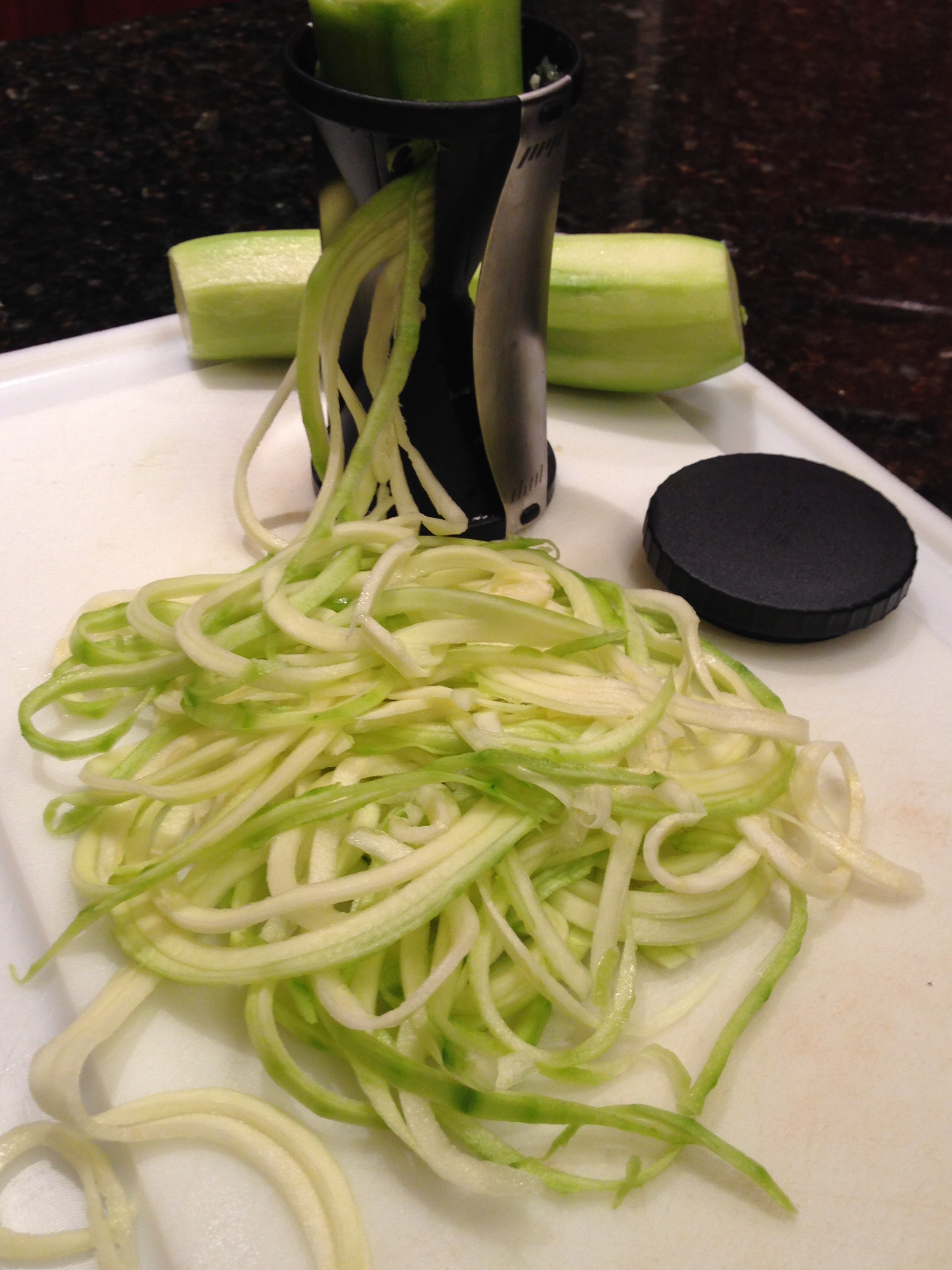
3. Swap pasta for shirataki noodles and zucchini


Lisa Grudzielanek, MS,RDN,CD,CDE
Cureality Nutrition Specialist

Not so fast. Don’t make this mistake when going gluten free!

Beginning last month, the Food and Drug Administration began implementing its definition of “gluten-free” on packaged food labels.  The FDA determined that packaged food labeled gluten free (or similar claims such as "free of gluten") cannot contain more than 20 parts per million of gluten.

It has been years in the making for the FDA to define what “gluten free” means and hold food manufactures accountable, with respect to food labeling.  However, the story does not end there.

Yes, finding gluten-free food, that is now properly labeled, has become easier. So much so the market for gluten-free foods tops $6 billion last year.   However, finding truly healthy, commercially prepared, grain-free foods is still challenging.

A very common mistake made when jumping into the gluten-free lifestyle is piling everything labeled gluten-free in the shopping cart.  We don’t want to replace a problem: wheat, with another problem: gluten free products.

Typically gluten free products are made with rice flour (and brown rice flour), tapioca starch, cornstarch, and potato flour.  Of the few foods that raise blood sugar higher than wheat, these dried, powdered starches top the list.

 They provide a large surface area for digestion, thereby leading to sky-high blood sugar and all the consequences such as diabetes, hypertension, cataracts, arthritis, and heart disease. These products should be consumed very rarely consumed, if at all.  As Dr. Davis has stated, “100% gluten-free usually means 100% awful!”

There is an ugly side to the gluten-free boom taking place.  The Cureality approach to wellness recommends selecting gluten-free products wisely.  Do not making this misguided mistake and instead aim for elimination of ALL grains, as all seeds of grasses are related to wheat and therefore overlap in many effects.

Lisa Grudzielanek MS, RDN, CD, CDE
Cureality Health & Nutrition Coach

3 Foods to Add to Your Next Grocery List

Looking for some new foods to add to your diet? Look no further. Reach for these three mealtime superstars to encourage a leaner, healthier body.

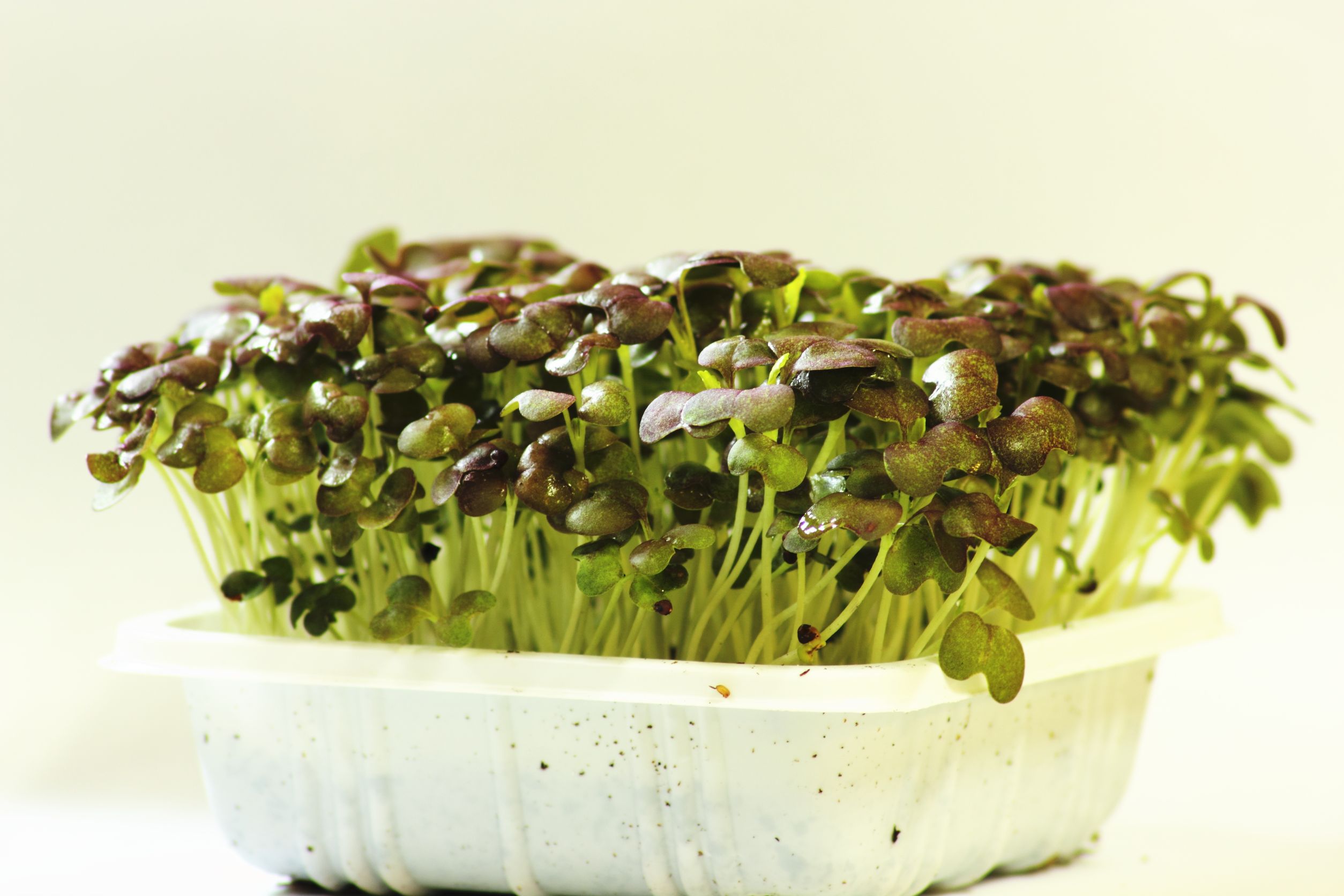
Microgreens

Microgreens are simply the shoots of salad greens and herbs that are harvested just after the first leaves have developed, or in about 2 weeks.  Microgreen are not sprouts. Sprouts are germinated, in other words, sprouted seeds produced entirely in water. Microgreens are grown in soil, thereby absorbing the nutrients from the soil.

The nutritional profile of each microgreen depends greatly on the type of microgreen you are eating. Researchers found red cabbage microgreens had 40 times more vitamin E and six times more vitamin C than mature red cabbage. Cilantro microgreens had three times more beta-carotene than mature cilantro.

A few popular varieties of microgreens are arugula, kale, radish, pea, and watercress. Flavor can vary from mild to a more intense or spicy mix depending on the microgreens.  They can be added to salads, soup, omelets, stir fry and in place of lettuce.  

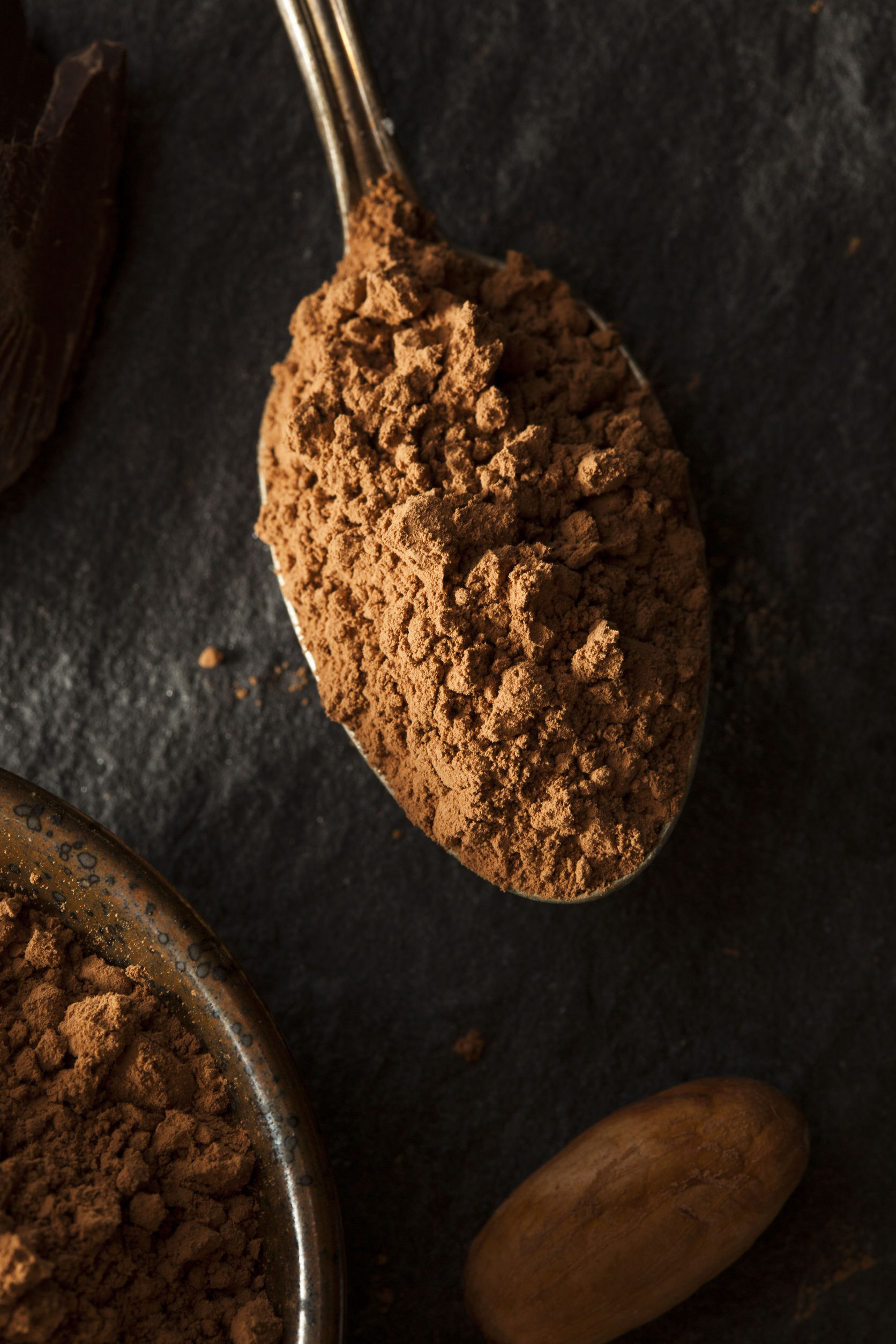
Cacao Powder

Cocoa and cacao are close enough in flavor not to make any difference. However, raw cacao powder has 3.6 times the antioxidant activity of roasted cocoa powder.  In short, raw cacao powder is definitely the healthiest, most beneficial of the powders, followed by 100% unsweetened cocoa.

Cacao has more antioxidant flavonoids than blueberries, red wine and black and green teas.  Cacao is one of the highest sources of magnesium, a great source of iron and vitamin C, as well as a good source of fiber for healthy bowel function.
Add cacao powder to milk for chocolate milk or real hot chocolate.  Consider adding to coffee for a little mocha magic or sprinkle on berries and yogurt.


Shallots


Shallots have a better nutrition profile than onions. On a weight per weight basis, they have more anti-oxidants, minerals, and vitamins than onions. Shallots have a milder, less pungent taste than onions, so people who do not care for onions may enjoy shallots.

Like onions, sulfur compounds in shallot are necessary for liver detoxification pathways.  The sulfur compound, allicin has been shown to be beneficial in reducing cholesterol.  Allicin is also noted to have anti-bacterial, anti-viral, and anti-fungal activities.

Diced then up and add to salads, on top of a bun less hamburger, soups, stews, or sauces.  Toss in an omelet or sauté to enhance a piece of chicken or steak, really the possibilities are endless.  

Lisa Grudzielanek,MS,RDN,CD,CDE
Cureality Nutrition & Health Coach

3 Band Exercises for Great Glutes

Bands and buns are a great combination.  (When I talk about glutes or a butt, I use the word buns)  When it comes to sculpting better buns, grab a band.   Bands are great for home workouts, at gym or when you travel.  Check out these 3 amazing exercises that will have your buns burning. 

Band Step Out

Grab a band and place it under the arch of each foot.  Then cross the band and rest your hands in your hip sockets.  The exercise starts with your feet hip width apart and weight in the heels.  Slightly bend the knees and step your right foot out to the side.  Step back in so that your foot is back in the starting position.  With each step, make sure your toes point straight ahead.  The tighter you pull the band, the more resistance you will have.    You will feel this exercise on the outside of your hips. 

Start with one set of 15 repetitions with each foot.  Work on increasing to 25 repetitions on each side and doing two to three sets.


Band Kick Back

This exercise is performed in the quadruped position with your knees under hips and hands under your shoulders.    Take the loop end of the band and put it around your right foot and place the two handles or ends of the band under your hands.  Without moving your body, kick your right leg straight back.  Return to the starting quadruped position.  Adjust the tension of the band to increase or decrease the difficulty of this exercise. 

Start with one set of 10 repetitions with each foot.  Work on increasing to 20 repetitions on each side and doing two to three sets. 


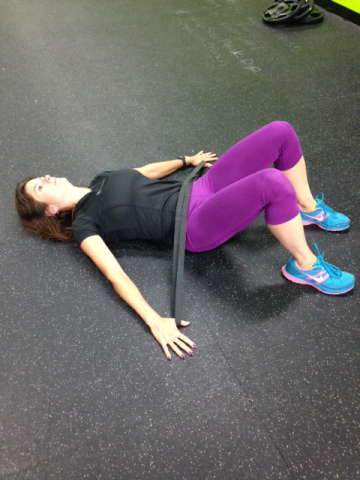
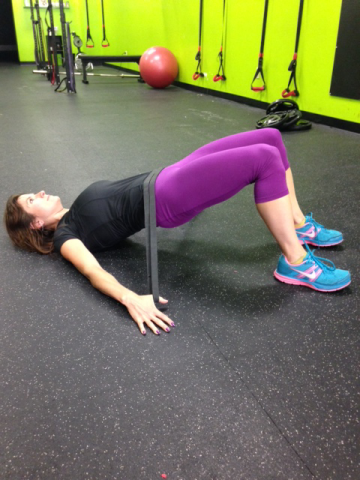
Band Resisted Hip Bridge

Start lying on your back with feet hip distance apart and knees bent at about a 45-degree angle.  Adjust your hips to a neutral position to alleviate any arching in your lower back.  Place the band across your hipbones.  Hold the band down with hands along the sides of your body.  Contract your abs and squeeze your glutes to lift your hips up off the ground.  Stop when your thighs, hips and stomach are in a straight line.  Lower you hips back down to the ground. 

Start with one set of 15 repetitions.  Work on increasing to 25 repetitions and doing two to three.  Another variation of this exercise is to hold the hip bridge position.  Start with a 30 second hold and work up to holding for 60 seconds.
For the sake of convenience: Commercial sources of prebiotic fibers

Our efforts to obtain prebiotic fibers/resistant starches, as discussed in the Cureality Digestive Health Track, to cultivate healthy bowel flora means recreating the eating behavior of primitive humans who dug in the dirt with sticks and bone fragments for underground roots and tubers, behaviors you can still observe in extant hunter-gatherer groups, such as the Hadza and Yanomamo. But, because this practice is inconvenient for us modern folk accustomed to sleek grocery stores, because many of us live in climates where the ground is frozen much of the year, and because we lack the wisdom passed from generation to generation that helps identify which roots and tubers are safe to eat and which are not, we rely on modern equivalents of primitive sources. Thus, green, unripe bananas, raw potatoes and other such fiber sources in the Cureality lifestyle.

There is therefore no need to purchase prebiotic fibers outside of your daily effort at including an unripe green banana, say, or inulin and fructooligosaccharides (FOS), or small servings of legumes as a means of cultivating healthy bowel flora. These are powerful strategies that change the number and species of bowel flora over time, thereby leading to beneficial health effects that include reduced blood sugar and blood pressure, reduction in triglycerides, reduced anxiety and improved sleep, and reduced colon cancer risk.

HOWEVER, convenience can be a struggle. Traveling by plane, for example, makes lugging around green bananas or raw potatoes inconvenient. Inulin and FOS already come as powders or capsules and they are among the options for a convenient, portable prebiotic fiber strategy. But there are others that can be purchased. This is a more costly way to get your prebiotic fibers and you do not need to purchase these products in order to succeed in your bowel flora management program. These products are therefore listed strictly as a strategy for convenience.

Most perspectives on the quality of human bowel flora composition suggest that diversity is an important feature, i.e., the greater the number of species, the better the health of the host. There may therefore be advantage in varying your prebiotic routine, e.g., green banana on Monday, inulin on Tuesday, PGX (below) on Wednesday, etc. Beyond providing convenience, these products may introduce an added level of diversity, as well.

Among the preparations available to us that can be used as prebiotic fibers:

PGX

While it is billed as a weight management and blood sugar-reducing product, the naturally occurring fiber--α-D-glucurono-α-D-manno-β-D-manno- β-D-gluco, α-L-gulurono-β-D mannurono, β-D-gluco-β- D-mannan--in PGX also exerts prebiotic effects (evidenced by increased fecal butyrate, the beneficial end-product of bacterial metabolism). PGX is available as capsules or granules. It also seems to exert prebiotic effects at lower doses than other prebiotic fibers. While I usually advise reaching 20 grams per day of fiber, PGX appears to exert substantial effects at a daily dose of half that quantity. As with all prebiotic fibers, it is best to build up slowly over weeks, e.g., start at 1.5 grams twice per day. It is also best taken in two or three divided doses. (Avoid the PGX bars, as they are too carb-rich for those of us trying to achieve ideal metaobolic health.)

Prebiotin

A combination of inulin and FOS available as powders and in portable Stick Pacs (2 gram and 4 gram packs). This preparation is quite costly, however, given the generally low cost of purchasing chicory inulin and FOS separately.

Acacia

Acacia fiber is another form of prebiotic fiber.  RenewLife and NOW are two reputable brands.

Isomalto-oligosaccharides

This fiber is used in Quest bars and in Paleo Protein Bars. With Quest bars, choose the flavors without sucralose, since it has been associated with undesirable changes in bowel flora.

There you go. It means that there are fewer and fewer reasons to not purposefully cultivate healthy bowel flora and obtain all the wonderful health benefits of doing so, from reduced blood pressure, to reduced triglycerides, to deeper sleep.

Disclaimer: I am not compensated in any way by discussing these products.

How Not To Have An Autoimmune Condition


Autoimmune conditions are becoming increasingly common. Estimates vary, but it appears that at least 8-9% of the population in North America and Western Europe have one of these conditions, with The American Autoimmune Related Diseases Association estimating that it’s even higher at 14% of the population.

The 200 or so autoimmune diseases that afflict modern people are conditions that involve an abnormal immune response directed against one or more organs of the body. If the misguided attack is against the thyroid gland, it can result in Hashimoto’s thyroiditis. If it is directed against pancreatic beta cells that produce insulin, it can result in type 1 diabetes or latent autoimmune diabetes of adults (LADA). If it involves tissue encasing joints (synovium) like the fingers or wrists, it can result in rheumatoid arthritis. It if involves the liver, it can result in autoimmune hepatitis, and so on. Nearly every organ of the body can be the target of such a misguided immune response.

While it requires a genetic predisposition towards autoimmunity that we have no control over (e.g., the HLA-B27 gene for ankylosing spondylitis), there are numerous environmental triggers of these diseases that we can do something about. Identifying and correcting these factors stacks the odds in your favor of reducing autoimmune inflammation, swelling, pain, organ dysfunction, and can even reverse an autoimmune condition altogether.

Among the most important factors to correct in order to minimize or reverse autoimmunity are:


Wheat and grain elimination

If you are reading this, you likely already know that the gliadin protein of wheat and related proteins in other grains (especially the secalin of rye, the hordein of barley, zein of corn, perhaps the avenin of oats) initiate the intestinal “leakiness” that begins the autoimmune process, an effect that occurs in over 90% of people who consume wheat and grains. The flood of foreign peptides/proteins, bacterial lipopolysaccharide, and grain proteins themselves cause immune responses to be launched against these foreign factors. If, for instance, an autoimmune response is triggered against wheat gliadin, the same antibodies can be aimed at the synapsin protein of the central nervous system/brain, resulting in dementia or cerebellar ataxia (destruction of the cerebellum resulting in incoordination and loss of bladder and bowel control). Wheat and grain elimination is by far the most important item on this list to reverse autoimmunity.

Correct vitamin D deficiency

It is clear that, across a spectrum of autoimmune diseases, vitamin D deficiency serves a permissive, not necessarily causative, role in allowing an autoimmune process to proceed. It is clear, for instance, that autoimmune conditions such as type 1 diabetes in children, rheumatoid arthritis, and Hashimoto’s thyroiditis are more common in those with low vitamin D status, much less common in those with higher vitamin D levels. For this and other reasons, I aim to achieve a blood level of 25-hydroxy vitamin D level of 60-70 ng/ml, a level that usually requires around 4000-8000 units per day of D3 (cholecalciferol) in gelcap or liquid form (never tablet due to poor or erratic absorption). In view of the serious nature of autoimmune diseases, it is well worth tracking occasional blood levels.

Supplement omega-3 fatty acids

While omega-3 fatty acids, EPA and DHA, from fish oil have proven only modestly helpful by themselves, when cast onto the background of wheat/grain elimination and vitamin D, omega-3 fatty acids compound anti-inflammatory benefits, such as those exerted via cyclooxygenase-2. This requires a daily EPA + DHA dose of around 3600 mg per day, divided in two. Don’t confuse EPA and DHA omega-3s with linolenic acid, another form of omega-3 obtained from meats, flaxseed, chia, and walnuts that does not not yield the same benefits. Nor can you use krill oil with its relatively trivial content of omega-3s.

Eliminate dairy

This is true in North America and most of Western Europe, less true in New Zealand and Australia. Autoimmunity can be triggered by the casein beta A1 form of casein widely expressed in dairy products, but not by casein beta A2 and other forms. Because it is so prevalent in North America and Western Europe, the most confident way to avoid this immunogenic form of casein is to avoid dairy altogether. You might be able to consume cheese, given the fermentation process that alters proteins and sugar, but that has not been fully explored.

Cultivate healthy bowel flora

People with autoimmune conditions have massively screwed up bowel flora with reduced species diversity and dominance of unhealthy species. We restore a healthier anti-inflammatory panel of bacterial species by “seeding” the colon with high-potency probiotics, then nourishing them with prebiotic fibers/resistant starches, a collection of strategies summarized in the Cureality Digestive Health discussions. People sometimes view bowel flora management as optional, just “fluff”–it is anything but. Properly managing bowel flora can be a make-it-or-break-it advantage; don’t neglect it.

There you go: a basic list to get started on if your interest is to begin a process of unraveling the processes of autoimmunity. In some conditions, such as rheumatoid arthritis and polymyalgia rheumatica, full recovery is possible. In other conditions, such as Hashimoto’s thyroiditis and the pancreatic beta cell destruction leading to type 1 diabetes, reversing the autoimmune inflammation does not restore organ function: hypothyroidism results after thyroiditis quiets down and type 1 diabetes and need for insulin persists after pancreatic beta cell damage. But note that the most powerful risk factor for an autoimmune disease is another autoimmune disease–this is why so many people have more than one autoimmune condition. People with Hashimoto’s, for instance, can develop rheumatoid arthritis or psoriasis. So the above menu is still worth following even if you cannot hope for full organ recovery

Five Powerful Ways to Reduce Blood Sugar

Left to conventional advice on diet and you will, more than likely, succumb to type 2 diabetes sooner or later. Follow your doctor’s advice to cut fat and eat more “healthy whole grains” and oral diabetes medication and insulin are almost certainly in your future. Despite this, had this scenario played out, you would be accused of laziness and gluttony, a weak specimen of human being who just gave into excess.

If you turn elsewhere for advice, however, and ignore the awful advice from “official” sources with cozy relationships with Big Pharma, you can reduce blood sugars sufficient to never become diabetic or to reverse an established diagnosis, and you can create a powerful collection of strategies that handily trump the worthless advice being passed off by the USDA, American Diabetes Association, the American Heart Association, or the Academy of Nutrition and Dietetics.

Among the most powerful and effective strategies to reduce blood sugar:

1) Eat no wheat nor grains

Recall that amylopectin A, the complex carbohydrate of grains, is highly digestible, unlike most of the other components of the seeds of grasses AKA “grains,” subject to digestion by the enzyme, amylase, in saliva and stomach. This explains why, ounce for ounce, grains raise blood sugar higher than table sugar. Eat no grains = remove the exceptional glycemic potential of amylopectin A.

2) Add no sugars, avoid high-fructose corn syrup

This should be pretty obvious, but note that the majority of processed foods contain sweeteners such as sucrose or high-fructose corn syrup, tailored to please the increased desire for sweetness among grain-consuming people. While fructose does not raise blood sugar acutely, it does so in delayed fashion, along with triggering other metabolic distortions such as increased triglycerides and fatty liver.

3) Vitamin D

Because vitamin D restores the body’s normal responsiveness to insulin, getting vitamin D right helps reduce blood sugar naturally while providing a range of other health benefits.

4) Restore bowel flora

As cultivation of several Lactobacillus and Bifidobacteria species in bowel flora yields fatty acids that restore insulin responsiveness, this leads to reductions in blood sugar over time. Minus the bowel flora-disrupting effects of grains and sugars, a purposeful program of bowel flora restoration is required (discussed at length in the Cureality Digestive Health section.)

5) Exercise

Blood sugar is reduced during and immediately following exercise, with the effect continuing for many hours afterwards, even into the next day.

Note that, aside from exercise, none of these powerful strategies are advocated by the American Diabetes Association or any other “official” agency purporting to provide dietary advice. As is happening more and more often as the tide of health information rises and is accessible to all, the best advice on health does not come from such agencies nor from your doctor but from your efforts to better understand the truths in health. This is our core mission in Cureality. A nice side benefit: information from Cureality is not accompanied by advertisements from Merck, Pfizer, Kelloggs, Kraft, or Cadbury Schweppes.

Cureality App Review: Breathe Sync


Biofeedback is a wonderful, natural way to gain control over multiple physiological phenomena, a means of tapping into your body’s internal resources. You can, for instance, use biofeedback to reduce anxiety, heart rate, and blood pressure, and achieve a sense of well-being that does not involve drugs, side-effects, or even much cost.

Biofeedback simply means that you are tracking some observable physiologic phenomenon—heart rate, skin temperature, blood pressure—and trying to consciously access control over it. One very successful method is that of bringing the beat-to-beat variation in heart rate into synchrony with the respiratory cycle. In day-to-day life, the heart beat is usually completely out of sync with respiration. Bring it into synchrony and interesting things happen: you experience a feeling of peace and calm, while many healthy phenomena develop.

A company called HeartMath has applied this principle through their personal computer-driven device that plugs into the USB port of your computer and monitors your heart rate with a device clipped on your earlobe. You then regulate breathing and follow the instructions provided and feedback is obtained on whether you are achieving synchrony, or what they call “coherence.” As the user becomes more effective in achieving coherence over time, positive physiological and emotional effects develop. HeartMath has been shown, for instance, to reduce systolic and diastolic blood pressure, morning cortisol levels (a stress hormone), and helps people deal with chronic pain. Downside of the HeartMath process: a $249 price tag for the earlobe-USB device.

But this is the age of emerging smartphone apps, including those applied to health. Smartphone apps are perfect for health monitoring. They are especially changing how we engage in biofeedback. An app called Breathe Sync is available that tracks heart rate using the camera’s flash on the phone. By tracking heart rate and providing visual instruction on breathing pattern, the program generates a Wellness Quotient, WQ, similar to HeartMath’s coherence scoring system. Difference: Breathe Sync is portable and a heck of a lot less costly. I paid $9.99, more than I’ve paid for any other mainstream smartphone application, but a bargain compared to the HeartMath device cost.

One glitch is that you need to not be running any other programs in the background, such as your GPS, else you will have pauses in the Breathe Sync program, negating the value of your WQ. Beyond this, the app functions reliably and can help you achieve the health goals of biofeedback with so much less hassle and greater effectiveness than the older methods.

If you are looking for a biofeedback system that provides advantage in gaining control over metabolic health, while also providing a wonderful method of relaxation, Breathe Sync, I believe, is the go-to app right now.

Amber’s Top 35 Health and Fitness Tips

This year I joined the 35 club!  And in honor of being fabulous and 35, I want to share 35 health and fitness tips with you! 

1.  Foam rolling is for everyone and should be done daily. 
2.  Cold showers are the best way to wake up and burn more body fat. 
3.  Stop locking your knees.  This will lead to lower back pain. 
4.  Avoid eating gluten at all costs. 
5.  Breath deep so that you can feel the sides or your lower back expand. 
6.  Swing a kettlebell for a stronger and great looking backside. 
7.  Fat is where it’s at!  Enjoy butter, ghee, coconut oil, palm oil, duck fat and many other fabulous saturated fats. 
8.  Don’t let your grip strength fade with age.  Farmer carries, kettlebells and hanging from a bar will help with that. 
9.  Runners, keep your long runs slow and easy and keep your interval runs hard.  Don’t fall in the chronic cardio range. 
10.  Drink high quality spring or reverse osmosis water. 
11.  Use high quality sea salt season food and as a mineral supplement. 
12.  Work your squat so that your butt can get down to the ground.  Can you sit in this position? How long?
13.  Lift heavy weights!  We were made for manual work,.   Simulate heavy labor in the weight room. 
14.  Meditate daily.  If you don’t go within, you will go with out.  We need quiet restorative time to balance the stress in our life. 
15.  Stand up and move for 10 minutes for every hour your sit at your computer. 
16. Eat a variety of whole, real foods. 
17.  Sleep 7 to 9 hours every night. 
18.  Pull ups are my favorite exercise.  Get a home pull up bar to practice. 
19.  Get out and spend a few minutes in nature.  Appreciate the world around you while taking in fresh air and natural beauty. 
20.  We all need to pull more in our workouts.  Add more pulling movements horizontally and vertically. 
21. Surround yourself with health minded people. 
22. Keep your room dark for deep sound sleep.  A sleep mask is great for that! 
23. Use chemical free cosmetics.  Your skin is the largest organ of your body and all chemicals will absorb into your blood stream. 
24. Unilateral movements will help improve symmetrical strength. 
25. Become more playful.  We take life too seriously, becoming stress and overwhelmed.  How can you play, smile and laugh more often?
26.  Choose foods that have one ingredient.  Keep your diet simple and clean. 
27.  Keep your joints mobile as you age.  Do exercises that take joints through a full range of motion. 
28. Go to sleep no later than 10:30pm.  This allows your body and brain to repair through the night. 
29. Take care of your health and needs before others.  This allows you to be the best spouse, parent, coworker, and person on the planet. 
30.  Always start your daily with a high fat, high protein meal.  This will encourage less sugar cravings later in the day. 
31. Approach the day with positive thinking!  Stinkin’ thinkin’ only leads to more stress and frustration. 
32. You are never “too old” to do something.  Stay young at heart and keep fitness a priority as the years go by. 
33. Dream big and go for it. 
34.  Lift weights 2 to 4 times every week.  Strong is the new sexy. 
35.  Love.  Love yourself unconditionally.  Love your life and live it to the fullest.  Love others compassionately. 

Amber B.
Cureality Exercise and Fitness Coach

To Change, You Need to Get Uncomfortable

Sitting on the couch is comfortable.  Going through the drive thru to pick up dinner is comfortable.  But when you notice that you’re out-of-shape, tired, sick and your clothes no longer fit, you realize that what makes you comfortable is not in align with what would make you happy.   

You want to see something different when you look in the mirror.  You want to fit into a certain size of jeans or just experience your day with more energy and excitement.  The current condition of your life causes you pain, be it physical, mental or emotional.  To escape the pain you are feeling, you know that you need to make changes to your habits that keep you stuck in your current state.  But why is it so hard to make the changes you know that will help you achieve what you want?  

I want to lose weight but….

I want a six pack but…

I want more energy but….

The statement that follows the “but” is often a situation or habit you are comfortable with.  You want to lose weight but don’t have time to cook healthy meals.  So it’s much more comfortable to go through the drive thru instead of trying some new recipes.   New habits often require a learning curve and a bit of extra time in the beginning.  It also takes courage and energy to establish new routines or seek out help.  

Setting out to achieve your goals requires change.  Making changes to establish new habits that support your goals and dreams can be uncomfortable.  Life, as you know it, will be different.  Knowing that fact can be scary, but so can staying in your current condition.  So I’m asking you to take a risk and get uncomfortable so that you can achieve your goals.  

Realize that it takes 21 days to develop a new habit.  I believe it takes triple that amount of time to really make a new habit stick for the long haul.  So for 21 days, you’ll experience some discomfort while you make changes to your old routine and habits.  Depending on what you are changing, discomfort could mean feeling tired, moody, or even withdrawal symptoms.  However, the longer you stick to your new habits the less uncomfortable you start to feel.  The first week is always the worst, but then it gets easier.

Making it through the uncomfortable times requires staying focused on your goals and not caving to your immediate feelings or desires.  I encourage clients to focus on why their goals important to them.  This reason or burning desire to change will help when old habits, cravings, or situations call you back to your old ways.
Use a tracking and a reward system to stay on track.  Grab a calendar, journal or index card to check off or note your daily successes.  Shoot for consistency and not perfection when trying to make changes.  I encourage my clients to use the 90/10 principle of change and apply that to their goal tracking system.  New clothes, a massage, or a day me-retreat are just a few examples of rewards you can use to sticking to your tracking system.  Pick something that really gets you excited.  

Getting support system in place can help you feel more comfortable with being uncomfortable.  Hiring a coach, joining an online support group, or recruiting family and friends can be very helpful when making big changes.  With a support system in place you are not alone in your discomfort.  You’re network is there for you to reach out for help, knowledge, accountability or camaraderie when you feel frustrated and isolated.  

I’ve helped hundreds of people change their bodies, health and lives of the eleven years I’ve worked as a trainer and coach.  I know it’s hard, but I also know that if they can do it, so can you.  You just need to step outside of your comfort zone and take a risk. Don’t let fear create uncomfortable feelings that keep you stuck in your old ways.  Take that first step and enjoy the journey of reaching your goals and dreams.  

Amber Budahn, B.S., CSCS, ACE PT, USATF 1, CHEK HLC 1, REIKI 1
Cureality Exercise Specialist

The 3 Best Grain Free Food Swaps to Boost Fat Burning

You can join others enjoying substantial improvements in their health, energy and pant size by making a few key, delicious substitutions to your eating habits.  This is possible with the Cureality nutrition approach, which rejects the idea that grains should form the cornerstone of the human diet.  

Grain products, which are seeds of grasses, are incompatible with human digestion.  Contrary to what we have been told for years, eating healthy whole grain is not the answer to whittle away our waists.  Consumption of all grain-based carbohydrates results in increased production of the fat storage hormone insulin.  Increased insulin levels create the perfect recipe for weight gain. By swapping out high carbohydrate grain foods that cause spikes in insulin with much lower carbohydrate foods, insulin release is subdued and allows the body to release fat.

1. Swap wheat-based flour with almond flour/meal

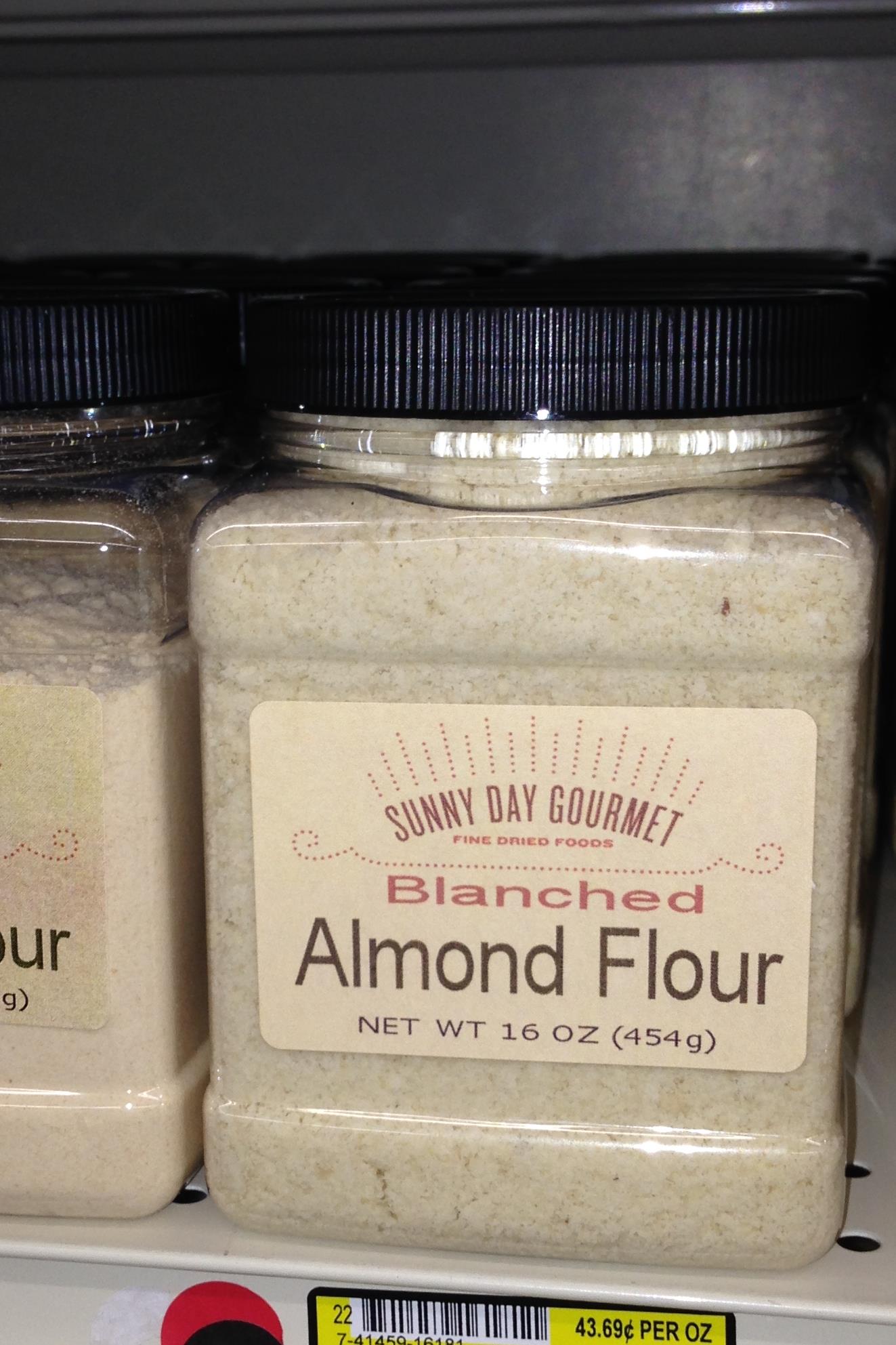
  • One of the most dubious grain offenders is modern wheat. Replace wheat flour with naturally wheat-free, lower carbohydrate almond flour.  
  • Almond flour contains a mere 12 net carbs per cup (carbohydrate minus the fiber) with 50% more filling protein than all-purpose flour.
  • Almond flour and almond meal also offer vitamin E, an important antioxidant to support immune function.

2. Swap potatoes and rice for cauliflower

  • Replace high carb potatoes and pasta with vitamin C packed cauliflower, which has an inconsequential 3 carbs per cup.  
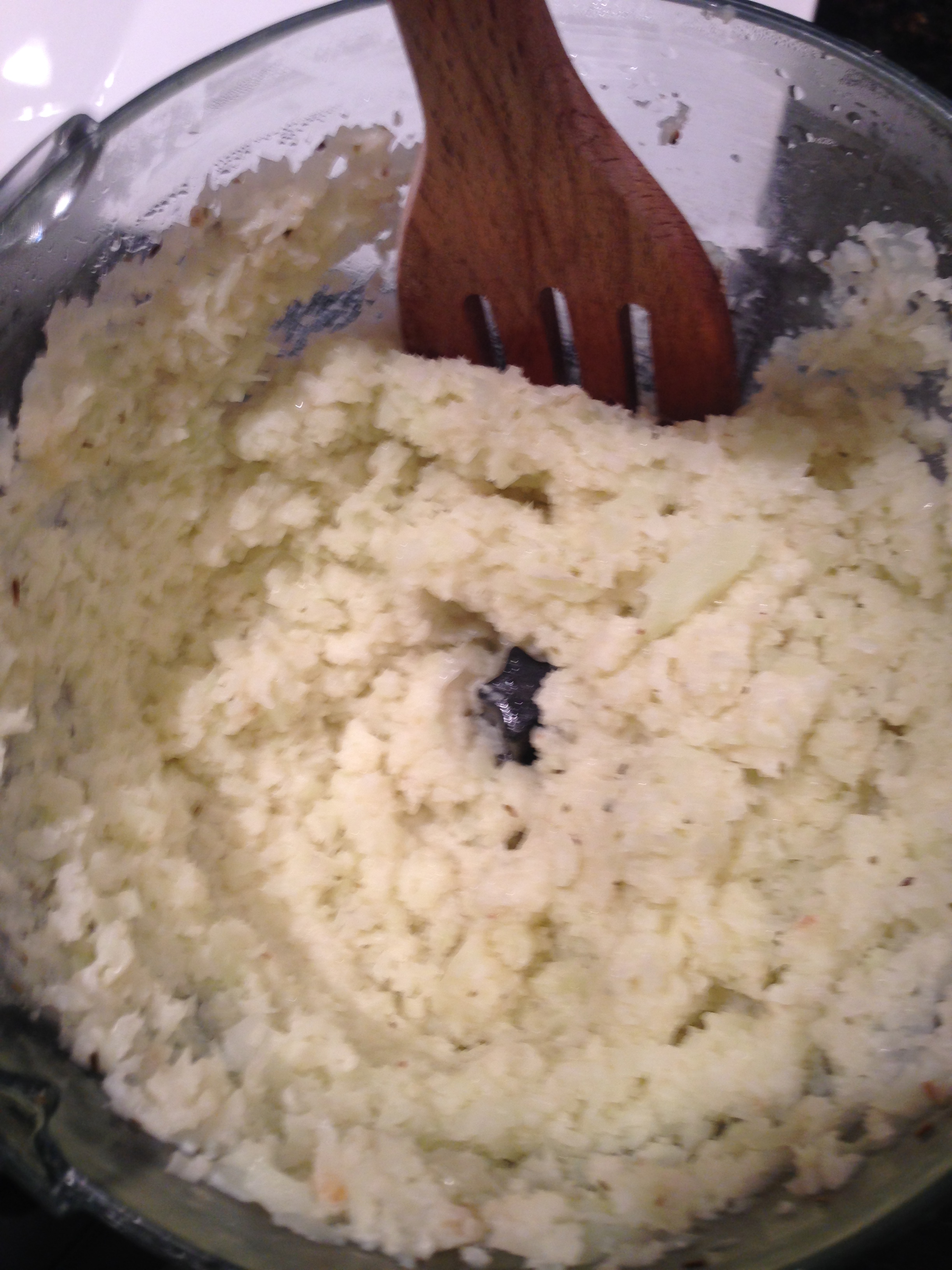
  • Try this food swap: blend raw cauliflower in food processor to make “rice”. (A hand held grater can also be used).  Sautee the “riced” cauliflower in olive or coconut oil for 5 minutes with seasoning to taste.
  • Another food swap: enjoy mashed cauliflower in place of potatoes.  Cook cauliflower. Place in food processor with ½ a stick organic, grass-fed butter, ½ a package full-fat cream cheese and blend until smooth. Add optional minced garlic, chives or other herbs such as rosemary.
3. Swap pasta for shirataki noodles and zucchini

  • Swap out carb-rich white pasta containing 43 carbs per cup with Shirataki noodles that contain a few carbs per package. Shirataki noodles are made from konjac or yam root and are found in refrigerated section of supermarkets.
  • Another swap: zucchini contains about 4 carbs per cup. Make your own grain free, low-carb noodles from zucchini using a julienne peeler, mandolin or one of the various noodle tools on the market.  

Lisa Grudzielanek, MS,RDN,CD,CDE
Cureality Nutrition Specialist

Not so fast. Don’t make this mistake when going gluten free!

Beginning last month, the Food and Drug Administration began implementing its definition of “gluten-free” on packaged food labels.  The FDA determined that packaged food labeled gluten free (or similar claims such as "free of gluten") cannot contain more than 20 parts per million of gluten.

It has been years in the making for the FDA to define what “gluten free” means and hold food manufactures accountable, with respect to food labeling.  However, the story does not end there.

Yes, finding gluten-free food, that is now properly labeled, has become easier. So much so the market for gluten-free foods tops $6 billion last year.   However, finding truly healthy, commercially prepared, grain-free foods is still challenging.

A very common mistake made when jumping into the gluten-free lifestyle is piling everything labeled gluten-free in the shopping cart.  We don’t want to replace a problem: wheat, with another problem: gluten free products.

Typically gluten free products are made with rice flour (and brown rice flour), tapioca starch, cornstarch, and potato flour.  Of the few foods that raise blood sugar higher than wheat, these dried, powdered starches top the list.

 They provide a large surface area for digestion, thereby leading to sky-high blood sugar and all the consequences such as diabetes, hypertension, cataracts, arthritis, and heart disease. These products should be consumed very rarely consumed, if at all.  As Dr. Davis has stated, “100% gluten-free usually means 100% awful!”

There is an ugly side to the gluten-free boom taking place.  The Cureality approach to wellness recommends selecting gluten-free products wisely.  Do not making this misguided mistake and instead aim for elimination of ALL grains, as all seeds of grasses are related to wheat and therefore overlap in many effects.

Lisa Grudzielanek MS, RDN, CD, CDE
Cureality Health & Nutrition Coach

3 Foods to Add to Your Next Grocery List

Looking for some new foods to add to your diet? Look no further. Reach for these three mealtime superstars to encourage a leaner, healthier body.

Microgreens

Microgreens are simply the shoots of salad greens and herbs that are harvested just after the first leaves have developed, or in about 2 weeks.  Microgreen are not sprouts. Sprouts are germinated, in other words, sprouted seeds produced entirely in water. Microgreens are grown in soil, thereby absorbing the nutrients from the soil.

The nutritional profile of each microgreen depends greatly on the type of microgreen you are eating. Researchers found red cabbage microgreens had 40 times more vitamin E and six times more vitamin C than mature red cabbage. Cilantro microgreens had three times more beta-carotene than mature cilantro.

A few popular varieties of microgreens are arugula, kale, radish, pea, and watercress. Flavor can vary from mild to a more intense or spicy mix depending on the microgreens.  They can be added to salads, soup, omelets, stir fry and in place of lettuce.  

Cacao Powder

Cocoa and cacao are close enough in flavor not to make any difference. However, raw cacao powder has 3.6 times the antioxidant activity of roasted cocoa powder.  In short, raw cacao powder is definitely the healthiest, most beneficial of the powders, followed by 100% unsweetened cocoa.

Cacao has more antioxidant flavonoids than blueberries, red wine and black and green teas.  Cacao is one of the highest sources of magnesium, a great source of iron and vitamin C, as well as a good source of fiber for healthy bowel function.
Add cacao powder to milk for chocolate milk or real hot chocolate.  Consider adding to coffee for a little mocha magic or sprinkle on berries and yogurt.


Shallots


Shallots have a better nutrition profile than onions. On a weight per weight basis, they have more anti-oxidants, minerals, and vitamins than onions. Shallots have a milder, less pungent taste than onions, so people who do not care for onions may enjoy shallots.

Like onions, sulfur compounds in shallot are necessary for liver detoxification pathways.  The sulfur compound, allicin has been shown to be beneficial in reducing cholesterol.  Allicin is also noted to have anti-bacterial, anti-viral, and anti-fungal activities.

Diced then up and add to salads, on top of a bun less hamburger, soups, stews, or sauces.  Toss in an omelet or sauté to enhance a piece of chicken or steak, really the possibilities are endless.  

Lisa Grudzielanek,MS,RDN,CD,CDE
Cureality Nutrition & Health Coach

3 Band Exercises for Great Glutes

Bands and buns are a great combination.  (When I talk about glutes or a butt, I use the word buns)  When it comes to sculpting better buns, grab a band.   Bands are great for home workouts, at gym or when you travel.  Check out these 3 amazing exercises that will have your buns burning. 

Band Step Out

Grab a band and place it under the arch of each foot.  Then cross the band and rest your hands in your hip sockets.  The exercise starts with your feet hip width apart and weight in the heels.  Slightly bend the knees and step your right foot out to the side.  Step back in so that your foot is back in the starting position.  With each step, make sure your toes point straight ahead.  The tighter you pull the band, the more resistance you will have.    You will feel this exercise on the outside of your hips. 

Start with one set of 15 repetitions with each foot.  Work on increasing to 25 repetitions on each side and doing two to three sets.


Band Kick Back

This exercise is performed in the quadruped position with your knees under hips and hands under your shoulders.    Take the loop end of the band and put it around your right foot and place the two handles or ends of the band under your hands.  Without moving your body, kick your right leg straight back.  Return to the starting quadruped position.  Adjust the tension of the band to increase or decrease the difficulty of this exercise. 

Start with one set of 10 repetitions with each foot.  Work on increasing to 20 repetitions on each side and doing two to three sets. 


Band Resisted Hip Bridge

Start lying on your back with feet hip distance apart and knees bent at about a 45-degree angle.  Adjust your hips to a neutral position to alleviate any arching in your lower back.  Place the band across your hipbones.  Hold the band down with hands along the sides of your body.  Contract your abs and squeeze your glutes to lift your hips up off the ground.  Stop when your thighs, hips and stomach are in a straight line.  Lower you hips back down to the ground. 

Start with one set of 15 repetitions.  Work on increasing to 25 repetitions and doing two to three.  Another variation of this exercise is to hold the hip bridge position.  Start with a 30 second hold and work up to holding for 60 seconds.
Cureality | Real People Seeking Real Cures

The Paleo approach to meal frequency

Furthering our discussion of postprandial (after-eating) phenomenona, including chylomicron and triglyceride "stacking" (Grazing is for cattle and Triglyceride and chylomicron stacking), here's a comment from the recent Palet Diet Newsletter on the closely related issue, meal timing and frequency:


We are currently in the process of compiling meal times and patterns in the worlds historically studied hunter-gatherers. If any single picture is beginning to emerge, it clearly is not three meals per day plus snacking ala the typical U.S. grazing pattern. Here are a few examples:

--The Ingalik Hunter Gatherers of Interior Alaska: 'As has been made clear, the principal meal and sometimes the only one of the day is eaten in the evening.'
--The Guayaki (Ache) Hunter Gatherers of Paraguay: 'It seems, however, that the evening meal is the most consistent of the day. This is understandable, since the day is generally spent hunting for food that will be eaten in the evening."
--The Kung Hunter Gatherers of Botswana. "Members move out of camp each day individually or in small groups to work through the surrounding range and return in the evening to pool the collected resources for the evening meal."
--Hawaiians, Tahitians, Fijians and other Oceanic peoples (pre-westernization). 'Typically, meals, as defined by Westerners, were consumed once or twice a day. . . Oliver (1989) described the main meal, usually freshly cooked, as generally eaten in the late afternoon after the day’s work was over."

The most consistent daily eating pattern that is beginning to emerge from the ethnographic literature in hunter-gatherers is that of a large single meal which was consumed in the late afternoon or evening. A midday meal or lunch was rarely or never consumed and a small breakfast (consisting of the remainders of the previous evening meal) was sometimes eaten. Some snacking may have occurred during daily gathering, however the bulk of the daily calories were taken in the late afternoon or evening. This pattern of eating could be described as intermittent fasting relative to the typical Western pattern, particularly when daily gathering or hunting were unsuccessful or marginal. There is wisdom in the ways of our hunter gatherer ancestors, and perhaps it is time to re-think three squares a day.


In other words, the notion of "grazing," or eating small meals or snacks throughout the day, is an unnatural situation. It is directly contrary to the evolutionarily more appropriate large meal followed by periods of no eating or small occasional meals.

I stress this point because I see that the notion of grazing has seized hold of many people's thinking. In my view, grazing is a destructive practice that is self-indulgent, unnecessary, and simply fulfills the perverse non-stop hunger impulse fueled by modern carbohydrate foods.

Eliminate wheat, cornstarch, and sugars and you will find that grazing is a repulsive impulse that equates with gorging.


The full-text of the Paleo Diet Newsletter can be obtained through www.ThePaleoDiet.com. You can also read and/or subscribe to the new Paleo Diet Blog, just launched in November, 2009.

Even mummies do it


Lady Rai, nursemaid to Queen Nefertari of Egypt, died in 1530 BC, somewhere between the age of 30 and 40 years. Her mummy is preserved in the Egyptian National museum of Antiquities in Cairo.

A CT scan of her thoracic aorta revealed calcium, representing aortic atherosclerosis, reported by Allam et al (including my friend from The Wisconsin Heart Hospital, Dr. Sam Wann, who provided me a blow-by-blow tale of this really fascinating project). Ladi Rai and 14 other Egyptian mummies were found to have vascular calcification of a total of 22 mummies scanned. (The hearts of the mummies were too degenerated to make out any coronary calcium.)

But why would people of that age have developed atherosclerosis?

The authors of the study comment that "Our findings that atherosclerosis was not infrequent among middle-aged and older ancient Egyptians of high social status challenges the view that it is a disease of modern humans. . . Although ancient Egyptians did not smoke tobacco or eat processed food or presumably lead sedentary lives, they were not hunter-gatherers. [Emphasis mine.] Agriculture was well established in ancient Egypt and meat consumption appers to have been common among those of high social status."

Fascinating. But I don't think that I'd blame meat consumption. Egyptians were also known to have cultivated grains, including wheat, and frequently consumed such sweet delicacies as dates and figs. Egyptians were also apparently beer drinkers. Unfortunately, no beer steins were seen in any of the scans.

Life Extension article on iodine

Here's a link to my recent article in Life Extension Magazine on iodine:

Halt on Salt Sparks Iodine Deficiency

Iodized salt, a concept introduced into the U.S. by the FDA in 1924, slowly eliminated goiter (enlarged thyroid glands), along with an enormous amount of thyroid disease, heart attack, mental impairment, and death. The simple addition of iodine to salt ensured that salt-using Americans obtained enough iodine sufficient to not have a goiter.

Now that the FDA, goiters long forgotten from their memories, urges Americans to reduce salt, what has happened to our iodine?

I talk at length about this issue in the Life Extension article.

The healthiest people are the most iodine deficient

Here's an informal observation.

The healthiest people are the most iodine deficient.

The healthier you are, the more likely you are to:

--Avoid junk foods--30% of which have some iodine from salt
--Avoid overuse of iodized salt
--Exercise--Sweating causes large losses of iodine.

So the healthy-eating, exercising person is the one most likely to show iodine deficiency: gradually enlarged thyroid gland (in the neck), declining thyroid function. Over time, if iodine deficiency persists, excessive sensitivity to iodine develops, as well as abnormal thyroid conditions like overactive nodules.

Even subtle levels of thyroid dysfunction act as a potent coronary risk factor.

It's the score, stupid

Sal has had 3 heart scans. (He was not on the Track Your Plaque program.) His scores:

March, 2006: 439

April, 2007: 573

October, 2009: 799

Presented with the 39% increase from April, 2007 to October, 2009, Sal's doctor responded, "I don't understand. Your LDL cholesterol is fine."

This is the sort of drug-driven, cholesterol-minded thinking that characterizes 90% of primary care and cardiologists' practices: "Cholesterol is fine; therefore, you must be fine, too."

No. Absolutely not.

The data are clear: Heart scan scores that continue to increase at this rate predict high risk for cardiovascular events. Unfortunately, when my colleagues hear this, they respond by scheduling a heart catheterization to prevent heart attack--a practice that has never been shown to be effective and, in my view, constitutes malpractice (i.e., performing heart procedures in people with no symptoms and with either no stress test or a normal stress test).

It's the score, stupid! It's not the LDL cholesterol. Pay attention to the increasing heart scan score and you will know that the disease is progressing at an alarming rate. Accepting this fact will set you and your doctor on the track to ask "Why?"

That's when you start to uncover all the dozens of other reasons that plaque can grow that have nothing to do with LDL cholesterol or statin drugs.

Heart Scan Blog Redux: Cheers to flavonoids

Because in Track Your Plaque we've been thinking a lot about anthocyanins, here's a rerun of a previous Heart Scan Blog post about red wine. (Anthocyanins are among the interesting flavonoids in red wine, along with resveratrol and quercetin.)


The case in favor of healthful flavonoids seems to grow bit by bit.

Flavonoids such as procyanadins in wine and chocolate, catechins in tea, and those in walnuts, pomegranates, and pycnogenol (pine bark extract) are suspected to block oxidation of LDL (preventing its entry into plaque), normalize abnormal endothelial constriction, and yield platelet-blocking effects (preventing blood clots).

Dr. Roger Corder is a prolific author of many scientific papers detailing his research into the flavonoids of foods, but wine in particular. He summarizes his findings in a recent book, The Red Wine Diet. Contrary to the obvious vying-for-prime-time title, Dr. Corder's compilation is probably the best mainstream discussion of flavonoids in foods and wines that I've come across. Although it would have been more entertaining if peppered with more wit and humans interest, given the topic, its straightfoward, semi-academic telling of the story makes his points effectively.

Among the important observations Corder makes is that regions of the world with the greatest longevity also correspond to regions with the highest procyanidin flavonoids in their wines.


Regarding the variable flavonoid content of wines, he states:

Although differences in the amount of procyanidins in red wine clearly occur because of the grape variety and the vineyard environment, the winemaker holds the key to what ends up in the bottle. The most important aspect of the winemaking process for ensuring high procyanidins in red wines is the contact time between the liquid and the grape seeds during fermentation when the alcohol concentration reaches about 6 percent. Depending on the fermentation temperature, it may be two to three days or more before this extraction process starts. Grape skins float and seeds sink, so the number of times they are pushed down and stirred into the fermenting wine also increases extraction of procyanidins. Even so, extraction is a slow process and, after fermentation is complete, many red wines are left to macerate with their seeds and skins for days or even weeks in order to extract all the color, flavor, and tannins. Wines that have a contact time of less than seven days will have a relatively low level of procyanidins. Wines with a contact time of ten to fourteen days have decent levels, and those with contact times of three weeks or more have the highest.

He points out that deeply-colored reds are more likely to be richer in procyanidins; mass-produced wines that are usually "house-grade" served at bars and restaurants tend to be low. Some are close to zero.

Wines rich in procyanidins provide several-fold more, such that a single glass can provide the same purported health benefit as several glasses of a procyanidin-poor wine.

So how do various wines stack up in procyanidin content? Here's an abbreviated list from his book:

Australian--tend to be low, except for Australian Cabernet Sauvignon which is moderate.

Chile--only Cabernet Sauvignon stands out, then only moderate in content.

France--Where to start? The French, of course, are the perennial masters of wine, and prolonged contact with skins and seeds is usually taken for granted in many varieties of wine. Each wine region (French wines are generally designated by region, not by variety of grape) can also vary widely in flavonoid content. Nonetheless, Bordeaux rate moderately; Burgundy low to moderate (except the village of Pommard); Languedoc-Roussillon moderate to high (and many great bargains in my experience, since these producers live in the shadow of its northern Bordeaux neighbors); Rhone (Cote du Rhone) moderate to high, though beware of their powerful "barnyard" character upon opening; decanting is wise.

Italy--Much red Italian wine is made from the Sangiovese grape and called variously Chianti, Valpolicella, and "super-Tuscan" when blended with other varietals. Corder rates the southern Italian wines from Sicily, Sardinia, and the mainland as high in procyanidins; most northern varieties are moderate.

Spain--Moderate in general.

United States--Though his comments are disappointingly scanty on the U.S., he points out that Cabernet Sauvignon is the standout for procyanidin content. He mentions only the Napa/Sonoma regions, unfortunately. (I'd like to know how the San Diego-Temecula and Virginian wines fare, for instance.)

The winner in procyanidin content is a variety grown in the Gers region of southwest France, a region with superior longevity of its residents. The wines here are made with the tannat grape within the Madiran appellation; wines labeled "Madiran" must contain 40% or more tannat to be so labeled (such is a quirk of French wine regulation). Among the producers Dr. Corder lists are Chateau de Sabazan, Chateau Saint-Go, Chateau du Bascou, Domaine Labranche Laffont, and Chateau d'Aydie. (A more complete list can be found in his book.)

How does this all figure into the Track Your Plaque program? Can you succeed without red wine? Of course you can. I doubt you could do it, however, without some attention to flavonoid-rich food sources, whether they come from spinach, tea, chocolate, beets, pomegranates, or red wine.

Though my wife and I love wine, I confess that I've never personally drank or even seen a French Madiran wine. Any wine afficionados with some advice?

Can wheat elimination cure ulcerative colitis?

Tammy is a 36-year old mother of three young children. Since age 20, she has suffered with the debilitating symptoms of ulcerative colitis: constant, gnawing abdominal pain; frequent diarrhea, often bloody.


Tammy has had to take several medications, some with significant side-effects, all of which provided only partial relief from the pain and diarrhea. Her gastroenterologist and surgeon were planning a colectomy (removal of the colon) with creation of an ileostomy (rerouting of the small intestine to the abdominal surface, which would require Tammy to wear an ileostomy bag under her clothes for the rest of her life).


Although Tammy had previously tested negative for celiac disease (an allergic sensitivity to the gluten in wheat products), I urged her to attempt a trial of a wheat-free diet. Having witnessed many people experience relief from irritable bowel syndrome, acid reflux, and other common gastrointestinal complaints, all while trying to reduce blood sugar and small LDL, I'd hoped that Tammy would obtain at least some small improvement in her terrible symptoms.


I therefore urged Tammy to try it. After all, what was there to lose? Tammy grudgingly agreed.


She returned 6 months later. Her report: She had lost 38 lbs, virtually all of it within the first 6-8 weeks. Her diarrhea and cramping were not better, but gone. She was down to a single medicine from her former list of drugs.


I am unsure what proportion of people with ulcerative colitis or other inflammatory bowel diseases like Crohn's will experience a result like Tammy's. Perhaps it's only a minority. But I take this another piece of evidence that this enormously destructive thing called wheat has no place in the human diet.


We have no facts or figures on the prevalence of various forms of wheat intolerance in the U.S. When I contacted the Celiac Disease Foundation, they had no figures on the number of fatalities per year in the U.S. from celiac disease. But if there are 2-3 million Americans with celiac disease, there are probably 100 times that many people with various forms of wheat intolerance.


Postprandial pile-up with fructose

Heart disease is likely caused in the after-eating, postprandial period. That's why the practice of grazing, eating many small meals throughout the day, can potentially increase heart disease risk. Eating often can lead to the phenomenon I call triglyceride and chylomicron "stacking," or the piling up of postprandial breakdown products in the blood stream.

Different fatty acid fractions generate different postprandial patterns. But so do different sugars. Fructose, in particular, is an especially potent agent that magnifies the postprandial patterns. (See Goodbye, fructose.)

Take a look at the graphs from the exhaustive University of California study by Stanhope et al, 2009:


From Stanhope KL et al, J Clin Invest 2009. Click on image to make larger.

The left graphs show the triglyceride effects of adding glucose-sweetened drinks (not sucrose) to the study participants' diets. The right graphs show the triglyceride effects of adding fructose-sweetened drinks.

Note that fructose causes enormous "stacking" of triglycerides, meaning that postprandial chylomicrons and VLDL particles are accumulating. (This study also showed a 4-fold greater increase in abdominal fat and 45% increase in small LDL particles with fructose.)

It means that low-fat salad dressings, sodas, ketchup, spaghetti sauce, and all the other foods made with high-fructose corn syrup not only make you fat, but also magnifies the severity of postprandial lipoprotein stacking, a phenomenon that leads to more atherosclerotic plaque.

Track Your Plaque: Safer at any score

Imagine two people.

Tom is a 50-year old man. Tom's initial heart scan score was 500--a concerning score that carries a 5% risk for heart attack per year.

Harry is also 50 years old. His heart scan score is 100--also a concerning score, but not to the same degree as Tom's much higher score.

Tom follows the Track Your Plaque program. He achieves the 60:60:60 lipid targets; chooses healthy foods, including elimination of wheat; takes fish oil at a therapeutic dose; increase his blood vitamin D level to 60-70 ng/ml, etc. One year later, Tom's heart scan score is 400, representing a 20% reduction from his starting score.

Harry, on the other hand, doesn't understand the implications of his score. Neither does his doctor. He's casually provided a prescription for a cholesterol drug by his doctor, a brief admonition to follow a low-fat diet, and little else. One year later, Harry's heart scan score is 200, a doubling (100% increase) of the original score.

At this point, we're left with Tom having a score of 400, Harry with a score of 200. That is, Tom has twice Harry's score, 200 points higher. Who's better off?

Tom with the score of 400 is better off. Even though he has a significantly higher score, Tom's plaque is regressing. Tom's plaque is therefore quiescent with active components being extracted, inflammation subsiding, the artery in a more relaxed state, etc.

Harry's plaque, in contrast, is active and growing: inflammatory cells are abundant and producing enzymes that degrade supportive tissue, constrictive factors are released that cause the artery to pinch partially closed, fatty materials accumulate and trigger a cascade of abnormal responses.

So it's not just the score--the quantity of atherosclerotic plaque present--but the state of activity of the plaque: Is it growing, is it being reduced? Is there escalating or subsiding inflammation? Is plaque filled with degradative enzymes or quiescent?

Following the Track Your Plaque program therefore leads us to the notion that it's not the score that's most important; the most important thing is what you're doing about it. We sometimes say that Track Your Plaque makes you safer at any score.
All posts by william-davis

Excessive Heart Procedures Makes New York Times Headline


One example of flagrant cardiac procedure excess has made New York Times headlines:


Heart Procedure Is Off the Charts in an Ohio City
The number of angioplasties performed in Elyria is so high that Medicare is starting to ask questions.

(The full article can be accessed through the New York Times website at http://www.nytimes.com/2006/08/18/business/18stent.html?pagewanted=2&ei=5094&en=b81be5f43f98a99b&hp&ex=1155960000&partner=homepage)


Cardiologists in little Elyria, Ohio, about a 30-minute drive west of Cleveland, do more coronary angioplasties and insert more stents than any other location in the U.S.--four times more than the national average, three times more than the Cleveland average. They perform even more than the recently-indicted cardiologist in Louisiana, who performed twice the national average of procedures.


The Times article, part of a series about financial incentives in medical care, provides a responsible and incredibly balanced report on the situation in Elyria. I have to give them credit, because from the eyes of a colleague (myself), this looks like blatant and extreme profiteering: "cathing for dollars".

I find it outrageous that this group of cardiologists claims that they have some special insight into heart care that justifies this extraordinary reliance on heart procedures. There's bound to be variation in practice patterns, but this is so outside the norm that I believe criminal behavior will be exposed. In fact, I believe that even the "norm", or average, rate of procedures is also excessive.

This is symptomatic of the perverse equation in heart disease care. If there's money to be made in major heart procedures, who wants to bother with prevention? Programs like the Track Your Plaque program present real potential to stop coronary heart disease in its tracks for many, if not most, participants--but don't expect to hear about it from your cardiologist. Don't expect to hear about it from the increasingly hospital-employed primary care physician.

Hopefully, media exposure like that in the New York Times is just the beginning of a public re-analysis of not only what's wrong with medicine today, but recognition of the tremendous power in preventive strategies when everyone stops being so enamored with hospital-based procedures. CT-based heart scanning that ignites your heart disease prevention program is your way to dodge the mainstream obsession with procedures.

More on "Bio-identical hormones" and Wyeth Pharmaceuticals

In October 2005, Wyeth petitioned the FDA, requesting that it completely ban the bioidentical alternatives that women have been using in ever-increasing numbers to achieve optimal hormone balance. With bioidentical replacement therapy clearly reducing its market share, Wyeth asked the FDA to outlaw all compounded bioidentical hormone formulations that compete with its own discredited drugs. If Wyeth is successful, then menopausal women will have no choice other than to take potentially life-threatening hormone drugs or to forgo hormone replacement therapy altogether, thus enduring the physically and emotionally debilitating effects of menopause-induced hormone depletion.

Dave Tuttle
Life Extension Magazine
August, 2006


For more commentary on Wyeth Pharmaceutical's outrageous and brazen petition to the FDA to bar prescription "bio-identical" hormones, i.e., hormones that are identical to natural human forms, read Life Extension's article, Health Freedom Under Attack!
Drugmaker Seeks to Deny Access to Bioidentical Hormones


This well-researched article is in the August, 2006 issue of Life Extension Magazine. The article can also be accessed online at http://www.lef.org/magazine/mag2006/aug2006_cover_attack_01.htm

or go to www.lef.org and click on the August, 2006 issue.

The author, Dave Tuttle, details the baseless arguments raised by Wyeth, a pathetic and amazingly selfish act in the name of protecting profits for Premarin, their prescription agent. It's bad enough to be selling this worthless drug. It's even worse--criminal, in my mind--to try to stamp out our right to have a physician write a prescription for a pharmacy to mix up hormones identical to that humans produce, individualized to our needs.

If you are as angry about this as I am, please go to the Life Extension online reprint that provides access to the International Academy of Compounding Pharmacists website to send the FDA an e-mail describing your opinion, or go to www.iacprx.org.

How accurate is LDL cholesterol?

Watch TV and you'd get the impression that the world revolves around LDL cholesterol: Commercials for Lipitor, Zetia, Vytorin, etc., all drugs to reduce cholesterol (total and LDL). Your doctor looks first and often only at LDL cholesterol.

If there's so much attention paid to LDL, how accurate is it? 100%? 90%? 80%?

Well, it varies widely. Occasionally, it's truly accurate, but most of the time it's miserably inaccurate . Every single day, I see people with LDL cholesterols that underestimates true (measured) LDL by 40%, 50%, and even over 100%. In other words, LDL cholesterol might be 120 mg/dl by the conventional method, but the genuine measured value might be 160 mg/dl, or even 240 mg/dl. It can be that far off--and it's not rare.

The converse can occasionally be true, though rarely in my experience: that conventional LDL overestimates true LDL. I saw someone in the office today like this, with a conventional LDL of 142 mg/dl but a true measured LDL of 115 mg/dl. I may see one or two more people like this the rest of this year.


Why is LDL so inaccurate? Several reasons:

--LDL in most labs is calculated, not measured. The "Friedewald calculation" derives LDL by substracting HDL and triglycerides (divided by 5) from total cholesterol. The higher triglycerides are, especially above 150 mg/dl, the more inaccurate the calculation becomes. As HDL drops below 50 mg/dl, this also introduces greater and greater inaccuracy.

--LDL particles vary in size. A more accurate representation and measure of LDL's dangers are therefore found in measures of LDL particle number , rather than a weight-based measure or calculation. LDL particle number can be measure as just that, LDL particle number (NMR), or as apoprotein B, the protein in LDL that occurs one apoB per LDL.

I liken conventionally calculated LDL cholesterol to a broken speedometer. You simply won't have an accurate measure of how fast you're going, though you may have a ballpark sense. But try telling that to the state patrol.

Or, as a cardiologist colleague said to me in a similar conversation about LDL: "Well, it's better than nothing!"

The lesson: If you're interested in plaque control, and control or reduction of heart scan score, you need a measured LDL, preferably LDL particle number by NMR or an apoprotein B. Another option is "direct" LDL.

Green tea: friend or faux?

The www.HealthCastle.com website is a helpful website on healthy eating that sends out a free newsletter. The content is all produced by licensed dietitions and nutritionists. Although I don't agree with everything said on the site, there's still some good information.

I'm a fan of green tea. Although I believe the effects are relatively modest (weight reduction, cholesterol reduction, anti-oxidation, etc., with theaflavin and/or green tea as a beverage,) they alerted me to the fact that the Lipton Green Tea product is one you should steer clear of. Here are their comments:


"More like Soft drink than Green Tea!With 200 calories, 13 teaspoons of added sugar and a long list of artificial ingredients, Lipton Iced Green Tea is more like a bottle of soft drink than tea, in our opinion."


The Lipton website lists the ingredients:

Water, high fructose corn syrup, citric acid, green tea, sodium hexametaphosphate, ascorbic acid (to protect flavor), honey, natural flavors, phosphoric acid, sodium benzoate (preserves freshness), potassium sorbate (preserves freshness), calcium disodium edta (to protect flavor), caramel color, tallow 5, blue1.

An 8 oz serving yields 21 grams of sugar. If you drink the full 20 oz. bottle (not hard to do!), that yields 52.5 grams of sugar! You will also notice that the second ingredient listed after water is high fructose corn syrup. This ingredient, you may recall, causes triglycerides to skyrocket, causes an insatiable sweet tooth, and is a probable contributor to obesity and diabetes.

In their defense, the Lipton people do also offer a sugar-free alternative without the excessive sweeteners and empty calories.

Do the Lipton products offer the same kind of benefits from green tea catechins (flavonoids) offered by freshly brewed teas? This product has not been formally tested by an independent lab to my knowledge, though, in general, commercially prepared and bottled teas tend to have dramatically less catechin/flavonoid content compared to brewed. (The USDA website provides access to an extraordinary collection of flavonoid food content at their USDA Database for the Flavonoid Content of Selected Foods - 2003. You'll find it at http://www.ars.usda.gov/Services/docs.htm?docid=6231.)

I think the HealthCastle people got it right: Brew your own, making sure to steep for at least 3 minutes. Alternatively, a green tea or theaflavin supplement provides many of the benefits. (Theaflavin has been used in trials at doses of 375 to 900 mg per day.) An in-depth report on green tea will be coming in a future Special Report on the www.cureality.com Membership website.

The Track Your Plaque guide to getting grotesquely overweight

If you'd like to gain huge quantities of weight, here's a number of helpful tips:

1) Follow the advice of food manufacturers and eat the products they label "healthy", or "heart healthy", or "part of a nutritious breakfast" etc., like Shredded Wheat cereal, pretzels ("a low-fat snack"!), low- or non-fat salad dressings.

2) Cut your morning calorie intake by skipping breakfast.

3) Hang around with other heavy people. They will confirm that it's okay to be overweight.

4) Call walking your dog "exercise".

5) Get a sedentary desk job. Use your swivel desk chair to scoot about whenever possible, rather than getting up to do things.

6) Say "I've worked hard all week long. Weekends are for relaxing, not for physical activities. I deserve a rest."

7) Eat foods without thinking about it: Eat chips while watching football, eat while on the phone, daydream over the sink.

8) Eat to provide comfort when stressed.

9) Eat foods that have sentimental value, whether or not they're good for you: Freshly-baked cakes that remind you of Mom, Pop Tarts that you used to carry in your lunchbox when you were a kid, hot dogs just like Dad would buy at the baseball stadium.

10) Cut back on sleep and generate insatiable starch cravings.

11) Stack your shelves at home with great variety. That way, you'll always have something to suit your mood.

12) Say to your spouse: "It's none of your damn business what I eat! I'm a grown man/woman!" Prove it by over-indulging in obviously unhealthy foods.

13) Tell yourself that you're just too busy to pay attention to food choices. Just grab whatever you can out of a convenience store or vending machine.

See, it's easy! And that just a start.

Of course, I don't really want you to do any of these things. But if you see yourself in any of the above, and you're struggling with weight, you should seriously rethink your approach.

Your heart scan is just a "false positive"

I've seen this happen many times. Despite the great media exposure and the growing acceptance of my colleagues, heart scans still trigger wrong advice. I had another example in the office today.

Henry got a CT heart scan in 2004. His score: 574. In his mid-50s, this placed him in the 90th percentile, with a heart attack risk of 4% per year. Henry was advised to see a cardiologist.

The cardiologist advised Henry, "Oh, that's just a 'false positive'. It's not true. You don't have any heart disease. Sometimes calcium just accumulates on the outside of the arteries and gives you these misleading tests. I wish they'd stop doing them." He then proceeded to advise Henry that he needed a nuclear stress test every two years ($4000 each time, by the way). No attempt was made to question why his heart scan score was high, since the entire process was outright dismissed as nonsense.

I'm still shocked when I hear this, despite having heard these inane responses for the past decade. Of course, Henry's heart scan was not a false positive, it was a completely true positive. I'm grateful that nothing bad happened to Henry through two years of negligence, though his heart scan score is likely around 970, given the expected, untreated rate of increase of 30%.

The cardiologist did a grave disservice to Henry: He misled him due to his ignorance and lack of understanding. I wish Henry had asked the cardiologist whether he had read any of the thousands of studies now available validating CT heart scans. I doubt he's bothered to read more than the title. The cardiologist is lucky (as is Henry) that nothing bad happened in those two years.

Do false positives occur as the cardiologist suggested? They do, but they're very rare. There's a rare phenomenon of "medial calcification" that occurs in smokers and others, but it is quite unusual. >99% of the time, coronary calcium means you have coronary plaque--even if the doctor is too poorly informed to recognize it.

What's better than a heart scan?


Do you know what's better than a heart scan?

Two heart scans. No other method can provide better feedback on the results of your program.

Say you've made efforts to correct high LDL; lost weight to raise HDL and reduce small LDL; added soluble fibers, nuts, and dramatically reduced wheat products; take fish oil, vitamin D, and follow a flavonoid-rich diet. Has it worked?

After a year or so of your program, that's when another heart scan can give you invaluable feedback on whether it's been successful. I tell my patients that it's relatively easy to correct lipid and lipoprotein abnormalities. The difficult part is to know when it's good enough. Is your LDL of 67 mg/dl and HDL of 50 mg/dl good enough? Another heart scan score is the best way I know of to find out.

Variation in plaque growth differs hugely from one person to another, even at equivalent lipoprotein values. Why? Lots of reasons. Humans are inconsistent day to day. Lipoproteins, being a snapshot in time and not a cumulative value, change somewhat from day to day. There's also the possibility of unmeasured, unrecognized factors that influence coronary plaque growth. We may not be smart enough to identify these hidden factors yet. But your heart scan score will incorporate the effects of these hidden factors.

Ideally, we aim for zero growth in plaque (no change in score) or a reduction. But, particularly in the first year, 10% or less plaque growth is still a good result that predicts much reduced risk of heart attack. More than 20% per year and your program needs more work--or else you know what's ahead.

Lipids are snapshots in time; heart scans are cumulative

Let me paint a picture. It's fictional, though a very real portrait of how things truly happen in life.

Michael is an unsuspecting 40-year old man. He hasn't undergone any testing: no heart scan, no lipids or lipoproteins. But we have x-ray vision, and we can see what's going on inside of him. (We can't, of course, but we're just pretending.) Average build, average lifestyle habits, nothing extraordinary about him. His lipids/lipoproteins at age 40:

--LDL cholesterol 150 mg/dl
--HDL cholesterol 38 mg/dl
--Triglycerides 160 mg/dl
--Small LDL 70% of all LDL

At age 40, with this panel, his heart scan score is 100. That's high for a 40-year old male.

Fast forward 10 years. Michael is now 50 years old. Michael prides himself on the fact that, over the past 10 years, he's felt fine, hasn't gained a single pound, and remains as active at 50 as he did in 40. In other words, nothing has changed except that he's 10 years older. His lipids and lipoproteins:

--LDL cholesterol 150 mg/dl
--HDL cholesterol 38 mg/dl
--Triglycerides 160 mg/dl
--Small LDL 70% of all LDL

Some of you might correctly point out that just simple aging can cause some deterioration in lipids and lipoproteins, but we're going to ignore these relatively modest issues for now.)

Lipids and lipoproteins are, therefore, unchanged. Michael's heart scan score: 1380, or an approximate 30% annual increase in score. (Since Michael didn't know about his score, he took no corrective/preventive action.)

My point: If we were to make our judgment about Michael's heart disease risk by looking at lipids or lipoproteins, they would'nt tell us where he stood with regards to heart disease risk. His lipids and lipoproteins were, in fact, the same at age 50 as they were at age 40. That's because measures of risk like this are snapshots in time.

In contrast, the heart scan score reflects the cumulative effects of life and lipids/lipoproteins up until the day you got your scan.

Which measure do you think is a better gauge of heart attack risk? I think the answer's obvious.

The recognition of the metabolic syndrome as a distinct collection of factors that raise heart disease risk has been a great step forward in helping us understand many of the causes behind heart disease.

Curiously, there's not complete agreement on precisely how to define metabolic syndrome. The American Heart Association and the National Heart, Lung, and Blood Institute issued a concensus statement in 2005 that "defined" metabolic syndrome as anyone having any 3 of the 5 following signs:


Waist size 40 inches or greater in men; 35 inches or greater in women

Triglycerides 150 mg/dL or greater (or treatment for high triglycerides)

HDL-C <40 mg/dL in men; <50 mg/dL in women (or treatment for reduced HDL-C)

Blood Pressure >130 mmHg systolic; or >85 mmHg diastolic (or drug treatment for hypertension)

Glucose (fasting) >100 mg/dL (or drug treatment for elevated glucose)


Using this definition, it has become clear that meeting these criteria triple your risk of heart attack.

But can you have the risk of metabolic syndrome even without meeting the criteria? What if your waste size (male) is, 36 inches, not the 40 inches required to meet that criterion; and your triglycerides are 160, but you meet none of the other requirements?

In our experience, you certainly can carry the same risk. Why? The crude criteria developed for the primary practitioner tries to employ pedestrian, everyday measures.

We see people every day who do not meet the criteria of the metabolic syndrome yet have hidden factors that still confer the same risk. This includes small LDL; a lack of healthy large HDL despite a normal total HDL; postprandial IDL; exercise-induced high blood pressure; and inflammation. These are all associated with the metabolic syndrome, too, but they are not part of the standard definition.

I take issue in particular with the waist requirement. This one measure has, in fact, gotten lots of press lately. Some people have even claimed that waist size is the only requirement necessary to diagnose metabolic syndrome.

Our experience is that features of the metabolic syndrome can occur at any waist size, though it increases in likelihood and severity the larger the waist size. I have seen hundreds of instances in which waist size was 32-38 inches in a male, far less than 35 inches in a female, yet small LDL is wildly out of control, IDL is sky high, and C-reactive protein is markedly increased. These people obtain substantial risk from these patterns, though they don't meet the standard definition.

To me, having to meet the waist requirement for recogition of metabolic syndrome is like finally accepting that you have breast cancer when you feel the two-inch mass in your breast--it's too late.

Recognize that the standard definition when you seen it is a crude tool meant for broad consumption. You and I can do far better.

What role DHEA?


DHEA, the adrenal gland hormone, has suffered its share of ups and downs over the years.

Initially, DHEA was held up as the fountain of youth with hopes of turning back the clock 20 years. Such extravagant dreams have not held up. But DHEA can still be helpful for your program.

All of us had oodles of DHEA in our bodies when we were in our 20s and 30s. Gradually diminishing levels usually reach nearly blood levels of around zero by age 70.


In our heart disease prevention program, of course, we aim to stop or reduce your CT heart scan score. Does DHEA reduce your score? No, it most certainly does not. But it can be helpful for gaining control over some of the causes behind coronary plaque.

For instance, DHEA can:

--Help reduce abdominal fat and increase muscle mass (slightly)
--Provide more physical stamina.
--Boost mood.
--It may modestly reduce some of the phenomena associated with the metabolic syndrome (high blood pressure, high blood sugar, high insulin, low HDL, small LDL, etc.)

In my experience, people who feel better do better on their overall program. If you're always tired and run down and run out of steam by 3 pm, I won't see you riding your bicycle outdoors or at the aerobics class. But if you're bursting with energy until you put your head on the pillow, you're more inclined to walk, bike, dance, play with the kids, dance, take Tai Chi, etc.

Some downsides to DHEA: Some people experience aggression. Backing off on the dose usually relieves it. Also, sleeplessness. Taking your DHEA in the morning usually fixes it.


The dose is best tailored to your age and blood levels. People less than 40 years old should not take DHEA. The older you are, the higher the dose, though we rarely ever have to exceed 50 mg per day. If you've never had a blood level and your doctor refuses to obtain one, 25 mg per day is a reasonable dose (10-15 mg in women 40-50 years old). It's always best to discuss your supplement use, particularly agents like DHEA, with your doctor.

Track Your Plaque Members: Stay tuned to the www.cureality.com website for a Special Report more completely detailing the hows and whys behind DHEA.
All posts by william-davis

Why not just get "perfect" lipids and call it a day?

What if you achieved the Track Your Plaque lipid targets: LDL cholesterol 60 mg/dl, HDL 60 mg/dl, and triglycerides 60 mg/dl?

After all, these are pretty stringent standards. Compared to national guidelines (the ATP-III Guidelines of the National Cholesterol Educational Panel), the Track Your Plaque 60-60-60 goals are laughably ambitious. There's a lot of wisdom hidden in those numbers. The triglyceride level of 60, for instance, is a level at which triglycerides become essentially unavailable for formation of triglyceride-containing lipoprotein particles such as small LDL and VLDL.

If you get to the 60-60-60 target, isn't that good enough? What if you just held your values there and went about your business? Will coronary plaque stop growing and will your CT heart scan score stop increasing?

Sometimes it will. But, unfortunately, many times it will not. The experience generated through clinical trials bear this out. Studies like the St. Francis Heart Study and the BELLES Trial both showed that just reducing LDL cholesterol is insufficient to stop plaque growth. Beyond the Track Your Plaque experience, there's no clinical trial experience that shows whether the 60-60-60 approach does any better.

In our experience, achieving 60-60-60 is indeed better than just reducing LDL. That makes sense. Just raising HDL from the average of 42 mg/dl for a male, 52 mg/dl for a woman adds advantage. Compound this with triglyceride reduction from the plaque-creating equation, and you've doubled success.

But there's even more. What if you had hidden patterns not revealed by conventional lipids? How about lipoprotein(a)? Small LDL? Postprandial (after-eating) abnormalities? Hypertensive effects (more common than you think)!

In 2006, stopping the increase in your heart scan score is, for most of us, not just a matter of taking Lipitor or its equivalent and sitting back. For nearly all of us, stopping the progression of your score is a multi-faceted effort.

Hospitals: Then and Now

It's 1920. The hospital in your city is a facility run by nuns or the church. It's a place for the very ill, often without hope of meaningful treatment, but nonetheless a place where surgeries take place, babies are born, the injured and chronically ill can find care. No one has health insurance and there's no Medicare. Everyone pays what they can. The hospital is accustomed to doling out plenty of care without compensation. For that reason, they welcome donations and sometimes will build new additions or other facilities in honor of a major donor.

Volunteeers are common, since the wards are understaffed and generally suffering from a shortage of trained nurses and personnel associated with the church. Drugs, such as they are, are often prepared from basic ingredients in the hospital pharmacy. Product representatives hawking medicines and devices are virtually unheard of.

Though their therapeutic tools are limited, the physicians are a proud group, dedicating their careers to healing. The majority of the medical staff volunteer large portions of their time to care for the poor who come to the hospital with very advanced stages of disease: metastatic tumors, advanced heart failure, debilitating strokes, overwhelming septicemia, etc.

Hospitals are usually governed by a board of clergy and physicians who make decisions on how to apply their limited resources and continually seek charitable donations.


Fast forward to present day: Hospitals are high-tech, professional facilities with lots of skilled people, complicated equipment,and capable of complex procedures. While they still house people with advanced illnesses, the floors are also filled with people with much earlier phases of disease. In general, they do a good job, with quality issues scrutinized by a number of official agencies to police practices, incidence of hospital-related infections, medication errors, care protocols, etc.

The hospital of 2006 is a more more effective place than the hospital of 1920. But its aims and operations are different, also. Though some churches are still involved in hospitals, more and more are owned by publicly-traded companies that answer to shareholders--shareholders who want share value to increase. Though donations are still sought, much of the revenues are obtained by concentrating on profitable, large-ticket procedures. More procedures are often generated by advertising.

Because they operate to generate profits, several hospitals in a single city or region compete with one another. The 21st century has therefore witnessed the phenomenon of hospital-owned physicians: more and more practicing physicians are employees of their hospital. That way, the physician brings all his patients and procedures to his hospital, not to a competitor. The top of the funnel is the primary care physician, who tends to see all disease when it first occurs. The primary care physician then sends the patient to the specialist, who is obliged (by contract) to perform his/her procedure in the hsopital paying their salary.


Representatives from companies manufacturing and selling expensive hospital equipment and drugs are everywhere, falling over themselves to gain attention of the physicians using their equipment and the hospital buyers who make purchasing decisions. Millions of dollars can be transacted with just one sale.

The number of volunteers has dwindled. The poor and uninsured are commonly diverted elsewhere, often to a government-funded, and often second-rate, institution. Hospitals measure success by comparing annual revenues and numbers of major procedures.

The hospital of 2006 is a vastly different place than 1920. If you're expecting charitable treatment, compassion, and selfless care, you're in the wrong century. In 2006, the hospital is a business. You don't expect charitable treatment at Wal-Mart or from your car dealer. Don't expect it from your hospital. They are businesses and you are a customer. Recognize this fact, lose the nostalgia for the hospitals of yesterday, and a lot more will become clear to you.

The dreaded small LDL particle

Brian is a 59-year old landscape architect whose starting CT heart scan score was 276.

Brian's food choices at the start were deplorable: a pound of sausage per week, sometimes more; butter on anything and everything; up to two pounds of cheese per week; hot dogs; etc. His lipoproteins were accordingly just as miserable: low HDL, high triglycerides, excessive (postprandial, or after-eating) IDL. Small LDL was a particularly stand-out pattern, with 95% of all LDL particles in the small category.

Brian made a dramatic turnaround in lifestyle and corrected all of his patterns--except for small LDL. After one year, small LDL still occupied 95% of all LDL particles, even though the quantity of LDL had been reduced. In order to help convince Brian that correction of his small LDL was going to be necessary to achieve control oover coronary plaque, I suggested that he undergo another heart scan. His score: 435, or a 57% increase.

Each day that passes, I gain more and more respect for small LDL as a cause for coronary plaque growth. Conventional thought among lipid experts is that small LDL should no longer be a factor if total LDL (e.g., LDL particle number) is reduced. But our experience suggests otherwise: when small LDL persists, we tend to see continued, sometimes frightening, plaque growth.

I therefore asked Brian to intensify his efforts: additional weight loss off his somewhat prominent abdomen (since visceral fat increases small LDL), further reduce wheat products and processed carbohydrates, increase niacin (to 1500 mg per day), and use more raw almonds and oat bran.

Don't let small LDL get the best of you. It is a nasty, sometimes persistent abnormality that has impressive effects on plaque growth.

Winning Through Intimidation

Do you remember the book, Winning Through Intimidation by author Robert J. Ringer?


In his 1984 bestseller, author Ringer details how to succeed in business by overwhelming clients and competition by appearing hugely successful and powerful. Rather than a business card, he'd hand out an elegant book to represent himself. He'd show up in a limousine to a meeting, even when he could barely afford it. He used these tactics, even when he was a small-fry, in commercial real estate and built a successful business following such techniques.

This reminds me a lot of what happens in conventional medical practice: The large and successful hospitals, filled with trained staff and technology, exude legitimacy and success. How can they possibly be wrong? Such overwhelming know-how and multiple levels of expertise mustbe right!

Let's be grateful that we do have access to such high-tech, capable care. Unfortunately, just as Mr. Ringer used deceptive practices to appear something he wasn't, this is also true in hospitals. Not all physicians have your best interests in mind. Their principal concern is how profitable your care can be for them--can you be persuaded to have your stent, bypass, etc.. After all, look around you: Aren't all this equipment and personnel impressive? Aren't you intimidated?

The patient that most recently drove home this issue for me recently was a smart and capable executive who came in for consultation. He had been told by his internist that a surgery (to replace his aorta, a HUGE procedure) was probably necessary. In my view, it was not--his process was simply not that far progressed. The risks for danger over the next several years was virtually nil. Unfortunately, this man, now confused and worried, sought an opinion from the chief of thoracic surgery (in the usual white coat and with professorial demeanor, I'm sure) in a major metropolitan hospital (in Chicago), who promptly rushed him off to the operating room.

The pathology report, cleverly not mentioned in any other of the hospital documentation, showed what I had suspected: this man had mild disease that wasn't even close to requiring surgery. But, with all that technology, $100,000 or so of costs, chief of surgery who looked the part, etc.--they must be right!

Robert Ringer's concepts only ring too true for hospitals and some of the unscrupulous physicians in practice. Don't allow yourself to be intimidated.

Can natural treatments "cure" or "treat" any disease?

According to current FDA policy, the answer is a flat "NO!"

No natural treatment, whether it be fish oil (as a nutritional supplement), l-arginine, vitamin D, magnesium, various flavonoids like theaflavin or resveratrol, can be declared to treat or cure any disease. That's why you see the evasive and vague wording on nutritional supplements, nutraceuticals, and various foods, like "Supports heart health" or "Supports healthy cholesterol". Claiming, for instance, that taking 6000 mg per day of a standard OTC fish will reduce triglycerides and stating so on the label of a supplement is unlawful and prosecutable.

Think what you will of Mr. Kevin Trudeau (author of Natural Cures They Don't Want You to Know About"): visionary, consumer advocate, David vs. the Goliath of the FDA and "Big Pharma", or huckster, scam artist, and one-time felon. But Trudeau got it right on one important issue: The FDA dictates what claims can be made to treat disease. On one of his ubiquitous informercials, Trudeau states:


"...the way the system works today, you have the Food and Drug Administration—the FDA, and you have the drug industry. They really work in tandem. Unfortunately, there’s an unholy alliance there. People don’t know that the majority of commissioners of the FDA, which allegedly regulates the drug industry, and the food industry—Food and Drug Administration, the commissioners of the FDA—the majority of them—go to work directly for the drug companies upon leaving the FDA and are paid millions and millions and millions of dollars. Now in any other format, that would be called bribery; that would be called a conflict of interest; that would be called payoffs. That’s exactly what’s happening right now. So what has occurred is the Food and Drug Administration is really working in tandem with the drug industry to protect their profits. Example: The Food and Drug Administration says that only a drug can diagnose, prevent, or cure any disease."


He goes on to say that

"...the Food and Drug Administration says only a drug--nothing else--can cure, prevent, or diagnose a disease. Therefore the Food and Drug Administration continues to call more and more and more things diseases. Therefore they eliminate all-natural remedies. No one can say what a natural remedy can do if it’s been classified as a disease. So Attention Deficit Disorder is now a disease. Therefore only a drug can cure, prevent, or diagnose it. Cancer is a disease. Acid reflux is now a disease. Obesity is now a disease."

(PLEASE do not construe this as an endorsement of Mr. Trudeau's overall opinions. But I do think he's right on this one point.)

The stated purpose of this restrictive policy is to protect the public. Indeed, in years past before protective legislation, ineffective and even poisonous products were commonly sold as therapeutic treatments. (Remember cocaine and morphine in cold remedies? Lead and other toxic agents were also common.) Unfortunately, a huge gap has emerged as clinical data accumulates that support the efficacy of nutritional treatments and other non-traditional methods to treat or alleviate diseases. Any disease, or anything construed as disease as Trudeau points out, can onlybe treated by a drug.

In the FDA's defense, they have made slow progress in allowing "claims" of benefits for several supplements and food substances, such as the beta-glucan of oat products, soy protein, and most recently barley (for cholesterol reduction). The scrutiny is quite thorough and the wording of the policy is quite specific. Regarding oat products, for instance, the policy states:

"FDA concluded that the beta-glucan soluble fiber of whole oats is the primary component responsible for the total and LDL blood cholesterol-lowering effects of diets that contain these whole oat-containing foods at appropriate levels. This conclusion is based on review of scientific evidence indicating a relationship between the soluble fiber in these whole oat-containing foods and a reduction in the
risk of coronary heart disease.

Food products eligible to bear the health claim include oat bran and rolled oats, such as oatmeal, and whole oat flour...To qualify for the health claim, the whole oat-containing food must provide at least 0.75 grams of soluble fiber per
serving. The amount of soluble fiber needed for an effect on cholesterol levels is about 3 grams per day."


(Source: FDA Talk Paper which can be viewed in its entirety at http://www.fda.gov/bbs/topics/ANSWERS/ANS00782.html.)

In light of the boom in nutritional and non-traditional research that validate or refute efficacy, is such a policy still necessary? Or does it inhibit the open dissemination of information and result in a extraordinary monopolization of health treatment for the drug companies?

This debate will likely rage for the next two or more decades, particularly as drug companies are increasingly viewed as profit-seeking enterprises and more validation is gained by non-drug treatments.

For the moment, don't dismiss a "treatment" because it doesn't come by prescription. But don't reject a drugjust because it is a prescription. We need to strike a healthy, rational balance somewhere in between.

Can procedures alone keep you alive?

My days in the hospital remind me of what heart disease can be like when no preventive efforts are taken--what it used to be like even with my patients before taking a vigorous approach to prevention (though over 12 years ago).

Several cardiologists in my hospital, for instance, express skepticism that heart disease prevention works at all. Yes, they know about the statin cholesterol drug trials. But they claim that, given their experience with the power of coronary disease to overpower an individual's control, statin drugs are just "fluff". Coronary disease is a powerful process that can only begin to be harnessed with major procedures, i.e., a mechanical approach.

So these cardiologists routinely have their patients in the hospital, often once a year, sometimes more, for heart catheterization and "fixing" whatever requires fixing: balloon angioplasty, stents, various forms of atherectomy. Year in, year out, these patients return for their "maintenance" procedures. Their cardiologists maintain that this approach works. The patients go on eating what they like, taking little or no nutritional supplements, and medications prescribed by their primary care physicians for blood pressure, etc. But no real effort towards heart disease prevention beyond these minimal steps.

Can this work? Very little at-home, preventive efforts, but periodic "maintenance" procedures?

It can, perhaps, for a relatively short time of a few years, maybe up to 10 years. But it crumbles after this. The disease eventaully overwhelms the cardiologist's ability to stent or balloon this or that, since it has progressed and plaque has growth diffusely the entire period that maintenance procedures have been performed. In addition, acute illness still occurs with some frequency--in other words, plaque rupture is not affected just because there's a stent in the artery upstream or downstream.

Not to mention this can be misery on you and your life, with risk incurred during each procedure. It's also terribly expensive, with hospitalization easily costing $25,000-$50,000 or more each time. (Compare that to a $250 or so CT heart scan.)


As people become more aware of the potential tools for prevention of heart disease, fewer are willing to submit to the archaic and barbaric practice of "maintenance" heart procedures in lieu of prevention. But it still goes on. If you, or anybody you know, are on this pointless and doomed path, find a new doctor.


Bloodletting, another antiquated health practice

Support your local hospital: HAVE A HEART ATTACK!

I'm kidding, of course. But, in your hospital's secret agenda, that's not too far from the truth. Catastrophes lead to hospital procedures, which then yields major revenues.

Prevention, on the other hand, yields nothing for your hospital. No $8,000 to $12,000 for heart catheterization, several thousand more for a stent, $60,000-plus for a bypass, $25,000 or more for a defibrillator. In other words, prevention of heart attack and all its consequences deprive your hospital of a goldmine of revenue.

The doctors are all too often conspirators. I heard of yet another graphic example today. A man I didn't know called me out of the blue with a question. "I had a heart scan and I had a 'score' that I was told meant a moderate quantity of plaque in my arteries, a score of 157. My doctor said to ignore it. But I got another scan a year later and my score was 178. So I told this to my doctor and he said, 'Let's get you into the hospital. We'll set up a catheterization and then you'll get bypassed.' Of course, I was completely thrown off balance by this. Here I was thinking that the heart scan was showing that my prevention program needed improvement. But my doctor was talking about bypass surgery. Can you help? Does this sound right?"

No, this is absolutely not right. It's another tragedy like the many I hear about every day. Heart scans are, in fact, wonderfully helpful tools for prevention. This man was right: he felt great and the heart scan simply uncovered hidden plaque that should have triggered a conversation on how to prevent it from getting worse. But the doctor took it as a license to hustle the patient into the hospital. Ka-ching!

This sort of blatant money-generating behavior is far from rare. Don't become another victim of the cardiovascular money-making machine. Be alert, be skeptical, and question why. Of course, there are plenty of times when major heart procedures are necessary. But always insist on knowing the rationale behind such decisions, whether it's you or a loved one.

Hospitals contain experts in ILLNESS

Hospitals contain many experts in sickness. This seems obvious. But walk down the hallways of any hospital, and you'll quickly be convinced that hospitals contain almost no experts in health.

People (hospital staff, that is, not the patients) in hospitals are especially good at identifying and treating disease. They lack knowledge of health.

If your nurse is 100 lbs overweight and struggles to walk down the hall because of arthritis in both knees, would you entrust her with health advice?

If your doctor sits down in the cafeteria and eats his lunch of a ham sandwich with cheese on a bun, fried onion rings, and a milkshake and pastry, can you believe that he/she possesses any insight into health and nutrition?

If your physical therapist or cardiac rehabilitation counselor struggles nearly as much as you while climbing a single flight of stairs, can you accept their advice on how to regain your stamina and use exerise to full health advantage?

The answer to all these questions is, of course, no. Hospital staff are generally expert at dressing surgical wounds, stopping bleeding, identifying infections, and providing the support services for surgical and diagnostic procedures. In contrast, they are generally miserable at conveying genuine health advice. They certainly fall short in being examples of health themselves.

To hospitals and their staff, health is a temporary situation that persists only until you become ill. Illness is an inevitability in the hospital staff mindset. Health is a temporary state in between illnesses.

We need to shake off this perverse mentality. Health is the state of life that should dominate our practices and philosophies. Illness via the occasional catastrophe, e.g., broken leg from skiing, car accident, etc., is the province of hospitals. We should gravitate towards this philosphy and away from the over-reliance on hospitals that has come to dominate our present perceptions of health. Hospitals are not glamorous. They are, for the most part, profit-seeking businesses intent on portraying themselves as champions of health.

When I walk down the halls of hospitals, I am shocked and ashamed at the extraordinary examples of ill-health presented by hospital staff. Yet they falsely paint themselves as experts in both illness and health. Don't believe it for a second.

Are there still unexplored causes of heart disease?

I met a woman today. She had her first heart attack at age 37. She just had her 2nd heart attack this morning, at age 40.

Several issues are surprising about her story. First, she's pre-menopausal. Heart attacks before menopause are unusual. We'll occasionally see women have a heart attack before or during menopausal years only if they're heavy smokers and/or they have had diabetes (either type I or type II) for many years. But this young woman had neither. She is slender and has never smoked.

Even more surprising are her basic lipid values: LDL cholesterol 35 mg/dl, HDL 150 mg/dl, triglycerides 317 mg/dl. This is a very unusual pattern.

Unfortunately, this is all developing acutely in the hospital. (I've just met her today--she's not a Track Your Plaquer!) Lipoprotein analysis would be extremely interesting. In particular, I'd like to see whether she has any other markers besides elevated triglycerides of a "post-prandial" abnormality, i.e., persistence of abnormal particles after eating. The high triglycerides make this quite likely.

If this proves true, the omega-3 fatty acids from fish oil will be a lifesaving treatment for her, since they dramatically reduce both triglycerides as well as persistent postprandial particles like intermediate-density lipoprotein (IDL). (Track Your Plaque Members: See the Special Report on Postprandial Abnormalities on the present home page at www.cureality.com for a more in-depth discussion of this fascinating collection of patterns that is just started to be explored.)

In the real world, especially acute care medicine, there's always a kicker: she speaks no English. Unfortunately, communicating the intricacies of a powerful program like ours that aims to identify all causes of heart disease, then corrects then and aims for coronary plaque regression, is difficult if not impossible.

I also do occasionally worry that, given this woman's extraordinary risk at a young age, and overall very unusual lipid patterns (HDL 150?!), if there are causes presently beyond our reach. We have to make use of the tools available to us for now.

Everything causes heart attack!

The media are presently gushing about a recent study that associates caffeine intake with heart attack.

CBS News: That cup of coffee you're craving might not be such a good idea. Research in the September issue of Epidemiology suggests coffee can trigger a heart attack within an hour in some people.


Some reporters and their quoted sources are musing about whether it's the caffeine, cream vs. other whiteners, time of day, interaction with other risk factors, etc.

My advice: Get a grip! How many relatively benign, every day factors in life can be blamed for dire health risks?

The problem with many of these studies is that they are cross-sectional. They do not enroll participants, then "treat" with coffee (or other substance in question) vs. placebo. In other words, it is not a randomized trial, the sort of trial necessary to prove a hypothesis. That's all that can be generated by a study like this one: a hypothesis.

Perhaps there's a bit of warning for the person with uncorrected lipids and lipoproteins, has no idea that they have extensive coronary plaque because they've never had a heart scan, and have a slovenly lifestyle. Maybe that person might have exaggerated risk from a cup of coffee.

But for us, involved and intensively addressing all causes of coronary plaque to the point of stabilizing or reducing it, coffee is likely a non-issue.

For more conversation on coffee and this report, go to the www.cureality.com home page.

Green coffee bean extract in AGF Factor I

Track Your Plaque's new and proprietary formulation, AGF Factor I, is designed to to support a program to achieve low levels of endogenous glycation.

Endogenous glycation, discussed at length in a recent Track Your Plaque Special Report, makes LDL particles (especially small LDL particles) more prone to oxidation and thereby more atherogenic, i.e., more likely to contribute to atherosclerotic plaque. Endogenous glycation also exerts unhealthy effects on long-lived proteins in the body, such as the proteins in the lenses of your eyes (cataracts), the lining of arteries (hypertension), and the cartilage cells of joints (brittle cartilage and arthritis).

Endogenous glycation is reduced by slashing carbohydrates in the diet, especially the most offensive carbohydrates of all, the amylopectin A of wheat, sucrose, high-fructose corn syrup and other fructose sources. Endogenous glycation can also be blocked by using blockers of the glycation reaction, such as benfotiamine (lipid-soluble thiamine), pyridoxal-5'-phosphate (a form of vitamin B6 with greater glycation blocking effect), and chlorogenic acid from green coffee beans, all components of AGF Factor I, which also contains Portulaca oleracea (Portusana), or purslane, for reduction of glucose.

Green coffee bean extract, and thereby chlorogenic acid, is receiving increased attention, most recently due to a study demonstrating substantial weight loss with 750-1050 mg green coffee bean extract, providing approximately 325-500 mg chlorogenic acid per day. Participants lost 15.4 pounds over 8 weeks at the higher dose (500 mg chlorogenic acid per day), while participants lost 8.8 pounds over 8 weeks at the lower dose (325 mg chlorogenic acid per day).

AGF Factor I was not formulated for weight loss but, taken twice or three times per day, does indeed mimic the dose of chlorogenic acid from green coffee bean extract used in the weight loss study. If you wish to take advantage of this application of chlorogenic acid/green coffee bean extract, while also maximizing protection from endogenous glycation, our AGF Factor I is one excellent choice to do so.

Lessons learned from the 2012 Low-carb Cruise

I just returned from Jimmy Moore's Low-carb Cruise, a 7-day excursion to Jamaica, Grand Cayman Island, and Cozumel aboard the Carnival Magic. During our 7 wonderful days, a number of authors and experts spoke, each offering their unique perspective on the low-carb world. The focus was the science, experience, and practical application of low-carbohydrate diets.

The event kicked off with a roast by Tom Naughton of Fat Head fame, who entertained with his insightful low-carb humor and predictions of my demise at the hands of Monsanto!

Among the most important lessons provided:

Dr. Andreas Eenfeldt of the Diet Doctor blog discussed how Sweden is leading the world as the nation with the most vigorous low-carbohydrate following, witnessing incredible weight loss and reversal of carbohydrate-related diseases way ahead of the U.S. experience. I spent several hours with Dr. Eenfeldt who, besides being an engaging speaker, is a new father and an all-around gentleman. At 6 ft, 7 inches, he also towered high above all of us.

Dr. Eric Westman of Duke University and author of The New Atkins for a New You, debunked low-carbohydrate myths, such as "low-carb diets are high-protein diets that make your kidneys explode."

Dr. John Briffa, creator of the popular blog, Dr. John Briffa: A Good Look at Good Health, and author of the wonderfully straightforward primer to low-carbohydrate eating, Escape the Diet Trap, stressed the importance of never allowing hunger to rule behavior. Dr. Briffa's serious writing tone conceals an incredible charm and wit that took me by surprise, having spent several thoroughly engaging hours over breakfast, lunch, and dinner with him over the week.

Fred Hahn, exercise expert, founder of Serious Strength and author of Slow Burn Fitness Revolution and Strong Kids, Healthy Kids, debunked a number of trendy exercise methods, boiling many of the purported benefits of exercise down to that of increased strength.

Dr. Chris Masterjohn of The Daily Lipid and supporter of the Weston A. Price Foundation program, provided a comprehensive overview of the data that fails to link saturated fat with heart disease. He also helped me understand the analytical techniques used in studies of advanced glycation end-products.

Denise Minger, brilliant young usurper of China Study dogma and blogger at Raw Foods SOS, proved an engaging speaker and a truly real person (since some critics of her analyses have actually questioned whether there was even such a person!). She also proved every bit as likable as she seems in her captivating blog discussions.

Dr. Jeff Volek, prolific researcher from University of Connecticut, author of over 200 studies validating low-carbohydrate diet effects, and author of the recently released book with Dr. Stephen Phinney, The Art and Science of Low Carbohydrate Living, debunked myths behind carbohydrate dependence and "loading" by athletes. He also talked about how assessing blood ketones may be the gold standard method to ensure low-grade ketosis on a long-term low-carb effort.

Over a bottle of wine, Jimmy Moore and I reminisced over how his modest start with no experience in blogging or media has now ballooned to an audience of over 100,000 readers/viewers.

All in all, Jimmy's Low-carb Cruise experience was worth every minute, with many wonderful lessons and memories!

Chili Sesame Crackers

Looking for something hot and crunchy?

These chili sesame crackers are perfect for dipping into hummus or salsa. As written, the recipe yields a moderately spicy cracker that you can modify readily by increasing or decreasing quantities of cayenne pepper and Tabasco sauce.

This recipe uses sesame seeds as the "flour." Either brown sesame seeds or the lighter version work, though the lighter seeds yield a slightly less bitter flavor with the spices.

For ease of baking, a shallow baking pan measuring 11 x 17 inches works best, as it allows the batter to fill the pan and spread to a cracker thickness. With a smaller pan, you may have to bake in two batches.

Makes approximately 30 chips

2 cups raw sesame seeds
1 cup shredded Parmesan cheese
2 tablespoons extra-virgin olive oil
1 tablespoon chili powder
½ teaspoon cayenne pepper
2 teaspoons onion powder
1 teaspoon garlic powder
1 teaspoon dry mustard
1 teaspoon sea salt
1 teaspoon Tabasco sauce
1¼ cups water

Preheat oven to 350º F.

In food chopper or food processor, grind 1¼ cups sesame seeds to fine meal. Remove and place in large bowl.

Place shredded Parmesan cheese in food chopper or food processor and pulse briefly until reduced to granular consistency. Add to sesame seed meal and mix. Stir in olive oil.

Add remaining (unground) sesame seeds, chili powder, cayenne pepper, onion and garlic powder, mustard, sea salt and mix thoroughly. Add Tabasco sauce and water and mix. Add additional water, if necessary, one tablespoon at a time, to obtain a consistency similar to pancake batter.

Pour mixture into baking pan and smooth to fill pan and obtain a thickness of a cracker. If too thick, remove some batter and re-smooth. Optionally, roll a clean cylindrical glass or bottle over top to smooth and yield a consistent thickness.

Bake for 30 minutes or until edges browned and center firm. If a dry, extra crunchy cracker is designed, bake an additional 10-15 minutes at 250 degrees F.

Remove and allow to cool. Cut with pizza cutter to desired size.

Opiate of the masses

Although it is a central premise of the whole Wheat Belly argument and the starting strategy in the New Track Your Plaque Diet, I fear that some people haven't fully gotten the message:

Modern wheat is an opiate.

And, of course, I don't mean that wheat is an opiate in the sense that you like it so much that you feel you are addicted. Wheat is truly addictive.

Wheat is addictive in the sense that it comes to dominate thoughts and behaviors. Wheat is addictive in the sense that, if you don't have any for several hours, you start to get nervous, foggy, tremulous, and start desperately seeking out another "hit" of crackers, bagels, or bread, even if it's the few stale 3-month old crackers at the bottom of the box. Wheat is addictive in the sense that there is a distinct withdrawal syndrome characterized by overwhelming fatigue, mental "fog," inability to exercise, even depression that lasts several days, occasionally several weeks. Wheat is addictive in the sense that the withdrawal process can be provoked by administering an opiate-blocking drug such as naloxone or naltrexone.

But the "high" of wheat is not like the high of heroine, morphine, or Oxycontin. This opiate, while it binds to the opiate receptors of the brain, doesn't make us high. It makes us hungry.

This is the effect exerted by gliadin, the protein in wheat that was inadvertently altered by geneticists in the 1970s during efforts to increase yield. Just a few shifts in amino acids and gliadin in modern high-yield, semi-dwarf wheat became a potent appetite stimulant.

Wheat stimulates appetite. Wheat stimulates calorie consumption: 440 more calories per day, 365 days per year, for every man, woman, and child. (440 calories per person per day is the average.) We experience this, sense the weight gain that is coming and we push our plate away, settle for smaller portions, increase exercise more and more . . . yet continue to gain, and gain, and gain. Ask your friends and neighbors who try to include more "healthy whole grains" in their diet. They exercise, eat a "well-balanced diet" . . . yet gained 10, 20, 30, 70 pounds over the past several years. Accuse your friends of drinking too much Coca Cola by the liter bottle, or being gluttonous at the all-you-can-eat buffet and you will likely receive a black eye. Many of these people are actually trying quite hard to control impulse, appetite, portion control, and weight, but are losing the battle with this appetite-stimulating opiate in wheat.

Ignorance of the gliadin effect of wheat is responsible for the idiocy that emits from the mouths of gastroenterologists like Dr. Peter Green of Columbia University who declares:

"We tell people we don't think a gluten-free diet is a very healthy diet . . . Gluten-free substitutes for food with gluten have added fat and sugar. Celiac patients often gain weight and their cholesterol levels go up. The bulk of the world is eating wheat. The bulk of people who are eating this are doing perfectly well unless they have celiac disease."

In the simple minded thinking of the gastroenterology and celiac world, if you don't have celiac disease, you should eat all the wheat you want . . . and never mind about the appetite-stimulating effects of gliadin, not to mention the intestinal disruption and leakiness generated by wheat lectins, or the high blood sugars and insulin of the amylopectin A of wheat, or the new allergies being generated by the new alpha amylases of modern wheat.

Jelly beans and ice cream

What if I said: "Eliminate all wheat from your diet and replace it with all the jelly beans and ice cream you want."

That would be stupid, wouldn't it? Eliminate one rotten thing in diet--modern high-yield, semi-dwarf wheat products that stimulate appetite (via gliadin), send blood sugar through the roof (via amylopectin A), and disrupt the normal intestinal barriers to foreign substances (via the lectin, wheat germ agglutinin)--and replace it with something else that has its own set of problems, in this case sugary foods. How about a few other stupid replacements: Replace your drunken, foul-mouthed binges with wife beating? Replace cigarette smoking with excessive bourbon?

Sugary carbohydrate-rich foods like jelly beans and ice cream are not good for us because:

1) High blood sugar causes endogenous glycation, i.e, glucose modification of long-lived proteins in the body. Glycate the proteins in the lenses of your eyes, you get cataracts. Glycate cartilage proteins in the cartilage of your hips and knees, you get brittle cartilage that erodes and causes arthritis. Glycate structural proteins in your arteries and you get hypertension (stiff arteries) and atherosclerosis. Small LDL particles--the #1 cause of heart disease in the U.S. today--are both triggered by blood sugar rises and are 8-fold more prone to glycation (and thereby oxidation).

2) High blood sugar is inevitably accompanied by high blood insulin. Repetitive surges in insulin lead to <em>insulin resistance</em>, i.e., muscles, liver, and fat cells unresponsive to insulin. This forces your poor tired pancreas to produce even more insulin, which causes even more insulin resistance, and round and round in a vicious cycle. This leads to visceral fat accumulation (Jelly Bean Belly!), which is highly inflammatory, further worsening insulin resistance via various inflammatory mediators like tumor necrosis factor.

3) Sugary foods, i.e., sucrose- or high-fructose corn syrup-sweetened, are sources of fructose, a truly very, very bad sugar that is metabolized via a completely separate pathway from glucose. Fructose is 10-fold more likely to induce glycation of proteins than glucose. It also provokes a (delayed) rise in insulin resistance, accumulation of triglycerides, marked increase in formation of small LDL particles, and delayed postprandial (after-eating) clearance of the lipoprotein byproducts of meals, all of which leads to diabetes, hypertension, and atherosclerosis.

I think we can all agree that replacing wheat with jelly beans and ice cream is not a good solution. And, no, we shouldn't have drunken binges, wife beating, smoking or bourbon to excess. So why does the "gluten-free" community advocate replacing wheat with products made with:

rice starch, tapioca starch, potato starch, and cornstarch?

These powdered starches are among the few foods that increase blood sugar (and thereby provoke glycation and insulin) higher than even the amylopectin A of wheat! For instance, two slices of whole wheat bread typically increase blood sugar in a slender, non-diabetic person to around 170 mg/dl. Two slices of gluten-free, multigrain bread will increase blood sugar typically to 180-190 mg/dl.

The fatal flaw in thinking surrounding gluten-free junk carbohydrates is this: If a food lacks some undesirable ingredient, then it must be good. This is the same fatally flawed thinking that led people to believe, for instance, that Snack Well low-fat cookies were healthy: because they lacked fat. Or processed foods made with hydrogenated oils were healthy because they lacked saturated fat.

So gluten-free foods made with junk carbohydrates are good because they lack gluten? No. Gluten-free foods made with rice starch, tapioca starch, potato starch, and cornstarch are destructive foods that NOBODY should be eating.

This is why the recipes for muffins, cupcakes, cookies, etc. in this blog, the Track Your Plaque website, and the Track Your Plaque Cookbook are wheat- and gluten-free and free of gluten-free junk carbohydrates. And put that bottle of Jim Beam down!

Diet by LDL

Conventional notions of heart healthy diets, such as that advocated by the American Heart Association, are largely based on observations of total and LDL cholesterol.

So, cut the saturated fat in the diet, cut the overall fat content, and replace them with polyunsaturated oils like safflower, corn, and vegetable oils and increase consumption of whole grains and total and LDL cholesterol show a modest downturn. Thus, diets like the American Heart Association Total Lifestyle Change approach advocate limiting total fat to no more 25 to 35% of calories and saturated fat to no more than 7% of calories.

Orange Cream Cookies

If you loved Creamsicles as a kid, you'll love these Orange Cream Cookies. (Sorry, no photo: We ate them up before I realized we hadn't taken the photo. And, worse, we did it twice!)

Ingredients:
2 cups almond meal
2 tablespoons coconut flour
1 teaspoon baking soda
½ teaspoon sea salt
¼ cup golden raisins
½ cup chopped pecans
Sweetener equivalent to 1 cup sugar
2 tablespoons finely-grated orange rind
1 large egg
2 tablespoons coconut oil, melted
½ cup whipping cream (or coconut milk)
1 tablespoon vanilla extract

Preheat oven to 350º F.

Combine almond meal, coconut flour, baking soda, salt, raisins, pecans, sweetener and orange zest in bowl and mix.

In separate bowl, whisk egg, then add coconut oil, whipping cream, vanilla extract and mix together. Pour wet mix into dry and blend by hand thoroughly.

Spoon onto parchment paper-lined baking pan (or oiled pan) and flatten with spoon to ½-¾ inch thickness. Bake for 20-25 minutes or until toothpick withdraws dry.

Why are heart attacks still happening?

I'm a cardiologist. I see patients with heart disease in the form of coronary artery disease every day.

These are people who have undergone bypass surgery, received one or more stents or undergone other forms of angioplasty, have survived heart attacks or sudden cardiac death, or have high heart scan scores. In short, I see patients every day who are at high-risk for heart attack and death from heart disease.

But I see virtually no heart attacks. And nobody is dying from heart disease. (I'm referring to the people who follow the strategies I advocate, not the guy who thinks that smoking a pack of cigarettes a day is still okay, or the woman who thinks the diet is unnecessary because she's slender.)

Two high-profile deaths from heart attacks occurred this week:

Davy Jones--The iconic singer from the 1960s pop group, the Monkees, suffered sudden cardiac death after a large heart attack, just hours after experiencing chest pain.

Andrew Breitbart--The conservative blogger and controversy-generating media personality suffered what was believed to be sudden cardiac death while walking.

It's a darn shame and it shouldn't happen. The tools to identify the potential for heart attack are available, inexpensive, and simple. The strategies to reduce, even eliminate, risk are likewise available, inexpensive, and cultivate overall health.

The followers of the Track Your Plaque program who

1) get a heart scan that yields a coronary calcium score (for long-term tracking purposes)
2) identify the causes such as small LDL particles, lipoprotein(a), vitamin D deficiency, and thyroid dysfunction
3) correct the causes

enjoy virtual elimination of risk.

My letter to the Wall Street Journal: It's NOT just about gluten

The Wall Street Journal carried this report of a new proposed classification of the various forms of gluten sensitivity: New Guide to Who Really Shouldn't Eat Gluten

This represents progress. Progress in understanding of wheat-related illnesses, as well as progress in spreading the word that there is a lot more to wheat-intolerance than celiac disease. But, as I mention in the letter, it falls desperately short on several crucial issues.

Ms. Beck--

Thank you for writing the wonderful article on gluten sensitivity.

I'd like to bring several issues to your attention, as they are often neglected
in discussions of "gluten sensitivity":

1) The gliadin protein of wheat has been modified by geneticists through their
work to increase yield. This work, performed mostly in the 1970s, yielded a form
of gliadin that is several amino acids different, but increased the
appetite-stimulating properties of wheat. Modern wheat, a high-yield, semi-dwarf
strain (not the 4 1/2-foot tall "amber waves of grain" everyone thinks of) is
now, in effect, an appetite-stimulant that increases calorie intake 400 calories
per day. This form of gliadin is also the likely explanation for the surge in
behavioral struggles in children with autism and ADHD.
2) The amylopectin A of wheat is the underlying explanation for why two slices
of whole wheat bread raise blood sugar higher than 6 teaspoons of table sugar or
many candy bars. It is unique and highly digestible by the enzyme amylase.
Incredibly, the high glycemic index of whole wheat is simply ignored, despite
being listed at the top of all tables of glycemic index.
3) The lectins of wheat may underlie the increase in multiple autoimmune and
inflammatory diseases in Americans, especially rheumatoid arthritis and
inflammatory bowel diseases (ulcerative colitis, Crohn's).

In other words, if someone is not gluten-sensitive, they may still remain
sensitive to the many non-gluten aspects of modern high-yield semi-dwarf wheat,
such as appetite-stimulation and mental "fog," joint pains in the hands, leg
edema, or the many rashes and skin disorders. This represents one of the most
important examples of the widespread unintended effects of modern agricultural
genetics and agribusiness.

William Davis, MD
Author: Wheat Belly: Lose the wheat, lose the weight and find your path back to health
All posts by william-davis

Wheat-free and still fat

Readers of The Heart Scan Blog know that I preach a diet that contains foods with low glycemic index to control weight, raise HDL, and reduce triglycerides, blood sugar, and small LDL.

A crucial aspect of a low glycemic index approach is to sharply reduce, preferably eliminate, wheat products.

I pick on wheat specifically because it has come to dominate the American diet. Look at the shelves in the supermarket: aisle after aisle of processed wheat products. The bread shelves alone in some of the grocery stores in my neighborhood are 40 feet long, six shelves high. There's also breakfast cereals, granola products, cookies, cakes, baking products, pretzels, crackers, pasta, and on and on.

Wheat products like these are tasty and they're addicting--literally. Test animals given processed wheat will eat more and gain more weight. Wheat fails to trigger satiety. So laboratory mice--and you and I--eat and eat, because eating wheat stimulates appetite, creates a hunger for more wheat, and a vicious cycle ensues. Eliminating wheat, on the other hand, results in dramatic drop in appetite, substantial weight loss, followed by correction of the metabolic disruptions it created.


A quick Google search for "gluten-free" turns up a startling array of wheat-free, gluten-free, yet high glycemic index products. The breakfast cereal pictured, for instance, can do as much damage as most wheat containing products--though it won't cause gluten enteropathy (also known as "celiac disease").


The product shown contains:

Brown rice flakes, rice bran, evaporated cane juice, brown rice syrup, raisins, cinnamon, gum arabic, vanilla, molasses, ground flaxseed, rosemary extract.

A 1/2-cup serving contains:
Total Carbohydrate 31g
Dietary Fiber 5g
Sugars 8g


And I'll bet that most people eat a lot more than a half-cup serving.

But you and I are not laboratory mice. If deprived of wheat, many people will then seek out processed rice products (rice cakes, Rice Krispies), processed cornstarch or cornmeal products (tacos, cornbread, many processed foods using these products for texture or thickness), or other products labeled "gluten-free."

Going wheat-free for our purposes is not about avoiding the gluten in wheat. It is about seizing control of appetite, eliminating a food that disrupts insulin responses, reduces HDL, raises triglycerides, and creates small LDL particles. But this applies to processed corn, rice, and other high glycemic index foods, as well.

So, occasionally, someone will declare, "I've eliminated wheat! Now I only eat rice, corn, and I've discovered all the gluten-free alternatives!"

Unfortunately, they've traded one evil for another. So it's not just about wheat. It's really about reducing or minimizing foods that mess up metabolic responses and lead to coronary plaque growth. Wheat is the biggest culprit and so I focus on it. However, you could easily transfer far less popular rice and corn products into center stage and allow them to wreak all the health damage of wheat.

Going wheat-free for our atherosclerotic plaque-control purposes is not the same as going gluten-free. So be careful of the distinction.


Wheat-free gummi bears:


Contents:
Organic dehydrated cane juice, organic corn malt syrup, organic juice concentrates (may contain organic apple, organic apricot, organic aronia, organic carrot, organic cranberry, organic elderberry, organic lemon or organic red beet), organic spinach powder, organic apple pectin, citric acid, natural fruit flavors.

Virtually pure sugar--yet wheat-free.


Wheat-free rice bread


Ingredients:
White rice flour, water, honey, soy oil, natural gum, salt, yeast, natural gum


Copyright 2008 William Davis, MD

Heart disease is reversible

In a previous post, Take this survey: I double-dare you, I posed a challenge:

Ask your doctor: Is heart disease reversible? Their answer:

1) No. Heart disease is definitely not reversible.

2) Yes, in rare instances, like lightning striking twice.

3) Yes, of course it is! Let's talk about how to do it!

I predicted that few readers of this blog would respond. I also predicted that the few who did would respond with the first answer, Heart disease is definitely not reversible. After all, in nearly all medical practices, the only parameters routinely followed to track risk for heart disease are LDL cholesterol and blood pressure. A measure of the disease itself (i.e., coronary atherosclerotic plaque) is not followed. So how can your doctor actually tell whether heart disease is reversed or not? When I engage in this conversation with colleagues, it goes no farther than rolled eyes or a snort. In my experience, talking about reversal of heart disease is a wasted effort.

To my great surprise, this simple survey received a total of 177 responses. Even more surprising, 122 (69%) of respondents chose number 3, claiming that their doctor said that heart disease is reversible.

Overall results:

1--31 responses (17.5%)

2--24 responses (13.5%)

3--122 responses (69%)


Now wait a minute: Where is the disconnect? Why are doctors saying that heart disease is reversible, yet not following this concept in practice? Contrary to the survey results, I have yet to meet a patient who said their doctor was trying to reverse their heart disease. Of course, this may be a skewed population, but I find it hard to believe that the prevailing view is that heart disease is reversible.

Anyway, this simple survey cannot settle the why or how, nor can it suggest just how prevalent this opinion is.

I am encouraged by these results. If true, it means that the message that heart disease is a reversible process is spreading. It may be make-believe heart disease reversal as preached by Dr. Dean Ornish or claimed by statin drug manufacturers. It may be the hocus-pocus of practices like chelation, or scams like nattokinase. But perhaps the seed of this notion has been planted in the minds of the medical community.

I'd be interested in hearing from the respondents who reported that their doctor said heart disease is reversible. How exactly are they going about achieving reversal?

Looking for health in all the wrong places

The American public now has unprecedented freedom to explore new directions in health.

Never before have we had the enormous resources now available to add to our health experience: nutritional supplements, endless books on health and diet, the internet, online discussion groups, insurance products to permit spending on self-directed health services like medical savings accounts and flex-spending. The Track Your Plaque program is just one facet of this emerging and exciting area of self-empowerment in health. Compare what you can achieve with such a program with the situation of just 25 years ago, when the most you might get to reduce your risk for heart disease was to take the (largely ineffective) drug cholestyramine, probucol, and a low-cholesterol, low-fat diet.

Unfortunately, it also means that people have unrestrained potential to be tripped up, to be misled down some dead end of health that fails to accomplish desired goals, maybe even dangerous. The more freedom we have, the greater the choices, the more room we have to screw up.

Among the unproductive strategies I've witnessed recently:

--Nattokinase--The staying power of this scam continues to shock me. There is no rational basis for its use. A woman today declared that she would like to stop the warfarin that she was taking to prevent stroke from atrial fibrillation by taking nattokinase. This would be a mistake that could cost her a major and disabling, even fatal, stroke. Though warfarin is far from perfect, it at least achieves its goal of reducing stroke risk. Nattokinase does not. Nattokinase does nothing but make money for the people who sell it.

--Poly-nutritional supplements. You've heard of polypharmacy, the phenomenon of taking numerous medications with overlapping effects and side-effects, usually because of multiple doctors, each prescribing drugs without knowledge or interest in what colleagues are prescribing. I'm seeing the same phenomenon with supplements: 20,30, or more supplements per day, all in the hopes of heightening health. A focused few supplements is, in my view, superior to a shotgun approach of trying to improve health by taking hawthorne, silymarin, chrysin, calcium, Chinese herbs, and 25 other supplements.

--Chelation--Based on the notion that heavy metal toxicity causes heart disease; removal of heavy metals cures it. I've read some of the books on chelation, in addition to the slim scientific data, to decide whether there was anything to it. In my view, it is a complete and utter scam. It does make money for its practitioners, however. That's not to say that heavy-metal chelation doesn't have a role in health--it does. But it serves no purpose in coronary disease prevention and control.

--Colonic purges--Achieved by a number of routes, some oral, others via enema. Promotions for purging are often accompanied by a pile of scum that apparently lined somebody's intestinal tract. Purges purportedly, well, purge it from the intestine. This is also plain nonsense. There is no such toxic scum lining anybody's intestinal tract. However, if calorie restriction or a fast results inadvertently from the effort, perhaps some good comes from it.

--Statin drug alternatives--The unprecedented $27 billion dollar a year success of the statin drug industry, accompanied by the enormous marketing push by their manufacturers, has spawned an entire industry of statin alternatives. They range from red yeast rice, to guggulipid, to various concoctions of sterol esters, Chinese herbs, chitosan, and a variety of others. Some actually do reduce cholesterol a few points. Preparations like red yeast rice even pose a side-effect profile not too different from the prescription statin agents. Unfortunately, even among those agents that work, the effects tend to be small to trivial. While I am no lover of statin drugs nor the statin drug industry, I find these preparations to be anemic imitators. You'd be better off with raw nuts and ground flaxseed than wasting your money on these cheap imitations.

--Worries about liver toxicity--A day doesn't go by that I don't have at least several questions about suffering toxic liver effects from niacin, vitamin D, statin drugs, etc. I have treated thousands of patients for heart disease in its various stages and forms and have used many different strategies. How many times have I seen serious liver toxicity? A handful of times and usually from either mis-use of the agent or drug, or in a person with several other coexisting diseases. (Other serious health conditions, like kidney failure, raise the toxicity of drugs and supplements.) Liver toxicity in the vast majority of otherwise healthy people is close to being a non-concern.


Readers of The Heart Scan Blog and of the Track Your Plaque website know that I celebrate expansion of knowledge and information access to the public. However, I am concerned that the flip side of this growing self-empowerment is expanding potential for mistakes. It reminds me of an attorney friend, who, when diagnosed with prostate cancer, explored all manner of alternative treatments, from laetrile to heavy metal chelation to high-dose lycopene tablets. At the initial stage of diagnosis, his cancer was readily treatable. He now has widely metastatic cancer.

Maintain an open mind, but think before you commit to some crazed claim of cure, some "secret" to health, somebody's brazen but concealed attempt at steering profits in their direction.

With freedom comes responsibility. Otherwise, you might be looking for love . . .oops, I mean health . . . in all the wrong places.

Track Your Plaque APB

I'm posting this intriguing comment from the Track Your Plaque Member Forum because I would like to speak to the Member who posted it.

The Member said:

I tested at 965 last year, and while I have followed the TYP diet and nutraceutical recommendations, I was totally unprepared for my first repeat scan (at the same lab/machine) on January 29, 2008. My result was 4.0, and at first I assumed the rating scale had been changed.

I then noted that 3 of the big four arteries received scores of 0, which means the same in any scale, and that four nodules had disappeared from the scan field.


Wow!!

If this is true, it would represent the biggest success in the Track Your Plaque program--ever! It would be an incredible story to tell, to convince the public and medical community that it is indeed possible, and a cause for popping a bottle of champagne! It would also represent what I would regard as essentially a cure for coronary atherosclerosis, a virtual elimination.

While we have plenty of success in stopping the progression or reducing heart scan scores, we do not have 100% success. I wish we did. The Track Your Plaque program is, to some degree, a work in progress. We learn from experiences, continually adjust to obtain the results we desire. Even as it stands today, the Track Your Plaque program is superior to any program of heart disease prevention known--by a long stretch. But it's not infallible, it's not foolproof.

That's all the more reason I would like to communicate with the Track Your Plaque Member who posted this comment. I would also like permission to view the heart scans themselves. (I can't obtain them nor view them without the individual's permission.) While we often have difficulty judging reversal just by looking at heart scans, presumed reversal to this profound degree should be obvious, even to the naked eye.

I would like to know--in detail--precisely what steps were taken and whether there was anything unique about this person's medical history or in the program they followed. This is all in an effort to learn and help others do the same.

If you are the Member who posted this comment, I would like to hear more. Please post your further thoughts on the Track Your Plaque Member Forum, or privately through our Contact page . Or e-mail us at contact@cureality.com.

Vitamin D toxicity

It is the craziest thing.

The notion of vitamin D being easily and readily toxic has grabbed hold of many people, including my colleagues who were taught that vitamin D was toxic in medical school based on the skimpiest (and often misinterpreted) observations in a handful of unusual cases.

In my practice and in the Track Your Plaque program, we routinely use doses of 2000-10,000 units per day, occasionally more. We are guided by blood levels of 25(OH) vitamin D3. I have personally never witnessed vitamin D toxicity.

Here's an interesting graph from Dr. Reinhold Vieth. Those of you familiar with the vitamin D argument know that Dr. Vieth is among the few genuine gurus in the vitamin D world.


From Vieth R. Vitamin D supplementation, 25-hydroxyvitamin D concentrations, and safety. Am J Clin Nutr 1999;69:842-856. (Full text is available without charge.)

In the graph, the X's represent toxicity; circles fall within the non-toxic range. (Toxicity is generally defined as a level sufficient to raise blood calcium levels, "hypercalcemia.") Note that the 25(OH) vitamin D3 levels are given in nmol/L; to convert to ng/ml units that are customary in the U.S., divide the nmol/L value by a factor of 2.5.

You will notice that toxicity is virtually unheard of until the dose exceeds 10,000 units per day. Beyond 10,000 units per day, the curve heads upward sharply and toxicity does become a possibility, though not an absolute (since there are circles above 10,000 units).

You may also notice that the curve is relatively flat from vitamin D doses between 200 units and 10,000 units (log scale on x axis; arithmetic scale on y), the range of most common doses for vitamin D supplementation.

Another perspective on vitamin D blood levels is to examine the blood levels of people who are young and obtain plentiful sun exposure. Lifeguards, for instance, have blood levels of 84 ng/ml (210 nmol/L) without ill-effect. (Sun exposure cannot generate vitamin D toxicity, because of a feedback safety mechanism in skin.) While this may not represent an ideal level since they represent an extreme, it does provide reassurance that such levels are non-toxic. I also point out these levels occur in the youthful since most people lose 75% or more of vitamin D activating capacity in the skin by their 70s. Most of us over 40 are kidding ourselves if we think that a suntan provides sufficient vitamin D.

Keep in mind that it is not necessarily the dose of vitamin D that is toxic, but the blood level it generates. I take 10,000 units of vitamin D as a gelcap per day to maintain my blood level between 50-60 ng/ml (125-150 nmol/L). This strategy helps me keep my HDL in the 70-80 mg/dl range, my blood sugar around 90 mg/dl, my blood pressure <120/80, and I no longer experience colds nor winter "blues."


Copyright 2008 William Davis, MD

Turning plaque into profit

For reasons unknown to me, I received a solicitation to invest in a company called Prescient Medical, with a slogan that caught my eye:


Detect and treat heart attacks before they occur.


The glossy brochure details their technology development strategy:

Predict(TM) Optical Catheter System--A catheter introduced into the coronary artery during a catheterization procedure to determine whether a specific plaque or vessel area is "vulnerable," i.e., prone to rupture in future.

Protect(TM) Luminal Shield--A stent-like metal device deployed into the coronary artery at the region of vulnerable plaque to prevent future plaque rupture.

The company anticipates FDA approval for their systems by 2009 and sales to begin by 2010. They predict sales of $7 billion.

Let's stop and think about this for a moment. It seems to me that, rather than pursuing the market of another stent for a "severe blockage," this company is going after the untapped procedural market of vulnerable plaque. In other words, their technology (an optical sensor technology that emits and analyzes light wavelengths to map specific plaque characteristics) identifies plaque that may rupture in months or years, followed by implantation of stent(s) that presumably prevent plaque rupture.

Thus, conceivably, many 20%, 30%, 40% etc. "blockages", atherosclerotic plaques that do not block flow and thereby pose no need for a conventional stent, will end up with this new type of stent. One patient could therefore receive multiple "Luminal Shields" in a single procedure.

When would these devices be employed? One pathway I could conceive of that my colleagues will be sure to exploit is 1) identify plaque by CT angiography, then 2) bring patient to the catheterization laboratory and perform this procedure for whatever hot, vulnerable plaques are identified. In other words, symptoms are no longer necessary. Reduced blood flow is no longer necessary. An abnormal stress test is no longer necessary. All that is required is that you have plaque. If the plaque is then determined to be vulnerable, then it is stented.

What bothers me about all this is the emerging effort to exploit this untapped market--a big one--of early heart disease as identified by coronary atherosclerotic plaque. As heart scans have demonstrated, there is an enormous amount of hidden heart disease in this world. This company has discovered a way to turn plaque into a profit opportunity, much as the statin drug industry found a way to "turn cholesterol into money."

The conventional stent market has plateaued and now has been, to some degree, battered by the drug-coated stent argument. Prescient has found a new and significant market for procedures and stents.

Is this really necessary? Why does plaque have to become a procedural disease? Doesn't it make more sense that, if vulnerable plaque is identified, that clinical trials are then designed to develop treatment strategies that modify vulnerable characteristics? Shockingly, this has not been done to any significant extent. Instead, the easiest path to a profit opportunity is to implant a "Luminal Shield."

You and I are able to inactivate, disempower, and essentially shut down plaque, while others are working furiously to convert it into a procedural profit opportunity. I personally find this so distasteful that I would sooner endorse a high-dose statin strategy than this approach.

You can view a video of my colleague, Dr. Martin Leon, on the Prescient Medical website, (or click here to go directly to the video), talking about how this technology will "change the treatment paradigm of the interventionalist from reactive to proactive." Scary stuff. Dr. Leon has made millions of dollars (probably more like tens of millions of dollars) from his support of technology companies for the interventional coronary device market.

My hope is that word of the sorts of techniques we use in the Track Your Plaque program disseminate before this sort of luminal coating idiocy gets off the ground.

(In actuality, a different version of this approach has been available for years using intravascular ultrasound (IVUS), another procedure that involves threading a catheter down each coronary artery during a catheterization procedure. IVUS can also cross-sectionally map a plaque's anatomy and identify "vulnerable" features, like a thin cap overlying a collection of semi-liquid fat ("lipid pool"). There has been some discussion of using this approach to identify vulnerable plaque followed by stent implantation, but it has never gotten off the ground and has certainly not found validation in any clinical study. By the way, any stent prevents plaque rupture, since by their very nature, the plaque contents are compressed, modified, and excluded to the exterior of the stent. Plaque rupture within a stent is very rare in its few millimeters of length. It may therefore not require some new technology to prevent plaque rupture.)

Statin mono-failure

Evan's first heart scan score in November, 2006 yielded a high score for a 56-year old male: 542.

So he put up little fuss when his doctor prescribed simvastatin at a high dose.

Evan's LDL cholesterol before simvastatin: 158 mg/dl

Evan's LDL cholesterol on simvastatin: 72 mg/dl.

By conventional standards, Evan has had an excellent response. The rest of his lipid (cholesterol) panel was unrevealing: HDL 62 mg/dl, triglycerides 78 mg/dl. Evan doesn't smoke, has a normal blood pressure, and he is not diabetic. That should do it, right?

So his doctor thought. So Evan asked if another heart scan was in order. In December, 2007, after one year of simvastatin, his second heart scan score: 705--a 30% increase over one year.

Recall that, with no effort at prevention whatsoever, the natural progression of heart scan scores is a 30% per year increase. Did simvastatin do nothing?

This is quite typical of people who do nothing more than take a statin drug. While some people do slow plaque growth (we say "decelerate") modestly on a statin drug, Evan's experience is not unusual: plaque continues to grow despite high-dose statin drug and an apparently favorable cholesterol panel.

In fact, I can count the number of people who reduced their heart scan scores taking a statin drug alone on one finger.

Statins do not represent a cure for heart disease. They cannot be used as sole therapy to reduce risk for heart attack. In fact, given sufficient time, the majority of people who do nothing more than follow this standard line of treatment (along with the equally lame low-fat diet, etc.) will have done nothing more than postpone their heart attack. Elimination of risk? Nope.

This is among the reasons we developed the Track Your Plaque approach. While not foolproof, I know of no better approach to seize control over plaque growth.

Additional conversations on clinical studies which, as with Evan's experience, demonstrated how statin drugs fail to slow plaque growth can be found in previous Heart Scan Blog posts:

Don't be satisfied with "deceleration"

Study review: Yet another Lipitor study


Copyright 2008 William Davis, MD

Triglyceride traps

Triglycerides are a potent trigger for coronary plaque growth.

Triglycerides in and of themselves probably do not cause plaque growth. Instead, triglycerides contribute to the formation of abnormal lipoproteins in the blood that, in turn, trigger coronary plaque, like VLDL, intermediate-density lipoprotein (IDL), and small LDL. Excess triglycerides also modify HDL structure and cause you to lose HDL in the urine.

I see plenty of people who begin with triglycerides of 200 mg/dl, 300, 700, even over 1000 mg/dl. It doesn't take long before you learn what works, what doesn't to reduce triglycerides. This is especially true in the Track Your Plaque approach, in which our target for triglycerides is 60 mg/dl or less.

Here's a list of things to consider if you are trying to gain control of your triglycerides:

--Fish oil--A mainstay of treatment. The omega-3 fatty acids from fish oil are the number one most potent treatment for high triglycerides.

--Reduction of high-glycemic index foods--Most notably wheat. Everybody knows that we shouldn't eat Snickers bars or bags of licorice. But many people eat plenty of wheat-containing breads, pastas, pretzels, crackers, breakfast cereals, etc., all in the name of increasing whole grains and fiber. In reality, they are causing triglycerides to skyrocket, dropping HDL, forming small LDL, increaaing blood sugar and blood pressure, and increasing obesity.

--Eliminating fructose and high-fructose corn syrup--This ubiquitous sweetener is now consumed in enormous quantities by the average American, nearly 80 lbs per year per person. You'll find it in soft drinks, ketchup, beer, breads, breakfast cereals, and many other processed foods. You'll find none in green peppers, cucumbers, and raw nuts. Fructose causes large rises in triglycerides, as well as diabetic patterns. Don't let "fat-free" claims fool you. Take a look at the ingredients in Kraft Fat-Free Caesar Italian salad dressing, for instance:

Kraft Fat-Free Caesar Italian

Ingredients:
Water, Vinegar, High Fructose Corn Syrup, Corn Syrup, Salt, Parmesan Cheese, Part-Skim Milk, Cheese Culture, Salt, Enzymes, Contains less than 2% of Garlic, Whey, Onion Juice, Autolyzed Yeast Extract, Phosphoric Acid, Worcestershire Sauce, Vinegar, Molasses, Corn Syrup, Water, Salt, Caramel Color, Dried Garlic, Sugar ,Spices, Tamarind, Natural Flavors, Hydrolyzed Soy Protein, Xanthan Gum, Potassium Sorbate and Calcium Disodium EDTA as Preservatives, Dried Garlic, Buttermilk, Spice, Dried Parsley, Caramel Color, Sodium Phosphate, Oleoresin Paprika.


--Alcohol--While a couple of drinks a day raises HDL, exerts anti-inflammatory effects, and reduces blood pressure, more than this begins to raise triglycerides. Although I've come across no formal studies on this question, my gut sense is that beer, in particular, raises triglycerides more than wine or other alcoholic beverages. Could it be the wheat source of beer? Or its high-fructose corn syrup? I don't know, but beer is the least desirable form of alcohol of the choices we have.


Following these simple steps, it is unusual in my experience that you cannot achieve a triglyceride level <60 mg/dl. Rarely do we need to add fibrate drugs or other prescription agents to reduce triglycerides.


Copyright 2008 William Davis, MD

High-dose fish oil for Lp(a)

Lipoprotein(a), or Lp(a), is a problem area in coronary plaque reversal.

While our current Track Your Plaque record holder for largest percentage reduction in heart scan score has Lp(a), it remains among the more troublesome lipoprotein patterns.

One unique treatment for Lp(a) is high-dose omega-3 fatty acids from fish oil. While the data are relatively meager, there is one solid study from Lp(a) expert, Dr. Santica Marcovina of the University of Washington, called "The Lugalawa Study."

In this unique set of observations, 1300 members of a Bantu tribe living in Tanzania were studied. What made this population unusual is the fact that two groups of Bantus lived under different circumstances. One group lived on Nyasa Lake (3rd largest lake in Africa and reputed to have the greatest number of species of fish of any lake in the world) and ate large quantities of freshwater fish providing up to 500 mg of omega-3s, EPA and DHA, per day. Another Bantu group lived away from the lake as farmers, eating a pure vegetarian diet without fish.

Nyasa Lake


This situation among genetically similar stock provided a unique learning opportunity, a chance to assess whether different diets influenced Lp(a) levels.

The results: The fish-eating Bantus had an average Lp(a) level of 14.0 mg/dl. The farming, non-fish eating Bantus had an average Lp(a) of 27.0--a 48% difference. Curiously, a comparison of the apo(a) component of Lp(a) between the groups also showed that the fisherman expressed fewer dangerous small apo(a) forms, despite equal potential to express both.

The Lugalawa Study opens the question of whether similar results can be obtained not by moving to Tanzania and fishing Nyasa Lake, but by mimicking their experience by supplementing high doses of omega-3 fatty acids.

It's an intriguing question. In the Track Your Plaque program, we have no specific experience with this strategy, but it is certainly worth exploring further.

Watch for two upcoming Special Reports on the Track Your Plaque website in which we will be detailing 1)unique strategies for Lp(a) reduction, and 2) the usefulness of high-dose fish oil for coronary plaque reversal.

Interesting enough for a Virtual Clinical Trial?


Image courtesy Wikipedia.


Copyright 2008 William Davis, MD

The many faces of LDL

Pam has an LDL cholesterol of 144 mg/dl.

To most people, this means that she has a mildly elevated LDL value. Many people would respond by cutting the saturated fat in their diet. Most physicians would concur and talk about prescribing a statin drug.

Let me tell you what an LDL cholesterol of 144 mg/dl means to me:

1) It could mean an LDL of all large particles (which is good) or an LDL of all small particles (which is very bad). Or, perhaps it's some combination of big and small. I can't tell which just by knowing that LDL is 144.

Small LDL responds to a diet reduced in processed carbohydrates and wheat flour; large LDL does not. Small LDL responds in an exagerrated way to niacin; large LDL does not. It makes a difference.

2) It could mean that, hidden within LDL, is lipoprotein(a), or Lp(a). Recall that Lp(a) is a high-risk genetic pattern that can provide the false appearance of high LDL cholesterol. If Pam were prescribed a statin drug, it would have little effect and little benefit. (See Red flags for Lipoprotein(a).)

Knowing that Pam has Lp(a) can point us in an entirely different direction than just LDL cholesterol. It might mean high-dose fish oil, a more serious approach to niacin, hormonal treatments like DHEA or testosterone. It might mean more attention to warning your children about the possibility that they, too, might share this genetic trait.

3) It could mean both small LDL and Lp(a) are present simultaneously, an especially dangerous combined pattern that is among the highest risks for heart disease known.

4) Because Pam's LDL of 144 mg/dl was not measured, but calculated, it means that it is subject to tremendous inaccuracy.

In my office, calculated LDL cholesterols can be inaccurate by 50 or 100 mg/dl--commonly. So Pam's LDL of 144 mg/dl could really be 70 mg/dl, or it could be 244 mg/dl. Once again, it's a big difference.


Just like The Three Faces of Eve, the 1957 film in which Joanne Woodward played the three wildly different sides of Eve's personality--the daytime Eve White, the fun-loving and daring Eve Black, and Jane--so can LDL assume several different faces, all with different personalities, different implications.

Accepting LDL cholesterol as LDL cholesterol is a fool's game. It is only a starting point, nothing more. Accepting a statin drug based on LDL is, likewise, a trap fraught with uncertainty, the potential for limited or ineffective results, the price being your heart and health.