the better the health of the host. There may therefore be advantage in varying your prebiotic routine, e.g., green banana on Monday, inulin on Tuesday, PGX (below) on Wednesday, etc. Beyond providing convenience, these products may introduce an added level of diversity, as well.

Among the preparations available to us that can be used as prebiotic fibers:

PGX

While it is billed as a weight management and blood sugar-reducing product, the naturally occurring fiber--α-D-glucurono-α-D-manno-β-D-manno- β-D-gluco, α-L-gulurono-β-D mannurono, β-D-gluco-β- D-mannan--in PGX also exerts prebiotic effects (evidenced by increased fecal butyrate, the beneficial end-product of bacterial metabolism). PGX is available as capsules or granules. It also seems to exert prebiotic effects at lower doses than other prebiotic fibers. While I usually advise reaching 20 grams per day of fiber, PGX appears to exert substantial effects at a daily dose of half that quantity. As with all prebiotic fibers, it is best to build up slowly over weeks, e.g., start at 1.5 grams twice per day. It is also best taken in two or three divided doses. (Avoid the PGX bars, as they are too carb-rich for those of us trying to achieve ideal metaobolic health.)

Prebiotin

A combination of inulin and FOS available as powders and in portable Stick Pacs (2 gram and 4 gram packs). This preparation is quite costly, however, given the generally low cost of purchasing chicory inulin and FOS separately.

Acacia

Acacia fiber is another form of prebiotic fiber.  RenewLife and NOW are two reputable brands.

Isomalto-oligosaccharides

This fiber is used in Quest bars and in Paleo Protein Bars. With Quest bars, choose the flavors without sucralose, since it has been associated with undesirable changes in bowel flora.

There you go. It means that there are fewer and fewer reasons to not purposefully cultivate healthy bowel flora and obtain all the wonderful health benefits of doing so, from reduced blood pressure, to reduced triglycerides, to deeper sleep.

Disclaimer: I am not compensated in any way by discussing these products.

How Not To Have An Autoimmune Condition

Autoimmune conditions are becoming increasingly common. Estimates vary, but it appears that at least 8-9% of the population in North America and Western Europe have one of these conditions, with The American Autoimmune Related Diseases Association estimating that it’s even higher at 14% of the population.

The 200 or so autoimmune diseases that afflict modern people are conditions that involve an abnormal immune response directed against one or more organs of the body. If the misguided attack is against the thyroid gland, it can result in Hashimoto’s thyroiditis. If it is directed against pancreatic beta cells that produce insulin, it can result in type 1 diabetes or latent autoimmune diabetes of adults (LADA). If it involves tissue encasing joints (synovium) like the fingers or wrists, it can result in rheumatoid arthritis. It if involves the liver, it can result in autoimmune hepatitis, and so on. Nearly every organ of the body can be the target of such a misguided immune response.

While it requires a genetic predisposition towards autoimmunity that we have no control over (e.g., the HLA-B27 gene for ankylosing spondylitis), there are numerous environmental triggers of these diseases that we can do something about. Identifying and correcting these factors stacks the odds in your favor of reducing autoimmune inflammation, swelling, pain, organ dysfunction, and can even reverse an autoimmune condition altogether.

Among the most important factors to correct in order to minimize or reverse autoimmunity are:


Wheat and grain elimination

If you are reading this, you likely already know that the gliadin protein of wheat and related proteins in other grains (especially the secalin of rye, the hordein of barley, zein of corn, perhaps the avenin of oats) initiate the intestinal “leakiness” that begins the autoimmune process, an effect that occurs in over 90% of people who consume wheat and grains. The flood of foreign peptides/proteins, bacterial lipopolysaccharide, and grain proteins themselves cause immune responses to be launched against these foreign factors. If, for instance, an autoimmune response is triggered against wheat gliadin, the same antibodies can be aimed at the synapsin protein of the central nervous system/brain, resulting in dementia or cerebellar ataxia (destruction of the cerebellum resulting in incoordination and loss of bladder and bowel control). Wheat and grain elimination is by far the most important item on this list to reverse autoimmunity.

Correct vitamin D deficiency

It is clear that, across a spectrum of autoimmune diseases, vitamin D deficiency serves a permissive, not necessarily causative, role in allowing an autoimmune process to proceed. It is clear, for instance, that autoimmune conditions such as type 1 diabetes in children, rheumatoid arthritis, and Hashimoto’s thyroiditis are more common in those with low vitamin D status, much less common in those with higher vitamin D levels. For this and other reasons, I aim to achieve a blood level of 25-hydroxy vitamin D level of 60-70 ng/ml, a level that usually requires around 4000-8000 units per day of D3 (cholecalciferol) in gelcap or liquid form (never tablet due to poor or erratic absorption). In view of the serious nature of autoimmune diseases, it is well worth tracking occasional blood levels.

Supplement omega-3 fatty acids

While omega-3 fatty acids, EPA and DHA, from fish oil have proven only modestly helpful by themselves, when cast onto the background of wheat/grain elimination and vitamin D, omega-3 fatty acids compound anti-inflammatory benefits, such as those exerted via cyclooxygenase-2. This requires a daily EPA + DHA dose of around 3600 mg per day, divided in two. Don’t confuse EPA and DHA omega-3s with linolenic acid, another form of omega-3 obtained from meats, flaxseed, chia, and walnuts that does not not yield the same benefits. Nor can you use krill oil with its relatively trivial content of omega-3s.

Eliminate dairy

This is true in North America and most of Western Europe, less true in New Zealand and Australia. Autoimmunity can be triggered by the casein beta A1 form of casein widely expressed in dairy products, but not by casein beta A2 and other forms. Because it is so prevalent in North America and Western Europe, the most confident way to avoid this immunogenic form of casein is to avoid dairy altogether. You might be able to consume cheese, given the fermentation process that alters proteins and sugar, but that has not been fully explored.

Cultivate healthy bowel flora

People with autoimmune conditions have massively screwed up bowel flora with reduced species diversity and dominance of unhealthy species. We restore a healthier anti-inflammatory panel of bacterial species by “seeding” the colon with high-potency probiotics, then nourishing them with prebiotic fibers/resistant starches, a collection of strategies summarized in the Cureality Digestive Health discussions. People sometimes view bowel flora management as optional, just “fluff”–it is anything but. Properly managing bowel flora can be a make-it-or-break-it advantage; don’t neglect it.

There you go: a basic list to get started on if your interest is to begin a process of unraveling the processes of autoimmunity. In some conditions, such as rheumatoid arthritis and polymyalgia rheumatica, full recovery is possible. In other conditions, such as Hashimoto’s thyroiditis and the pancreatic beta cell destruction leading to type 1 diabetes, reversing the autoimmune inflammation does not restore organ function: hypothyroidism results after thyroiditis quiets down and type 1 diabetes and need for insulin persists after pancreatic beta cell damage. But note that the most powerful risk factor for an autoimmune disease is another autoimmune disease–this is why so many people have more than one autoimmune condition. People with Hashimoto’s, for instance, can develop rheumatoid arthritis or psoriasis. So the above menu is still worth following even if you cannot hope for full organ recovery
Five Powerful Ways to Reduce Blood Sugar

Left to conventional advice on diet and you will, more than likely, succumb to type 2 diabetes sooner or later. Follow your doctor’s advice to cut fat and eat more “healthy whole grains” and oral diabetes medication and insulin are almost certainly in your future. Despite this, had this scenario played out, you would be accused of laziness and gluttony, a weak specimen of human being who just gave into excess.

If you turn elsewhere for advice, however, and ignore the awful advice from “official” sources with cozy relationships with Big Pharma, you can reduce blood sugars sufficient to never become diabetic or to reverse an established diagnosis, and you can create a powerful collection of strategies that handily trump the worthless advice being passed off by the USDA, American Diabetes Association, the American Heart Association, or the Academy of Nutrition and Dietetics.

Among the most powerful and effective strategies to reduce blood sugar:

1) Eat no wheat nor grains

Recall that amylopectin A, the complex carbohydrate of grains, is highly digestible, unlike most of the other components of the seeds of grasses AKA “grains,” subject to digestion by the enzyme, amylase, in saliva and stomach. This explains why, ounce for ounce, grains raise blood sugar higher than table sugar. Eat no grains = remove the exceptional glycemic potential of amylopectin A.

2) Add no sugars, avoid high-fructose corn syrup

This should be pretty obvious, but note that the majority of processed foods contain sweeteners such as sucrose or high-fructose corn syrup, tailored to please the increased desire for sweetness among grain-consuming people. While fructose does not raise blood sugar acutely, it does so in delayed fashion, along with triggering other metabolic distortions such as increased triglycerides and fatty liver.

3) Vitamin D

Because vitamin D restores the body’s normal responsiveness to insulin, getting vitamin D right helps reduce blood sugar naturally while providing a range of other health benefits.

4) Restore bowel flora

As cultivation of several Lactobacillus and Bifidobacteria species in bowel flora yields fatty acids that restore insulin responsiveness, this leads to reductions in blood sugar over time. Minus the bowel flora-disrupting effects of grains and sugars, a purposeful program of bowel flora restoration is required (discussed at length in the Cureality Digestive Health section.)

5) Exercise

Blood sugar is reduced during and immediately following exercise, with the effect continuing for many hours afterwards, even into the next day.

Note that, aside from exercise, none of these powerful strategies are advocated by the American Diabetes Association or any other “official” agency purporting to provide dietary advice. As is happening more and more often as the tide of health information rises and is accessible to all, the best advice on health does not come from such agencies nor from your doctor but from your efforts to better understand the truths in health. This is our core mission in Cureality. A nice side benefit: information from Cureality is not accompanied by advertisements from Merck, Pfizer, Kelloggs, Kraft, or Cadbury Schweppes.

Cureality App Review: Breathe Sync


Biofeedback is a wonderful, natural way to gain control over multiple physiological phenomena, a means of tapping into your body’s internal resources. You can, for instance, use biofeedback to reduce anxiety, heart rate, and blood pressure, and achieve a sense of well-being that does not involve drugs, side-effects, or even much cost.

Biofeedback simply means that you are tracking some observable physiologic phenomenon—heart rate, skin temperature, blood pressure—and trying to consciously access control over it. One very successful method is that of bringing the beat-to-beat variation in heart rate into synchrony with the respiratory cycle. In day-to-day life, the heart beat is usually completely out of sync with respiration. Bring it into synchrony and interesting things happen: you experience a feeling of peace and calm, while many healthy phenomena develop.

A company called HeartMath has applied this principle through their personal computer-driven device that plugs into the USB port of your computer and monitors your heart rate with a device clipped on your earlobe. You then regulate breathing and follow the instructions provided and feedback is obtained on whether you are achieving synchrony, or what they call “coherence.” As the user becomes more effective in achieving coherence over time, positive physiological and emotional effects develop. HeartMath has been shown, for instance, to reduce systolic and diastolic blood pressure, morning cortisol levels (a stress hormone), and helps people deal with chronic pain. Downside of the HeartMath process: a $249 price tag for the earlobe-USB device.

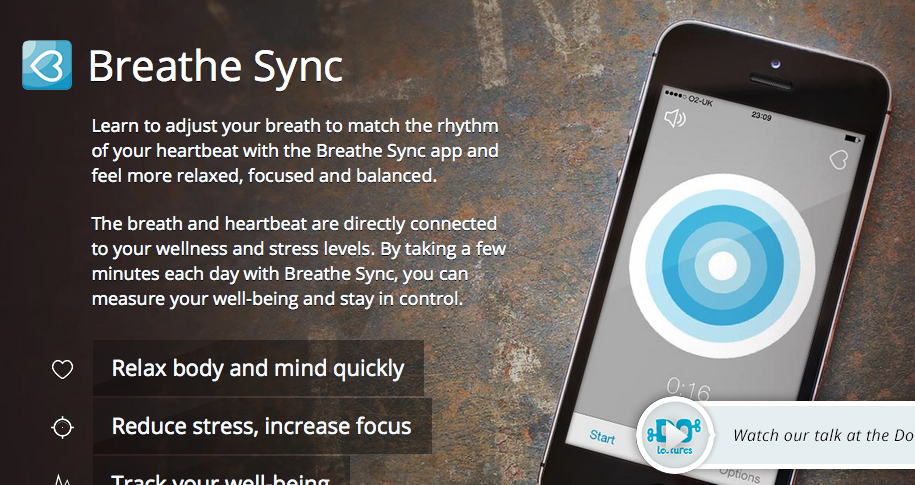
But this is the age of emerging smartphone apps, including those applied to health. Smartphone apps are perfect for health monitoring. They are especially changing how we engage in biofeedback. An app called Breathe Sync is available that tracks heart rate using the camera’s flash on the phone. By tracking heart rate and providing visual instruction on breathing pattern, the program generates a Wellness Quotient, WQ, similar to HeartMath’s coherence scoring system. Difference: Breathe Sync is portable and a heck of a lot less costly. I paid $9.99, more than I’ve paid for any other mainstream smartphone application, but a bargain compared to the HeartMath device cost.

One glitch is that you need to not be running any other programs in the background, such as your GPS, else you will have pauses in the Breathe Sync program, negating the value of your WQ. Beyond this, the app functions reliably and can help you achieve the health goals of biofeedback with so much less hassle and greater effectiveness than the older methods.

If you are looking for a biofeedback system that provides advantage in gaining control over metabolic health, while also providing a wonderful method of relaxation, Breathe Sync, I believe, is the go-to app right now.

How did Cureality get its start?


In the Cureality program, we embrace information and strategies that empower you in health without drugs, without hospitals, without procedures. We convert your doctor from director of healthcare to your assistant in health. He or she is there when you need help, but you largely direct your own health future.

How did we gain the know-how, information, tools, even chutzpah to take on such an ambitious project?


It started around 10 years ago with the awkwardly named Track Your Plaque program. In fact, some of the current followers of the Cureality program are former Track Your Plaque members, having learned of the wonderful list of strategies that can be adopted to gain better control over, even reverse, coronary atherosclerotic plaque and risk for heart attack. They also learned that something special happens when you engage with other people with similar interests, all sharing ideas, insights, and resources to get the self-directed health job done. Over time, what started out as simply a source of better information for coronary health evolved into a self-directed coronary disease management program. We never set out to create something as wildly ambitious as a do-it-yourself-at-home coronary disease risk management program, but that is how it inadvertently turned out.

How we went from Information Provider to Health Empowerment Program

So we never intended to take on something so seemingly impossible as managing coronary risk on your own. But, because we armed people with such empowering, profound insights into better ways to manage their heart disease risk beyond “don’t smoke, cut saturated fat, be active, and take a statin drug”—the typical advice offered by doctors—they returned after an interaction with their doctors disappointed: doctors often declared such strategies unnecessary, or the doctor didn’t understand them—even when there were clear-cut clinical data already available to support their use. In other words, the patients—everyday people, not experts—knew more than their doctors. 

This flip-flop in the balance of knowledge made for some very interesting stories, like “Harold” (not his real name) who, having survived a heart attack and received a stent, was told by his doctor to cut his fat intake, eat more whole grains, exercise, take aspirin and a beta blocker drug, and reduce his cholesterol values with a statin drug. Upon learning all the additional information from the Track Your Plaque program, Harold returned to his doctor and asked “I’m not so ready to just go along with this idea of ‘reducing cholesterol’ to address heart disease risk. Because my goal is to gain as much control over coronary disease as possible, maybe even reverse it, I’d like to address some additional issues that I believe may be important. I’d like to have my advanced lipoproteins drawn to measure the proportion of small LDL particles I have, whether I have lipoprotein(a), an omega-3 fatty acid index and 25-hydroxy vitamin D level, and a thyroid assessment. Oh, and I believe I should also have an assessment of my inflammation status, perhaps a c-reactive protein and phospholipase A2, and my blood sugar status measured with a fasting glucose, insulin, and hemoglobin A1c.” Harold’s doctor was dumbfounded and speechless. Rather than reveal his ignorance, his doctor advised Harold that none of that was necessary, sending him on his way and telling him that he was fine.

But this left Harold with a sour taste in his mouth, having engaged in many online discussions with people who had followed conventional advice that resulted in more heart attack, more heart procedures—the conventional answers simply did not work. He also discussed his situation with people who had successfully obtained the additional information he sought, added it to their program and enjoyed dramatically improved health, including freedom from more heart attacks, heart symptoms, and heart procedures, as well as improved overall health. So Harold found an easy way to obtain the testing on his own. Within a couple of weeks, he returned to his online community and shared all his information. Within moments, he was provided useful discussion to help him understand the values, all leading to changes in nutrition, nutritional supplement choices, how and where to get the simple tools necessary, such as iodine and vitamin D supplements. He even entered his data, choosing which values he was willing to share with others, which remained private, allowing him to compare his own follow-up values several months later. Engaged in this process, self-directed but collaborative, he witnessed marked transformations in his health. Not only did he never again—over several years—ever re-develop heart symptoms nor require any more trips back to the cath lab, he lost weight, reversed a pre-diabetic sugar profile, improved his cholesterol values without drugs, got rid of the acid reflux symptoms he endured for many years, dropped his blood pressure to normal, enjoyed better mood, energy, and sleep. Slender, healthier, all accomplished without his doctor. 

Harold returned to his doctor for a routine follow-up. Slender, energetic, without complaints, on no drugs except the aspirin for his stent, the basic laboratory assessment his doctor ordered in front of him, his doctor admitted,” Well, I don’t know how you’re doing it, but these values look like a 20-year old substituted his blood for yours. They’re unbelievable. What drugs are you taking to do this?” “No drugs,” Harold replied, “I’m following a program to reverse heart disease, but it means doing some things that are different from conventional solutions.” His doctor closed their meeting with the signature response of doctors nationwide: “Well, I don’t understand what you are doing, but just keep doing it.”

Yes, Harold knew more about how to control heart disease than his doctor, more than his cardiologist. The cardiologist knew how to insert a stent or defibrillator. But deliver information that empowered Harold in all aspects of health from head to toe, while also dramatically reducing, perhaps eliminating, his coronary disease risk? As you now know, that is not what conventional healthcare does, nor is it interested in doing so, as it would relinquish control and threaten to cut off this hugely profitable revenue stream that drives “healthcare.”

Having managed to inadvertently create a self-directed coronary risk management program with such spectacular results and in probably one of the most difficult areas of all—heart disease—it became clear that a similar approach could be even more easily applied to many other areas of health, such as weight loss, bone health, cholesterol and blood pressure issues, diabetes and pre-diabetes, hormonal health, autoimmune conditions, and others. You can do it when empowered by safe, effective information, and supported by a community of sharing and collaboration. We don’t fire our doctors; they are there when we need them when, for instance, we get injured or catch pneumonia, or as an occasional resource. But doctors should no longer be able to get away with neglect, misinformation, or blindly directing you to the next revenue-generating procedure because you are empowered by the information and support you receive in Cureality.

As we get more effective in delivering this information and new tools to you, just imagine what we can accomplish in this new age of information and self-empowerment. The future for us is bright with ambitions for better interactive tools with Cureality expert staff, better ways to crowd source health answers, provide more engaging community conversation, all while the health insights that help accomplish our self-directed health goals get better and better. Each person that joins Cureality helps make this service more effective because your wisdom, insights, and experience are added to the collective knowledge. We are more powerful together than we are as individuals.

If you are already a Cureality Member, please add your comments and questions to the growing conversation. If you are not a Member, consider joining our discussions, as each new voice gets us closer and closer to better answers to take back control over health.

Power in Numbers


In his book, The Wisdom of Crowds, author James Surowiecki begins with the story of an ox judging competition in which 800 people—not ox experts nor breeders, just ordinary people attending a county fair—were asked to guess the weight of the ox. The competition was conducted by a scientist, Francis Galton, who held a low opinion of the intelligence of the average person, remarking that “the stupidity and wrong-headedness of many men and women being so great as to be scarcely credible.” He hoped to prove, by examining the various guesses, that the average person had no idea of how to judge the real answer. After all participants casted their written votes, Galton tallied up the total and averaged the result: 1,197 pounds—just one pound off from the real weight of 1,198 pounds. Few individuals actually guessed the correct weight themselves but, when the opinions of many were combined, the result was near-perfect.

Crowds can also be a source of irrational behavior, panic, and stampede. Witness any modern football or soccer game, for instance, in which fights break out over an issue as minor as a disputed call or a heckle. Or go back through history to the countless events when mass hysteria ruled, such as the Salem Witch Trials or Orson Welles’ War of the Worlds radio broadcast.

Let’s put aside examples of mass emotional chaos of the sort that causes crowds to stampede store doors on Black Friday. Let’s focus instead on conscious, considered, thoughtful opinions. We all accept that there are as many opinions on issues as there are people, not uncommonly with widely divergent views. But can we, as Galton’s famous experiment did, combine the opinions of many and come away with some fruitful insight—the correct answer? Just as the people participating in Galton’s experiment were not experts, so Cureality participants—a crowd-sourced collection of opinions—are not experts. If we were to poll everyone to identify their area of expertise or experience, it would likely include finance, the retail industry, raising children, or teaching—but not health. Yes, we have experts curating the direction of content, but we also crowd-source collective opinion.

Right now, Cureality is based on existing science, the philosophy of self-directed health, combined with guidance and community to help the participant along in the sometimes complex world of health questions. But as our processes and procedures improve, can we—like Galton’s ox weight guessers—come away with coalescent wisdom, answers to our health questions, near-perfect solutions to health conditions that have eluded the “experts” for centuries?

I think that we can. No, I know that we can. We enter a new age in information and harness the power of the crowd-sourcing of solutions, even when no single individual has the complete answer herself.

What is Cureality all about?


“Looking over your medical record, Nancy, I’m a bit concerned about your risk for osteoporosis and hip fracture. It looks like your mom had a hip fracture at age 67. Is that right? ”

“Yes, she did,” Nancy responded. “And her life was never quite the same for the 15 years she lived after that.

“You’re 53 year old. Bone thinning develops over many years. Let’s get you scheduled for a bone scan.”

Two weeks later:

“Your z-score is 1.5, Nancy. This means you’ve got a mild form of osteoporosis called ‘osteopenia.’ Here: This is a prescription for alendronate, what used to be called Fosamax.”

“Aren’t there side-effects with that drug? A friend of mine said that her mom had a leg fracture from it.”

“Well, yes. All prescription drugs have potential side-effects. They’re rare, but they can happen and we can’t predict it. Besides leg fracture, there’s something called jaw osteonecrosis in which the jawbone dies and has to be surgically replaced. But would you rather run the risk of a hip fracture?”

“Before we jump to drugs, aren’t there natural things I could do first?”

(Big sigh.) “You can take calcium, but that only helps a bit. You’ve got to make a choice: Take the drug or risk a hip fracture.”

“I’m going to explore some natural remedies on my own first.”

Nancy’s dialogue with her doctor is fictional but based on similar encounters that occur thousands of times every day nationwide. Identify a problem, prescribe a drug. Natural remedies? “They don’t work.” “I don’t know anything about that.” “None of that is proven.” “I only practice evidence-based medicine.” You’ve probably heard a few of these explanations yourself if you ever question the wisdom of conventional medical care.

Each of Nancy’s fictitious interactions were no more 10 minutes long. If she is like most people, she will have one or two such interactions over the course of a year, unless she develops some acute illness. So she’s got something like 20-30 minutes per year to compress all of her “health” advice into the time allotted. 20-30 minutes per year to discuss bone health, nutrition, blood sugar issues, cholesterol issues, blood pressure, female issues, and all the other facets of health. Perhaps she has developed some chronic gastrointestinal complaints, too, and an odd rash on her elbows, maybe headaches a few times per week that she didn’t have before. Regardless, she’s going to have to make do with those few minutes, likely receiving one or more prescriptions or imaging procedures for each.

Such is the nature of modern healthcare: Provide the minimum interaction, address only a few, perhaps no more than one, problem, then prescribe a drug. This is, more often than not, wrong. Plain wrong. Tragically, awfully, unethically, unnecessarily wrong.

Let’s pick up again with Nancy. Upon learning of her osteopenia and long-term risk for hip fractures of the sort that changed her mom’s life and health irretrievably, Nancy started searching for solutions. Not only did she discover that, yes, there are indeed a number of safe and effective ways to deal with osteopenia. She also learned that such strategies have even been examined in clinical trials, some of the strategies pitted head-to-head with drugs and performed on a par, sometimes better, than prescription drugs. She also found that there are online communities that she could join and discuss her health situation with people all sharing the same health interests. During one such interaction at the start of her effort, when she was still a bit unsure and tentative, a woman she didn’t know but who shared a similar interest in restoring bone health, commented to Nancy, “Don’t sweat it, Nancy. I was in your shoes a little over a year ago. I followed a program for bone health: vitamin D, vitamin K2, magnesium, I made sure that I included leafy green vegetables at least once or twice per day, and I added strength training for a few minutes twice per week. I started with osteoporosis. My most recent bone density test showed that I reversed it completely—it’s entirely normal! So hang in there and be sure to share your questions and concerns with us here.”

THAT is what Cureality is all about. Cureality fills the gap of knowledge in health that is not being provided in a few minute-long medical interaction. Cureality reveals the astounding amount of credible, safe, scientific information that allows you to participate, sometimes take over completely, various aspects of health. You don’t have to fire your doctor; these efforts supplement the information and advice you obtain (or don’t obtain) in the doctor’s office. While critics may sometimes say that this can be dangerous or that misdiagnoses and dangerous treatments might be risked, our experience is the exact opposite: People do better by taking the reins of health themselves, choosing to use the health care system for acute or catastrophic illness—but not necessarily for health.

Our fictional woman, Nancy, returns to her doctor one year later after undergoing a repeat bone scan. The doctor opened her chart, clearly expecting to scold her for her foolhardy and careless attitude. Instead, he was speechless. After a pause, he said, “I don’t know how you did it, but your bone density is now normal, the density of a healthy 30-year old woman. Just continue doing what you’re doing.” He closed the chart and walked out.

Yes: “Just continue what you are doing”—not “Please tell me what you did so that I might learn something new,” or “Where did you learn about such strategies? I knew nothing about this!” Just “do what you’re doing.” Too often, that is the response you get that defines what modern health care has become.

You don’t want that kind of health care. Sure, it’s reassuring to know that the doctor and hospital are there in case you injure yourself or develop pneumonia. But obtain day-to-day health advice of the sort that keeps you slender, keeps blood pressure normal, maintains normal insulin and blood pressure responses, helps keep bowel health ideal, can even be used to reverse conditions such as autoimmune joint pain, diabetes, osteoporosis, or skin rashes, while costing next to nothing and yielding health care benefits for you and your family in multiple areas of health? That is the kind of health care you want.

That’s why we developed Cureality.


William Davis, MD
Author of 
#1 New York Times Bestseller Wheat Belly: Lose the wheat, lose the weight and find your path back to health, The Wheat Belly Cookbook, and Wheat Belly 30-Minute (or Less!) Cookbook published by Rodale, Inc.  
Author, Track Your Plaque: The only heart disease prevention program that shows how the new CT heart scans can be used to detect, track, and control coronary plaque

Omega-3 fatty acids likely NOT associated with prostate cancer

A weakly constructed study was reported recently that purportedly associated higher levels of omega-3 fatty acid blood levels and prostate cancer. See this CBS News report, for instance.

Lipid and omega-3 fat expert, Dr. William Harris, posted this concise critique of the study, exposing some fundamental problems:

First, the reported EPA+DHA level in the plasma phospholipids in this study was 3.62% in the no-cancer control group, 3.66% in the total cancer group, 3.67% in the low grade cancer group, and 3.74% in the high-grade group. These differences between cases and controls are very small and would have no meaning clinically as they are within the normal variation. Based on experiments in our lab, the lowest quartile would correspond to an HS-Omega-3 Index of <3.16% and the highest to an Index of >4.77%). These values are obviously low, and virtually none of the subjects was in “danger” of having an HS-Omega-3 Index of >8%. So to conclude that regular consumption of 2 oily fish meals a week or taking fish oil supplements (both of which would result in an Index above the observed range) would increase risk for prostate cancer is extrapolating beyond the data.

This study did not test the question of whether giving fish oil supplements (or eating more oily fish) increased PC risk; it looked only a blood levels of omega-3 which are determined by intake, other dietary factors, metabolism and genetics.


The authors also failed to present the fuller story taught by the literature. The same team reported in 2010 that the use of fish oil supplements was not associated with any increased risk for prostate cancer. A 2010 meta-analysis of fish consumption and prostate cancer reported a reduction in late stage or fatal cancer among cohort studies, but no overall relationship between prostate cancer and fish intake. Terry et al. in 2001 reported higher fish intake was associated with lower risk for prostate cancer incidence and death, and Leitzmann et al. in 2004 reported similar findings. Higher intakes of canned, preserved fish were reported to be associated with reduced risk for prostate cancer. Epstein et al found that a higher omega-3 fatty acid intake predicted better survival for men who already had prostate cancer, and increased fish intake was associated with a 63% reduction in risk for aggressive prostate cancer in a case-control study by Fradet et al). So there is considerable evidence actually FAVORING an increase in fish intake for prostate cancer risk reduction.

Another piece of the picture is to compare prostate cancer rates in Japan vs the US. Here is a quote from the World Foundation of Urology:


"[Prostate cancer] incidence is really high in North America and Northern Europe (e.g., 63 X 100,000 white men and 102 X 100,000 Afro-Americans in the United States), but very low in Asia (e.g., 10 X 100,000 men in Japan).”

Since the Japanese typically eat about 8x more omega-3 fatty acids than Americans do and their
blood levels are twice as high, you’d think their prostate cancer risk would be much higher...
but the opposite is the case.


Omega-3 fatty acids are physiologically necessary, normalizing multiple metabolic phenomena including augmentation of parasympathetic tone, reductions of postprandial (after-meal) lipoprotein excursions, and endothelial function. It would indeed make no sense that nutrients that are necessary for life and health exert an adverse effect such as prostate cancer at such low blood levels. (Recall that an omega-3 RBC index of 6.0% or greater is associated with reduced potential for sudden cardiac death.)

I personally take 3600 mg per day of EPA + DHA in highly-purified, non-oxidized triglyceride form (Ascenta Nutrasea liquid) that yields an RBC omega-3 index of just over 10%, the level that I believe the overwhelming bulk of data suggest is the ideal level for humans.

Are statins and omega-3s incompatible?

French researcher, Dr. Michel de Lorgeril, has been in the forefront of thinking and research into nutritional issues, including the Mediterranean Diet, the French Paradox, and the role of fat intake in cardiovascular health. In a recent review entitled Recent findings on the health effects of omega-3 fatty acids and statins, and their interactions: do statins inhibit omega-3?, he explores the question of whether statin drugs are, in effect, incompatible with omega-3 fatty acids.

Dr. Lorgeril makes several arguments:

1) Earlier studies, such as GISSI-Prevenzione, demonstrated reduction in cardiovascular events with omega-3 fatty acid supplementation, consistent with the biological and physiological benefits observed in animals, experimental preparations, and epidemiologic observations in free-living populations.

2) More recent studies (and meta-analyses) examining the effects of omega-3 fatty acids have failed to demonstrate cardiovascular benefit showing, at most, non-significant trends towards benefit.

He points out that the more recent studies were conducted post-GISSI and after agencies like the American Heart Association's advised people to consume more fish, which prompted broad increases in omega-3 intake. The populations studied therefore had increased intake of omega-3 fatty acids at the start of the studies, verified by higher levels of omega-3 RBC levels in participants.

In addition, he raises the provocative idea that the benefits of omega-3 fatty acids appear to be confined to those not taking statin agents, as suggested, for instance, in the Alpha Omega Trial. He speculates that the potential for statins to ablate the benefits of omega-3s (and vice versa) might be based on several phenomena:

--Statins increase arachidonic acid content of cell membranes, a potentially inflammatory omega-6 fatty acid that competes with omega-3 fatty acids. (Insulin provocation and greater linoleic acid/omega-6 oils do likewise.)
--Statins induce impaired mitochondrial function, while omega-3s improve mitochondrial function. (Impaired mitochondrial function is evidenced, for instance, by reduced coenzyme Q10 levels, with partial relief from muscle weakness and discomfort by supplementing coenzyme Q10.)
--Statins commonly provoke muscle weakness and discomfort which can, in turn, lead to reduced levels of physical activity and increased resistance to insulin. (Thus the recently reported increases in diabetes with statin drug use.)

Are the physiologic effects of omega-3 fatty acids, present and necessary for health, at odds with the non-physiologic effects of statin drugs?

I fear we don't have sufficient data to come to firm conclusions yet, but my perception is that the case against statins is building. Yes, they have benefits in specific subsets of people (none in others), but the notion that everybody needs a statin drug is, I believe, not only dead wrong, but may have effects that are distinctly negative. And I believe that the arguments in favor of omega-3 fatty acid supplementation, EPA and DHA (and perhaps DPA), make better sense.


DHA: the crucial omega-3

Of the two omega-3 fatty acids that are best explored, EPA and DHA, it is likely DHA that exerts the most blood pressure- and heart rate-reducing effects. Here are the data of Mori et al in which 4000 mg of olive oil, purified EPA only, or purified DHA only were administered over 6 weeks:


□ indicates baseline SBP; ▪, postintervention SBP; ○, baseline DBP; •, postintervention DBP; ⋄, baseline HR; and ♦, postintervention HR.

In this group of 56 overweight men with normal starting blood pressures, only DHA reduced systolic BP by 5.8 mmHg, diastolic by 3.3 mmHg.

While each omega-3 fatty acid has important effects, it may be DHA that has an outsized benefit. So how can you get more DHA? Well, this observation from Schuchardt et al is important:

DHA in the triglyceride and phospholipid forms are 3-fold better absorbed, as compared to the ethyl ester form (compared by area-under-the-curve). In other words, fish oil that has been reconstituted to the naturally-occurring triglyceride form (i.e., the form found in fresh fish) provides 3-fold greater blood levels of DHA than the more common ethyl ester form found in most capsules. (The phospholipid form of DHA found in krill is also well-absorbed, but occurs in such small quantities that it is not a practical means of obtaining omega-3 fatty acids, putting aside the astaxanthin issue.)

So if the superior health effects of DHA are desired in a form that is absorbed, the ideal way to do this is either to eat fish or to supplement fish oil in the triglyceride, not ethyl ester, form. The most common and popular forms of fish oil sold are ethyl esters, including Sam's Club Triple-Strength, Costco, Nature Made, Nature's Bounty, as well as prescription Lovaza. (That's right: prescription fish oil, from this and several other perspectives, is an inferior product.)

What sources of triglyceride fish oil with greater DHA content/absorption are available to us? My favorites are, in this order:

Ascenta NutraSea
CEO and founder, Marc St. Onge, is a friend. Having visited his production facility in Nova Scotia, I was impressed with the meticulous methods of preparation. At every step of the way, every effort was made to limit any potential oxidation, including packaging in a vacuum environment. The Ascenta line of triglyceride fish oils are also richer in DHA content. Their NutraSea High DHA liquid, for instance, contains 500 mg EPA and 1000 mg DHA per teaspoon, a 1:2 EPA:DHA ratio, rather than the more typical 3:2 EPA:DHA ratio of ethyl ester forms.

Pharmax (now Seroyal) also has a fine product with a 1.4:1 EPA:DHA ratio.

Nordic Naturals has a fine liquid triglyceride product, though it is 2:1 EPA:DHA.


All posts by william-davis

For the sake of convenience: Commercial sources of prebiotic fibers

Our efforts to obtain prebiotic fibers/resistant starches, as discussed in the Cureality Digestive Health Track, to cultivate healthy bowel flora means recreating the eating behavior of primitive humans who dug in the dirt with sticks and bone fragments for underground roots and tubers, behaviors you can still observe in extant hunter-gatherer groups, such as the Hadza and Yanomamo. But, because this practice is inconvenient for us modern folk accustomed to sleek grocery stores, because many of us live in climates where the ground is frozen much of the year, and because we lack the wisdom passed from generation to generation that helps identify which roots and tubers are safe to eat and which are not, we rely on modern equivalents of primitive sources. Thus, green, unripe bananas, raw potatoes and other such fiber sources in the Cureality lifestyle.

There is therefore no need to purchase prebiotic fibers outside of your daily effort at including an unripe green banana, say, or inulin and fructooligosaccharides (FOS), or small servings of legumes as a means of cultivating healthy bowel flora. These are powerful strategies that change the number and species of bowel flora over time, thereby leading to beneficial health effects that include reduced blood sugar and blood pressure, reduction in triglycerides, reduced anxiety and improved sleep, and reduced colon cancer risk.

HOWEVER, convenience can be a struggle. Traveling by plane, for example, makes lugging around green bananas or raw potatoes inconvenient. Inulin and FOS already come as powders or capsules and they are among the options for a convenient, portable prebiotic fiber strategy. But there are others that can be purchased. This is a more costly way to get your prebiotic fibers and you do not need to purchase these products in order to succeed in your bowel flora management program. These products are therefore listed strictly as a strategy for convenience.

Most perspectives on the quality of human bowel flora composition suggest that diversity is an important feature, i.e., the greater the number of species, the better the health of the host. There may therefore be advantage in varying your prebiotic routine, e.g., green banana on Monday, inulin on Tuesday, PGX (below) on Wednesday, etc. Beyond providing convenience, these products may introduce an added level of diversity, as well.

Among the preparations available to us that can be used as prebiotic fibers:

PGX

While it is billed as a weight management and blood sugar-reducing product, the naturally occurring fiber--α-D-glucurono-α-D-manno-β-D-manno- β-D-gluco, α-L-gulurono-β-D mannurono, β-D-gluco-β- D-mannan--in PGX also exerts prebiotic effects (evidenced by increased fecal butyrate, the beneficial end-product of bacterial metabolism). PGX is available as capsules or granules. It also seems to exert prebiotic effects at lower doses than other prebiotic fibers. While I usually advise reaching 20 grams per day of fiber, PGX appears to exert substantial effects at a daily dose of half that quantity. As with all prebiotic fibers, it is best to build up slowly over weeks, e.g., start at 1.5 grams twice per day. It is also best taken in two or three divided doses. (Avoid the PGX bars, as they are too carb-rich for those of us trying to achieve ideal metaobolic health.)

Prebiotin

A combination of inulin and FOS available as powders and in portable Stick Pacs (2 gram and 4 gram packs). This preparation is quite costly, however, given the generally low cost of purchasing chicory inulin and FOS separately.

Acacia

Acacia fiber is another form of prebiotic fiber.  RenewLife and NOW are two reputable brands.

Isomalto-oligosaccharides

This fiber is used in Quest bars and in Paleo Protein Bars. With Quest bars, choose the flavors without sucralose, since it has been associated with undesirable changes in bowel flora.

There you go. It means that there are fewer and fewer reasons to not purposefully cultivate healthy bowel flora and obtain all the wonderful health benefits of doing so, from reduced blood pressure, to reduced triglycerides, to deeper sleep.

Disclaimer: I am not compensated in any way by discussing these products.

How Not To Have An Autoimmune Condition


Autoimmune conditions are becoming increasingly common. Estimates vary, but it appears that at least 8-9% of the population in North America and Western Europe have one of these conditions, with The American Autoimmune Related Diseases Association estimating that it’s even higher at 14% of the population.

The 200 or so autoimmune diseases that afflict modern people are conditions that involve an abnormal immune response directed against one or more organs of the body. If the misguided attack is against the thyroid gland, it can result in Hashimoto’s thyroiditis. If it is directed against pancreatic beta cells that produce insulin, it can result in type 1 diabetes or latent autoimmune diabetes of adults (LADA). If it involves tissue encasing joints (synovium) like the fingers or wrists, it can result in rheumatoid arthritis. It if involves the liver, it can result in autoimmune hepatitis, and so on. Nearly every organ of the body can be the target of such a misguided immune response.

While it requires a genetic predisposition towards autoimmunity that we have no control over (e.g., the HLA-B27 gene for ankylosing spondylitis), there are numerous environmental triggers of these diseases that we can do something about. Identifying and correcting these factors stacks the odds in your favor of reducing autoimmune inflammation, swelling, pain, organ dysfunction, and can even reverse an autoimmune condition altogether.

Among the most important factors to correct in order to minimize or reverse autoimmunity are:


Wheat and grain elimination

If you are reading this, you likely already know that the gliadin protein of wheat and related proteins in other grains (especially the secalin of rye, the hordein of barley, zein of corn, perhaps the avenin of oats) initiate the intestinal “leakiness” that begins the autoimmune process, an effect that occurs in over 90% of people who consume wheat and grains. The flood of foreign peptides/proteins, bacterial lipopolysaccharide, and grain proteins themselves cause immune responses to be launched against these foreign factors. If, for instance, an autoimmune response is triggered against wheat gliadin, the same antibodies can be aimed at the synapsin protein of the central nervous system/brain, resulting in dementia or cerebellar ataxia (destruction of the cerebellum resulting in incoordination and loss of bladder and bowel control). Wheat and grain elimination is by far the most important item on this list to reverse autoimmunity.

Correct vitamin D deficiency

It is clear that, across a spectrum of autoimmune diseases, vitamin D deficiency serves a permissive, not necessarily causative, role in allowing an autoimmune process to proceed. It is clear, for instance, that autoimmune conditions such as type 1 diabetes in children, rheumatoid arthritis, and Hashimoto’s thyroiditis are more common in those with low vitamin D status, much less common in those with higher vitamin D levels. For this and other reasons, I aim to achieve a blood level of 25-hydroxy vitamin D level of 60-70 ng/ml, a level that usually requires around 4000-8000 units per day of D3 (cholecalciferol) in gelcap or liquid form (never tablet due to poor or erratic absorption). In view of the serious nature of autoimmune diseases, it is well worth tracking occasional blood levels.

Supplement omega-3 fatty acids

While omega-3 fatty acids, EPA and DHA, from fish oil have proven only modestly helpful by themselves, when cast onto the background of wheat/grain elimination and vitamin D, omega-3 fatty acids compound anti-inflammatory benefits, such as those exerted via cyclooxygenase-2. This requires a daily EPA + DHA dose of around 3600 mg per day, divided in two. Don’t confuse EPA and DHA omega-3s with linolenic acid, another form of omega-3 obtained from meats, flaxseed, chia, and walnuts that does not not yield the same benefits. Nor can you use krill oil with its relatively trivial content of omega-3s.

Eliminate dairy

This is true in North America and most of Western Europe, less true in New Zealand and Australia. Autoimmunity can be triggered by the casein beta A1 form of casein widely expressed in dairy products, but not by casein beta A2 and other forms. Because it is so prevalent in North America and Western Europe, the most confident way to avoid this immunogenic form of casein is to avoid dairy altogether. You might be able to consume cheese, given the fermentation process that alters proteins and sugar, but that has not been fully explored.

Cultivate healthy bowel flora

People with autoimmune conditions have massively screwed up bowel flora with reduced species diversity and dominance of unhealthy species. We restore a healthier anti-inflammatory panel of bacterial species by “seeding” the colon with high-potency probiotics, then nourishing them with prebiotic fibers/resistant starches, a collection of strategies summarized in the Cureality Digestive Health discussions. People sometimes view bowel flora management as optional, just “fluff”–it is anything but. Properly managing bowel flora can be a make-it-or-break-it advantage; don’t neglect it.

There you go: a basic list to get started on if your interest is to begin a process of unraveling the processes of autoimmunity. In some conditions, such as rheumatoid arthritis and polymyalgia rheumatica, full recovery is possible. In other conditions, such as Hashimoto’s thyroiditis and the pancreatic beta cell destruction leading to type 1 diabetes, reversing the autoimmune inflammation does not restore organ function: hypothyroidism results after thyroiditis quiets down and type 1 diabetes and need for insulin persists after pancreatic beta cell damage. But note that the most powerful risk factor for an autoimmune disease is another autoimmune disease–this is why so many people have more than one autoimmune condition. People with Hashimoto’s, for instance, can develop rheumatoid arthritis or psoriasis. So the above menu is still worth following even if you cannot hope for full organ recovery

Five Powerful Ways to Reduce Blood Sugar

Left to conventional advice on diet and you will, more than likely, succumb to type 2 diabetes sooner or later. Follow your doctor’s advice to cut fat and eat more “healthy whole grains” and oral diabetes medication and insulin are almost certainly in your future. Despite this, had this scenario played out, you would be accused of laziness and gluttony, a weak specimen of human being who just gave into excess.

If you turn elsewhere for advice, however, and ignore the awful advice from “official” sources with cozy relationships with Big Pharma, you can reduce blood sugars sufficient to never become diabetic or to reverse an established diagnosis, and you can create a powerful collection of strategies that handily trump the worthless advice being passed off by the USDA, American Diabetes Association, the American Heart Association, or the Academy of Nutrition and Dietetics.

Among the most powerful and effective strategies to reduce blood sugar:

1) Eat no wheat nor grains

Recall that amylopectin A, the complex carbohydrate of grains, is highly digestible, unlike most of the other components of the seeds of grasses AKA “grains,” subject to digestion by the enzyme, amylase, in saliva and stomach. This explains why, ounce for ounce, grains raise blood sugar higher than table sugar. Eat no grains = remove the exceptional glycemic potential of amylopectin A.

2) Add no sugars, avoid high-fructose corn syrup

This should be pretty obvious, but note that the majority of processed foods contain sweeteners such as sucrose or high-fructose corn syrup, tailored to please the increased desire for sweetness among grain-consuming people. While fructose does not raise blood sugar acutely, it does so in delayed fashion, along with triggering other metabolic distortions such as increased triglycerides and fatty liver.

3) Vitamin D

Because vitamin D restores the body’s normal responsiveness to insulin, getting vitamin D right helps reduce blood sugar naturally while providing a range of other health benefits.

4) Restore bowel flora

As cultivation of several Lactobacillus and Bifidobacteria species in bowel flora yields fatty acids that restore insulin responsiveness, this leads to reductions in blood sugar over time. Minus the bowel flora-disrupting effects of grains and sugars, a purposeful program of bowel flora restoration is required (discussed at length in the Cureality Digestive Health section.)

5) Exercise

Blood sugar is reduced during and immediately following exercise, with the effect continuing for many hours afterwards, even into the next day.

Note that, aside from exercise, none of these powerful strategies are advocated by the American Diabetes Association or any other “official” agency purporting to provide dietary advice. As is happening more and more often as the tide of health information rises and is accessible to all, the best advice on health does not come from such agencies nor from your doctor but from your efforts to better understand the truths in health. This is our core mission in Cureality. A nice side benefit: information from Cureality is not accompanied by advertisements from Merck, Pfizer, Kelloggs, Kraft, or Cadbury Schweppes.

Cureality App Review: Breathe Sync


Biofeedback is a wonderful, natural way to gain control over multiple physiological phenomena, a means of tapping into your body’s internal resources. You can, for instance, use biofeedback to reduce anxiety, heart rate, and blood pressure, and achieve a sense of well-being that does not involve drugs, side-effects, or even much cost.

Biofeedback simply means that you are tracking some observable physiologic phenomenon—heart rate, skin temperature, blood pressure—and trying to consciously access control over it. One very successful method is that of bringing the beat-to-beat variation in heart rate into synchrony with the respiratory cycle. In day-to-day life, the heart beat is usually completely out of sync with respiration. Bring it into synchrony and interesting things happen: you experience a feeling of peace and calm, while many healthy phenomena develop.

A company called HeartMath has applied this principle through their personal computer-driven device that plugs into the USB port of your computer and monitors your heart rate with a device clipped on your earlobe. You then regulate breathing and follow the instructions provided and feedback is obtained on whether you are achieving synchrony, or what they call “coherence.” As the user becomes more effective in achieving coherence over time, positive physiological and emotional effects develop. HeartMath has been shown, for instance, to reduce systolic and diastolic blood pressure, morning cortisol levels (a stress hormone), and helps people deal with chronic pain. Downside of the HeartMath process: a $249 price tag for the earlobe-USB device.

But this is the age of emerging smartphone apps, including those applied to health. Smartphone apps are perfect for health monitoring. They are especially changing how we engage in biofeedback. An app called Breathe Sync is available that tracks heart rate using the camera’s flash on the phone. By tracking heart rate and providing visual instruction on breathing pattern, the program generates a Wellness Quotient, WQ, similar to HeartMath’s coherence scoring system. Difference: Breathe Sync is portable and a heck of a lot less costly. I paid $9.99, more than I’ve paid for any other mainstream smartphone application, but a bargain compared to the HeartMath device cost.

One glitch is that you need to not be running any other programs in the background, such as your GPS, else you will have pauses in the Breathe Sync program, negating the value of your WQ. Beyond this, the app functions reliably and can help you achieve the health goals of biofeedback with so much less hassle and greater effectiveness than the older methods.

If you are looking for a biofeedback system that provides advantage in gaining control over metabolic health, while also providing a wonderful method of relaxation, Breathe Sync, I believe, is the go-to app right now.

How did Cureality get its start?


In the Cureality program, we embrace information and strategies that empower you in health without drugs, without hospitals, without procedures. We convert your doctor from director of healthcare to your assistant in health. He or she is there when you need help, but you largely direct your own health future.

How did we gain the know-how, information, tools, even chutzpah to take on such an ambitious project?


It started around 10 years ago with the awkwardly named Track Your Plaque program. In fact, some of the current followers of the Cureality program are former Track Your Plaque members, having learned of the wonderful list of strategies that can be adopted to gain better control over, even reverse, coronary atherosclerotic plaque and risk for heart attack. They also learned that something special happens when you engage with other people with similar interests, all sharing ideas, insights, and resources to get the self-directed health job done. Over time, what started out as simply a source of better information for coronary health evolved into a self-directed coronary disease management program. We never set out to create something as wildly ambitious as a do-it-yourself-at-home coronary disease risk management program, but that is how it inadvertently turned out.

How we went from Information Provider to Health Empowerment Program

So we never intended to take on something so seemingly impossible as managing coronary risk on your own. But, because we armed people with such empowering, profound insights into better ways to manage their heart disease risk beyond “don’t smoke, cut saturated fat, be active, and take a statin drug”—the typical advice offered by doctors—they returned after an interaction with their doctors disappointed: doctors often declared such strategies unnecessary, or the doctor didn’t understand them—even when there were clear-cut clinical data already available to support their use. In other words, the patients—everyday people, not experts—knew more than their doctors. 

This flip-flop in the balance of knowledge made for some very interesting stories, like “Harold” (not his real name) who, having survived a heart attack and received a stent, was told by his doctor to cut his fat intake, eat more whole grains, exercise, take aspirin and a beta blocker drug, and reduce his cholesterol values with a statin drug. Upon learning all the additional information from the Track Your Plaque program, Harold returned to his doctor and asked “I’m not so ready to just go along with this idea of ‘reducing cholesterol’ to address heart disease risk. Because my goal is to gain as much control over coronary disease as possible, maybe even reverse it, I’d like to address some additional issues that I believe may be important. I’d like to have my advanced lipoproteins drawn to measure the proportion of small LDL particles I have, whether I have lipoprotein(a), an omega-3 fatty acid index and 25-hydroxy vitamin D level, and a thyroid assessment. Oh, and I believe I should also have an assessment of my inflammation status, perhaps a c-reactive protein and phospholipase A2, and my blood sugar status measured with a fasting glucose, insulin, and hemoglobin A1c.” Harold’s doctor was dumbfounded and speechless. Rather than reveal his ignorance, his doctor advised Harold that none of that was necessary, sending him on his way and telling him that he was fine.

But this left Harold with a sour taste in his mouth, having engaged in many online discussions with people who had followed conventional advice that resulted in more heart attack, more heart procedures—the conventional answers simply did not work. He also discussed his situation with people who had successfully obtained the additional information he sought, added it to their program and enjoyed dramatically improved health, including freedom from more heart attacks, heart symptoms, and heart procedures, as well as improved overall health. So Harold found an easy way to obtain the testing on his own. Within a couple of weeks, he returned to his online community and shared all his information. Within moments, he was provided useful discussion to help him understand the values, all leading to changes in nutrition, nutritional supplement choices, how and where to get the simple tools necessary, such as iodine and vitamin D supplements. He even entered his data, choosing which values he was willing to share with others, which remained private, allowing him to compare his own follow-up values several months later. Engaged in this process, self-directed but collaborative, he witnessed marked transformations in his health. Not only did he never again—over several years—ever re-develop heart symptoms nor require any more trips back to the cath lab, he lost weight, reversed a pre-diabetic sugar profile, improved his cholesterol values without drugs, got rid of the acid reflux symptoms he endured for many years, dropped his blood pressure to normal, enjoyed better mood, energy, and sleep. Slender, healthier, all accomplished without his doctor. 

Harold returned to his doctor for a routine follow-up. Slender, energetic, without complaints, on no drugs except the aspirin for his stent, the basic laboratory assessment his doctor ordered in front of him, his doctor admitted,” Well, I don’t know how you’re doing it, but these values look like a 20-year old substituted his blood for yours. They’re unbelievable. What drugs are you taking to do this?” “No drugs,” Harold replied, “I’m following a program to reverse heart disease, but it means doing some things that are different from conventional solutions.” His doctor closed their meeting with the signature response of doctors nationwide: “Well, I don’t understand what you are doing, but just keep doing it.”

Yes, Harold knew more about how to control heart disease than his doctor, more than his cardiologist. The cardiologist knew how to insert a stent or defibrillator. But deliver information that empowered Harold in all aspects of health from head to toe, while also dramatically reducing, perhaps eliminating, his coronary disease risk? As you now know, that is not what conventional healthcare does, nor is it interested in doing so, as it would relinquish control and threaten to cut off this hugely profitable revenue stream that drives “healthcare.”

Having managed to inadvertently create a self-directed coronary risk management program with such spectacular results and in probably one of the most difficult areas of all—heart disease—it became clear that a similar approach could be even more easily applied to many other areas of health, such as weight loss, bone health, cholesterol and blood pressure issues, diabetes and pre-diabetes, hormonal health, autoimmune conditions, and others. You can do it when empowered by safe, effective information, and supported by a community of sharing and collaboration. We don’t fire our doctors; they are there when we need them when, for instance, we get injured or catch pneumonia, or as an occasional resource. But doctors should no longer be able to get away with neglect, misinformation, or blindly directing you to the next revenue-generating procedure because you are empowered by the information and support you receive in Cureality.

As we get more effective in delivering this information and new tools to you, just imagine what we can accomplish in this new age of information and self-empowerment. The future for us is bright with ambitions for better interactive tools with Cureality expert staff, better ways to crowd source health answers, provide more engaging community conversation, all while the health insights that help accomplish our self-directed health goals get better and better. Each person that joins Cureality helps make this service more effective because your wisdom, insights, and experience are added to the collective knowledge. We are more powerful together than we are as individuals.

If you are already a Cureality Member, please add your comments and questions to the growing conversation. If you are not a Member, consider joining our discussions, as each new voice gets us closer and closer to better answers to take back control over health.

Power in Numbers


In his book, The Wisdom of Crowds, author James Surowiecki begins with the story of an ox judging competition in which 800 people—not ox experts nor breeders, just ordinary people attending a county fair—were asked to guess the weight of the ox. The competition was conducted by a scientist, Francis Galton, who held a low opinion of the intelligence of the average person, remarking that “the stupidity and wrong-headedness of many men and women being so great as to be scarcely credible.” He hoped to prove, by examining the various guesses, that the average person had no idea of how to judge the real answer. After all participants casted their written votes, Galton tallied up the total and averaged the result: 1,197 pounds—just one pound off from the real weight of 1,198 pounds. Few individuals actually guessed the correct weight themselves but, when the opinions of many were combined, the result was near-perfect.

Crowds can also be a source of irrational behavior, panic, and stampede. Witness any modern football or soccer game, for instance, in which fights break out over an issue as minor as a disputed call or a heckle. Or go back through history to the countless events when mass hysteria ruled, such as the Salem Witch Trials or Orson Welles’ War of the Worlds radio broadcast.

Let’s put aside examples of mass emotional chaos of the sort that causes crowds to stampede store doors on Black Friday. Let’s focus instead on conscious, considered, thoughtful opinions. We all accept that there are as many opinions on issues as there are people, not uncommonly with widely divergent views. But can we, as Galton’s famous experiment did, combine the opinions of many and come away with some fruitful insight—the correct answer? Just as the people participating in Galton’s experiment were not experts, so Cureality participants—a crowd-sourced collection of opinions—are not experts. If we were to poll everyone to identify their area of expertise or experience, it would likely include finance, the retail industry, raising children, or teaching—but not health. Yes, we have experts curating the direction of content, but we also crowd-source collective opinion.

Right now, Cureality is based on existing science, the philosophy of self-directed health, combined with guidance and community to help the participant along in the sometimes complex world of health questions. But as our processes and procedures improve, can we—like Galton’s ox weight guessers—come away with coalescent wisdom, answers to our health questions, near-perfect solutions to health conditions that have eluded the “experts” for centuries?

I think that we can. No, I know that we can. We enter a new age in information and harness the power of the crowd-sourcing of solutions, even when no single individual has the complete answer herself.

What is Cureality all about?


“Looking over your medical record, Nancy, I’m a bit concerned about your risk for osteoporosis and hip fracture. It looks like your mom had a hip fracture at age 67. Is that right? ”

“Yes, she did,” Nancy responded. “And her life was never quite the same for the 15 years she lived after that.

“You’re 53 year old. Bone thinning develops over many years. Let’s get you scheduled for a bone scan.”

Two weeks later:

“Your z-score is 1.5, Nancy. This means you’ve got a mild form of osteoporosis called ‘osteopenia.’ Here: This is a prescription for alendronate, what used to be called Fosamax.”

“Aren’t there side-effects with that drug? A friend of mine said that her mom had a leg fracture from it.”

“Well, yes. All prescription drugs have potential side-effects. They’re rare, but they can happen and we can’t predict it. Besides leg fracture, there’s something called jaw osteonecrosis in which the jawbone dies and has to be surgically replaced. But would you rather run the risk of a hip fracture?”

“Before we jump to drugs, aren’t there natural things I could do first?”

(Big sigh.) “You can take calcium, but that only helps a bit. You’ve got to make a choice: Take the drug or risk a hip fracture.”

“I’m going to explore some natural remedies on my own first.”

Nancy’s dialogue with her doctor is fictional but based on similar encounters that occur thousands of times every day nationwide. Identify a problem, prescribe a drug. Natural remedies? “They don’t work.” “I don’t know anything about that.” “None of that is proven.” “I only practice evidence-based medicine.” You’ve probably heard a few of these explanations yourself if you ever question the wisdom of conventional medical care.

Each of Nancy’s fictitious interactions were no more 10 minutes long. If she is like most people, she will have one or two such interactions over the course of a year, unless she develops some acute illness. So she’s got something like 20-30 minutes per year to compress all of her “health” advice into the time allotted. 20-30 minutes per year to discuss bone health, nutrition, blood sugar issues, cholesterol issues, blood pressure, female issues, and all the other facets of health. Perhaps she has developed some chronic gastrointestinal complaints, too, and an odd rash on her elbows, maybe headaches a few times per week that she didn’t have before. Regardless, she’s going to have to make do with those few minutes, likely receiving one or more prescriptions or imaging procedures for each.

Such is the nature of modern healthcare: Provide the minimum interaction, address only a few, perhaps no more than one, problem, then prescribe a drug. This is, more often than not, wrong. Plain wrong. Tragically, awfully, unethically, unnecessarily wrong.

Let’s pick up again with Nancy. Upon learning of her osteopenia and long-term risk for hip fractures of the sort that changed her mom’s life and health irretrievably, Nancy started searching for solutions. Not only did she discover that, yes, there are indeed a number of safe and effective ways to deal with osteopenia. She also learned that such strategies have even been examined in clinical trials, some of the strategies pitted head-to-head with drugs and performed on a par, sometimes better, than prescription drugs. She also found that there are online communities that she could join and discuss her health situation with people all sharing the same health interests. During one such interaction at the start of her effort, when she was still a bit unsure and tentative, a woman she didn’t know but who shared a similar interest in restoring bone health, commented to Nancy, “Don’t sweat it, Nancy. I was in your shoes a little over a year ago. I followed a program for bone health: vitamin D, vitamin K2, magnesium, I made sure that I included leafy green vegetables at least once or twice per day, and I added strength training for a few minutes twice per week. I started with osteoporosis. My most recent bone density test showed that I reversed it completely—it’s entirely normal! So hang in there and be sure to share your questions and concerns with us here.”

THAT is what Cureality is all about. Cureality fills the gap of knowledge in health that is not being provided in a few minute-long medical interaction. Cureality reveals the astounding amount of credible, safe, scientific information that allows you to participate, sometimes take over completely, various aspects of health. You don’t have to fire your doctor; these efforts supplement the information and advice you obtain (or don’t obtain) in the doctor’s office. While critics may sometimes say that this can be dangerous or that misdiagnoses and dangerous treatments might be risked, our experience is the exact opposite: People do better by taking the reins of health themselves, choosing to use the health care system for acute or catastrophic illness—but not necessarily for health.

Our fictional woman, Nancy, returns to her doctor one year later after undergoing a repeat bone scan. The doctor opened her chart, clearly expecting to scold her for her foolhardy and careless attitude. Instead, he was speechless. After a pause, he said, “I don’t know how you did it, but your bone density is now normal, the density of a healthy 30-year old woman. Just continue doing what you’re doing.” He closed the chart and walked out.

Yes: “Just continue what you are doing”—not “Please tell me what you did so that I might learn something new,” or “Where did you learn about such strategies? I knew nothing about this!” Just “do what you’re doing.” Too often, that is the response you get that defines what modern health care has become.

You don’t want that kind of health care. Sure, it’s reassuring to know that the doctor and hospital are there in case you injure yourself or develop pneumonia. But obtain day-to-day health advice of the sort that keeps you slender, keeps blood pressure normal, maintains normal insulin and blood pressure responses, helps keep bowel health ideal, can even be used to reverse conditions such as autoimmune joint pain, diabetes, osteoporosis, or skin rashes, while costing next to nothing and yielding health care benefits for you and your family in multiple areas of health? That is the kind of health care you want.

That’s why we developed Cureality.


William Davis, MD
Author of 
#1 New York Times Bestseller Wheat Belly: Lose the wheat, lose the weight and find your path back to health, The Wheat Belly Cookbook, and Wheat Belly 30-Minute (or Less!) Cookbook published by Rodale, Inc.  
Author, Track Your Plaque: The only heart disease prevention program that shows how the new CT heart scans can be used to detect, track, and control coronary plaque

Omega-3 fatty acids likely NOT associated with prostate cancer

A weakly constructed study was reported recently that purportedly associated higher levels of omega-3 fatty acid blood levels and prostate cancer. See this CBS News report, for instance.

Lipid and omega-3 fat expert, Dr. William Harris, posted this concise critique of the study, exposing some fundamental problems:

First, the reported EPA+DHA level in the plasma phospholipids in this study was 3.62% in the no-cancer control group, 3.66% in the total cancer group, 3.67% in the low grade cancer group, and 3.74% in the high-grade group. These differences between cases and controls are very small and would have no meaning clinically as they are within the normal variation. Based on experiments in our lab, the lowest quartile would correspond to an HS-Omega-3 Index of <3.16% and the highest to an Index of >4.77%). These values are obviously low, and virtually none of the subjects was in “danger” of having an HS-Omega-3 Index of >8%. So to conclude that regular consumption of 2 oily fish meals a week or taking fish oil supplements (both of which would result in an Index above the observed range) would increase risk for prostate cancer is extrapolating beyond the data.

This study did not test the question of whether giving fish oil supplements (or eating more oily fish) increased PC risk; it looked only a blood levels of omega-3 which are determined by intake, other dietary factors, metabolism and genetics.


The authors also failed to present the fuller story taught by the literature. The same team reported in 2010 that the use of fish oil supplements was not associated with any increased risk for prostate cancer. A 2010 meta-analysis of fish consumption and prostate cancer reported a reduction in late stage or fatal cancer among cohort studies, but no overall relationship between prostate cancer and fish intake. Terry et al. in 2001 reported higher fish intake was associated with lower risk for prostate cancer incidence and death, and Leitzmann et al. in 2004 reported similar findings. Higher intakes of canned, preserved fish were reported to be associated with reduced risk for prostate cancer. Epstein et al found that a higher omega-3 fatty acid intake predicted better survival for men who already had prostate cancer, and increased fish intake was associated with a 63% reduction in risk for aggressive prostate cancer in a case-control study by Fradet et al). So there is considerable evidence actually FAVORING an increase in fish intake for prostate cancer risk reduction.

Another piece of the picture is to compare prostate cancer rates in Japan vs the US. Here is a quote from the World Foundation of Urology:


"[Prostate cancer] incidence is really high in North America and Northern Europe (e.g., 63 X 100,000 white men and 102 X 100,000 Afro-Americans in the United States), but very low in Asia (e.g., 10 X 100,000 men in Japan).”

Since the Japanese typically eat about 8x more omega-3 fatty acids than Americans do and their
blood levels are twice as high, you’d think their prostate cancer risk would be much higher...
but the opposite is the case.


Omega-3 fatty acids are physiologically necessary, normalizing multiple metabolic phenomena including augmentation of parasympathetic tone, reductions of postprandial (after-meal) lipoprotein excursions, and endothelial function. It would indeed make no sense that nutrients that are necessary for life and health exert an adverse effect such as prostate cancer at such low blood levels. (Recall that an omega-3 RBC index of 6.0% or greater is associated with reduced potential for sudden cardiac death.)

I personally take 3600 mg per day of EPA + DHA in highly-purified, non-oxidized triglyceride form (Ascenta Nutrasea liquid) that yields an RBC omega-3 index of just over 10%, the level that I believe the overwhelming bulk of data suggest is the ideal level for humans.

Are statins and omega-3s incompatible?

French researcher, Dr. Michel de Lorgeril, has been in the forefront of thinking and research into nutritional issues, including the Mediterranean Diet, the French Paradox, and the role of fat intake in cardiovascular health. In a recent review entitled Recent findings on the health effects of omega-3 fatty acids and statins, and their interactions: do statins inhibit omega-3?, he explores the question of whether statin drugs are, in effect, incompatible with omega-3 fatty acids.

Dr. Lorgeril makes several arguments:

1) Earlier studies, such as GISSI-Prevenzione, demonstrated reduction in cardiovascular events with omega-3 fatty acid supplementation, consistent with the biological and physiological benefits observed in animals, experimental preparations, and epidemiologic observations in free-living populations.

2) More recent studies (and meta-analyses) examining the effects of omega-3 fatty acids have failed to demonstrate cardiovascular benefit showing, at most, non-significant trends towards benefit.

He points out that the more recent studies were conducted post-GISSI and after agencies like the American Heart Association's advised people to consume more fish, which prompted broad increases in omega-3 intake. The populations studied therefore had increased intake of omega-3 fatty acids at the start of the studies, verified by higher levels of omega-3 RBC levels in participants.

In addition, he raises the provocative idea that the benefits of omega-3 fatty acids appear to be confined to those not taking statin agents, as suggested, for instance, in the Alpha Omega Trial. He speculates that the potential for statins to ablate the benefits of omega-3s (and vice versa) might be based on several phenomena:

--Statins increase arachidonic acid content of cell membranes, a potentially inflammatory omega-6 fatty acid that competes with omega-3 fatty acids. (Insulin provocation and greater linoleic acid/omega-6 oils do likewise.)
--Statins induce impaired mitochondrial function, while omega-3s improve mitochondrial function. (Impaired mitochondrial function is evidenced, for instance, by reduced coenzyme Q10 levels, with partial relief from muscle weakness and discomfort by supplementing coenzyme Q10.)
--Statins commonly provoke muscle weakness and discomfort which can, in turn, lead to reduced levels of physical activity and increased resistance to insulin. (Thus the recently reported increases in diabetes with statin drug use.)

Are the physiologic effects of omega-3 fatty acids, present and necessary for health, at odds with the non-physiologic effects of statin drugs?

I fear we don't have sufficient data to come to firm conclusions yet, but my perception is that the case against statins is building. Yes, they have benefits in specific subsets of people (none in others), but the notion that everybody needs a statin drug is, I believe, not only dead wrong, but may have effects that are distinctly negative. And I believe that the arguments in favor of omega-3 fatty acid supplementation, EPA and DHA (and perhaps DPA), make better sense.


DHA: the crucial omega-3

Of the two omega-3 fatty acids that are best explored, EPA and DHA, it is likely DHA that exerts the most blood pressure- and heart rate-reducing effects. Here are the data of Mori et al in which 4000 mg of olive oil, purified EPA only, or purified DHA only were administered over 6 weeks:


□ indicates baseline SBP; ▪, postintervention SBP; ○, baseline DBP; •, postintervention DBP; ⋄, baseline HR; and ♦, postintervention HR.

In this group of 56 overweight men with normal starting blood pressures, only DHA reduced systolic BP by 5.8 mmHg, diastolic by 3.3 mmHg.

While each omega-3 fatty acid has important effects, it may be DHA that has an outsized benefit. So how can you get more DHA? Well, this observation from Schuchardt et al is important:

DHA in the triglyceride and phospholipid forms are 3-fold better absorbed, as compared to the ethyl ester form (compared by area-under-the-curve). In other words, fish oil that has been reconstituted to the naturally-occurring triglyceride form (i.e., the form found in fresh fish) provides 3-fold greater blood levels of DHA than the more common ethyl ester form found in most capsules. (The phospholipid form of DHA found in krill is also well-absorbed, but occurs in such small quantities that it is not a practical means of obtaining omega-3 fatty acids, putting aside the astaxanthin issue.)

So if the superior health effects of DHA are desired in a form that is absorbed, the ideal way to do this is either to eat fish or to supplement fish oil in the triglyceride, not ethyl ester, form. The most common and popular forms of fish oil sold are ethyl esters, including Sam's Club Triple-Strength, Costco, Nature Made, Nature's Bounty, as well as prescription Lovaza. (That's right: prescription fish oil, from this and several other perspectives, is an inferior product.)

What sources of triglyceride fish oil with greater DHA content/absorption are available to us? My favorites are, in this order:

Ascenta NutraSea
CEO and founder, Marc St. Onge, is a friend. Having visited his production facility in Nova Scotia, I was impressed with the meticulous methods of preparation. At every step of the way, every effort was made to limit any potential oxidation, including packaging in a vacuum environment. The Ascenta line of triglyceride fish oils are also richer in DHA content. Their NutraSea High DHA liquid, for instance, contains 500 mg EPA and 1000 mg DHA per teaspoon, a 1:2 EPA:DHA ratio, rather than the more typical 3:2 EPA:DHA ratio of ethyl ester forms.

Pharmax (now Seroyal) also has a fine product with a 1.4:1 EPA:DHA ratio.

Nordic Naturals has a fine liquid triglyceride product, though it is 2:1 EPA:DHA.


rtant feature, i.e., the greater the number of species, the better the health of the host. There may therefore be advantage in varying your prebiotic routine, e.g., green banana on Monday, inulin on Tuesday, PGX (below) on Wednesday, etc. Beyond providing convenience, these products may introduce an added level of diversity, as well.

Among the preparations available to us that can be used as prebiotic fibers:

PGX

While it is billed as a weight management and blood sugar-reducing product, the naturally occurring fiber--α-D-glucurono-α-D-manno-β-D-manno- β-D-gluco, α-L-gulurono-β-D mannurono, β-D-gluco-β- D-mannan--in PGX also exerts prebiotic effects (evidenced by increased fecal butyrate, the beneficial end-product of bacterial metabolism). PGX is available as capsules or granules. It also seems to exert prebiotic effects at lower doses than other prebiotic fibers. While I usually advise reaching 20 grams per day of fiber, PGX appears to exert substantial effects at a daily dose of half that quantity. As with all prebiotic fibers, it is best to build up slowly over weeks, e.g., start at 1.5 grams twice per day. It is also best taken in two or three divided doses. (Avoid the PGX bars, as they are too carb-rich for those of us trying to achieve ideal metaobolic health.)

Prebiotin

A combination of inulin and FOS available as powders and in portable Stick Pacs (2 gram and 4 gram packs). This preparation is quite costly, however, given the generally low cost of purchasing chicory inulin and FOS separately.

Acacia

Acacia fiber is another form of prebiotic fiber.  RenewLife and NOW are two reputable brands.

Isomalto-oligosaccharides

This fiber is used in Quest bars and in Paleo Protein Bars. With Quest bars, choose the flavors without sucralose, since it has been associated with undesirable changes in bowel flora.

There you go. It means that there are fewer and fewer reasons to not purposefully cultivate healthy bowel flora and obtain all the wonderful health benefits of doing so, from reduced blood pressure, to reduced triglycerides, to deeper sleep.

Disclaimer: I am not compensated in any way by discussing these products.

How Not To Have An Autoimmune Condition


Autoimmune conditions are becoming increasingly common. Estimates vary, but it appears that at least 8-9% of the population in North America and Western Europe have one of these conditions, with The American Autoimmune Related Diseases Association estimating that it’s even higher at 14% of the population.

The 200 or so autoimmune diseases that afflict modern people are conditions that involve an abnormal immune response directed against one or more organs of the body. If the misguided attack is against the thyroid gland, it can result in Hashimoto’s thyroiditis. If it is directed against pancreatic beta cells that produce insulin, it can result in type 1 diabetes or latent autoimmune diabetes of adults (LADA). If it involves tissue encasing joints (synovium) like the fingers or wrists, it can result in rheumatoid arthritis. It if involves the liver, it can result in autoimmune hepatitis, and so on. Nearly every organ of the body can be the target of such a misguided immune response.

While it requires a genetic predisposition towards autoimmunity that we have no control over (e.g., the HLA-B27 gene for ankylosing spondylitis), there are numerous environmental triggers of these diseases that we can do something about. Identifying and correcting these factors stacks the odds in your favor of reducing autoimmune inflammation, swelling, pain, organ dysfunction, and can even reverse an autoimmune condition altogether.

Among the most important factors to correct in order to minimize or reverse autoimmunity are:


Wheat and grain elimination

If you are reading this, you likely already know that the gliadin protein of wheat and related proteins in other grains (especially the secalin of rye, the hordein of barley, zein of corn, perhaps the avenin of oats) initiate the intestinal “leakiness” that begins the autoimmune process, an effect that occurs in over 90% of people who consume wheat and grains. The flood of foreign peptides/proteins, bacterial lipopolysaccharide, and grain proteins themselves cause immune responses to be launched against these foreign factors. If, for instance, an autoimmune response is triggered against wheat gliadin, the same antibodies can be aimed at the synapsin protein of the central nervous system/brain, resulting in dementia or cerebellar ataxia (destruction of the cerebellum resulting in incoordination and loss of bladder and bowel control). Wheat and grain elimination is by far the most important item on this list to reverse autoimmunity.

Correct vitamin D deficiency

It is clear that, across a spectrum of autoimmune diseases, vitamin D deficiency serves a permissive, not necessarily causative, role in allowing an autoimmune process to proceed. It is clear, for instance, that autoimmune conditions such as type 1 diabetes in children, rheumatoid arthritis, and Hashimoto’s thyroiditis are more common in those with low vitamin D status, much less common in those with higher vitamin D levels. For this and other reasons, I aim to achieve a blood level of 25-hydroxy vitamin D level of 60-70 ng/ml, a level that usually requires around 4000-8000 units per day of D3 (cholecalciferol) in gelcap or liquid form (never tablet due to poor or erratic absorption). In view of the serious nature of autoimmune diseases, it is well worth tracking occasional blood levels.

Supplement omega-3 fatty acids

While omega-3 fatty acids, EPA and DHA, from fish oil have proven only modestly helpful by themselves, when cast onto the background of wheat/grain elimination and vitamin D, omega-3 fatty acids compound anti-inflammatory benefits, such as those exerted via cyclooxygenase-2. This requires a daily EPA + DHA dose of around 3600 mg per day, divided in two. Don’t confuse EPA and DHA omega-3s with linolenic acid, another form of omega-3 obtained from meats, flaxseed, chia, and walnuts that does not not yield the same benefits. Nor can you use krill oil with its relatively trivial content of omega-3s.

Eliminate dairy

This is true in North America and most of Western Europe, less true in New Zealand and Australia. Autoimmunity can be triggered by the casein beta A1 form of casein widely expressed in dairy products, but not by casein beta A2 and other forms. Because it is so prevalent in North America and Western Europe, the most confident way to avoid this immunogenic form of casein is to avoid dairy altogether. You might be able to consume cheese, given the fermentation process that alters proteins and sugar, but that has not been fully explored.

Cultivate healthy bowel flora

People with autoimmune conditions have massively screwed up bowel flora with reduced species diversity and dominance of unhealthy species. We restore a healthier anti-inflammatory panel of bacterial species by “seeding” the colon with high-potency probiotics, then nourishing them with prebiotic fibers/resistant starches, a collection of strategies summarized in the Cureality Digestive Health discussions. People sometimes view bowel flora management as optional, just “fluff”–it is anything but. Properly managing bowel flora can be a make-it-or-break-it advantage; don’t neglect it.

There you go: a basic list to get started on if your interest is to begin a process of unraveling the processes of autoimmunity. In some conditions, such as rheumatoid arthritis and polymyalgia rheumatica, full recovery is possible. In other conditions, such as Hashimoto’s thyroiditis and the pancreatic beta cell destruction leading to type 1 diabetes, reversing the autoimmune inflammation does not restore organ function: hypothyroidism results after thyroiditis quiets down and type 1 diabetes and need for insulin persists after pancreatic beta cell damage. But note that the most powerful risk factor for an autoimmune disease is another autoimmune disease–this is why so many people have more than one autoimmune condition. People with Hashimoto’s, for instance, can develop rheumatoid arthritis or psoriasis. So the above menu is still worth following even if you cannot hope for full organ recovery

Five Powerful Ways to Reduce Blood Sugar

Left to conventional advice on diet and you will, more than likely, succumb to type 2 diabetes sooner or later. Follow your doctor’s advice to cut fat and eat more “healthy whole grains” and oral diabetes medication and insulin are almost certainly in your future. Despite this, had this scenario played out, you would be accused of laziness and gluttony, a weak specimen of human being who just gave into excess.

If you turn elsewhere for advice, however, and ignore the awful advice from “official” sources with cozy relationships with Big Pharma, you can reduce blood sugars sufficient to never become diabetic or to reverse an established diagnosis, and you can create a powerful collection of strategies that handily trump the worthless advice being passed off by the USDA, American Diabetes Association, the American Heart Association, or the Academy of Nutrition and Dietetics.

Among the most powerful and effective strategies to reduce blood sugar:

1) Eat no wheat nor grains

Recall that amylopectin A, the complex carbohydrate of grains, is highly digestible, unlike most of the other components of the seeds of grasses AKA “grains,” subject to digestion by the enzyme, amylase, in saliva and stomach. This explains why, ounce for ounce, grains raise blood sugar higher than table sugar. Eat no grains = remove the exceptional glycemic potential of amylopectin A.

2) Add no sugars, avoid high-fructose corn syrup

This should be pretty obvious, but note that the majority of processed foods contain sweeteners such as sucrose or high-fructose corn syrup, tailored to please the increased desire for sweetness among grain-consuming people. While fructose does not raise blood sugar acutely, it does so in delayed fashion, along with triggering other metabolic distortions such as increased triglycerides and fatty liver.

3) Vitamin D

Because vitamin D restores the body’s normal responsiveness to insulin, getting vitamin D right helps reduce blood sugar naturally while providing a range of other health benefits.

4) Restore bowel flora

As cultivation of several Lactobacillus and Bifidobacteria species in bowel flora yields fatty acids that restore insulin responsiveness, this leads to reductions in blood sugar over time. Minus the bowel flora-disrupting effects of grains and sugars, a purposeful program of bowel flora restoration is required (discussed at length in the Cureality Digestive Health section.)

5) Exercise

Blood sugar is reduced during and immediately following exercise, with the effect continuing for many hours afterwards, even into the next day.

Note that, aside from exercise, none of these powerful strategies are advocated by the American Diabetes Association or any other “official” agency purporting to provide dietary advice. As is happening more and more often as the tide of health information rises and is accessible to all, the best advice on health does not come from such agencies nor from your doctor but from your efforts to better understand the truths in health. This is our core mission in Cureality. A nice side benefit: information from Cureality is not accompanied by advertisements from Merck, Pfizer, Kelloggs, Kraft, or Cadbury Schweppes.

Cureality App Review: Breathe Sync


Biofeedback is a wonderful, natural way to gain control over multiple physiological phenomena, a means of tapping into your body’s internal resources. You can, for instance, use biofeedback to reduce anxiety, heart rate, and blood pressure, and achieve a sense of well-being that does not involve drugs, side-effects, or even much cost.

Biofeedback simply means that you are tracking some observable physiologic phenomenon—heart rate, skin temperature, blood pressure—and trying to consciously access control over it. One very successful method is that of bringing the beat-to-beat variation in heart rate into synchrony with the respiratory cycle. In day-to-day life, the heart beat is usually completely out of sync with respiration. Bring it into synchrony and interesting things happen: you experience a feeling of peace and calm, while many healthy phenomena develop.

A company called HeartMath has applied this principle through their personal computer-driven device that plugs into the USB port of your computer and monitors your heart rate with a device clipped on your earlobe. You then regulate breathing and follow the instructions provided and feedback is obtained on whether you are achieving synchrony, or what they call “coherence.” As the user becomes more effective in achieving coherence over time, positive physiological and emotional effects develop. HeartMath has been shown, for instance, to reduce systolic and diastolic blood pressure, morning cortisol levels (a stress hormone), and helps people deal with chronic pain. Downside of the HeartMath process: a $249 price tag for the earlobe-USB device.

But this is the age of emerging smartphone apps, including those applied to health. Smartphone apps are perfect for health monitoring. They are especially changing how we engage in biofeedback. An app called Breathe Sync is available that tracks heart rate using the camera’s flash on the phone. By tracking heart rate and providing visual instruction on breathing pattern, the program generates a Wellness Quotient, WQ, similar to HeartMath’s coherence scoring system. Difference: Breathe Sync is portable and a heck of a lot less costly. I paid $9.99, more than I’ve paid for any other mainstream smartphone application, but a bargain compared to the HeartMath device cost.

One glitch is that you need to not be running any other programs in the background, such as your GPS, else you will have pauses in the Breathe Sync program, negating the value of your WQ. Beyond this, the app functions reliably and can help you achieve the health goals of biofeedback with so much less hassle and greater effectiveness than the older methods.

If you are looking for a biofeedback system that provides advantage in gaining control over metabolic health, while also providing a wonderful method of relaxation, Breathe Sync, I believe, is the go-to app right now.

How did Cureality get its start?


In the Cureality program, we embrace information and strategies that empower you in health without drugs, without hospitals, without procedures. We convert your doctor from director of healthcare to your assistant in health. He or she is there when you need help, but you largely direct your own health future.

How did we gain the know-how, information, tools, even chutzpah to take on such an ambitious project?


It started around 10 years ago with the awkwardly named Track Your Plaque program. In fact, some of the current followers of the Cureality program are former Track Your Plaque members, having learned of the wonderful list of strategies that can be adopted to gain better control over, even reverse, coronary atherosclerotic plaque and risk for heart attack. They also learned that something special happens when you engage with other people with similar interests, all sharing ideas, insights, and resources to get the self-directed health job done. Over time, what started out as simply a source of better information for coronary health evolved into a self-directed coronary disease management program. We never set out to create something as wildly ambitious as a do-it-yourself-at-home coronary disease risk management program, but that is how it inadvertently turned out.

How we went from Information Provider to Health Empowerment Program

So we never intended to take on something so seemingly impossible as managing coronary risk on your own. But, because we armed people with such empowering, profound insights into better ways to manage their heart disease risk beyond “don’t smoke, cut saturated fat, be active, and take a statin drug”—the typical advice offered by doctors—they returned after an interaction with their doctors disappointed: doctors often declared such strategies unnecessary, or the doctor didn’t understand them—even when there were clear-cut clinical data already available to support their use. In other words, the patients—everyday people, not experts—knew more than their doctors. 

This flip-flop in the balance of knowledge made for some very interesting stories, like “Harold” (not his real name) who, having survived a heart attack and received a stent, was told by his doctor to cut his fat intake, eat more whole grains, exercise, take aspirin and a beta blocker drug, and reduce his cholesterol values with a statin drug. Upon learning all the additional information from the Track Your Plaque program, Harold returned to his doctor and asked “I’m not so ready to just go along with this idea of ‘reducing cholesterol’ to address heart disease risk. Because my goal is to gain as much control over coronary disease as possible, maybe even reverse it, I’d like to address some additional issues that I believe may be important. I’d like to have my advanced lipoproteins drawn to measure the proportion of small LDL particles I have, whether I have lipoprotein(a), an omega-3 fatty acid index and 25-hydroxy vitamin D level, and a thyroid assessment. Oh, and I believe I should also have an assessment of my inflammation status, perhaps a c-reactive protein and phospholipase A2, and my blood sugar status measured with a fasting glucose, insulin, and hemoglobin A1c.” Harold’s doctor was dumbfounded and speechless. Rather than reveal his ignorance, his doctor advised Harold that none of that was necessary, sending him on his way and telling him that he was fine.

But this left Harold with a sour taste in his mouth, having engaged in many online discussions with people who had followed conventional advice that resulted in more heart attack, more heart procedures—the conventional answers simply did not work. He also discussed his situation with people who had successfully obtained the additional information he sought, added it to their program and enjoyed dramatically improved health, including freedom from more heart attacks, heart symptoms, and heart procedures, as well as improved overall health. So Harold found an easy way to obtain the testing on his own. Within a couple of weeks, he returned to his online community and shared all his information. Within moments, he was provided useful discussion to help him understand the values, all leading to changes in nutrition, nutritional supplement choices, how and where to get the simple tools necessary, such as iodine and vitamin D supplements. He even entered his data, choosing which values he was willing to share with others, which remained private, allowing him to compare his own follow-up values several months later. Engaged in this process, self-directed but collaborative, he witnessed marked transformations in his health. Not only did he never again—over several years—ever re-develop heart symptoms nor require any more trips back to the cath lab, he lost weight, reversed a pre-diabetic sugar profile, improved his cholesterol values without drugs, got rid of the acid reflux symptoms he endured for many years, dropped his blood pressure to normal, enjoyed better mood, energy, and sleep. Slender, healthier, all accomplished without his doctor. 

Harold returned to his doctor for a routine follow-up. Slender, energetic, without complaints, on no drugs except the aspirin for his stent, the basic laboratory assessment his doctor ordered in front of him, his doctor admitted,” Well, I don’t know how you’re doing it, but these values look like a 20-year old substituted his blood for yours. They’re unbelievable. What drugs are you taking to do this?” “No drugs,” Harold replied, “I’m following a program to reverse heart disease, but it means doing some things that are different from conventional solutions.” His doctor closed their meeting with the signature response of doctors nationwide: “Well, I don’t understand what you are doing, but just keep doing it.”

Yes, Harold knew more about how to control heart disease than his doctor, more than his cardiologist. The cardiologist knew how to insert a stent or defibrillator. But deliver information that empowered Harold in all aspects of health from head to toe, while also dramatically reducing, perhaps eliminating, his coronary disease risk? As you now know, that is not what conventional healthcare does, nor is it interested in doing so, as it would relinquish control and threaten to cut off this hugely profitable revenue stream that drives “healthcare.”

Having managed to inadvertently create a self-directed coronary risk management program with such spectacular results and in probably one of the most difficult areas of all—heart disease—it became clear that a similar approach could be even more easily applied to many other areas of health, such as weight loss, bone health, cholesterol and blood pressure issues, diabetes and pre-diabetes, hormonal health, autoimmune conditions, and others. You can do it when empowered by safe, effective information, and supported by a community of sharing and collaboration. We don’t fire our doctors; they are there when we need them when, for instance, we get injured or catch pneumonia, or as an occasional resource. But doctors should no longer be able to get away with neglect, misinformation, or blindly directing you to the next revenue-generating procedure because you are empowered by the information and support you receive in Cureality.

As we get more effective in delivering this information and new tools to you, just imagine what we can accomplish in this new age of information and self-empowerment. The future for us is bright with ambitions for better interactive tools with Cureality expert staff, better ways to crowd source health answers, provide more engaging community conversation, all while the health insights that help accomplish our self-directed health goals get better and better. Each person that joins Cureality helps make this service more effective because your wisdom, insights, and experience are added to the collective knowledge. We are more powerful together than we are as individuals.

If you are already a Cureality Member, please add your comments and questions to the growing conversation. If you are not a Member, consider joining our discussions, as each new voice gets us closer and closer to better answers to take back control over health.
All posts by william-davis

Letter from the insurance company

Claudia got this letter from her health insurance company:

Dear Ms. ------,

Based on a recent review of your cholesterol panel of January 12, 2011, we feel that you should strongly consider speaking to your doctor about cholesterol treatment.

Reducing cholesterol values to healthy levels has been shown to reduce heart attack risk . . .


Okay. So the health insurer wants Claudia to take a cholesterol drug in the hopes that it will reduce their exposure to the costs for her future heart catheterization, angioplasty and stent, or bypass surgery. This is understandable, given the extraordinary costs of such hospital services, typically running from $40,000 for a several hour-long outpatient catheterization procedure, to as much as $200,000 for a several day long stay for coronary bypass surgery.

So what's the problem?

Here are Claudia's most recent lipid values:

LDL cholesterol 196 mg/dl
HDL 88 mg/dl
Triglycerides 37 mg/dl
Total cholesterol 291 mg/dl

By the criteria followed by her health insurer, both total and LDL cholesterol are much too high. Note, of course, that LDL cholesterol was a calculated value, not measured.

Here are Claudia's lipoproteins, drawn simultaneously with her lipids:

LDL particle number 898 nmol/L
Small LDL particle number less than 90 nmol/L (Values less than 90 are not reported by Liposcience)

LDL particle number is, by far and away, the best measure of LDL particles, an actual count of particles, rather than a guesstimate of LDL particles gauged by measuring cholesterol in the low-density fraction of lipoproteins (i.e., LDL cholesterol). It is also measured and is highly reproducible.

To convert LDL particle number in nmol/L to an LDL cholesterol-like value in mg/dl, divide by ten (or just drop the last digit).

Claudia's measured LDL is therefore 89 mg/dl--54% lower than the crude calculated LDL suggests.

This is because virtually all of Claudia's LDL particles are large, with little or no small. This situation throws off the crude assumptions built into the LDL calculation, making it appear that she has very high LDL cholesterol.

Do you think that Big Pharma advertises this phenomenon?

Healthy smoothies

I've now seen several people who have either caused themselves to be diabetic or to have other phenomena associated with excessive consumption of carbohydrates, all by innocently indulging in a carbohydrate-packed smoothie every morning.

Kay, for instance, has a smoothie of a half-pint blueberries, a banana, a scoop of whey, low-fat yogurt, a cup of milk every morning. The rest of her diet was fairly healthy: salads with oil-based dressing for lunch, salmon and asparagus for dinner, only an occasional carbohydrate indulgence outside of her morning smoothie ritual. Yet she had a HbA1c (a reflection of prior 60 to 90 days average blood sugar) at the near-diabetic range of 5.9%.

The mistake most people make when making smoothies is relying too heavily on carbohydrates like fruit. A smoothie like the one made by Kay can easily top 50, 60, or 70 grams carbohydrates per serving, more than sufficient to send blood sugars up to 150 mg/dl or more.

So what can you put in your smoothie and not send you over the edge to diabetes, small LDL, and all the other undesirable phenomena of excessive carbohydrates? Here's a list:

--coconut milk, unsweetened almond milk. Less desirable: milk, full-fat soymilk
--ground flaxseed
--oils: flaxseed oil, coconut oil (melted), extra-light olive oil, walnut oil
--dried coconut
--extracts: vanilla, almond, coconut, cherry, hazelnut
--spices: cinnamon, nutmeg, ginger
--herbs: mint leaves, cilantro
--cocoa powder (unsweetened)
--nut or seed butters (peanut butter, almond butter, sunflower seed butter)
--tofu
--exotic ingredients (ingredients you wouldn't expect in a smoothie): spinach, kale, cucumber

How do you sweeten a smoothie? This is what trips up most people. If you resort to fruit like bananas, pineapple, or apple, you will readily send your blood sugar skyward. Honey, agave syrup, and sugar, of course, all increase blood sugar and/or have the adverse effects of fructose. Be careful of yogurt, also, for similar reasons.

Therefore, to sweeten your smoothie, consider:

--Small servings of berries, e.g., 8-10 blueberries, 2 strawberries, a few wedges of apple, half a kiwi
--Non-nutritive sweeteners like stevia, Truvia, sucralose, xylitol, erythritol. Also, sugar-free (sucralose-based) syrups like those from DaVinci and Torani are useful. (Just be aware that non-nutritive sweeteners can increase appetite--use sparingly.)

Also, note that, if you have divorced yourself from wheat, cornstarch, and sugars, your desire for sweet should be much reduced. Foods other people find just right will taste sickeningly sweet to you. You might therefore find that foods like peanut butter or coconut milk have a mild natural sweetness; added sweetness is only minimally necessary.

Coming next: I'll share a smoothie recipe or two of mine. Anyone want to share a recipe?

Insulin secretagogue

Dairy products have the peculiar property of triggering pancreatic release of insulin. The research group at Lund University in Sweden have contributed the most to documenting this phenomenon:


Mean (±SEM) incremental changes (?) in serum insulin in response to equal amounts of carbohydrate from a white-wheat-bread reference meal (x) and test meals of whey (?), milk (?), cheese (?), cod (?), gluten-low (?), and gluten-high (?) meals. From Nilsson 2004.

Note that it is the area under the curve (AUC), not the peak value, that assumes greatest importance.

Dairy products, especially milk, whey, and yogurt, are insulin secretagogues: they stimulate pancreatic release of insulin. The effect is likely due to amino acids and/or polypeptides in dairy products. (The effect is less prominent with cheese. Also see this study.)

By conventional wisdom, this may be a good thing, since the excess insulin will blunt the glucose rise after consumption. However, in my book, this is not such a good thing, since most of us have tired, beaten, overworked pancreatic beta cells from our decades of carbohydrate overconsumption. I fear that the effect of dairy products just take us a bit closer to beta cell failure: diabetes.

Good news: The effect is least with cheese.

Be gluten-free without "gluten-free"

While I've discussed this before, it is such a confusing issue that I'd like to discuss it again.

I advocate wheat elimination because consumption of products made from modern dwarf Triticum aestivum:

--Triggers formation of extravagant quantities of small LDL and LDL particle number (or apoprotein B)
--Triggers inflammatory phenomena like c-reactive protein, increases leptin resistance, and reduction of the protective adipocytokine, adiponectin.
--Encourages accumulation of deep visceral fat ("wheat belly") that is inflammatory and causes resistance to insulin
--Increases blood sugar more than nearly all other foods--higher than a Milky Way bar, higher than a Snickers bar, higher than table sugar.
--Is being linked to a growing number of immune-mediated diseases, including celiac disease (quadrupled over past 50 years), type 1 diabetes in children, and cerebellar ataxia and peripheral neuropathies.

This last group of wheat-related phenomena are primarily due to gluten, the collection of 50+ proteins found in each wheat plant. For this reason, people diagnosed with celiac disease are advised to eliminate gluten from wheat and other sources (barley, rye, triticale, bulgur) and to eat gluten-free foods.

Gluten-free has therefore come to be viewed as wheat-free and problem-free. It ain't so.

Among the few foods that increase blood glucose higher than wheat: cornstarch, rice starch, potato starch, and tapioca starch--Yup: the ingredients commonly used to replace wheat in gluten-free foods. They are also flagrant triggers of the small LDL pattern, along with increased triglycerides, reduced HDL, increased visceral fat, increased blood pressure. In short, gluten-free foods lack the immune and brain effects of wheat gluten, but still make you fat, hypertensive, and diabetic.

I tell patients to view gluten-free foods like jelly beans: Gluten-free pancakes, muffins, breads, etc. are indulgences, not healthy replacements for wheat. It's okay to have a few jelly beans now and then. But they should not be part of a frequent or daily routine. Same with gluten-free foods.

Diabetes: Better than hedge funds

Diabetes is where the action is.

While, for virtually all of history, type 2 diabetes was an uncommon condition of adults, the disease has spread so much to all levels of American society that even kids are now developing the adult form. Researchers from the Center for Disease Control and Prevention predict that, by 2050, one in three adults will be diabetic.

The diabetes market is booming, handily surpassing growth of the oil industry, the housing market, even technology. It makes Bernie Madoff’s billions look like small potatoes. In health, few markets are growing as fast as diabetes—-not osteoporosis, not heart disease, not cancer.

Americans are getting fat from carbohydrate consumption, becoming diabetic along with it. While kids hanging around the convenience store gulp down 26 teaspoons of sugar in 32-ounce sodas and 56-grams-of-sugar in 16-ounce frozen ices, health-minded adults are more likely eating two slices of 6-teaspoons sugar-equivalent “healthy whole grain” bread, wondering why last year’s jeans are too tight.

The U.S. is not the only nation affected. Globally, 2.8% of the world’s population are diabetic, a number expected to double over the next 20 years.

Pharmaceutical companies boast double-digit growth for diabetes drugs, growth rates that keep profit-hungry investors happy. Merck’s Januvia, for instance, introduced in 2006, recently catalogued 30% growth in sales, with annual sales approaching $1 billion. Recently FDA-approved Victoza, requiring once-a-day injection, is expected to reap $4 billion in sales per year for manufacturer Novo Nordisk. Such numbers can only warm a drug company CEO’s heart.

Most diabetics don’t just take one medication, but several. A typical regimen for an adult diabetic after a couple of years of treatment and following the dietary advice of the American Diabetes Association includes metformin, Januvia, and Actos, a triple-drug treatment that costs around $420 per month. Two forms of insulin (slow- and fast-acting), along with two or three oral medications, is not at all uncommon.

“Collateral” revenues from the other health conditions that develop from a diet rich in “healthy whole grains,” such as drugs for hypertension, drugs to slow the progression of kidney disease in diabetes, drugs for “high cholesterol,” and drugs for high triglycerides, and you have a pharmaceutical drug bonanza. You, too, would throw all-expenses-paid, fly-the-entire-sales-force-to-the-Caribbean sales meetings.

The global diabetes market has already topped $25 billion and is growing at double-digit rates. Forget the Internet, gold stocks, or solar energy—-diabetes is where the money is. This fact has not been lost on the very market-savvy pharmaceutical industry. As with any successful business, they have devoted substantial resources to develop and grow this booming business.

270 lb man in diapers

Alex is a big guy: 6 ft 4 inches, 273 lbs.

On 10,000 units per day of vitamin D in gelcap form, his 25-hydroxy vitamin D level was 38.4 ng/ml. One year earlier, his 25-hydroxy vitamin D level, prior to any vitamin D supplementation was 9.8 ng/ml.

According to the latest assessment offered by the Institute of Medicine (IOM):

Vitamin D need for a 13-month old infant: 600 units per day

Vitamin D need for a 6 ft 4 in, 273 lb male: 600 units per day

I paint this picture to highlight some of the absurdity built into the smug assumptions of the IOM's report. It would be like trying to fit a large, full-grown man into the diapers of a 13-month old. Few nutrients or hormones (in fact, I can't think of a single one) are required in similar quantity by an infant or toddler and a full grown adult. However, according to the IOM's logic, their vitamin D needs are identical, regardless of age, body size, skin color, genetics, etc. One size fits all.

Just as the original RDA assessment by the Institute of Medicine kept thinking about vitamin D somewhere in the Stone Age, so does this most recent assessment.

90% small LDL: Good news, bad news

Chris has 90% small LDL particles.

On his (NMR) lipoprotein panel, of the total 2432 nmol/L LDL particles ("LDL particle number"), 2157 nmol/L are small, approximately 90% (2157/2432).

Bad news: Having this severe excess of small LDL particles virtually guarantees heart attack and stroke in Chris' future.

Good news: It means that Chris potentially has spectacular control over his lipoprotein and lipid values, achieving statin-like values without statin drugs.

Typically, extravagant quantities of small LDL particles are accompanied by low HDL, high triglycerides, and pre-diabetes or diabetes. Chris' HDL is 26 mg/dl, triglycerides 204 mg/dl; HbA1c 5.9% (a reflection of prior 60-90 days average blood glucose; desirable 4.8% or less), fitting neatly into the expected pattern.

Chris' pattern tells me several things:

1) He overconsumes carbohydrates, since carbohydrates trigger this pattern.
2) He likely has a genetic susceptibility to this effect (e.g., a variant of the gene for cholesteryl ester transfer protein, perhaps hepatic lipase). Only the most gluttonous and overweight carbohydrate consumers can generate this high a percentage small LDL without an underlying genetic susceptibility.
3) Provided he follows the diet advised, i.e., elimination of all wheat, cornstarch, oats, and sugars, he is likely to have an extavagant drop in LDL particle number. Should he achieve the goal I set of small LDL of 300 nmol/L or less, his LDL particle number will likely be around 500 nmol/L. This translates to an LDL cholesterol of 50 mg/dl . . . 50 mg/dl.

In many people, this notion of taking statin drugs for "high cholesterol" is an absurd oversimplification. But it is a situation that, for many, is wonderfully controllable with the right diet.

The American Heart Association has a PR problem

The results of the latest Heart Scan Blog poll are in. The poll was prompted by yet another observation that the American Heart Association diet is a destructive diet that, in this case, made a monkey fat.

Because I am skeptical of "official" organizations that purport to provide health advice, particularly nutritional advice, I thought this poll might provide some interesting feedback.

I asked:

The American Heart Association is an organization that:

The responses:
Tries to maintain the procedural and medication status quo to benefit the medical system and pharmaceutical industry for money
240 (64%)

Doesn't know its ass from a hole in the ground
121 (32%)

Is generally helpful but is misguided in some of its advice
79 (21%)

Accomplishes tremendous good and you people are nuts
6 (1%)


Worrisome. Now, perhaps the people reading this blog are a skeptical bunch. Or perhaps they are better informed.

Nonetheless, one thing is clear: The American Heart Association (and possibly other organizations like the American Diabetes Association and USDA) have a serious PR problem. They are facing an increasingly critical and skeptical public.

Just telling people to "cut the fat and cholesterol" is beginning to fall on deaf ears. After all, the advice to cut fat, cut saturated fat, cut cholesterol and increase consumption of "healthy whole grains" in 1985 began the upward ascent of body weight and diabetes in the American public.

Believe it or not, my vote would be for something between choices 1 and 3. I believe that the American Heart Association achieves a lot of good. But I also believe that there are forces within organizations that are there to serve their own agendas. In this case, I believe there is a substantial push to maintain the procedural and medication status quo, the "treatments" that generate the most generous revenues.

I believe that I will forward these poll results to the marketing people at the American Heart Association. That'll be interesting!

The formula for aortic valve disease?

I've discussed this question before:

Can aortic valve stenosis be stopped or reversed using a regimen of nutritional supplements?

I had a striking experience this past week. Don has coronary plaque and began the Track Your Plaque program. However, discovery of a murmur led to an echocardiogram that measured his effective aortic valve area at 1.5 cm2. (Normal is between 2.5-3.0 cm2.)

Because of his aortic valve issue, I suggested that, in addition to the 10,000 units of vitamin D required to increase his 25-hydroxy vitamin D level to 70 ng/ml, he also add vitamin K2, 1000 mcg per day, along with elimination of all calcium supplements. (I asked Don to use a K2 supplement that contained both forms, short-acting MK-4 and long-acting MK-7.)

One year later, another echocardiogram: aortic valve area 2.6 cm2--an incredible increase.

This is not supposed to happen. By conventional thinking, aortic valve stenosis can only get worse, never get better. But I've now witnessed this in approximately 10% of the people with aortic valve stenosis. The majority just stop getting worse, an occasional person gets worse, while a few, like Don, get better.

Aortic valve stenosis is to the aortic valve as degenerative arthritis is to your knees: A form of wear-and-tear that leads to progressive dysfunction. When the aortic valve becomes stiff enough (i.e., "stenotic"), then it leads to chest pains, lightheadedness or losing consciousness, heart failure, and, eventually, death. Bad problem.

Aortic stenosis typically starts in your 50s with calcification of the valve, getting worse and worse until the calcium makes the valve "leaflets" unable to move. The treatment: a new valve, a major undertaking involving an open heart procedure.

What if taking vitamins D and K2 and avoiding calcium do not just reverse or stop aortic valve stenosis once established, but prevents it in the first place? Tantalizing possibility.

Pressures on my time being what they are, I've not had the freedom to put together a prospective study to further examine this fascinating question. But it is definitely worth pursuing.

Blood glucose 160

What happens when blood glucose hits 160 mg/dl?

A blood glucose at this level is typical after, say, a bowl of slow-cooked oatmeal with no added sugar, a small serving of Cheerios, or even an apple in the ultra carb-sensitive. Normal blood sugar with an empty stomach, i.e., fasting; high blood sugars after eating.

Conventional wisdom is that a blood sugar of 160 mg/dl is okay, since your friendly primary care doctor says that any postprandial glucose of 200 mg/dl or less is fine because you don't "need" medication.

But what sort of phenomena occur when blood sugars are in this range? Here's a list:

--Glycation (i.e., glucose modification of proteins) of various tissues, including the lens of your eyes (cataracts), kidney tissue leading to kidney disease, skin leading to wrinkles, cartilage leading to stiffness, degeneration, and arthritis.
--Glycation of LDL particles. Glycated LDL particles are more prone to oxidation.
--VLDL and triglyceride production by the liver, i.e., de novo lipogenesis.
--Small LDL particle formation--The increased VLDL/triglyceride production leads to the CETP-mediated reaction that creates small LDL particles which are, in turn, more glycation- and oxidation-prone.
--Glucotoxicity--i.e., a direct toxic effect of high blood glucose. This is especially an issue for the vulnerable beta cells of the pancreas that produce insulin. Repeated glucotoxic poundings by high glucose levels lead to fewer functional beta cells.

A blood glucose of 160 mg/dl is definitely not okay. While it is not an immediate threat to your health, repeated exposures will lead you down the same path that diabetics tread with all of its health problems.

Copyright © 2026 Cureality.com

All posts by william-davis

Calcium reflects total plaque


People frequently ask, "Why measure coronary artery calcium? My doctor said that calcium only tells you if there's hard plaque, and that hard plaque is stable. He/she says that calcium doesn't tell you anything about soft plaque."

Is that true? Is calcium only a reflection of "hard" plaque? Is hard plaque also more stable, less prone to rupture and causes heart attack?

Actually, calcium is a means of measuring total plaque, both soft and hard. That's because calcium comprises 20% of total plaque volume. Within plaque, there may be areas that are soft (labeled "lipid pool" in the diagram). There are also areas made of calcium (shown in white arcs within the plaque). Even though this is just a graphic, it's representative of what is seen when we perform intracoronary ultrasound of a live human being's coronary artery. In other words, this cross section contains both "soft" (lipid pool) as well as "hard" (calcium) elements.

Is this artery "soft" or "hard"? It's both, of course. The artery compostion can vary millimeter by millimeter, having more soft or hard elements. The artery can also change over time in either direction. Thus, "soft" plaque may indeed be soft today, only to be "hard" in 6 months, and vice versa.

The essential point is that measuring just "soft" plaque provides limited information. What the CT heart scan does is provide a gauge of total plaque, soft and hard, and it does so easily, safely, precisely. If your score increases, the lengthwise volume of total plaque has also grown. If your score decreases, the total amount of plaque has also decreased.

Don't mistake marketing for truth

We're all so inundated with marketing messages for food. Unfortunately, many people confuse the messages delivered through marketing with the truth.

For instance:

Pork: "The other white meat." Pork is a high-saturated fat food.

"Bananas: A great source of potassium." Bananas are a high glycemic index (rapid sugar release), low fiber food.

"Pretzels: A low-fat snack." A high glycemic index food made from white wheat flour. It makes you fat and skyrockets blood sugar.

Jif peanut butter: "Choosy moms choose Jif." Do they also choose hydrogenated fats?

Hi-C: Upbeat jingles like "Who put the straw in my Hi-C fruit drink, a new cool straw that wriggles and bends? Who put the straw in my Hi-C fruit drink, with Vitamin C for me and my friends? Who was that man, I'd like to shake his hand, he made my Hi-C cooler than before!" What about the 25 grams of sugar per 4 oz serving? And the high fructose corn syrup that creates an insatiable sweet tooth, raises triglycrides 30%, and exagerates pre-diabetes?


Marketing is not reliable, unbiased information. If Ford boasts that their cars are superior to GM, do you say "Well then, I need to buy a Ford?" Of course not. Take marketing for what it is: A method of persuading people to buy. It may or may not contain the truth. It's a big part of the reason Americans are the fattest people on earth and are experiencing an explosion of chronic diseases of excess.

Tattered Red Dress

"Are you taking your health to heart? Perhaps you understand the importance of eating a diet low in cholesterol or getting 30 minutes of exercise a day. But do you know your own risk of developing cardiovascular disease?


It’s time to take your heart health personally. Heart disease is the No. 1 killer of American women — and that means it is not “someone else’s problem.” As a woman, it’s your problem.

That’s where the Go Red Heart Checkup comes in. This comprehensive evaluation of your overall heart health can help you now and in the future. By knowing your numbers and assessing your risks now, you can work with your doctor to significantly reduce your chances of getting heart disease tomorrow, next year, or 30 years from now!"


So reads some of the materials promoted by the American Heart Association Red Dress campaign to increase awareness of heart disease in women. The effort is well-intended. There is no doubt that most women are unaware of just how common coronary disease is in females.

But I've got a problem with the solutions offered. "Know your numbers"? Eat healthy, don't be overweight, be active, don't smoke. That's the gist of the program's message--nothing new. In 2006, why would some sort of screening effort for detectin of heart disease not be part of the message? Why isn't there any message about the real, truly effective means to detect hidden heart disease in women--namely, heart scanning?

Does a 58-year old woman with normal blood pressure, LDL 144, HDL 51, 20 lbs overweight have hidden heart disease? I've said it before and I'll say it again: You can't tell from the numbers. She could die of a heart attack tomorrow without warning, or maybe she'll be dancing on our graves when she's 95 and never have experienced any manifestation of heart disease. The numbers will not tell you this.

I'm glad the American Heart Association has seen fit to invest its sponsors' money in a campaign to promote prevention. I wish they hadn't fallen so far short of a truly helpful message. Perhaps the sponsors (like Pfizer, maker of Lipitor) will benefit, anyway.

Panic in the streets

Several days ago, I wrote about a local prominent judge in my neighborhood who was unexpectedly found dead in bed of a heart attack at age 49.

As expected, I've received multiple calls from patients and physicians who want heart catheterizations. For instance, an internist I know called me in a panic. He asked that I perform a heart catheterization in a patient with a heart scan score of 768. I've been seeing this patient for about a year. He's without symptoms, even with strenuous exercise; stress tests (i.e., tests of coronary bloow flow) have been normal.

I remind patients and colleagues every day, day in day out: Having a heart scan score revealing some measure of coronary plaque is not a sufficient reason by itself to proceed with procedures. Fear of suffering a fate like the unfortunate judge is also not a reason to proceed with procedures.

Increased awareness of the gravity of heart disease is a good thing. Some good can come out of a needless tragedy like this. The lesson from the judge's unfortunate experience: he needed a CT heart scan. I'm told that the judge's doctor advised him that a heart scan was a waste of time. I hope that appropriate legal action for negligence is taken by the judge's family against this physician.

Not doing a heart scan is wrong. That's the lesson to learn. The lesson is not that everybody with coronary plaque needs a procedure. Had the judge undergone a simple heart scan, intensified prevention could have been instituted and he'd still be alive with his wife and children today.

The indications for procedures are unchanged by your heart scan. If a stress test is abnormal and indicates poor flow to a part of the heart, that would be a reason. If symptoms like chest discomfort or breathlessness appear, that's an indication. If there's evidence of poor heart muscle contraction, that's a reason to proceed with a procedure. But just having coronary plaque is not a sufficient reason.

Heart scan curiosities 1

Heart scans often reveal more than coronary plaque. From time to time, I'll show some curious findings that people have displayed during routine heart scans.

This 65-year old man had a relatively low heart scan score of 73, but showed an impressive quantity of calcification of his pericardium, the usually soft-tissue sack that encases the heart. The calcified pericardium is the white arcs that surround the heart in the center of the image.


Thankfully, because he's without any symptoms of breathlessness, excessive fatigue, or leg swelling, he won't need to have it surgically corrected. When the pericardium becomes rigid and encircles the heart, it can literally squeeze the heart, a condition called "constrictive pericarditis". The surgery is pretty awful.

This man's calcified pericardium likely resulted from one or more viral infections over his lifetime.

Annual physical

A judge who lives in my neighborhood was found dead in his bed this week from a heart attack. He was 49 years old. His teenage kids found him and performed CPR, but he was cold and long-gone by then.

A close friend of the judge told me that he'd passed an annual physical just weeks before.

This sort of tragedy shouldn't happen. It is easily--easily--preventable. Had this man undergone a heart scan, a score of at least 400 if not >1000 would have been uncovered, and appropriate preventive action could have been taken. The conversation could have centered around the strategies to correct the patterns that triggered his plaque and how he could reduce his score.

Of course, hospitals make use of stories like this to fuel fear that brings hordes to their wards for procedures. Would the judge have required a procedure to save his life, had his heart disease been diagnosed at his annual physical? Not necessarily. Hospitals and cardiologists would try to persuade you that procedures have an impact on mortality. This is simply not true. In fact, the mortality benefits of procedures are questionable except in the midst of acute illness (e.g., unstable chest pain symptoms or heart attack).

Don't be falsely reassured by passing a physical. A physical does nothing to screen you for heart disease. An EKG and stress test, if included, is a lame excuse for heart disease screening. Remember that a stress test is a test of coronary blood flow, not for the presence of coronary plaque. The unfortunate judge most likely had a 30% "blockage" that did not block flow, but ruptured and closed an artery off sometime in the night when he died. A stress test even on the day of his death would not have predicted this.

A CT heart scan would have uncovered it easily, unequivocally, safely.

A curious case of regression

Randi came to me at age 43. Before I'd met her, she'd undergone two heart scans about one year apart. The initial score was 57--not terribly high, but very high for a 41-year old, pre-menopausal female. Recall that rarely do women have any heart scan score above zero before age 50. Randi's 2nd scan had yielded a score of 72, a 27% increase.

Randi even had her lipoproteins assessed and she had the dreaded Lp(a). So when I met her, we discussed the possible choices in Lp(a) treatment: niacin and estrogens as primary treatment, along with LDL reduction to rock-bottom numbers, along with adjunctive DHEA, almonds, ground flaxseed, and fish oil. Sandi was okay with the adjunctive treatments and was already slender and active (BMI <25), and did not show Lp(a)'s evil partner, small LDL. But Randi had no interest in estrogens, even bio-identical preparations, because of the usual uncertainties associated with estrogen replacement. She also proved to be one of the people truly intolerant to anything but the most minute dose of niacin, experiencing prolonged flushing and abdominal cramps with any dose >250 mg.

Randi even attempted a trial of the Mathias Rath concoction of high-dose vitamin C, lysine, and proline as treatment for Lp(a), but we saw no effect on Lp(a).

Unfortunately, this left Randi's Lp(a) essentially uncorrected. Another scan one year later: 90, another 25% increase. 18 months after that, another scan: 120, a 30% increase.

Now 47-years old, Randi had resigned herself to not being able to control her plaque. We'd run out of options. At that point, I'd started to have everyone's vitamin D blood level assessed and then replaced with vitamin D. I did this with Randi, too.

A year after her last scan, she underwent another. The score: 92, a 23% reduction--substantial reversal following a course of unrelenting progression.

Randi and I, of course, both rejoiced with this unexpected success. But it raised some interesting questions: How important is Lp(a) when vitamin D is normalized and small LDL is not a part of the picture? How consistent with regression be with this strategy over time? Would normalization of vitamin D have stopped plaque from becoming established in the first place?

I hope these issues will clarify over time. For now, I'm thrilled with Randi's success. She remains on her present, "incomplete", though successful program.

Note: I would not ordinarily advise a young woman to undergo serial heart scanning with this frequency. Randi had unusual access to a scan center through a relationship with the staff. I am nonetheless grateful for the lessons her experience have taught us.

Fortune teller

Whenever your doctor uses your cholesterol values--total, LDL, HDL, triglycerides--to judge your heart disease risk, he/she is trying to act as your fortune teller.

In some states, fortune telling is illegal, a misdemeanor. The New York State lawbooks say:

A person is guilty of fortune telling when, for a fee or compensation which he directly or indirectly solicits or receives, he claims or pretends to tell fortunes, or holds himself out as being able, by claimed or pretended use of occult powers, to answer questions or give advice on personal matters or to exorcise, influence or affect evil spirits or curses; except that this section does not apply to a person who engages in the aforedescribed conduct as part of a show or exhibition solely for the purpose of entertainment or amusement.
(Source : Wikipedia)

Rather than occult powers, your physician claims to use "medical judgement" to tell your fortune. Except for that distinction, it might be construed as a misdemeanor.


Let's take three typical examples:

58-year old Laura has a high LDL of 195 mg/dl. Her HDL is 52 mg/dl, triglycerides 197 mg/dl. Does she have heart disease?

51-year old Jonathan has an LDL of 174 mg/dl, HDL 34 mg/dl, triglycerides 156 mg/dl. Does Jonathan have heart disease?

71-year old Marian has an LDL cholesterol of 135 mg/dl, HDL 84 mg/dl, triglycerides of 67 mg/dl.

None of the three have symptoms. They all feel well. Nobody is taking a statin cholesterol drug or other agent that would modify the numbers. Jonathan is around 30 lbs overweight. Nobody has an impressive family history of heart disease.

Can you tell who has heart disease and who doesn't? If you can, you're smarter than I am, because I certainly can't tell. But your doctor tries to divine your future by looking at these numbers.

Do they know something that we don't know? No. It's a crude odds game, a guessing game. A guessing game that frequently comes up on the losing end.

These are three real people. Laura, despite her high LDL, has no identifiable coronary heart disease. Jonathan has advanced coronary disease. These were his numbers just prior to his stent. Marian has a moderate quantity revealed by a CT heart scan score of 419.

Don't even try predicting your future from your cholesterol numbers--it simply can't be done. Every day, I see patients and physicians beating their heads over this dilemma. Telling your fortune using pretended occult powers is illegal. Telling your fortune using cholesterol numbers should be, too.

If you want to know if you have coronary plaque, that's the role of the CT heart scan. Plain and simple.

Heart scan score drops like a stone

Matt was dumbfounded when he found out about his heart scan score of 317 in the summer of 2005.

Earlier that year he'd unintentionally lost 20 lbs. in the space of two months and was feeling awful. He was diagnosed with diabetes and put on several medications. He told me that the heart scan score was just adding insult to injury.

As you'd expect in someone with diabetes, Matt had a low HDL, increased triglycerides, and small LDL. Blood pressure and inflammation (C-reactive protein) were issues as well.

Matt's primary care physician had put him on a statin cholesterol drug as soon as he heard about Matt's heart scan score, so we kept this going. What Matt's primary care physician didn't know was that his "true" LDL had been much higher than the conventional calculated LDL had suggested, so the statin agent was a reasonable solution. (Matt was also not terribly motivated to make dramatic changes in lifestyle or food choices. The statin drug was a compromise.)

We added fish oil and vitamin D to his regimen. Though recent data have cast doubt on the value of treating homocysteine levels of around 12.5, Matt's much higher value of 28 was treated with vitamins B6, B12, and folic acid, with a resultant homocysteine of 7.6.

17 months into the Track Your Plaque approach, and Matt's repeat heart scan score: 244, a 23% reduction.

How's that for an early Christmas gift?

"You don't have a uterus. You don't need progesterone"

I was talking with a hospital nurse recently who told me about her lack of energy, blue moods, and other assorted complaints. At age 49, she was exasperated. So I suggested that she ask her gynecologist about progesterone cream.

The gynecologist advised her, "You don't have a uterus. You don't need progesterone." He went on to explain that the only reason to take progesterone was to prevent uterine cancer caused by estrogen.

Then what about progesterone's weight loss benefits? It's effects on increased energy, improved mood, deeper sleep? These benefits, of course, have nothing to do with the uterus.

I've witnessed these benefits in women many times, both in the peri-menopausal period (which starts around your late 30's) and menopause.

Why talk about progesterone when our focus is heart disease and reduction of heart scan scores? Because if progesterone in a woman helps her feel better, more upbeat, and accelerates weight loss, she's more likely to succeed in her plaque-control program.

For additional comments on progesterone, read the Track Your Plaque interview with women's hormone expert, Dr. Nisha Jackson, Females, hormones, and weight control:
An interview with Dr. Nisha Jackson
found at http://www.cureality.com/library/fl_04-008njacksonhormones.asp. Dr. Jackson also has a book available called "The Hormone Survival Guide to Perimenopause".


Or, read Dr. John Lee's pioneering books, What Your Doctor May Not Tell You About Menopause: The Breakthrough Book on Natural Hormone Balance and What Your Doctor May Not Tell You About Premenopause: Balance Your Hormones and Your Life from Thirty to Fifty . (An edition that combines the two books is available, also.)

Copyright © 2026 Cureality.com

Heart Scan Curiosities #8: Fat heart

Here's a curious incidental finding on a heart scan: an unusual fat accumulation around the heart.


The arrows point to an unusually large accumulation of fat tissue on either side of the heart. This man was mildly but not excessively overweight at 5 ft 10 inches and 201 lbs.

I know of no specific implications of this curiosity. It makes me wonder if he was very obese at one time and has since lost the weight.

Chocolate and blood pressure

A recent very detailed and clean study on the effects of a small serving of dark chocolate on blood pressure was just published in the Journal of the American Medical Association.

I was going to do a little Blogging on this interesting study but I read the Fanatic Cook's wonderfully insightful comments. I'd direct you to her discussion, instead: A small daily dose of dark chocalate lowers blood pressure at http://fanaticcook.blogspot.com/. I couldn't have said it any better.

By the way, the authors of the study had no financial ties to the chocolate or cocoa industry. Refreshing.

Does prevention save money?

Prevention and reversal of heart disease are undoubtedly preferable to the current crash and repair model currently followed by doctors and hospital, the model that has created an enormous medical device industry to support it.

But does it save money? This debate often boils down to a metric of "lives saved per $100,000". Thus, the statin drugs (of course) have been subjected to such analyses and have been shown to be "cost-effective."

But how does a powerful heart disease prevention and reversal program like Track Your Plaque compare to the current crash and repair procedural approach to heart disease? This is a very difficult analysis, one that is subject to enormous variation, depending on the population studied and the prevalence of disease, the local practice habits (e.g., in the northwest Cleveland suburb of Lorain, virtually everybody going to the hospital for any heart problem gets one or several heart catheterizations), and other factors.

There's also the difficulty of what should constitute a prevention program. Is it like that used in the COURAGE Trial of "optimal medical therapy" that included nitroglycerin, aspirin, a beta blocker, and statin drug (which we regard as a laughably silly approach), or one like Track Your Plaque in which we try to correct the causes of heart disease, not just palliate (BandAid) them? Costs vary. The "optimal medical therapy" is very costly due to its reliance on medications to treat symptoms. Our program is somewhat costly because of the reliance on a CT heart scan and lipoprotein analysis (though, in the long perspective, our costs are modest).

We asked this question and came up with a lengthy analysis. Bottom line: Following the Track Your Plaque program saves enormous sums of money. Because of the complexity of the analysis, which is theoretical and not a real-world test, we confined our analysis to men in the 40-59 year old age group. If this group alone were to subscribe to a intensive but rational program of prevention like Track Your Plaque, over $20 billion dollars per year would be saved.

If the analysis were extended to women of all ages and men older than 59, the numbers would balloon to many more tens of billions of dollars. Such a savings wouldn't cure the healthcare system's growing financial crisis, but it sure would be a big help. Sort of like converting to a hydrid car--you don't eliminate the need for gas, but you'll save a lot in fuel costs.

The Track Your Plaque approach makes sense because it is, bar none, the most powerful approach to gaining hold of heart disease risk available. But it also makes sense from a financial standpoint. Now, if we can only convince the hospitals, the $30 million annual salary device manufacturer CEO, and my procedure-crazy colleagues that this way makes more sense.

Watch for our analysis on an upcoming Track Your Plaque Special Report.

Where should fiber come from?

Ray had the usual protuberant belly overhanging his beltline of someone who was over-reliant on processed starches, particularly wheat.

After all, he ran a sandwich bakery. He sheepishly admitted that he ate the products of his own production line every day while at work, even bringing a few sandwiches home.

At 5 ft 10 inches, 201 lbs, he wasn't terribly overweight, but all the excess was in his beltline. He had the lipoproteins to match: HDL 38 mg/dl, triglycerides 180 mg/dl, 83% of all LDL particles were small, excess VLDL and IDL. Blood pressure: 140/88. Blood sugar: 112 mg/dl.

With a CT heart scan score of 698, Ray had some work to do.

Among the strategies we discussed was a need to dramatically reduce, perhaps eliminate, wheat products and other high-glycemic index foods.

"You've got to be kidding me!" Besides the inconsistency with his business, he was puzzled on what foods were edible for his pattern. We discussed how he could easily replace his reliance on wheat and breads with more vegetables, more fruits, more lean proteins, and more healthy oils.

"But I won't get any fiber!" he declared. That was why he tried to choose whole wheat bread for his sandwiches.

This is a common concern when we discuss how grains, particuarly wheat, need to be sharply reduced. In the most recent edition of his Paleo Diet Newsletter, Dr. Loren Cordain has laid out a wonderful graph that beautifully illustrates the issue:


(From The Paleo Diet Newsletter at http://www.thepaleodiet.com/newsletter/back_issues.shtml)


In other words, reducing or eliminating "fiber-rich" grains and replacing their calories dramatically increases fiber content of your diet.

For Ray, whose livelihood depends on promoting and perpetuating the use of wheat breads, it will be tough to keep him on the right track. My prediction: the results he will see will be substantial and it will become difficult to return to eating his own products.

There's no doubt that this concept can be economically disruptive for many people, including Ray. It's a tough situation we've created: a huge industrial complex based on growing grains and wheat, processing it into breakfast cereals, bagels, pretzels, crackers, and sandwiches. But it has also contributed to the epidemic of obesity and the patterns that people like Ray have.

But the startling fact remains: If replaced with vegetables and fruits, reducing grains increases the fiber content of your diet, and not jsut a little bit, but enormously. If green peppers and spinach had brand names like "Fiber One" and "Smart Start" along with flashy boxes, then maybe it would be an easier concept to grasp.

To sign up for Dr. Cordain's wonderfully informative newsletter, go to http://www.thepaleodiet.com/newsletter/back_issues.shtml.

The Detection Gap

You've heard of the Generation Gap, the Income Gap, the Technology Gap, the Gender Gap, and the Achievement Gap.

How about the Detection Gap?

Haven't heard of it? That's the gap between coronary heart disease detected by conventional methods widely practiced in the community and the real prevalence of the disease.

The standard approach to coronary heart disease detection is a relatively simple formula. One of three things are sought:

1) Symptoms of heart disease like chest pain or breathlessness.
2) An abnormal EKG or abnormal stress test.
3) A catastrophe like heart attack or sudden cardiac death.

By this equation, the American Heart Association (AHA) estimates that 36% of American men and women have coronary disease.

However, we say the number is more like 48%. That's the number we arrive at when we ask: How many men and women have CT heart scan scores above zero?

The difference is the Detection Gap. Though only around 12%, it amounts to millions of people. The problem is that, by the conventional approach to detection of heart disease, you often don't know you have it until you're lying on a hospital gurney being wheeled off to a major procedure. Or your friends, family or neighbors find your body.

If heart disease is detected by a CT heart scan, it tends to be early, before catastrophe strikes. You can use tools like niacin, vitamin D, flaxseed, etc., all the components of the Track Your Plaque approach.

If heart disease is detected by waiting for the appearance of symptoms, then a stress test (usually nuclear) is followed by a heart catheterization, stents, bypass, etc. So there's more than a Detection Gap. There's also a difference in the sorts of therapies chosen. There's certainly a difference in cost.

In my view, there is no rational reason not to close the Detection Gap. While CT heart scan scores aren't perfect, they're damn close. The Detection Gap could be closed to around 2%. We'd also save billions of dollars.

Apoprotein B on VAP

We've just received an announcement that, if your Vertical Auto Profile lipoprotein test (Atherotech) is provided through the national Quest laboratories (a large national laboratory company), they will include an apoprotein B.

This represents an improvement over the previous "direct LDL," a measured LDL cholesterol. Recall that standard lipid panels obtained in hospitals and doctors' offices is a calculated LDL, based on the 40-some year old Friedewald calculation. In my view, the Friedewald calculated LDL is a dinosaur that is virtually useless and needs to be retired.

Direct, or measured, LDL is a slight improvement. It removes some of the inaccuracy introduced by the assumptions built into the calculated value.

Apoprotein B (also called apoprotein B100) is yet another improvement. Apo B's have been available for years, but was not provided on the VAP. The Atherotech people have done a good job of making VAP more broadly available through "drawing stations" and proponents like Life Extension. Adding an ApoB is a favorable development, since it incorporates the risk of other ApoB-containing particles, like VLDL, IDL, and Lp(a). Several studies like the Quebec Cardiovascular Study have shown that ApoB is a superior predictor of heart disease compared to calculated LDL.

I still believe that the gold standard for assessing risk from an LDL standpoint is the LDL particle number along with the other measures provided by the NMR assay (Liposcience). However, the addition of the ApoB to VAP adds greater confidence to the measures provided by this technique. Those of you who rely on the VAP assay provided by Quest for your Track Your Plaque program for control of CT heart scan scores therefore have access to this improved panel.

Estrogens and CT heart scan scores

A recent study from the Women's Health Initiative (WHI), the large study that originally showed no reduction in heart attack with use of estrogens in postmenopausal females, has just published a new study.

In this new effort, women who took Premarin (horse estogens) had up to 61% lower CT heart scan scores. This new study was confined to the women from the original WHI study who had entered the study between the ages of 50-59 years (average 55 years old), since this was the significant subgroup of women who actually showed a reduction in heart attack risk, whereas other groups showed no benefit or a slightly increased risk.

For a full discussion of this fascinating result, see the Track Your Plaque report, Can estrogen reduce CT heart scan scores? at http://cureality.com/library/fl_06-017estrogen.asp. (This report is open to both Track Your Plaque Members and non-Members.)

I truly wish that the issues surrounding female hormone replacement were clearer. This new perspective adds just another interesting twist on a strategy that too many people, in my view, dismissed too readily with the initial WHI results.

To add to an already confusing situation, the WHI study was sponsored by Wyeth Pharmaceuticals, the maker of Premarin, and many of the investigators participating in the study obtained financial compensation from Wyeth. On the one hand, we have to give credit to the company and the investigators for publishing the initial study that panned the effects of Premarin. On the other hand, it makes any positive data somewhat suspect, particularly since there is a far less costly and probably superior preparation called human estrogens.

Incidentally, Wyeth is also behind the maddening FDA petition to prevent "compounding" pharmacies from dispensing human hormones like estrogen unless made by a drug manufacturer. They hide behind claims of concerns over safety. Nonsense. This is pure profiteering and protection of their enormously profitable franchise and has nothing to do with public safety. If there were genuine concerns that the compounding pharmacies, around for decades with an excellent reputation, pose safety issues, why not just lobby for improved oversite?

If only we had data like WHI that used human estrogens and human progesterone. I suspect that we'd see bigger, better effects with less of the ill effects peculiar to the cross-species use of Premarin and the synethetic progestin, Provera.

The wheat-free life

"There's nothing else I can do with my diet," declared Whitney, a 53-year old university faculty member.

"I don't eat meat. I never eat fried foods. I can't remember the last time I used butter. My idea of having a treat is a handful of blueberries. What else can I do?"

Whitney was clearly frustrated. With a CT heart scan score of 264, she was worried that trouble was just around the corner. Her lipoprotein panel had demonstrated a severe small LDL pattern, with 70% of all LDL particles in the small category. HDL was also low at 41 mg/dl.

"What did you eat for breakfast?" I asked.

"Same as always: Either Fiber One cereal or Shredded Wheat. No sugar, just skim milk. Sometimes I have some orange juice, fresh-squeezed of course."

"How about lunch?"

"If I brown-bag it, I'll usually have a reduced-fat turkey breast sandwich on whole grain bread. About once a week, I'll have a whole wheat bagel--no cream cheese, of course."

"Dinner?"

"Sometimes I have chicken--skinless--with a vegetable, corn, or salad. I love pasta, but I always use whole wheat."

"How about snacks?"

"I try not to snack. But, when I'm desperate, I usually grab some Triscuits or pretzels."

The problem with Whitney's diet was clear: Too many sugar-equivalents, otherwise known as wheat. I suggested that her diet was far too heavily laden with wheat products. She seemed skeptical. "But this is as low-fat as I can get! Now you're going to take away wheat?"


What happens when you eliminate wheat from your diet?

Several predictable, consistent changes can be observed:


--HDL cholesterol goes up.

--Triglycerides go down.

--Small LDL particles are reduced.

--LDL cholesterol drops (the amount dropped depends on the proportion of small LDL pattern)

--Blood sugar drops.

--Blood pressure drops.

--C-reactive protein (an index of imperceptible inflammation) drops.


In addition to these measurable changes, several perceptible improvements often develop: more energy, less afternoon "slump," better sleep, sometimes less rashes.

Since Whitney was skeptical, I suggested a simple 4 week "experiment": Eliminate wheat products entirely for 4 weeks and see for herself what happens. I also warned her that, while I believe that elimination of wheat is a great strategy, she could negate the benefits by indulging in candy, soft drinks, and other junk products. It would therefore be necessary to maintain an otherwise healthy diet.

So Whitney gave it a try for 4 weeks. To make up for the dropped calories, she increased her reliance on vegetables, fruits, lean proteins, nuts, seeds, and healthy oils.

After losing 6 lbs over the 4 weeks without otherwise trying, she was convinced. She was further convinced when we reassessed her laboratory work: HDL went up 10 mg/dl; triglycerides down 120 mg/dl; blood sugar dropped from 112 mg/dl (pre-diabetic) to 95 mg/dl (normal). Several months later, we checked her lipoproteins. Small LDL had dropped to around 30% of total LDL--a big improvement.

It's contrary to conventional wisdom. It's counter to the USDA Food Pyramid. It's certainly not what the American Heart Association says. It could potentially disrupt the economics and politics of the enormously powerful food industry.

But, more often than not, the results are impressive to phenomenal.

Death of a $7 billion industry

Vitamin D has taken its place as a crucial ingredient for coronary plaque control and control of CT heart scan scores.

Vitamin D replacement is also crucial for bone health, particularly the prevention of osteoporosis. But conversations about vitamin D replacement to true healthy levels is notably absent from the conversation on treatment and prevention of osteoporosis. Yes, you will find a small dose of vitamin D in calcium tablets and in multivitamins. Those of us who check blood levels of 25-OH-vitamin D3 in patients will tell you: They don't work. These are unabsorbable forms of vitamin D and at trivial doses. There was an attempt to give this issue a little cursory attention when a small dose of vitamin D was added to Fosamax (Fosamax D).

There are an estimated 50 million Americans with various degrees of osteoporosis. It's numbers like this that make the drug manufacturers salivate. Osteoporosis treatment is also chronic. This is among the holy grails of the drug industry: developing agents for widespread ailments that require long-term treatment that extends over years. That's a lot more profitable than 10 days of antibiotics that are over and done with in one treament course.

The osteoporosis market now stands at $7 billion per year and is expected to grow 6-7% per year, according to industry analysts. Drugs like Fosamax, Evista, and Actonel will eventually be replaced by Boniva, Eclasta, and bazedoxifene, and later by AMG-172 and balicatib. Monthly costs for these drugs can be $70 or more per month, sometimes several hundred dollars. (Experience has shown that the introduction of new drugs does not necessarily mean that other drugs will drop in price.)

Here's a clinical trial I'd like to see performed: Vitamin D restored to healthy levels of 50-100 ng/ml over an extended period and compared to a group treated with placebo. My prediction is that there will be dramatic differences in bone density. (Small studies have been performed, but no large, long-term trials of the sort that would yield real firepower.) Or, how about vitamin D to true therapeutic levels over 5 years compared head-to-head with one of the drugs. My prediction: little difference.

Vitamin D also provides an enormous panel of health benefits beyond restoration of bone density, like rise in HDL, drop in triglycerides, facilitation of control over CT heart scan scores, drop in fracture risk, drop in blood pressure and C-reactive protein, reduction in risk for colon, prostate, and breast cancer. None of the drugs can hope to provide any of these effects, except a drop in fracture risk.

Vitamin D usually costs around $2 per month. I doubt that such trials will be performed. If I were a manufacturer of osteoporosis drugs and my career success was dependent on the increasing revenues of these drugs, I would be quaking in my shoes, hoping that the public does not learn what a powerful tool good old vitamin D is. But if you are an individual just looking for health tools, vitamin D is, in my view, amongst the most powerful natural, nutritional tools you have available with outsized health benefits.

Lose weight and HDL goes . . . down

Steve started with a miserable HDL cholesterol of 27 mg/dl. As expected, the low HDL was associated with all its evil friends: small LDL, deficiency of healthy, large HDL, high triglycerides, VLDL, and a pre-diabetic blood sugar.

Steve committed to a strict diet of reduced processed carbohydrates like wheat products, reduced meat and saturated fats. He relied on vegetables, fruit, lean proteins, and healthy oils. Over a 6 month period, he lost an impressive 39 lbs. He proclaimed that he hadn't felt this good in 30 years.

We rechecked his HDL: 25 mg/dl.

"I don't get it!" Steve declared, understandably.

There's a curious phenomenon with HDL. If you lose weight, HDL goes up--but not right away. Steve had lost a substantial quantity of weight and was continuing to lose weight when the blood work was obtained. While HDL does indeed rise with weight loss, it doesn't do so immediately. In fact, in the first two or so months after significant weight lost, HDL goes down.

Why? I don't really have an explanation, but it is a very consistent effect.

Losing weight towards ideal weight is truly an effective strategy for raising HDL. But we need to be patient. If you've lost many pounds like Steve did, then waiting at least two months after weight has stabilized may be necessary to fully gauge the effect on raising HDL.

Copyright © 2026 Cureality.com

All posts by william-davis

Why not just get "perfect" lipids and call it a day?

What if you achieved the Track Your Plaque lipid targets: LDL cholesterol 60 mg/dl, HDL 60 mg/dl, and triglycerides 60 mg/dl?

After all, these are pretty stringent standards. Compared to national guidelines (the ATP-III Guidelines of the National Cholesterol Educational Panel), the Track Your Plaque 60-60-60 goals are laughably ambitious. There's a lot of wisdom hidden in those numbers. The triglyceride level of 60, for instance, is a level at which triglycerides become essentially unavailable for formation of triglyceride-containing lipoprotein particles such as small LDL and VLDL.

If you get to the 60-60-60 target, isn't that good enough? What if you just held your values there and went about your business? Will coronary plaque stop growing and will your CT heart scan score stop increasing?

Sometimes it will. But, unfortunately, many times it will not. The experience generated through clinical trials bear this out. Studies like the St. Francis Heart Study and the BELLES Trial both showed that just reducing LDL cholesterol is insufficient to stop plaque growth. Beyond the Track Your Plaque experience, there's no clinical trial experience that shows whether the 60-60-60 approach does any better.

In our experience, achieving 60-60-60 is indeed better than just reducing LDL. That makes sense. Just raising HDL from the average of 42 mg/dl for a male, 52 mg/dl for a woman adds advantage. Compound this with triglyceride reduction from the plaque-creating equation, and you've doubled success.

But there's even more. What if you had hidden patterns not revealed by conventional lipids? How about lipoprotein(a)? Small LDL? Postprandial (after-eating) abnormalities? Hypertensive effects (more common than you think)!

In 2006, stopping the increase in your heart scan score is, for most of us, not just a matter of taking Lipitor or its equivalent and sitting back. For nearly all of us, stopping the progression of your score is a multi-faceted effort.

Hospitals: Then and Now

It's 1920. The hospital in your city is a facility run by nuns or the church. It's a place for the very ill, often without hope of meaningful treatment, but nonetheless a place where surgeries take place, babies are born, the injured and chronically ill can find care. No one has health insurance and there's no Medicare. Everyone pays what they can. The hospital is accustomed to doling out plenty of care without compensation. For that reason, they welcome donations and sometimes will build new additions or other facilities in honor of a major donor.

Volunteeers are common, since the wards are understaffed and generally suffering from a shortage of trained nurses and personnel associated with the church. Drugs, such as they are, are often prepared from basic ingredients in the hospital pharmacy. Product representatives hawking medicines and devices are virtually unheard of.

Though their therapeutic tools are limited, the physicians are a proud group, dedicating their careers to healing. The majority of the medical staff volunteer large portions of their time to care for the poor who come to the hospital with very advanced stages of disease: metastatic tumors, advanced heart failure, debilitating strokes, overwhelming septicemia, etc.

Hospitals are usually governed by a board of clergy and physicians who make decisions on how to apply their limited resources and continually seek charitable donations.


Fast forward to present day: Hospitals are high-tech, professional facilities with lots of skilled people, complicated equipment,and capable of complex procedures. While they still house people with advanced illnesses, the floors are also filled with people with much earlier phases of disease. In general, they do a good job, with quality issues scrutinized by a number of official agencies to police practices, incidence of hospital-related infections, medication errors, care protocols, etc.

The hospital of 2006 is a more more effective place than the hospital of 1920. But its aims and operations are different, also. Though some churches are still involved in hospitals, more and more are owned by publicly-traded companies that answer to shareholders--shareholders who want share value to increase. Though donations are still sought, much of the revenues are obtained by concentrating on profitable, large-ticket procedures. More procedures are often generated by advertising.

Because they operate to generate profits, several hospitals in a single city or region compete with one another. The 21st century has therefore witnessed the phenomenon of hospital-owned physicians: more and more practicing physicians are employees of their hospital. That way, the physician brings all his patients and procedures to his hospital, not to a competitor. The top of the funnel is the primary care physician, who tends to see all disease when it first occurs. The primary care physician then sends the patient to the specialist, who is obliged (by contract) to perform his/her procedure in the hsopital paying their salary.


Representatives from companies manufacturing and selling expensive hospital equipment and drugs are everywhere, falling over themselves to gain attention of the physicians using their equipment and the hospital buyers who make purchasing decisions. Millions of dollars can be transacted with just one sale.

The number of volunteers has dwindled. The poor and uninsured are commonly diverted elsewhere, often to a government-funded, and often second-rate, institution. Hospitals measure success by comparing annual revenues and numbers of major procedures.

The hospital of 2006 is a vastly different place than 1920. If you're expecting charitable treatment, compassion, and selfless care, you're in the wrong century. In 2006, the hospital is a business. You don't expect charitable treatment at Wal-Mart or from your car dealer. Don't expect it from your hospital. They are businesses and you are a customer. Recognize this fact, lose the nostalgia for the hospitals of yesterday, and a lot more will become clear to you.

The dreaded small LDL particle

Brian is a 59-year old landscape architect whose starting CT heart scan score was 276.

Brian's food choices at the start were deplorable: a pound of sausage per week, sometimes more; butter on anything and everything; up to two pounds of cheese per week; hot dogs; etc. His lipoproteins were accordingly just as miserable: low HDL, high triglycerides, excessive (postprandial, or after-eating) IDL. Small LDL was a particularly stand-out pattern, with 95% of all LDL particles in the small category.

Brian made a dramatic turnaround in lifestyle and corrected all of his patterns--except for small LDL. After one year, small LDL still occupied 95% of all LDL particles, even though the quantity of LDL had been reduced. In order to help convince Brian that correction of his small LDL was going to be necessary to achieve control oover coronary plaque, I suggested that he undergo another heart scan. His score: 435, or a 57% increase.

Each day that passes, I gain more and more respect for small LDL as a cause for coronary plaque growth. Conventional thought among lipid experts is that small LDL should no longer be a factor if total LDL (e.g., LDL particle number) is reduced. But our experience suggests otherwise: when small LDL persists, we tend to see continued, sometimes frightening, plaque growth.

I therefore asked Brian to intensify his efforts: additional weight loss off his somewhat prominent abdomen (since visceral fat increases small LDL), further reduce wheat products and processed carbohydrates, increase niacin (to 1500 mg per day), and use more raw almonds and oat bran.

Don't let small LDL get the best of you. It is a nasty, sometimes persistent abnormality that has impressive effects on plaque growth.

Winning Through Intimidation

Do you remember the book, Winning Through Intimidation by author Robert J. Ringer?


In his 1984 bestseller, author Ringer details how to succeed in business by overwhelming clients and competition by appearing hugely successful and powerful. Rather than a business card, he'd hand out an elegant book to represent himself. He'd show up in a limousine to a meeting, even when he could barely afford it. He used these tactics, even when he was a small-fry, in commercial real estate and built a successful business following such techniques.

This reminds me a lot of what happens in conventional medical practice: The large and successful hospitals, filled with trained staff and technology, exude legitimacy and success. How can they possibly be wrong? Such overwhelming know-how and multiple levels of expertise mustbe right!

Let's be grateful that we do have access to such high-tech, capable care. Unfortunately, just as Mr. Ringer used deceptive practices to appear something he wasn't, this is also true in hospitals. Not all physicians have your best interests in mind. Their principal concern is how profitable your care can be for them--can you be persuaded to have your stent, bypass, etc.. After all, look around you: Aren't all this equipment and personnel impressive? Aren't you intimidated?

The patient that most recently drove home this issue for me recently was a smart and capable executive who came in for consultation. He had been told by his internist that a surgery (to replace his aorta, a HUGE procedure) was probably necessary. In my view, it was not--his process was simply not that far progressed. The risks for danger over the next several years was virtually nil. Unfortunately, this man, now confused and worried, sought an opinion from the chief of thoracic surgery (in the usual white coat and with professorial demeanor, I'm sure) in a major metropolitan hospital (in Chicago), who promptly rushed him off to the operating room.

The pathology report, cleverly not mentioned in any other of the hospital documentation, showed what I had suspected: this man had mild disease that wasn't even close to requiring surgery. But, with all that technology, $100,000 or so of costs, chief of surgery who looked the part, etc.--they must be right!

Robert Ringer's concepts only ring too true for hospitals and some of the unscrupulous physicians in practice. Don't allow yourself to be intimidated.

Can natural treatments "cure" or "treat" any disease?

According to current FDA policy, the answer is a flat "NO!"

No natural treatment, whether it be fish oil (as a nutritional supplement), l-arginine, vitamin D, magnesium, various flavonoids like theaflavin or resveratrol, can be declared to treat or cure any disease. That's why you see the evasive and vague wording on nutritional supplements, nutraceuticals, and various foods, like "Supports heart health" or "Supports healthy cholesterol". Claiming, for instance, that taking 6000 mg per day of a standard OTC fish will reduce triglycerides and stating so on the label of a supplement is unlawful and prosecutable.

Think what you will of Mr. Kevin Trudeau (author of Natural Cures They Don't Want You to Know About"): visionary, consumer advocate, David vs. the Goliath of the FDA and "Big Pharma", or huckster, scam artist, and one-time felon. But Trudeau got it right on one important issue: The FDA dictates what claims can be made to treat disease. On one of his ubiquitous informercials, Trudeau states:


"...the way the system works today, you have the Food and Drug Administration—the FDA, and you have the drug industry. They really work in tandem. Unfortunately, there’s an unholy alliance there. People don’t know that the majority of commissioners of the FDA, which allegedly regulates the drug industry, and the food industry—Food and Drug Administration, the commissioners of the FDA—the majority of them—go to work directly for the drug companies upon leaving the FDA and are paid millions and millions and millions of dollars. Now in any other format, that would be called bribery; that would be called a conflict of interest; that would be called payoffs. That’s exactly what’s happening right now. So what has occurred is the Food and Drug Administration is really working in tandem with the drug industry to protect their profits. Example: The Food and Drug Administration says that only a drug can diagnose, prevent, or cure any disease."


He goes on to say that

"...the Food and Drug Administration says only a drug--nothing else--can cure, prevent, or diagnose a disease. Therefore the Food and Drug Administration continues to call more and more and more things diseases. Therefore they eliminate all-natural remedies. No one can say what a natural remedy can do if it’s been classified as a disease. So Attention Deficit Disorder is now a disease. Therefore only a drug can cure, prevent, or diagnose it. Cancer is a disease. Acid reflux is now a disease. Obesity is now a disease."

(PLEASE do not construe this as an endorsement of Mr. Trudeau's overall opinions. But I do think he's right on this one point.)

The stated purpose of this restrictive policy is to protect the public. Indeed, in years past before protective legislation, ineffective and even poisonous products were commonly sold as therapeutic treatments. (Remember cocaine and morphine in cold remedies? Lead and other toxic agents were also common.) Unfortunately, a huge gap has emerged as clinical data accumulates that support the efficacy of nutritional treatments and other non-traditional methods to treat or alleviate diseases. Any disease, or anything construed as disease as Trudeau points out, can onlybe treated by a drug.

In the FDA's defense, they have made slow progress in allowing "claims" of benefits for several supplements and food substances, such as the beta-glucan of oat products, soy protein, and most recently barley (for cholesterol reduction). The scrutiny is quite thorough and the wording of the policy is quite specific. Regarding oat products, for instance, the policy states:

"FDA concluded that the beta-glucan soluble fiber of whole oats is the primary component responsible for the total and LDL blood cholesterol-lowering effects of diets that contain these whole oat-containing foods at appropriate levels. This conclusion is based on review of scientific evidence indicating a relationship between the soluble fiber in these whole oat-containing foods and a reduction in the
risk of coronary heart disease.

Food products eligible to bear the health claim include oat bran and rolled oats, such as oatmeal, and whole oat flour...To qualify for the health claim, the whole oat-containing food must provide at least 0.75 grams of soluble fiber per
serving. The amount of soluble fiber needed for an effect on cholesterol levels is about 3 grams per day."


(Source: FDA Talk Paper which can be viewed in its entirety at http://www.fda.gov/bbs/topics/ANSWERS/ANS00782.html.)

In light of the boom in nutritional and non-traditional research that validate or refute efficacy, is such a policy still necessary? Or does it inhibit the open dissemination of information and result in a extraordinary monopolization of health treatment for the drug companies?

This debate will likely rage for the next two or more decades, particularly as drug companies are increasingly viewed as profit-seeking enterprises and more validation is gained by non-drug treatments.

For the moment, don't dismiss a "treatment" because it doesn't come by prescription. But don't reject a drugjust because it is a prescription. We need to strike a healthy, rational balance somewhere in between.

Can procedures alone keep you alive?

My days in the hospital remind me of what heart disease can be like when no preventive efforts are taken--what it used to be like even with my patients before taking a vigorous approach to prevention (though over 12 years ago).

Several cardiologists in my hospital, for instance, express skepticism that heart disease prevention works at all. Yes, they know about the statin cholesterol drug trials. But they claim that, given their experience with the power of coronary disease to overpower an individual's control, statin drugs are just "fluff". Coronary disease is a powerful process that can only begin to be harnessed with major procedures, i.e., a mechanical approach.

So these cardiologists routinely have their patients in the hospital, often once a year, sometimes more, for heart catheterization and "fixing" whatever requires fixing: balloon angioplasty, stents, various forms of atherectomy. Year in, year out, these patients return for their "maintenance" procedures. Their cardiologists maintain that this approach works. The patients go on eating what they like, taking little or no nutritional supplements, and medications prescribed by their primary care physicians for blood pressure, etc. But no real effort towards heart disease prevention beyond these minimal steps.

Can this work? Very little at-home, preventive efforts, but periodic "maintenance" procedures?

It can, perhaps, for a relatively short time of a few years, maybe up to 10 years. But it crumbles after this. The disease eventaully overwhelms the cardiologist's ability to stent or balloon this or that, since it has progressed and plaque has growth diffusely the entire period that maintenance procedures have been performed. In addition, acute illness still occurs with some frequency--in other words, plaque rupture is not affected just because there's a stent in the artery upstream or downstream.

Not to mention this can be misery on you and your life, with risk incurred during each procedure. It's also terribly expensive, with hospitalization easily costing $25,000-$50,000 or more each time. (Compare that to a $250 or so CT heart scan.)


As people become more aware of the potential tools for prevention of heart disease, fewer are willing to submit to the archaic and barbaric practice of "maintenance" heart procedures in lieu of prevention. But it still goes on. If you, or anybody you know, are on this pointless and doomed path, find a new doctor.


Bloodletting, another antiquated health practice

Support your local hospital: HAVE A HEART ATTACK!

I'm kidding, of course. But, in your hospital's secret agenda, that's not too far from the truth. Catastrophes lead to hospital procedures, which then yields major revenues.

Prevention, on the other hand, yields nothing for your hospital. No $8,000 to $12,000 for heart catheterization, several thousand more for a stent, $60,000-plus for a bypass, $25,000 or more for a defibrillator. In other words, prevention of heart attack and all its consequences deprive your hospital of a goldmine of revenue.

The doctors are all too often conspirators. I heard of yet another graphic example today. A man I didn't know called me out of the blue with a question. "I had a heart scan and I had a 'score' that I was told meant a moderate quantity of plaque in my arteries, a score of 157. My doctor said to ignore it. But I got another scan a year later and my score was 178. So I told this to my doctor and he said, 'Let's get you into the hospital. We'll set up a catheterization and then you'll get bypassed.' Of course, I was completely thrown off balance by this. Here I was thinking that the heart scan was showing that my prevention program needed improvement. But my doctor was talking about bypass surgery. Can you help? Does this sound right?"

No, this is absolutely not right. It's another tragedy like the many I hear about every day. Heart scans are, in fact, wonderfully helpful tools for prevention. This man was right: he felt great and the heart scan simply uncovered hidden plaque that should have triggered a conversation on how to prevent it from getting worse. But the doctor took it as a license to hustle the patient into the hospital. Ka-ching!

This sort of blatant money-generating behavior is far from rare. Don't become another victim of the cardiovascular money-making machine. Be alert, be skeptical, and question why. Of course, there are plenty of times when major heart procedures are necessary. But always insist on knowing the rationale behind such decisions, whether it's you or a loved one.

Hospitals contain experts in ILLNESS

Hospitals contain many experts in sickness. This seems obvious. But walk down the hallways of any hospital, and you'll quickly be convinced that hospitals contain almost no experts in health.

People (hospital staff, that is, not the patients) in hospitals are especially good at identifying and treating disease. They lack knowledge of health.

If your nurse is 100 lbs overweight and struggles to walk down the hall because of arthritis in both knees, would you entrust her with health advice?

If your doctor sits down in the cafeteria and eats his lunch of a ham sandwich with cheese on a bun, fried onion rings, and a milkshake and pastry, can you believe that he/she possesses any insight into health and nutrition?

If your physical therapist or cardiac rehabilitation counselor struggles nearly as much as you while climbing a single flight of stairs, can you accept their advice on how to regain your stamina and use exerise to full health advantage?

The answer to all these questions is, of course, no. Hospital staff are generally expert at dressing surgical wounds, stopping bleeding, identifying infections, and providing the support services for surgical and diagnostic procedures. In contrast, they are generally miserable at conveying genuine health advice. They certainly fall short in being examples of health themselves.

To hospitals and their staff, health is a temporary situation that persists only until you become ill. Illness is an inevitability in the hospital staff mindset. Health is a temporary state in between illnesses.

We need to shake off this perverse mentality. Health is the state of life that should dominate our practices and philosophies. Illness via the occasional catastrophe, e.g., broken leg from skiing, car accident, etc., is the province of hospitals. We should gravitate towards this philosphy and away from the over-reliance on hospitals that has come to dominate our present perceptions of health. Hospitals are not glamorous. They are, for the most part, profit-seeking businesses intent on portraying themselves as champions of health.

When I walk down the halls of hospitals, I am shocked and ashamed at the extraordinary examples of ill-health presented by hospital staff. Yet they falsely paint themselves as experts in both illness and health. Don't believe it for a second.

Are there still unexplored causes of heart disease?

I met a woman today. She had her first heart attack at age 37. She just had her 2nd heart attack this morning, at age 40.

Several issues are surprising about her story. First, she's pre-menopausal. Heart attacks before menopause are unusual. We'll occasionally see women have a heart attack before or during menopausal years only if they're heavy smokers and/or they have had diabetes (either type I or type II) for many years. But this young woman had neither. She is slender and has never smoked.

Even more surprising are her basic lipid values: LDL cholesterol 35 mg/dl, HDL 150 mg/dl, triglycerides 317 mg/dl. This is a very unusual pattern.

Unfortunately, this is all developing acutely in the hospital. (I've just met her today--she's not a Track Your Plaquer!) Lipoprotein analysis would be extremely interesting. In particular, I'd like to see whether she has any other markers besides elevated triglycerides of a "post-prandial" abnormality, i.e., persistence of abnormal particles after eating. The high triglycerides make this quite likely.

If this proves true, the omega-3 fatty acids from fish oil will be a lifesaving treatment for her, since they dramatically reduce both triglycerides as well as persistent postprandial particles like intermediate-density lipoprotein (IDL). (Track Your Plaque Members: See the Special Report on Postprandial Abnormalities on the present home page at www.cureality.com for a more in-depth discussion of this fascinating collection of patterns that is just started to be explored.)

In the real world, especially acute care medicine, there's always a kicker: she speaks no English. Unfortunately, communicating the intricacies of a powerful program like ours that aims to identify all causes of heart disease, then corrects then and aims for coronary plaque regression, is difficult if not impossible.

I also do occasionally worry that, given this woman's extraordinary risk at a young age, and overall very unusual lipid patterns (HDL 150?!), if there are causes presently beyond our reach. We have to make use of the tools available to us for now.

Everything causes heart attack!

The media are presently gushing about a recent study that associates caffeine intake with heart attack.

CBS News: That cup of coffee you're craving might not be such a good idea. Research in the September issue of Epidemiology suggests coffee can trigger a heart attack within an hour in some people.


Some reporters and their quoted sources are musing about whether it's the caffeine, cream vs. other whiteners, time of day, interaction with other risk factors, etc.

My advice: Get a grip! How many relatively benign, every day factors in life can be blamed for dire health risks?

The problem with many of these studies is that they are cross-sectional. They do not enroll participants, then "treat" with coffee (or other substance in question) vs. placebo. In other words, it is not a randomized trial, the sort of trial necessary to prove a hypothesis. That's all that can be generated by a study like this one: a hypothesis.

Perhaps there's a bit of warning for the person with uncorrected lipids and lipoproteins, has no idea that they have extensive coronary plaque because they've never had a heart scan, and have a slovenly lifestyle. Maybe that person might have exaggerated risk from a cup of coffee.

But for us, involved and intensively addressing all causes of coronary plaque to the point of stabilizing or reducing it, coffee is likely a non-issue.

For more conversation on coffee and this report, go to the www.cureality.com home page.

Copyright © 2026 Cureality.com

All posts by william-davis

Medicine ain't what it used to be

The practice of medicine ain't what it used to be.

For instance:

White coats are out-of-date--Not only do they serve as filthy reservoirs of microorganisms (since they hang unwashed after repeated use week after week), they only serve to distance the practitioner from the patient, an outdated notion that should join electroshock therapy to treat homosexuality and other "disorders" in the museum of outdated medical practices.

Normal cholesterol panel . . . no heart disease?

I often hear this comment: "I have a normal cholesterol panel. So I have low risk for heart disease, right?"

While there's a germ of truth in the statement, there are many exceptions. Having "normal" cholesterol values is far from a guarantee that you won't drop over at your daughter's wedding or find yourself lying on a gurney at your nearest profit-center-for-health, aka hospital, heading for the cath lab.

Statistically, large populations do indeed show fewer heart attacks at the lower end of the curve for low total and  LDL cholesterol and the higher end of HDL. But that's on a population basis. When applied to a specific individual, population observations can fall apart. Heart attack can occur at the low risk end of the curve; no heart attack can occur at the high risk end of the curve.

First of all, to me a "normal" lipid panel is not adhering to the lax notion of "normal" specified in the lab's "reference range" drawn from population observations. Most labs, for instance, specify that an HDL cholesterol of 40 mg/dl or more and triglycerides of 150 mg/dl or less are in the normal ranges. However, heart disease can readily occur with normal values of, say, an HDL of 48 mg/dl and triglycerides of 125 mg/dl, both of which allow substantial small oxidation-prone LDL particles to develop. So "normal" may not be ideal or desirable. Look at any study comparing people with heart disease vs. those without, for instance: Typical HDLs in people with heart attacks are around 46 mg/dl, while HDLs in people without heart attacks typically average 48 mg/dl--there is nearly perfect overlap in the distribution curves.

There are also causes for heart disease that are not revealed by the lipid values. Lipoprotein(a), or Lp(a), is among the most important exceptions: You can have a heart attack, stroke, three stents or bypass surgery at age 40 even with spectacular lipid values if you have this genetically-determined condition. And it's not rare, since 11% of the population express it. How about people with the apo E2 genetic variation? These people tend to have normal fasting cholesterol values (if they have only one copy of E2, not two) but have extravagant abnormalities after they eat that contribute to risk. You won't know this from a standard cholesterol panel.

Vitamin D deficiency can be suggested by low HDL and omega-3 fatty acid deficiency suggested by higher triglycerides, but deficiencies of both can exist in severe degrees even with reasonably favorable ranges for both lipid values. Despite the recent inane comments by the Institute of Medicine committee, from what I've witnessed from replacing vitamin D to achieve serum 25-hydroxy vitamin D levels of 60-70 ng/ml, vitamin D deficiency is among the most powerful and correctable causes of heart disease I've ever seen. And, while greater quantities of omega-3 fatty acids from fish oil are associated with lower triglycerides, they are even better at reducing postprandial phenomena, i.e., the after-eating flood of lipoproteins like VLDL and chylomicron remnants, that underlie formation of much atherosclerotic plaque--but not revealed by fasting lipids.

I view standard cholesterol panels as the 1963 version of heart disease prediction. We've come a long way since then and we now have far better tools for prediction of heart attack. Yet the majority of physicians and the public still follow the outdated notion that a cholesterol panel is sufficient to predict your heart's future. Nostalgic, quaint perhaps, but as outdated as transistor radios and prime time acts on the Ed Sullivan show.


Idiot farm

The notion of genetic modification of foods and livestock is a contentious issue. The purposeful insertion or deletion of a gene into a plant or animal's genome to yield specific traits, such as herbicide resistance, nutritional composition, or size, prompted the Codex Alimentarius Commission, an international effort to regulate the safety of foods, to issue guidelines concerning genetically-modified foods.

The committee is aware of the concept of unintended effects, i.e., effects that were not part of the original gene insertion or deletion design. In their report, last updated in 2009, they state that:

Unintended effects can result from the random insertion of DNA sequences into the plant genome, which may cause disruption or silencing of existing genes, activation of silent genes, or modifications in the expression of existing genes. Unintended effects may also result in the formation of new or changed patterns of metabolites. For example, the expression of enzymes at high levels may give rise to secondary biochemical effects or changes in the regulation of metabolic pathways and/or altered levels of metabolites.

They make the point that food crops generated using techniques without genetic modification are released into the food supply without safety testing:

New varieties of corn, soybean, potatoes and other common food plants are evaluated by breeders for agronomic and phenotypic characteristics, but generally, foods derived from such new plant varieties are not subjected to the rigorous and extensive food safety testing procedures, including studies in animals, that are typical of chemicals, such as food additives or pesticide residues, that may be present in food.

In other words, conventional plant breeding techniques, such as hybridization, backcrossing, and introgression, practices that include crossing parental plants with their progeny over and over again or crossing a plant with an unrelated plant, yield unique plants that are not subject to any regulation. This means that unintended effects that arise are often not identified or tested. Plant geneticists know that, when one plant is crossed with another, approximately 5% of the genes in the offspring are unique to that plant and not present in either parent. It means that offspring may express new characteristics, such as unique gliadin or gluten proteins in wheat, not expressed in either parent and with new immunological potential in consuming humans.

Dr. James Maryanski, the FDA's Biotechnology Coordinator, stated during Congressional testimony in 1999 that:

The new gene splicing techniques are being used to achieve many of the same goals and improvements that plant breeders have sought through conventional methods. Today's techniques are different from their predecessors in two significant ways. First, they can be used with greater precision and allow for more complete characterization and, therefore, greater predictability about the qualities of the new variety. These techniques give scientists the ability to isolate genes and to introduce new traits into foods without simultaneously introducing many other undesirable traits, as may occur with traditional breeding. [Emphasis mine.]

Efforts by the Codex Alimentarius and FDA are meant to control the introduction and specify safety testing procedures for genetically modified foods. But both organizations have publicly stated that there is another larger problem that has not been addressed that predates genetic modification. In other words, conventional methods like hybridization techniques, the crossing of different strains of a crop or crossing two dissimilar plants (e.g., wheat with a wild grass) have been practiced for decades before genetic modification became possible. And it is still going on.

In other words, the potential hazards of hybridization, often taken to extremes, have essentially been ignored. Hybridized plants are introduced into the food supply with no question of human safety. While hybridization can yield what appear to be benign foods, such as the tangelo, a hybrid of tangerines and grapefruit, it can also yield plants containing extensive unintended effects. It means that unique immunological sequences can be generated. It might be a unique gliadin sequence in wheat or a unique lectin sequence in beans. None are tested prior to selling to humans. So the world frets over the potential dangers of genetic modification while, all along, the much larger hazard of hybridization techniques have been--and still are--going on.

Imagine we applied the hybridization techniques applied by plant geneticists to humans, mating an uncle with his niece, then having the uncle mate again with the offspring, repeating it over and over until some trait was fully expressed. Such extensive inbreeding was practiced in the 19th century German village of Dilsberg, what Mark Twain described as "a thriving and diligent idiot factory."

Eat triglycerides

Dietary fats, from olive oil to cocoa butter to beef tallow, are made of triglycerides.

Triglycerides are simply three ("tri-") fatty acids attached to a glycerol backbone. Glycerol is a simple 3-carbon molecule that readily binds fatty acids. Fatty acids, of course, can be saturated, polyunsaturated, and monounsaturated.

Once ingested, the action of the pancreatic enzyme, pancreatic lipase, along with bile acids secreted by the gallbladder, remove triglycerides from glycerol. Triglycerides pass through the intestinal wall and are "repackaged" into large complex triglyceride-rich (about 90% triglycerides) molecules called chylomicrons, which then pass into the lymphatic system, then to the bloodstream. The liver takes up chylomicrons, removes triglycerides which are then repackaged into triglyceride-rich very low-density lipoproteins (VLDL).

So eating triglycerides increases blood levels of triglycerides, repackaged as chylomicrons and VLDL.

Many physicians are frightened of dietary triglycerides, i.e, fats, for fear it will increase blood levels of triglycerides. It's true: Consuming triglycerides does indeed increase blood levels of triglycerides--but only a little bit. Following a fat-rich meal of, say, a 3-egg omelet with 2 tablespoons of olive oil and 2 oz whole milk mozzarella cheese (total 55 grams triglycerides), blood triglycerides will increase modestly. A typical response would be an increase from 60 mg/dl to 80 mg/dl--an increase, but quite small.

Counterintuitively, it's the foods that convert to triglycerides in the liver that send triglycerides up, not 20 mg/dl, but 200, 400, or 1000 mg/dl or more. What foods convert to triglycerides in the liver? Carbohydrates.

After swallowing a piece of multigrain bread, for instance, carbohydrates are released by salivary and gastric amylase, yielding glucose molecules. Glucose is rapidly absorbed through the intestinal tract and into the liver. The liver is magnificently efficient at storing carbohydrate calories by converting them to the body's principal currency of energy, triglycerides, via the process of de novo lipogenesis, the alchemy of converting glucose into triglycerides for storage. The effect is not immediate; it may require many hours for the liver to do its thing, increasing blood triglycerides many hours after the carbohydrate meal.

This explains why people who follow low-fat diets typically have high triglyceride levels--despite limited ingestion of triglycerides. When I cut my calories from fat to 10% or less--a very strict low-fat diet--my triglycerides are 350 mg/dl. When I slash my carbohydrates to 40-50 grams per day but ingest unlimited triglycerides like olive oil, raw nuts, whole milk cheese, fish oil and fish, etc., my triglycerides are 50 mg/dl.

Don't be afraid of triglycerides. But be very careful with the foods that convert to triglycerides: carbohydrates.


You've come a long way, baby

In 1945, the room-sized ENIAC vacuum tube computer was first turned on, women began to smoke openly in public, and a US postal stamp cost three cents. And this was the US government's advice on healthy eating:


Green and yellow vegetables; oranges, tomatoes, grapefruit; potatoes and other vegetables and fruits; followed by milk and milk products; meat, poultry, fish, or eggs; bread, flour, and cereals, butter and fortified margarine.

In 2011, the computing power of the ENIAC can be performed by a microchip a few millimeters in width, smoking is now banned in public places, and a first class postage stamp has increased in price by 1466%. And this is the new USDA Food Plate for Americans:


Have we made any progress over the past 65 years? We certainly have in computing power and awareness of the adverse effects of smoking. But have US government agencies like the USDA kept up with nutritional advice? Compare the 2011 Food Plate with the dietary advice of 1945.

It looks to me like the USDA has not only failed to keep up with the evolution of nutritional thought, but has regressed to something close to advising Americans to go out and buy stocks on the eve of the 1929 depression. Most of us discuss issues like the genetic distortions introduced into wheat, corn, and soy; the dangers of fructose; exogenous glycoxidation and lipoxidation products yielded via high-temperature cooking; organic, free-range meats and the dangers of factory farming, etc. None of this, of course, fits the agenda of the USDA.

My advice: The USDA should stay out of the business of offering nutritional advice. They are very bad at it. They also have too many hidden motives to be a reliable source of unbiased information.


Fasting with green tea

I've been playing around with brief (18-24 hour) fasts with the use of green tea. Of the several variations on fasting, such as juice "fasts,"  I've been most impressed with the green tea experience.

While the weight loss effects of daily green tea consumption are modest, there seems to be a specific satiety effect that has now been demonstrated in multiple studies, such as this and this. In other words, green tea, through an uncertain mechanism, reduces hunger. The effect is not just due to volume, since the effect cannot be reproduced with hot water alone.

I therefore wondered whether green tea might be a useful beverage to consume during a fast, as it might take the "edge" off of hunger. While hunger during a fast in the wheat-free is far less than wheat-consuming humans, there is indeed an occasional twinge of hunger felt.

So I tried it, brewing a fresh 6-8 oz cup evert two hours or so. I brewed a pot in the morning while at home, followed by brewing single cups using my tea infuser at the office. Whenever I began to experience a hunger pang, I brewed another cup and sipped it. I was pleasantly surprised that hunger was considerably reduced. I sailed through my last 18 hours, for instance, effortlessly. The process was actually quite pleasant.

I brew loose Chinese bancha, sencha, and chunmee teas and Japanese gyokuro tea. Gyokuro is my favorite, but also the most expensive. Bancha is more affordable and I've used that most frequently.

If anyone else gives this a try, please report back your experience.

Dreamfields pasta is wheat

An active question on the blogosphere and elsewhere is whether Dreamfields pasta is truly low-carb. Dr. Andreas Eenfeldt of Diet Doctor detailed his high blood glucose experience with it. Jimmy Moore of Livin' La Vida Low Carb had a similar experience, observing virtually no difference when compared to conventional pasta.

The Dreamfields people make the claim that "Dreamfields' patent-pending recipe and manufacturing process protects all but 5 grams of the carbohydrates per serving from being digested and therefore lessens post-meal blood glucose rise as compared to traditional pasta." They call the modified carbohydrates "protected" carbs.


In other words, they are making the claim that they've somehow modified the amylopectin A and amylose molecules in durum wheat flour to inhibit conversion to glucose.

I'd like to add something to the conversation: Dreamfields pasta is wheat. It is a graphic demonstration that, no matter how you cut it, press it, sauce it up, "protect" it, it's all the same thing: wheat. (It reminds me of a bad girlfriend I had in my 20s: She'd put on makeup, a pretty dress, I'd take her out someplace nice . . . She was still an annoying person who whined about everything.)

Wheat is more than a carbohydrate. It is also a collection of over 1000 proteins, including gliadins, glutens, and glutenins. Gliadins, for instance, are degraded to polypeptide exorphins that underlie the addictive potential of wheat, as well as its withdrawal phenomenon on halting consumption. Gliadin-derived exorphins are also the triggers of auditory hallucinations and paranoid delusions in schizophrenia, as well as behavioral outbursts in children with ADHD and autism.

Wheat is a source of lectins that have the curious effect of "unlocking" the proteins of the intestinal lining, the oddly-named "zonulin" proteins, that protect you from ingested foreign molecules. Ingest wheat lectins and all manner of foreign molecules gain entry into your bloodstream. Cholera works by a similar mechanism. (How about a love story: Bread in the time of cholera?)

Glutens, of course, are responsible for triggering celiac disease, the devastating small intestinal disease that now afflicts 3 million Americans, although 2.7 million don't even know it. Glutens are also responsible for neurologic conditions like cerebellar ataxia, peripheral neuropathy, and dementia ("gluten encephalopathy") and the skin condition, dermatitis herpetiformis.

Then there are the conditions for which the active wheat components have not been identified, including acid reflux, irritable bowel syndrome, asthma (excepting "bakers' asthma), rheumatoid arthritis, edema and fluid retention, and a long list of skin conditions from alopecia to gangrene.

My point: Yeah, Dreamfields pastas, from these instructive experiences, acts a lot like conventional durum wheat pasta. But, even if Dreamfields or somebody else perfects the low-carb aspect of it, it's still wheat. Modern wheat is the genetically tarted-up version of Triticum aestivum, the product of genetic shenanigans from the 1960s and 1970s.

Bet you can't fast

People who continue to consume the world's most destructive grain, i.e., wheat, can rarely endure fasting--not eating for an extended period--except by mustering up monumental willpower. That's because wheat is a powerful appetite stimulant through its 2-hour cycle of exaggerated glycemia followed by a glucose low, along with its addictive exorphin effect. Wheat elimination is therefore an important first step towards allowing you to consider fasting.

Why fast? I regard fasting as among the most underappreciated and underutilized strategies for health.

In its purest form, fasting means eating nothing while maintaining hydration with water alone. (Inadequate hydration is the most common reason for failing, often experienced as nausea or lightheadedness.) You can fast for as briefly as 15 hours or as long as several weeks (though I tell people that any more than 5 days and supervision is required, as electrolyte distortions like dangerously low magnesium levels can develop).

Among its many physiological benefits, fasting can:

  • Reduce blood pressure. The blood pressure reducing effect can be so substantial that I usually have people hold some blood pressure medications, especially ACE inhibitors and ARB agents, during the fast since blood pressure will drop to normal even without the drugs. (A fascinating phenomenon all by itself.)

  • Reduce visceral fat, i.e., the fat that releases inflammatory mediators and generates resistance to insulin.

  • Reduce inflammatory measures

  • Reduce liver output of VLDL that cascades into reduced small LDL, improved HDL "architecture," and improved insulin responsiveness. (The opposite of fasting is "grazing," the ridiculous strategy advocated by many dietitians to control weight. Grazing, or eating small meals every two hours, is incredibly destructive for the opposite reason: flagrant provocation of VLDL production.)

  • Accelerate weight loss. One pound per day is typical.


Beyond this, fasting also achieves unique subjective benefits, including reduced appetite upon resumption of eating. You will find that as single boiled egg or a few slices of cucumber, for example, rapidly generate a feeling of fullness and satisfaction. Most people also experience greater appreciation of food--the sensory experience of eating is heightened and your sense of texture, flavors, sweetness, sourness, etc. are magnified.

After decades of the sense-deadening effects of processed foods--over-sugared, over-salted, reheated, dehydrated then just-add-water foods--fasting reawakens your appreciation for simple, real food. On breaking one of my fasts, I had a slice of green pepper. Despite its simplicity, it was a veritable feast of flavors and textures. Just a few more bites and I was full and satisfied.

Once you've fasted, I believe that you will see why it is often practiced as part of religious ritual. It has an almost spiritual effect.

More on fasting to come . . .

Total cholesterol 220

Talking about total cholesterol is like wearing a tie-dyed t-shirt with the peace sign emblazoned on the front: So totally 60s and out of date.

But talk of total cholesterol somehow keeps on coming back. After I spend 45 minutes discussing a patient's lipoprotein patterns, for instance, they'll asking something like, "But what's my total cholesterol?"

To help put this ridiculous notion of total cholesterol to rest, let me paint several pictures of what total cholesterol can tell you. Let's start with a theoretical, but very common, total cholesterol value of 220 mg/dl. Recall that:

LDL cholesterol = total cholesterol - HDL cholesterol - triglycerides/5

Note that LDL cholesterol is nearly always a calculated value. (Yes, your doctor has been treating a calculated, what I call "fictitious," value.)

Rearranging the equation:

Total cholesterol = LDL cholesterol + HDL cholesterol + Triglycerides/5

This relationship means that a great many variations are possible, all under total cholesterol = 220 mg/dl. For example:

LDL 95 mg/dl + HDL 105 mg/dl + Triglycerides 100 mg/dl

(a relatively low-risk pattern for heart disease)

LDL 160 mg/dl + HDL 50 mg/dl + Triglycerides 50 mg/dl

(an indeterminate risk pattern, potentially moderate risk)

LDL 120 mg/dl + HDL 30 mg/dl + Triglycerides 350 mg/dl

(a potentially high-risk pattern)

LDL 60 mg/dl + HDL 25 mg/dl + Triglycerides 675 mg/dl

(an indeterminate risk pattern)


That's just a sample of the incredible variation of patterns that can all fall under this simple observation, total cholesterol 220 mg/dl.

Total cholesterol is an outdated concept, one ready long ago for the junk heap of outdated ideas. It's time to throw total cholesterol out in the trash along with beliefs like high-fat intake causes diabetes, whole grains are healthy, and the tooth fairy will leave you money when you leave your molars under the pillow.

Scientists are freakin' liars

So says Tom Naughton, referring to the frequent misinterpretations or misrepresentations of data that characterize much medical research. Dr. Andreas Eenfeldt posted Tom Naughton's recent wonderfully engaging and hilarious talk from Jimmy Moore's Low-Carb Cruise on his Diet Doctor blog.

Comedian and blogger Tom Naughton, also the filmmaker of the movie Fat Head, has brought humor and personality into the low-carb movement. I told my wife to watch it and I could hear her laughing from 30 feet away while watching her laptop.

Dr. Eenfeldt is a sensation of sorts himself, making a big low-carb splash in Sweden. While I missed the cruise this year (due to time pressures), it's clear that Eenfeldt and Naughton have contributed substantially to helping people understand the nonsense that passes as dietary advice in the U.S. and the world.

I watched Naughton's talk while eating my three eggs scrambled with ricotta cheese. I almost spit my eggs out at the computer screen I was laughing so hard.


Copyright © 2026 Cureality.com